As climate change, over-extraction, and erratic weather patterns deplete conventional surface reservoirs, rivers, and subterranean aquifers, architects and environmental engineers are increasingly turning their focus skyward. Rather than treating water as an invisible utility pumped from remote municipal plants, a growing movement within environmental design treats the atmosphere itself as an active hydrologic reservoir. By capturing suspended moisture through fog collection, dew condensation, and sorbent-driven humidity extraction, buildings and public structures are being reconceptualized as living instruments within local water systems. This emerging design paradigm bridges cutting-edge materials science, humanitarian relief, and contextual architecture, reimagining roofs, facades, and public pavilions as visible, operational collectors of drinking water.
The urgency driving this shift is evident across regions grappling with severe hydrologic stress. In Jordan, data cited by UNICEF from the country’s National Water Strategy reveals an acute environmental crisis: each resident has access to only about 61 cubic meters of renewable water annually. This figure stands in stark contrast to the international benchmark of 500 cubic meters per capita, the threshold typically used by hydrologists to denote absolute water scarcity. In urban and rural settlements alike, groundwater reserves are being pumped out at rates far exceeding the natural recharge capacity of regional aquifers. As a consequence of this structural deficit, approximately half of Jordan’s population receives municipal piped water only once a week, forcing households and vulnerable communities to navigate pervasive shortages and rely on costly commercial water tankers.
In response to such systemic depletion, atmospheric water harvesting offers a decentralized alternative that taps into moisture suspended directly within the air column. Contemporary research outlines three primary technological mechanisms for extracting atmospheric water, each tailored to distinct microclimates and thermodynamic conditions. Fog harvesting relies on physical interception, using vertical meshes or net arrays to entrap microscopic liquid water droplets carried horizontally by prevailing winds. Dew collection, by contrast, depends on passive radiative cooling, where engineered surfaces lose heat toward the night sky, dropping below the ambient dew point to encourage moisture condensation. Finally, atmospheric humidity harvesting utilizes advanced sorption materials or mechanical condensation systems to capture water vapor from ambient air, functioning even in arid environments with low relative humidity.
While the scientific principles underlying these systems are well established, translating atmospheric capture into viable architectural components remains an evolving frontier. Academic assessments of atmospheric water harvesting for building envelopes highlight that the full architectural integration of these technologies continues to face barriers related to manufacturing economics, material durability, and technology-readiness levels. Freestanding mesh collectors have operated successfully in specialized rural topographies, but embedding sorption-based or condensation-driven systems directly into the cladding, louvers, and curtain walls of permanent buildings requires balancing hygrothermal performance, structural loads, and aesthetic coherence.
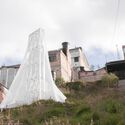
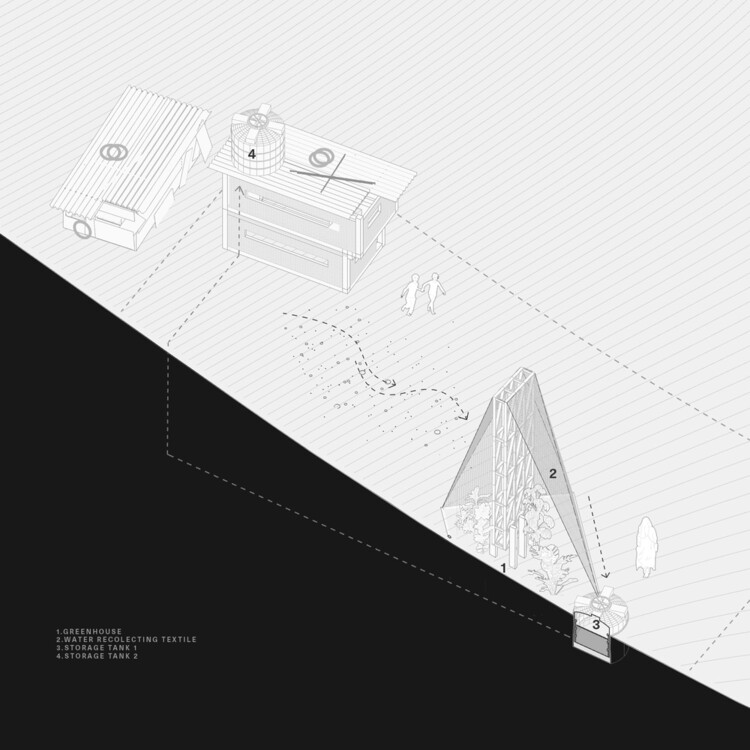
These design possibilities have sparked innovative speculative explorations within architectural academia, notably at Columbia University’s Graduate School of Architecture, Planning and Preservation (GSAPP). Through its Water Urbanism: Amman studio initiative, researchers and students developed spatial strategies to address Jordan’s compounding challenges of severe water poverty and large-scale refugee hosting. Investigating sites such as Al-Hadalat near the country’s northern border, the studio proposed configuring refugee shelter clusters around centralized fog-harvesting towers and secondary shaded water-collection canopies.
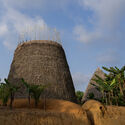
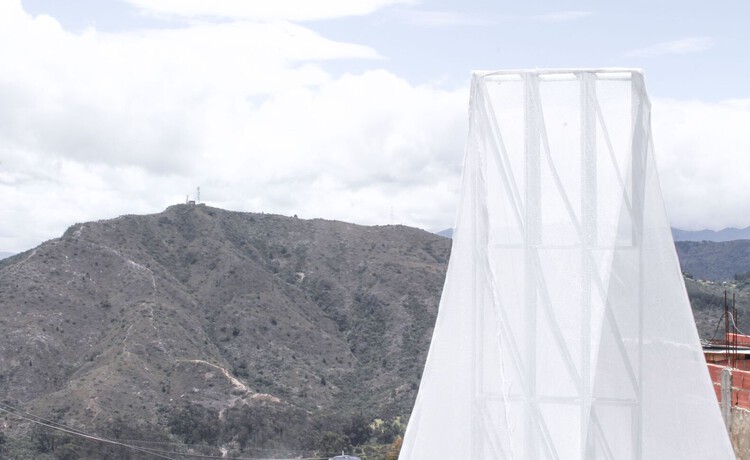
Under the Al-Hadalat design proposals, these atmospheric harvesting structures were modeled to serve as communal anchors. Computational design projections estimated that primary fog towers could harvest between 800 and 2,000 liters of water daily under favorable atmospheric conditions, while smaller secondary shaded fog structures were projected to yield approximately 500 liters per day. Studio researchers emphasized that these figures represent theoretical design simulations rather than verified operational data, but the proposals underscored how water infrastructure could simultaneously shape human habitats. The conceptual frameworks envisioned towers constructed from local palm timber and clad in multi-layered mesh woven from discarded humanitarian aid ration sacks. By exposing these fibrous meshes to moving air masses, the structures would extract airborne water while providing expansive shaded gathering spaces for displaced residents.
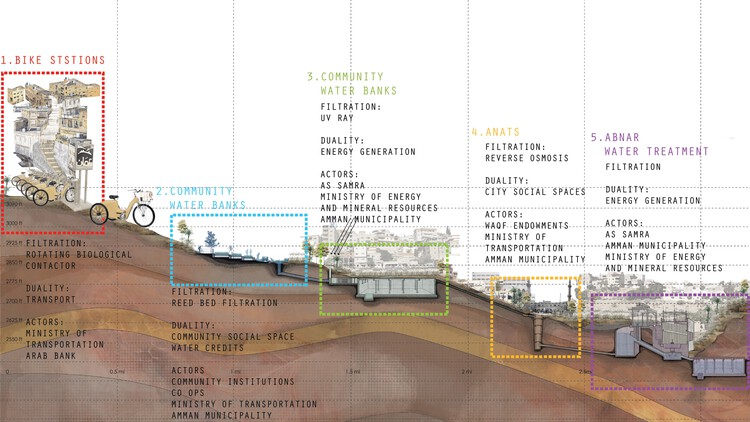
Crucially, the Columbia GSAPP designs embedded atmospheric capture into a comprehensive, cyclical water metabolism. Liquid collected on the elevated mesh surfaces was channeled through a multi-step gravity filtration sequence before draining into protected subterranean storage cisterns. From these underground reservoirs, filtered water was designated for basic hygiene, showers, and communal sanitation facilities. Runoff and greywater were then directed through constructed biological wetlands, filtering effluent naturally before releasing it into surrounding terraced plots for landscape restoration and food production.
This spatial integration highlights a profound philosophical departure from conventional civil engineering. Modern water networks—consisting of concrete dams, subterranean trunk mains, and perimeter treatment plants—have traditionally functioned out of public view, detached from the everyday architectural experience of the city. Atmospheric harvesting reverses this paradigm. Because the physics of atmospheric interception requires continuous exposure to ambient air currents, humidity, and thermal exchanges, the infrastructure cannot be buried or concealed behind opaque walls. It must occupy open space, rise into the wind, and directly engage weather patterns. When architects intentionally treat collectors as structural shading, civic pavilions, or communal shelters, water collection ceases to be merely mechanical utility and becomes an active spatial framework for community life.
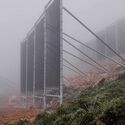
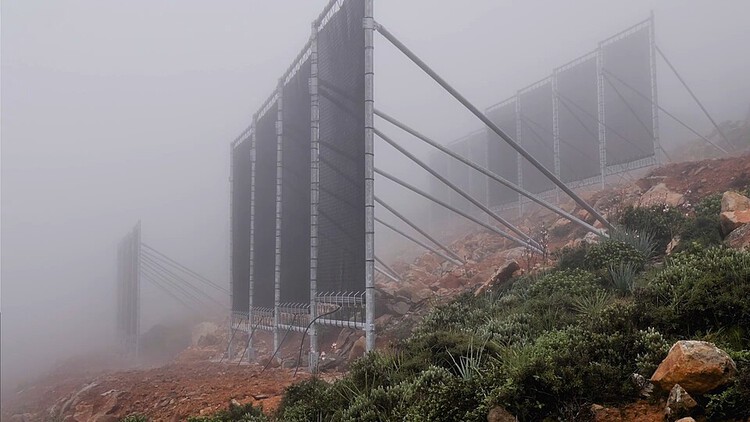
Beyond speculative academic designs, atmospheric water collection has proven its practical efficacy through permanent, field-tested installations. The most prominent real-world benchmark is located in the anti-Atlas region of Sidi Ifni along Morocco’s arid Atlantic coastline. There, at Mount Boutmezguida—located inland from the coast—an extensive array of specialized fog nets captures low-hanging stratocumulus clouds blowing off the ocean, directing liquid into a municipal-scale storage and piped distribution network that supplies surrounding Berber villages.
A comprehensive academic assessment published in 2024 evaluated the Mount Boutmezguida installation as the world’s largest operational fog-collection system, analyzing its yield efficiency, potable water quality, and community governance. The empirical findings demonstrated both the immense potential and the practical challenges of relying on atmospheric supply. Monitored over a four-year period, the system’s baseline output exhibited significant annual variability, yielding between 1.6 and 6 liters of water per square meter of mesh surface per day. Yields rose sharply during peak fog seasons: in March and April, collection rates reached a multi-year average of 8.5 liters per square meter daily, with an empirical peak reaching 21 liters per square meter per day recorded during April 2021.
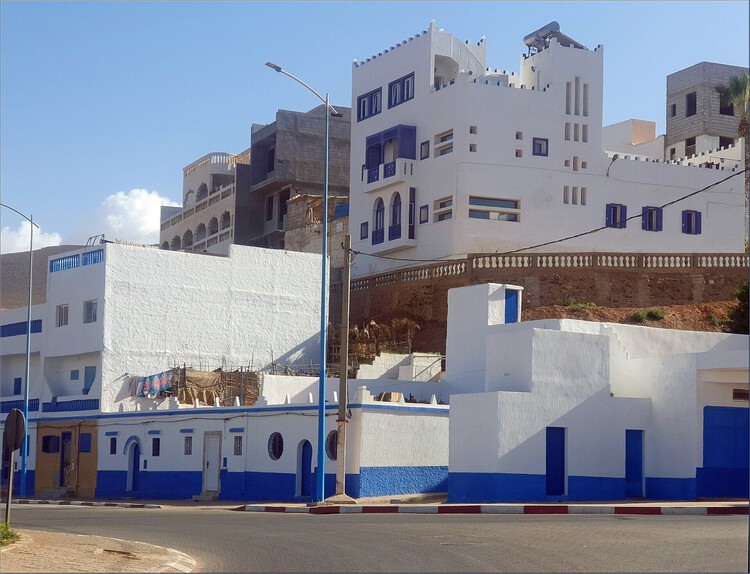
Yet the Moroccan project also illustrates the operational complexities that define atmospheric extraction. Fog generation is inherently seasonal and vulnerable to microclimatic fluctuations, making unbuffered reliance on moisture capture risky. The researchers evaluating Mount Boutmezguida warned that yield variability, paired with local risks of groundwater contamination in supplementary wells, poses a serious challenge for long-term water security. If atmospheric harvesting is implemented as an isolated, standalone water source, rural communities risk severe deficits during prolonged dry spells when fog fails to materialize. As a result, atmospheric capture must be engineered alongside extensive cistern storage, secondary municipal supplies, and proactive community maintenance regimes.
These real-world lessons are shaping how designers approach building-integrated atmospheric systems. Rather than relying solely on remote mesh farms, architects are investigating how building envelopes can function as active, moisture-harvesting skins. In this model, orientation toward prevailing winds, surface-to-volume geometry, thermal conductivity, and atmospheric exposure become primary environmental design variables. External screen assemblies, rainscreens, and sun-shading louvers can double as moisture interceptors. Roofscapes can be engineered with high-emissivity radiative coatings to drop surface temperatures below nocturnal dew points, and central courtyards can house integrated catchment cisterns. Sorption-based composite materials that alternately absorb vapor at night and release liquid water when heated by daytime solar radiation are viewed as particularly promising for architectural facades, even as high production costs and early-stage readiness delay widespread commercial adoption.
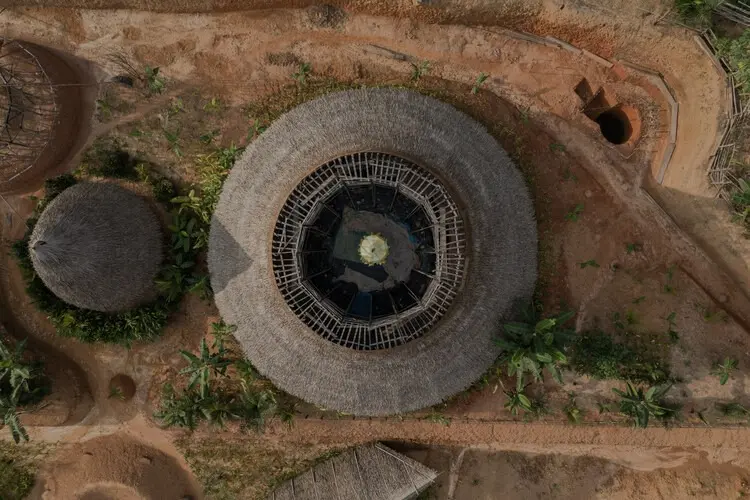
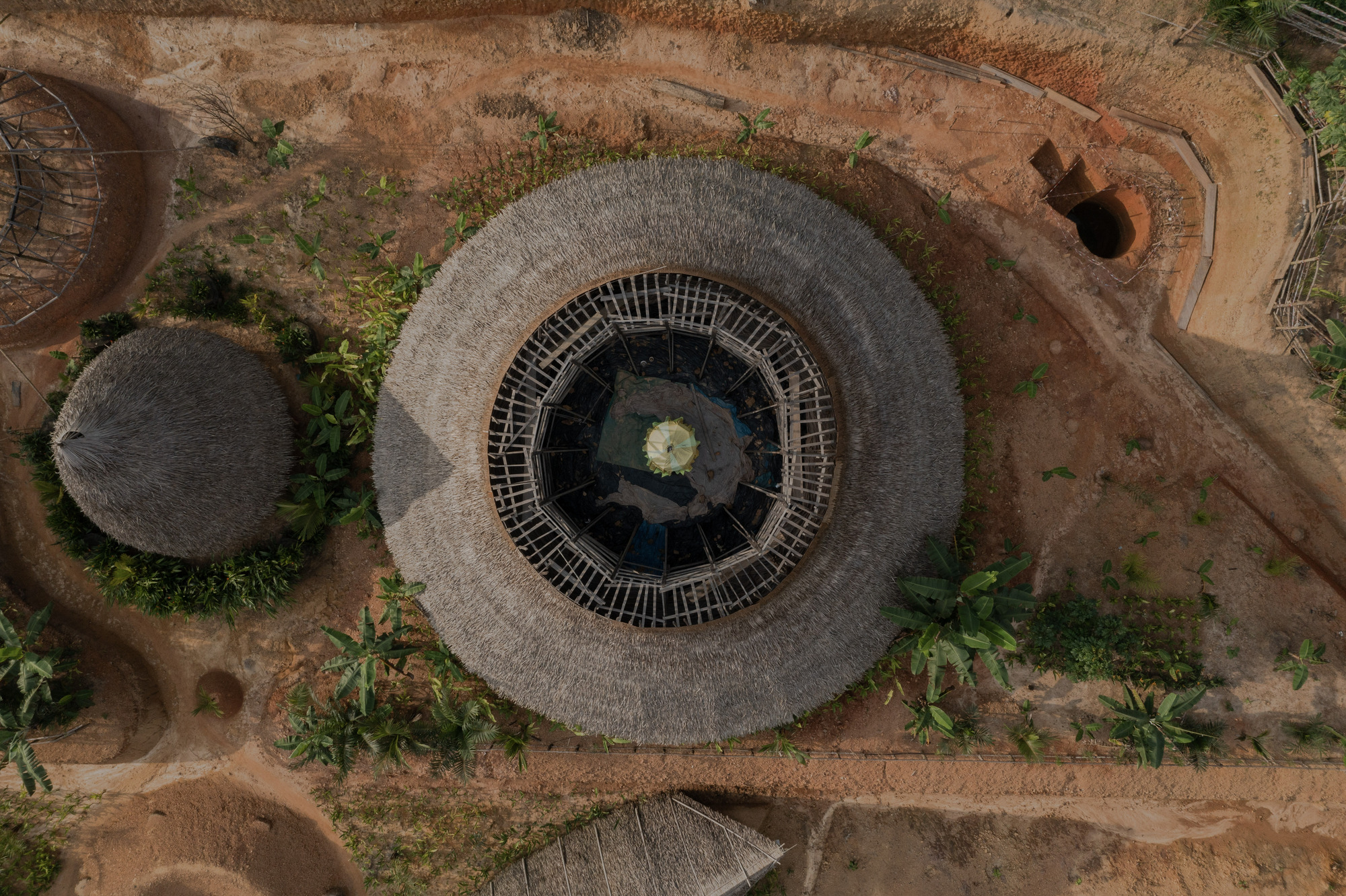
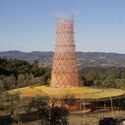
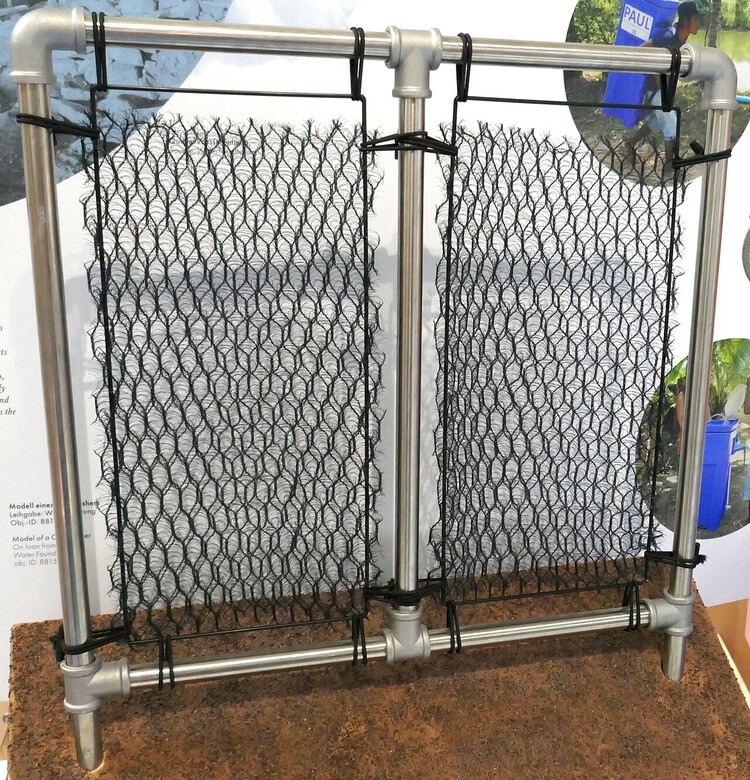
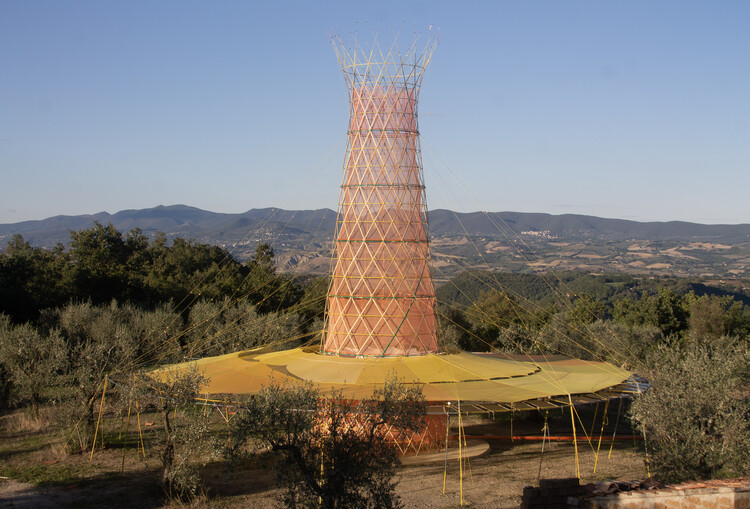
Freestanding designs like the bamboo-framed Warka Tower, developed for rural populations in Cameroon, and modular systems like the CloudFisher netting arrays exhibited in institutions such as Munich’s Deutsches Museum, demonstrate that passive atmospheric collection can function effectively when tailored to local climatic realities. These structures illustrate that water can be harvested without external energy grids if the geometry allows wind-driven fog and dew to precipitate naturally into gravity-fed storage.
Ultimately, architecture remains bound by natural physical limits: no design can conjure fog, compel clouds to gather, or force humidity into an arid sky. What architecture can accomplish, however, is the optimization of form, surface area, and material composition to capture ambient atmospheric resources whenever climatic conditions permit. As urban centers and rural outposts navigate an era of intensifying hydrologic volatility, atmospheric water harvesting is emerging not as a solitary cure-all, but as an indispensable layer within hybrid water management strategies—transforming the building envelope into an active participant in regional water security.