Photographing the moon has long tested the patience and technical skill of even the most seasoned photographers. Translating the vast, luminous beauty of Earth’s natural satellite into a compelling image requires a careful balance of timing, equipment, and atmospheric conditions. However, the second half of October offers a remarkable window of opportunity for astrophotographers and news photographers alike, highlighted by breathtaking recent imagery and upcoming celestial events.
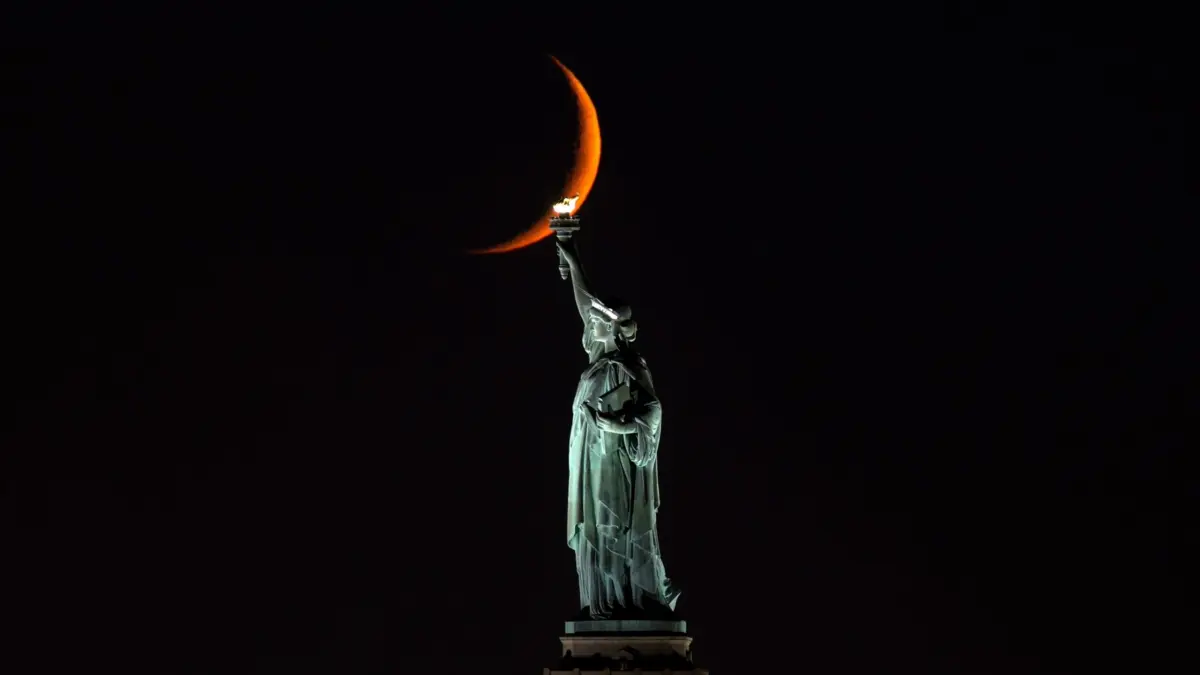
A striking example of what is possible recently captivated observers when renowned photographer Gary Hershorn captured a widely shared news photo in New York City. The composition places a waxing crescent moon directly behind the flaming torch of the Statue of Liberty. In the image, the moon is illuminated at just ten percent, casting a warm, distinct orange glow that makes it appear almost as a natural, glowing extension of Lady Liberty’s torch itself.
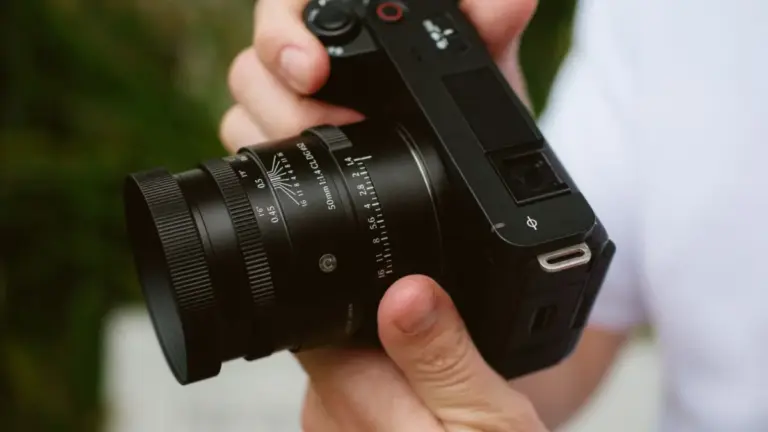
To achieve this striking alignment and visual scale, Hershorn utilized a 300mm lens mounted on a Canon EOS R7 camera. The choice of a telephoto focal length is central to such shots, as it compresses the perspective and makes the distant moon appear significantly larger relative to foreground architectural landmarks.
While Hershorn’s October 13 photograph stands out as an exceptional capture of a crescent moon, it also serves as a precursor to even bigger astrophotography events slated for later in the month. October is traditionally a rich period for lunar photography, largely due to seasonal shifts in weather, clearer autumn skies, and the specific angles at which the moon rises relative to the horizon.
The next major milestone for photographers arrives with October’s full moon, which officially takes place on October 25. Crucially for visual storytelling and landscape integration, the full moon will be positioned closest to the horizon when it rises on October 26. This positioning plays a vital role in the coloration of the moon. When the lunar body sits low on the horizon, its reflected light must travel through the densest part of the Earth’s atmosphere. This thick layer of air scatters shorter wavelengths of light, such as blue and violet, while allowing longer wavelengths—namely reds, oranges, and yellows—to pass through to the observer’s eye and camera sensor.
This atmospheric filtering is precisely what gives low-hanging moons their signature warm, amber hue, mirroring the fiery color seen in Hershorn’s crescent moon photograph. The upcoming Hunter’s Moon will provide another premier opportunity for photographers to capture this rich, warm glow during the full moon cycle.
While an orange moon is a regular occurrence rather than a rare astronomical anomaly, October’s full moon holds a special status among photography enthusiasts. Because it rises very close to the actual time of sunset, there is typically a brief, valuable window of ambient twilight light remaining in the sky. This lingering daylight illuminates the terrestrial landscape, allowing photographers to capture both a detailed, glowing moon and a clearly defined foreground, rather than shooting against a pitch-black night sky.
According to digital photography and astrophotography experts, capturing this month’s Hunter’s Moon effectively requires specific technical adjustments. Recommendations for the October 26 moon rise suggest employing a telephoto lens, ideally in the 200mm to 600mm range, to maximize the perceived size of the lunar disc against distant landscapes.
Because the upcoming full moon coincides with a supermoon—albeit a smaller variation of the phenomenon—the moon will appear exceptionally bright in the night sky. Consequently, photographers are advised to use a lower ISO setting and a faster shutter speed than they might otherwise choose for nighttime scenes. These settings are crucial to prevent overexposing the image, which would otherwise wash out the intricate craters, maria, and topographical details on the lunar surface.
As autumn nights grow longer and temperatures drop, October continues to provide a final transition period for various celestial observations, ranging from late-season views of the Milky Way to striking planetary alignments. Yet, for photographers focusing on Earth’s closest neighbor, the coming days offer a distinct confluence of atmospheric optics, favorable timing, and iconic framing opportunities.