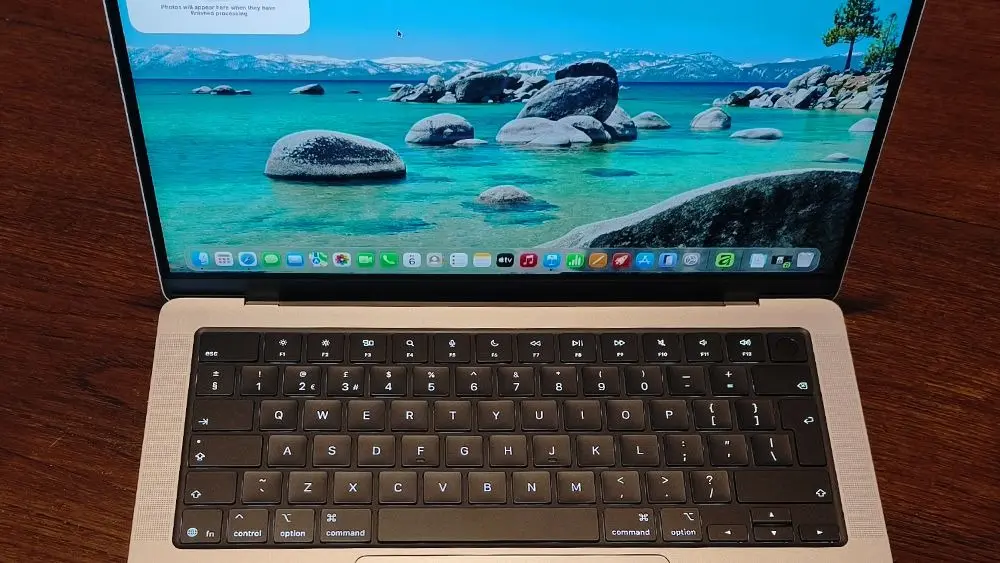
Creative professionals seeking to upgrade high-performance mobile hardware have spent much of the past year navigating an increasingly expensive computing market. Driven by unprecedented demand for artificial intelligence infrastructure, global component costs—particularly memory and high-speed storage—have escalated dramatically across the technology sector. These cost pressures recently forced major laptop manufacturers, including Apple, to implement significant retail price increases across higher-end hardware lineups, including a substantial $300 price bump introduced on premium MacBook Pro models earlier this summer.
However, a major price adjustment on retail channels has provided welcome relief for visual artists, video editors, and digital designers looking for top-tier performance without paying full inflated retail prices. Amazon has slashed $430 off the retail price of this year’s 14-inch MacBook Pro configured with the M5 Pro chip, 24GB of unified memory, and a 1TB solid-state drive. The discount lowers the purchase price of the compact workstation from its list price of $2,499 down to $2,049.
This drop represents a notable shift in current retail trends for high-end laptops. By cutting $430 off the sticker price, the current promotion not only entirely cancels out the $300 mid-year price increase enacted by Apple in June, but it also provides buyers with an additional $130 in net savings below the machine’s original standard pricing baseline. For creative workers who have delayed purchasing decisions while waiting out inflationary hardware cycles, this deal offers a rare window to acquire a current-generation pro workstation at a price below pre-hike levels.
The Impact of AI Infrastructure on Mobile Hardware Prices
The broader context surrounding this price reduction stems from an industry-wide realignment in hardware manufacturing. Over the past twelve to eighteen months, the rapid expansion of artificial intelligence research, enterprise deployment, and data center construction has placed unprecedented demands on global semiconductor supply chains. In particular, high-bandwidth memory modules and dense flash storage components have seen severe price increases as chipmakers pivot capacity toward server-grade AI hardware.
Consumer and workstation-class laptops have felt the direct downstream effects of these supply chain constraints. Laptop manufacturers operating at every tier of the industry have faced escalating bill-of-materials costs when building devices with heavy RAM and storage allocations. Because modern creative applications—such as multi-stream 4K and 8K video editing suites, node-based compositing software, 3D modeling and rendering engines, and high-resolution digital painting tools—require substantial memory bandwidth and fast local storage to operate efficiently, baseline configurations that once seemed generous have become essential entry points for working professionals.
When Apple applied a $300 price hike to its high-spec MacBook Pro models in June, it reflected the broader reality of these elevated component costs. For individual freelancers, studio photographers, motion graphics artists, and independent production agencies operating on fixed equipment budgets, the markup added a considerable financial hurdle to routine hardware refresh cycles. The sudden bump forced many creators to choose between settling for entry-level memory capacities or absorbing steep markups to maintain necessary performance levels.
Evaluating the Discounted M5 Pro Configuration
The specific model featured in the Amazon price cut hits what many industry specialists consider the ideal balance between portability, processing power, and long-term hardware longevity. Built around a 14-inch form factor, the laptop is designed to serve both as a standalone mobile editing station and as the core unit of a multi-monitor desktop arrangement.
At the heart of this machine is the M5 Pro system-on-chip, engineered to handle sustained high-load creative workflows that typically exhaust standard consumer-grade processors. The M5 Pro architecture integrates high-performance CPU cores with an expanded GPU architecture, providing hardware acceleration for task-heavy applications such as real-time color grading, complex timeline playback in video editing software, structural 3D mesh rendering, and heavy photographic batch processing.
Equally important for intensive creative work is the 24GB unified memory setup included in this configuration. Unlike traditional personal computers that divide memory between the CPU and a separate dedicated graphics card, Apple Silicon uses a unified memory architecture where the processor, graphics cores, and media engine all access a single shared memory pool with extremely high bandwidth.
In real-world production environments, a 24GB memory pool provides the headroom needed to run multiple high-demand applications simultaneously without causing system slowdowns or forcing the operating system to rely heavily on virtual memory paging. A video editor, for example, can run a primary non-linear editing program alongside heavy vector graphics software, dynamic audio processing tools, and web browser windows containing high-resolution reference files without experiencing interface lag or dropped frames during playback.
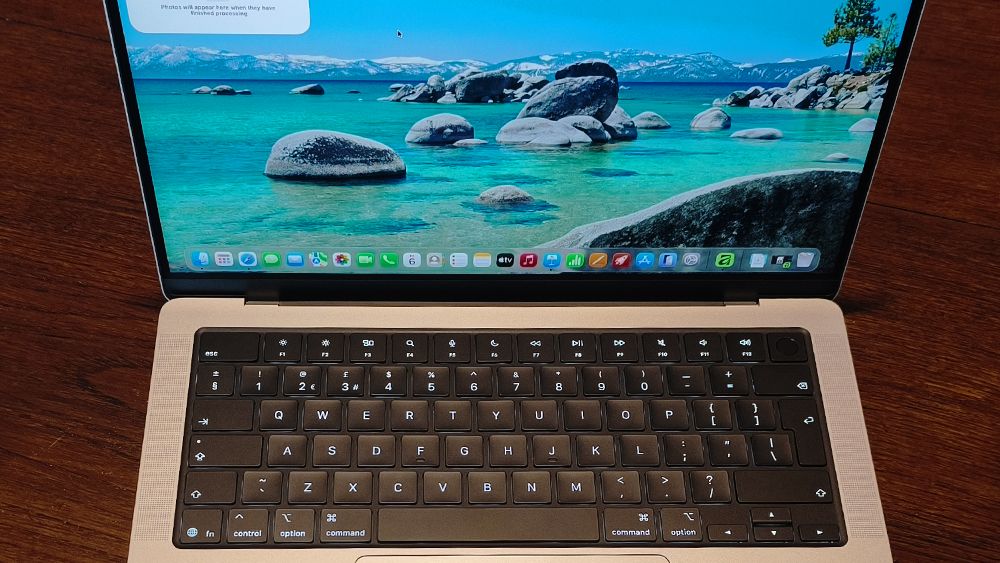
The inclusion of a 1TB solid-state drive further elevates this configuration into true professional territory. While entry-level configurations featuring 512GB of storage can quickly fill up when working with high-bitrate video footage, raw photographic camera files, high-resolution texture maps, and large application caches, a 1TB internal SSD provides the necessary buffer for active projects. Furthermore, local storage speed directly impacts project load times, timeline scrubbing responsiveness, and media export durations, making fast internal flash storage a crucial component of any production machine.
At $2,049, down from its typical $2,499 price tag, the 14-inch M5 Pro configuration delivers a price-to-performance ratio that has been largely absent from the market since component prices began escalating.
Strategic Hardware Upgrades for Creative Workflows
For professionals managing visual asset creation, equipment purchasing is rarely a matter of acquiring luxury hardware; it is a calculated business expense directly tied to project delivery times and daily productivity. When software tools constantly evolve to offer high-resolution canvas sizes, complex dynamic simulation effects, and AI-assisted processing tools, older hardware gradually becomes a bottleneck that slows down delivery schedules.
In creative production agency environments, where project managers, visual designers, photographers, and video editors collaborate under tight commercial deadlines, hardware reliability and performance speed dictate how efficiently content can be generated and revised. The ability to scrub through complex timeline sequences without waiting for proxy files to generate, or to execute high-resolution 3D renders without thermal throttling, directly impacts project turnaround times.
When hardware prices rise across the industry, independent creators and small media firms often respond by stretching aging equipment beyond its recommended operational lifespan. However, running resource-heavy design and editing applications on outdated hardware carries hidden costs, including increased render times, higher risk of system crashes during intensive operations, and inefficiency caused by application lag.
The current discount on the M5 Pro MacBook Pro addresses these operational challenges by offering top-tier hardware specs at a more manageable price point. For creators who held off on upgrading during the June price increase, the current $430 reduction offers a clear opportunity to acquire a high-capacity machine before seasonal inventory shifts or ongoing supply chain pressures trigger additional price adjustments.
Today’s best MacBook deals
While the $430 discount on the 14-inch M5 Pro MacBook Pro in the United States represents one of the most compelling reductions currently available for North American shoppers, regional pricing dynamics and promotional windows vary significantly across different global markets. Buyers located outside the US face a different hardware landscape shaped by local import duties, currency fluctuations, and retailer-specific promotional calendars.
In international markets, pricing adjustments for high-end laptops often follow different timelines than those seen in North America. While US buyers benefit from direct retailer competition between major ecommerce platforms, shoppers in Europe, the United Kingdom, and the Asia-Pacific region frequently see regional price shifts tied to local distribution costs and institutional demand. As a result, tracking localized promotions is essential for creative professionals looking to secure comparable savings on high-specification Apple Silicon hardware.
When evaluating potential laptop purchases across any region, buyers are advised to carefully match specific component configurations to their exact daily software requirements. While entry-level laptops may offer lower initial purchase costs, configurations equipped with expanded unified memory—such as 24GB or higher—and generous internal storage reserves invariably provide longer operational lifespans and better protection against future software resource demands.
For creative practitioners who depend on consistent computing performance to execute video production, 3D design, digital illustration, and complex visual asset creation, timing hardware upgrades around significant market corrections remains the most effective strategy for acquiring professional tools while keeping overhead costs under control.