Tesla has offered the public its most direct glimpse yet at its long-promised, rocket-boosted Roadster, showcasing a concept vehicle during a livestreamed presentation hosted at SpaceXAI’s testing facility in Texas. The high-profile demonstration featured a series of aerial maneuvers intended to prove that the company’s ambitious fusion of electric automotive engineering and rocket propulsion technology is moving closer to reality. However, with production now pushed back to 2028 and significant engineering and regulatory hurdles remaining, the spectacle has re-ignited debate over the feasibility, safety, and market purpose of a flying sports car.
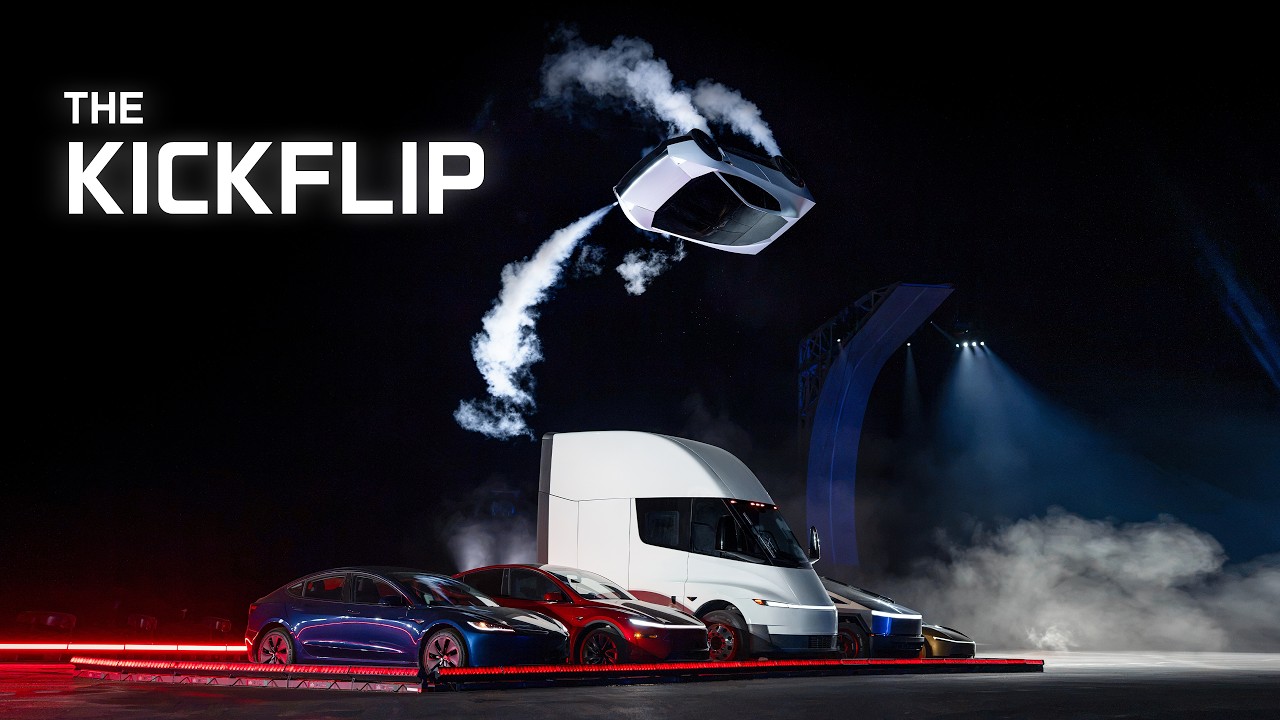
The event took on a highly theatrical atmosphere, executed on a stage set reminiscent of a large-scale illusionist show. Operating without a human driver behind the wheel, the two-seater prototype executed a pre-programmed sequence that began with the car driving up a steep incline and launching into the air. In one of the evening’s most striking visual moments, the concept vehicle performed a kickflip off a half-pipe structure before descending back toward the ground with a controlled glide. In a subsequent demonstration, the vehicle demonstrated its ability to lift off directly from a stationary position, executing a controlled vertical hop over a row of parked cars before landing safely on the tarmac.
Following the aerial display, Tesla Chief Executive Officer Elon Musk addressed the audience with a bold declaration, stating simply that flying cars are real. The statement served as a culmination of years of speculative posts and ambitious claims regarding the second-generation Roadster, a vehicle that has been in continuous development for roughly a decade.
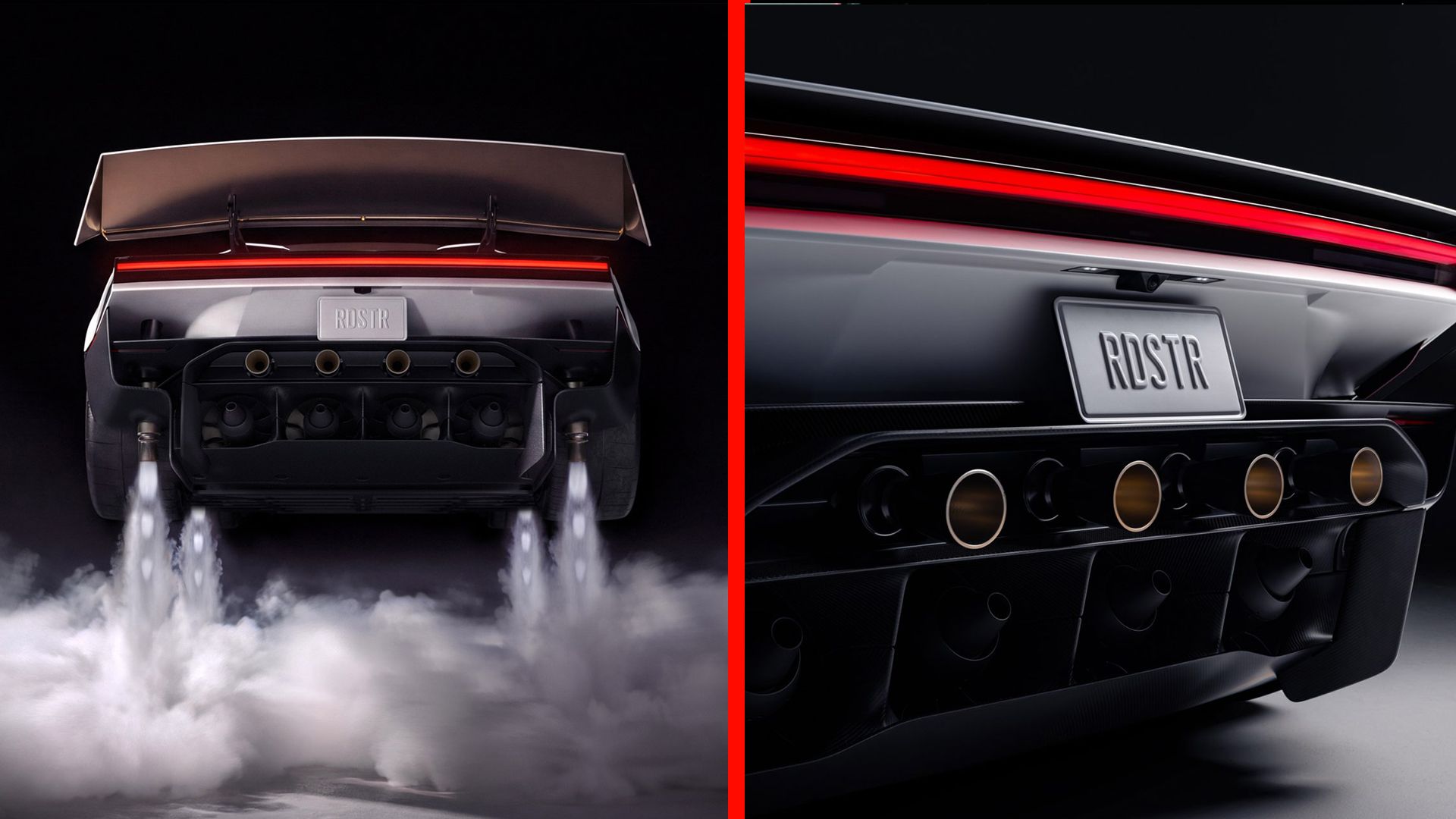
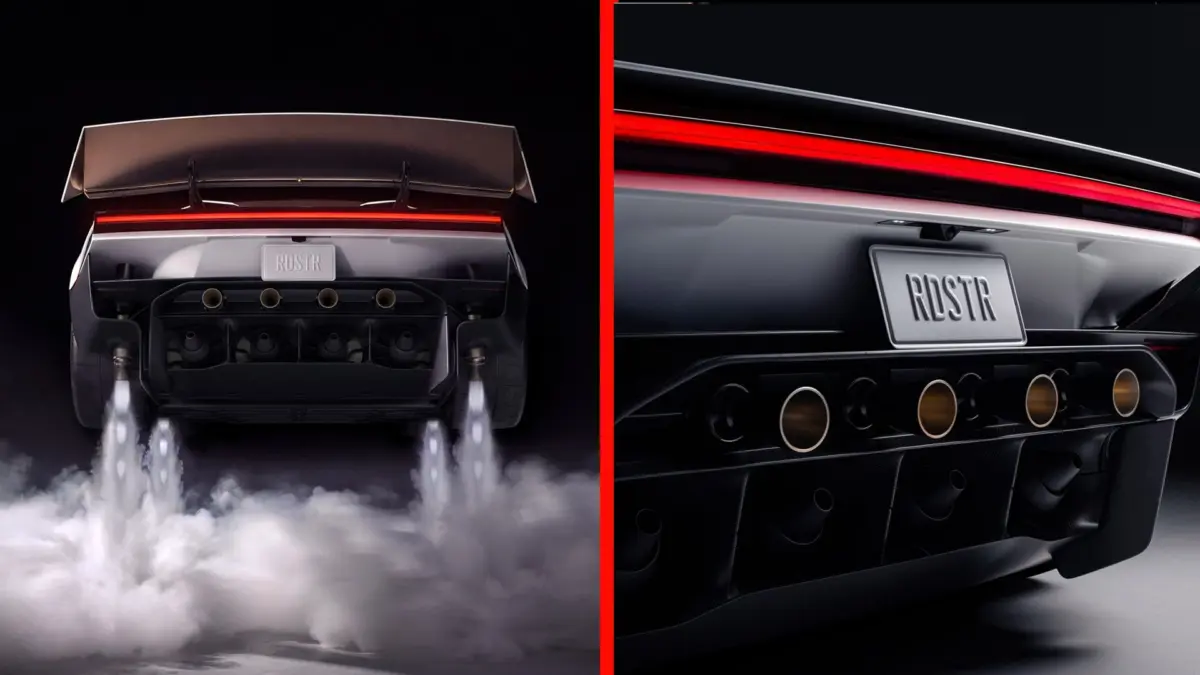
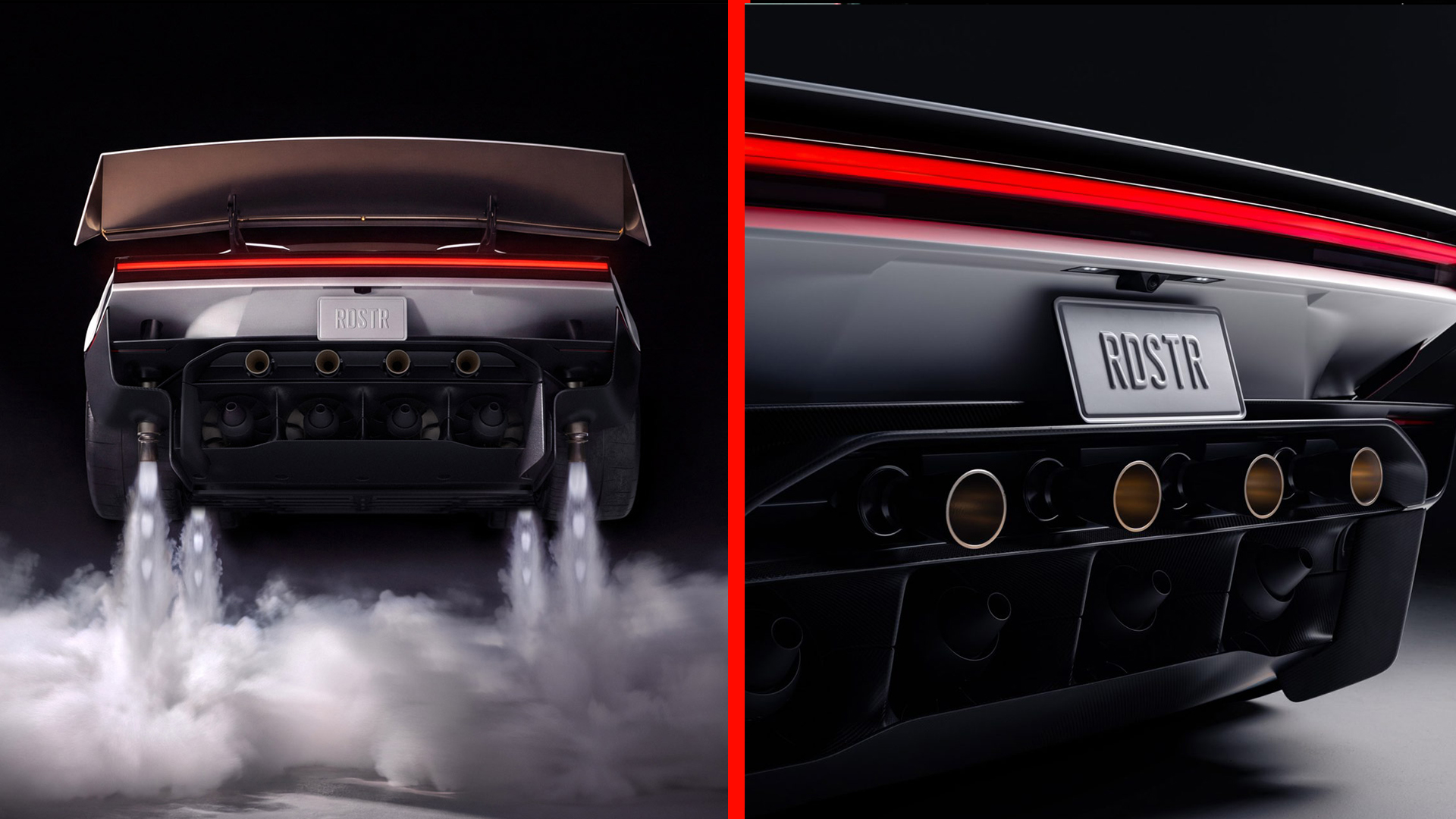
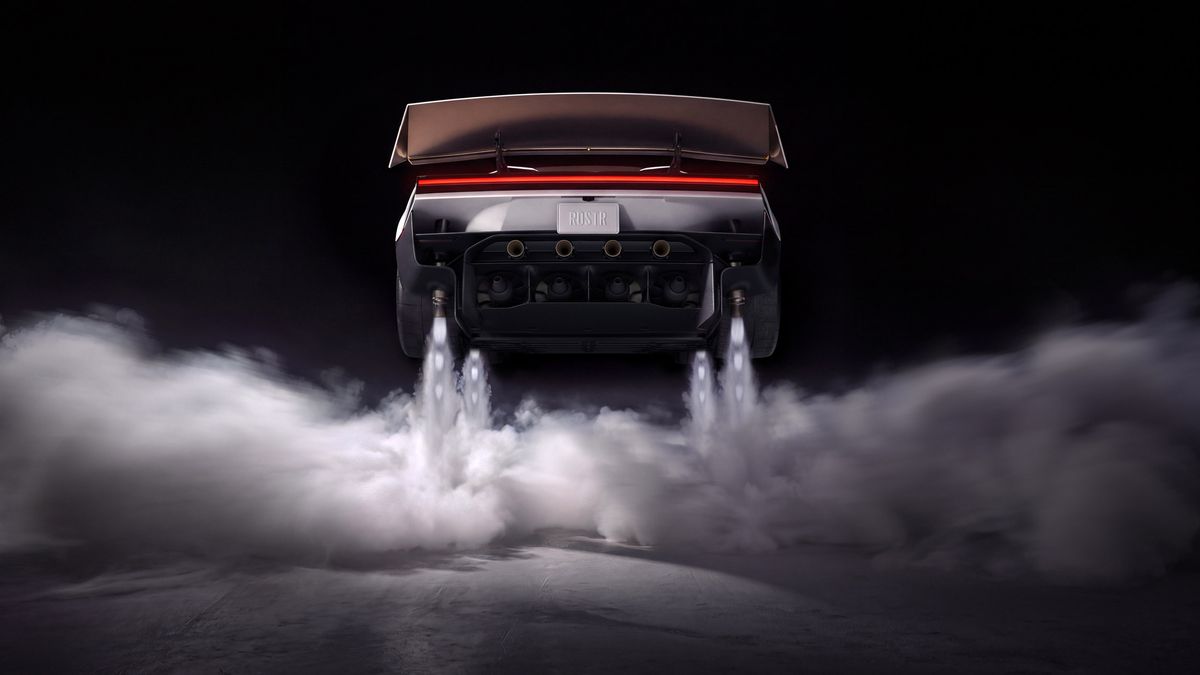
To achieve the aerial levitation and hopping maneuvers shown during the presentation, the concept Roadster relies on a specialized propulsion system developed through technical cross-pollination between Tesla and SpaceX. The prototype demonstrated at the Texas facility was equipped with custom, rechargeable ultra-high-pressure air tanks. These tanks store compressed air that is discharged through precise valves and thrusters to generate vertical thrust upon demand, while simultaneously providing a cushioning effect to soften landings upon touchdown. To maintain traction on steep surfaces prior to takeoff—such as the metallic incline used during the demonstration—the vehicle utilizes a high-powered fan suction system designed to pull the chassis firmly against the steel ramp.
Beyond vertical elevation, the onboard pneumatic propulsion system is designed to drastically augment horizontal dynamic performance. When configured to discharge rearward, the cold-gas thrusters deliver an additional surge of linear propulsion. According to performance figures released by Tesla, this auxiliary thrust allows the vehicle to accelerate from zero to 60 miles per hour in just 0.81 seconds, a figure that would make it one of the fastest-accelerating land vehicles ever produced.
The concept of integrating rocket technology into an electric passenger vehicle was first publicly floated by Musk in 2018 via social media. At the time, he revealed plans for an optional SpaceX-branded package that would embed ten small cold-gas rocket thrusters around the chassis. Musk noted that these thrusters would be positioned to dramatically enhance acceleration, maximum top speed, braking efficiency, and cornering grip, while hinting that the system might ultimately allow a Tesla vehicle to fly.
The aesthetic direction of the vehicle reflects these aerospace ambitions. Tesla Chief Designer Franz von Holzhausen explained that the Roadster’s sharp exterior angles and scissor-door architecture were heavily influenced by an aerospace design philosophy, aiming to marry aerodynamic efficiency with futuristic visual impact. Musk echoed this framing, characterizing the concept vehicle as the direct output of a collaborative effort between the world’s leading electric vehicle manufacturer and the world’s premier aerospace company.
Despite the dramatic demonstration in Texas, significant questions remain regarding the timeline and ultimate deliverability of the technology. When the second-generation Roadster was formally unveiled in late 2017, initial customer deliveries were projected to begin in 2020. That deadline passed without a production release, and Tesla now targets a 2028 release window, representing an eight-year delay from its original schedule. Addressing the inherent technical challenges of bringing such a radical concept to market, Musk acknowledged the risks during the event, remarking that success is not guaranteed, though adding that he believes the system will probably work.
For long-time observers of the company, the caution is notable given Musk’s history of making extraordinary claims regarding vehicle capabilities. In September 2022, Musk claimed publicly that the Tesla Cybertruck would feature sufficient waterproofing to function briefly as a boat, enabling it to cross bodies of water such as rivers, lakes, and calm seas. Subsequent real-world testing by third parties showed that the production Cybertruck was not equipped for aquatic navigation, serving as a point of reference for skeptics analyzing the Roadster’s flying claims.
Automotive and aerospace engineers have also pointed out fundamental practical constraints inherent to the compressed-air thruster design. The hardware required to support pneumatic flight—including reinforced pressure vessels, high-output valves, heavy storage tanks, and structural thruster housings—adds substantial physical weight to the platform. Because compressed air is exhausted rapidly during vertical thrust maneuvers, the vehicle can only remain airborne for a matter of seconds before its internal storage tanks are fully depleted and require recharging via onboard compressors. This brief operational window raises questions about whether the vertical hop capability represents a functional mobility feature or an elaborate engineering gimmick.
The practical limitations extend to commercial availability and regulatory compliance. On Tesla’s official reservation platform, potential customers can currently place a deposit of £50,000 to secure a standard version of the Roadster, which does not include the pneumatic booster system. Those seeking the high-acceleration variant equipped with rearward cold-gas thrusters—designated as the Thrust edition—are required to submit a $250,000 deposit.
Meanwhile, the top-tier single-seater variant featuring the complete flight system, officially referred to as the Rocket model, is listed as available exclusively by invitation. Tesla has not clarified whether the flight-capable variant could ever receive road-homologation approval from transportation authorities. Regulatory frameworks in major markets strictly govern vehicle modifications, pedestrian safety, noise levels, and exhaust discharge, making it highly unlikely that drivers will ever be legally permitted to execute vertical jumps over surrounding traffic or navigate public roadways using compressed air thrusters.
The timing of the demonstration also comes at a critical juncture for Tesla’s market position and investor relations. When the second-generation Roadster was originally announced in 2017, Tesla held an uncontested leadership position in the high-performance electric vehicle sector. In the years since, established luxury automakers and new entrants have aggressively expanded into the space, delivering production hypercars and performance EVs that have captured industry attention.
Vehicles from rival manufacturers such as Rimac, Porsche, Xiaomi, and BYD are already available to consumers, offering extreme performance metrics without the multi-year delays that have plagued the Roadster. Furthermore, upcoming high-end electric models—including the Jaguar Type-01 concept, the Bentley Torcal, and the Ferrari Luce—are set to heighten competition in the ultra-luxury EV segment. Wall Street appears to remain cautious regarding Tesla’s latest public display; following the livestream, Tesla shares remained down 4.5% over the previous week and down more than 16% for the year to date.
Tesla is also not the only entity operating in the burgeoning flying vehicle space. Specialized aerospace startups have been developing dedicated electric vertical takeoff and landing (eVTOL) vehicles designed specifically for sustained flight, operating on fundamentally different engineering principles than Tesla’s compressed-air system.
California-based Alef Aeronautics has already initiated limited hand-built production of its Model A flying car to conduct controlled testing environments. Responding to Tesla’s Texas event, Alef Aeronautics Chief Executive Officer Jim Dukhovny publicly welcomed Tesla to the flying car race, noting that his company had been developing technology in the sector for eleven years.
To mark the occasion, Alef released a video on YouTube displaying its Model A prototype hovering over a Tesla Roadster and a Cybertruck. Alef stated that the demonstration represented the 1,000th recorded flight of its vehicle platform. Unlike Tesla’s concept, which relies on brief discharges of high-pressure air stored in heavy tanks for short leaps, the Alef Model A achieves true sustained flight using distributed electric propulsion. Its architecture features eight internal, enclosed propellers integrated directly within a lightweight, mesh-like body shell.
As Tesla turns its attention toward the newly announced 2028 launch timeline, the company faces the dual challenge of solving complex engineering hurdles while reassuring investors and customers that its most ambitious promises can eventually be translated into street-legal production reality.