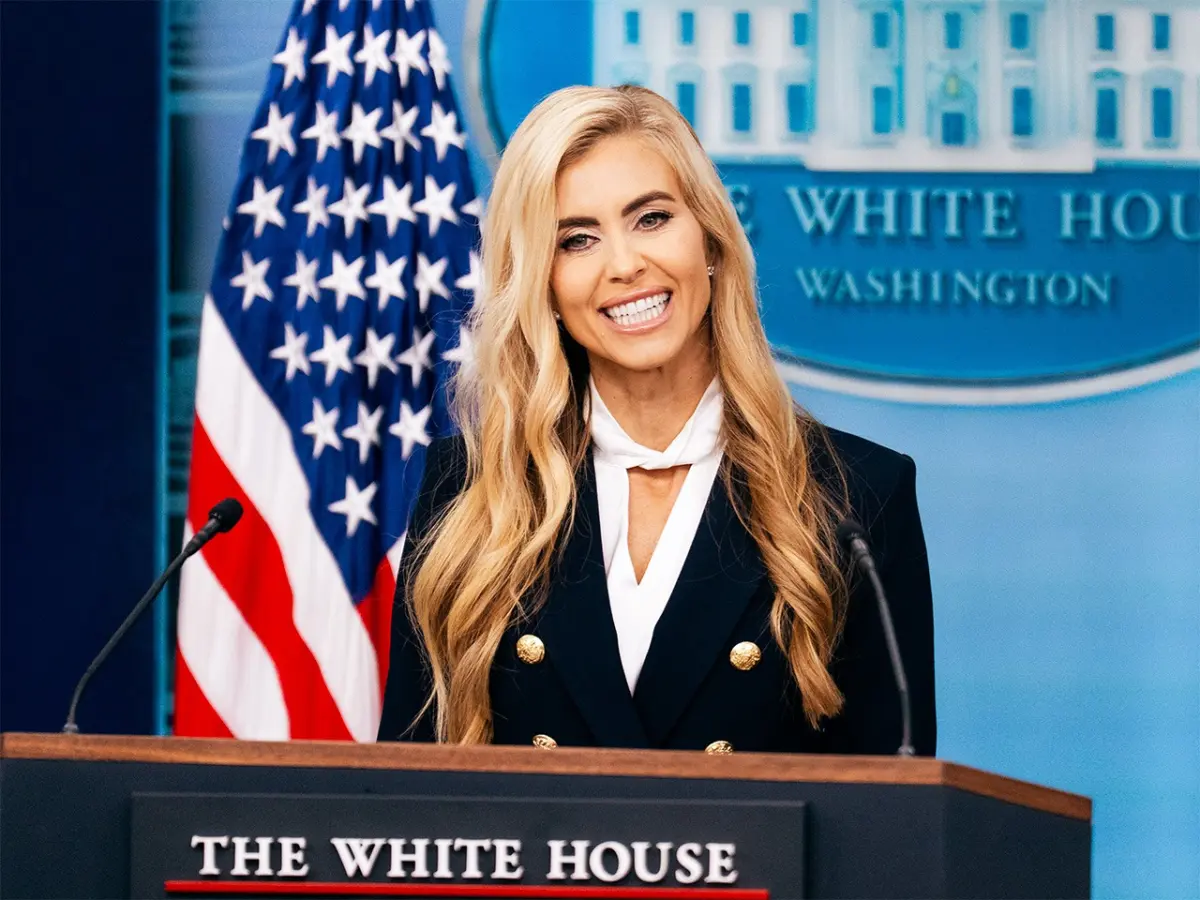
The tenure of Katie Zacharia as Donald Trump’s White House press secretary was characterized by a rocky start and an abrupt end, lasting a mere ten days before the administration decided to pivot in a new direction. Zacharia, a former conservative news commentator, attorney, and mother of four from California, succeeded Karoline Leavitt in the role, stepping into one of the most high-profile and pressurized communications positions in global politics. Her brief run ultimately established a record for brevity in Trump’s second administration, lasting half as long as the famously short ten-day stint of Anthony Scaramucci, who served as communications director during Trump’s first term in 2017.
Speaking to reporters on the White House South Lawn, President Trump reflected on the rapid departure, noting that he had offered Zacharia a candid assessment of the intense demands of the podium. According to the president, he told her that, honestly, if he were in her position, he would reconsider continuing in the role. Rather than exiting the administration entirely, however, Zacharia is slated to transition into a new position within the executive branch, according to statements from the president.
The difficulties for Zacharia accumulated rapidly during her brief time at the helm, culminating in a single, highly scrutinized press conference that quickly dominated evening news broadcasts for reasons entirely unhelpful to the administration’s messaging strategy. Clocking in at just over eight minutes, the briefing featured Zacharia largely reciting from a prepared script in a measured, newsreader-style delivery. The format left little room for the dynamic back-and-forth typically expected from a White House press secretary, but the content of the briefing was even more consequential.
During the live broadcast, Zacharia was tasked with delivering significant personnel news regarding a sitting ambassador. Responding to inquiries concerning the status of Kimberly Guilfoyle—the embattled former fiancée of Donald Trump Jr. and America’s top diplomat in Athens—Zacharia announced the administration’s decision on live television. She stated that the administration had asked Ambassador Guilfoyle to resign, adding that Guilfoyle had been a wonderful asset to the team and that the administration wished her well.
The question-and-answer portion of the briefing further underscored the challenges Zacharia faced during her introduction to the national press corps. Reporters from only three media outlets, all of which were Trump-friendly and conservative, were granted the opportunity to ask questions. Even within this supportive environment, Zacharia struggled to navigate queries regarding complex matters of foreign policy and national security. When pressed on whether the United States was continuing to share intelligence with Ukraine, she was unable to provide a definitive answer, offering only that she would have to get back to reporters on the matter.
The performance brought immediate scrutiny, highlighting the stark contrast between Zacharia and her predecessor. The delivery was widely characterized as icy and detached, fitting the archetype of the high-profile conservative figures frequently platformed within the movement. Yet, while supporters viewed her background as aligned with the administration’s core demographic, critics and media analysts quickly began to examine her professional credentials in depth.
Questions arose regarding her background as an attorney. While President Trump formally described her as an attorney when announcing her appointment, public records and professional details regarding her exact qualifications to practice law remained ambiguous. Zacharia is a graduate of Pepperdine University’s law school in California and serves as a current member of its Dean’s Council, but public records do not clearly indicate that she passed the mandatory bar exam in that state. Her professional legal background reportedly stems largely from her time working at a Beijing law firm in China, leaving her exact domestic licensure open to interpretation by media watchdogs.
Zacharia’s entry into the inner orbit of the White House surprised many political observers, largely because her predecessor, the 29-year-old Karoline Leavitt, had defined the role so completely in the chaotic, confrontational, and energetic image of Donald Trump. Leavitt’s departure in early August triggered widespread speculation regarding who might succeed her. High-profile figures, including CNN contributor and longtime Republican political strategist Scott Jennings, were heavily rumored to be leading contenders for the position. Ultimately, however, the administration selected Zacharia, whose profile resonated with the president’s inner circle.
Within the calculus of the administration, Zacharia possessed notable credentials. She had previously held roles associated with Truth Social and the Trump Media & Technology Group, cementing her commitment to the broader America First agenda championed by the MAGA movement. Furthermore, her personal life aligned closely with contemporary Republican values and the cultural priorities emphasized by prominent figures within the administration. As a mother of four children, she shared a demographic profile championed by prominent administration figures who view family growth as a vital societal goal. This placed her alongside other high-profile figures in the administration, such as Vice President JD Vance and Deputy Chief of Staff and Homeland Security Adviser Stephen Miller, both of whom also have four children.
Although political analysts frequently debate the relevance of focusing on a public official’s personal life or appearance, navigating high-level communications in the Trump administration often involves leveraging public persona, media connections, and cultural alignment. However, despite these shared values and her background in conservative media, Zacharia quickly encountered difficulties that positioned her as a political liability—an outcome the administration traditionally seeks to avoid.
Unlike the high turnover rate among senior communications personnel during Donald Trump’s first term, the second term had maintained a notable degree of stability prior to her appointment. Leavitt had served as the sole press secretary since the administration returned to the Oval Office, meaning the expectations and pressure for Zacharia to maintain that steady standard were exceptionally high.
Following her departure, Zacharia attributed her struggles during the press briefing to a lack of preparation time and exhaustion resulting from an early schedule, noting that she had been forced to wake up at 3:00 a.m. to prepare for the demands of the office. Nevertheless, observers pointed out that the role inherently requires rigorous schedules, relentless pressure, and continuous public scrutiny. Reflecting on the abrupt nature of the transition, the president remarked to the media that the demanding environment was perhaps not the right fit for her, questioning whether she truly needed the intense pressures associated with the podium.
With the departure of its second press secretary in quick succession, the White House once again finds itself navigating a transition in its primary communications office. As the administration evaluates potential candidates to take over the briefing room, the search for a permanent voice to manage relations with the press corps remains a pressing priority.