BRUMADINHO, Brazil — Standing directly upon the soil forever altered by one of Brazil’s most devastating industrial catastrophes, the Brumadinho Memorial has taken physical form as a profound space of mourning, memory, and enduring resistance against forgetting. Designed by the renowned Brazilian architectural practice Gustavo Penna Arquiteto e Associados (GPAA), the built monument honors the 272 individuals who lost their lives in the catastrophic collapse of the tailings dam at the Córrego do Feijão iron ore mine in Brumadinho, Minas Gerais.
Emerging from the deep civic mobilization of the victims’ bereaved families, the project was deliberately co-developed with those who lost parents, children, spouses, siblings, and colleagues in the disaster. Rather than imposing an outside monument upon an afflicted community, GPAA engaged with the community to establish a sacred, contemplative sanctuary. The resulting design provides a dedicated physical space for shared and private grief, carefully preserves personal histories, and establishes an open setting dedicated to collective reflection, human education, and an unyielding commitment to preventing historical amnesia.
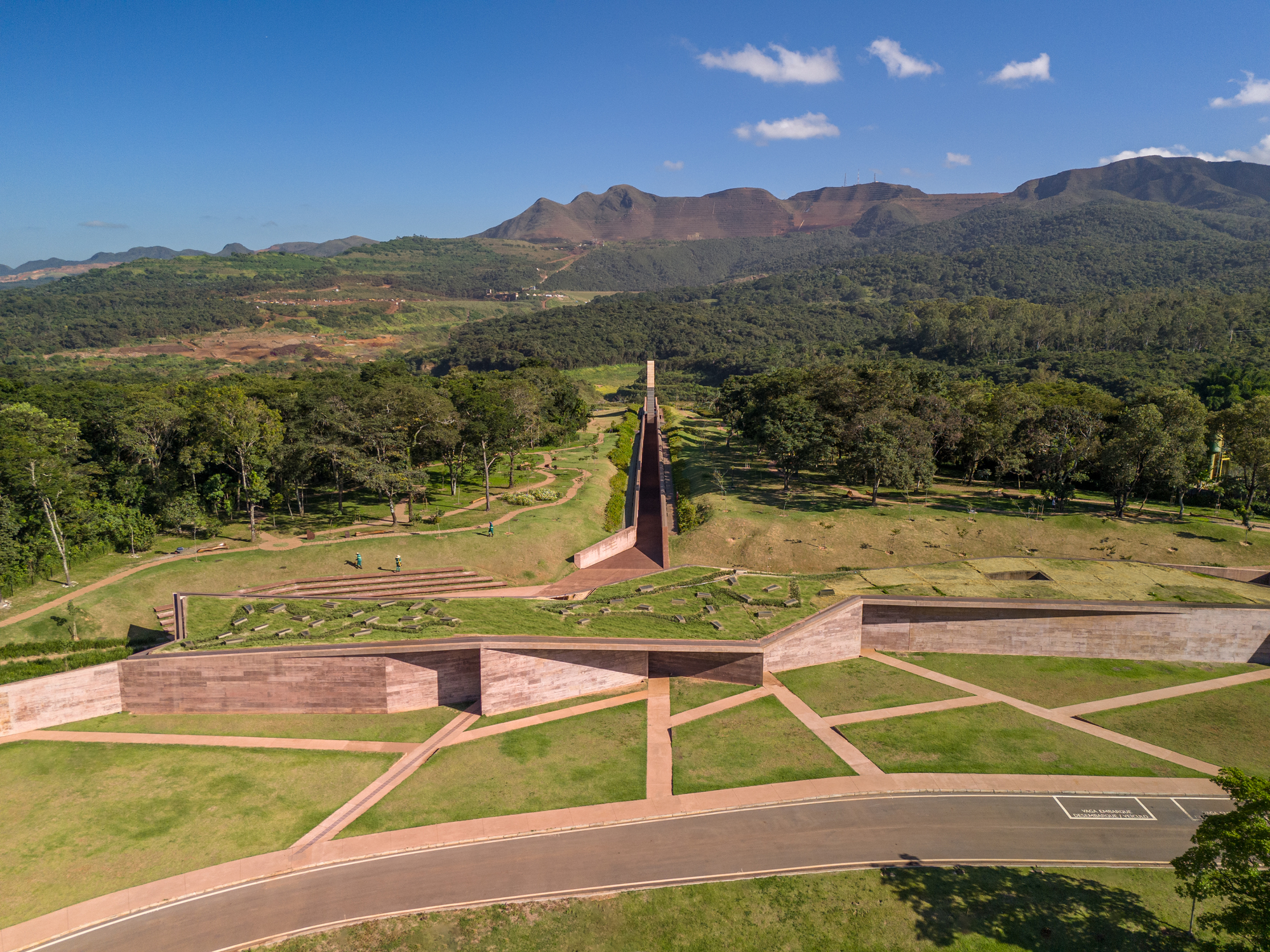
The physical site itself carries extraordinary emotional and architectural weight. Built directly at the locus of the catastrophe in the mountainous interior of Minas Gerais, the memorial anchors itself in the earth that was swept away during the dam failure. The project reconciles the rawness of human trauma with the quiet resilience of landscape, using architectural form to articulate the tension between sudden, violent loss and the gradual, enduring passage of memory.
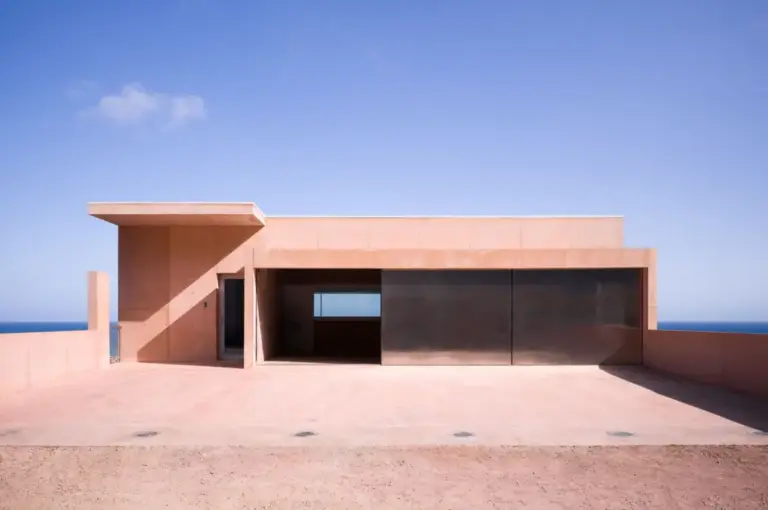
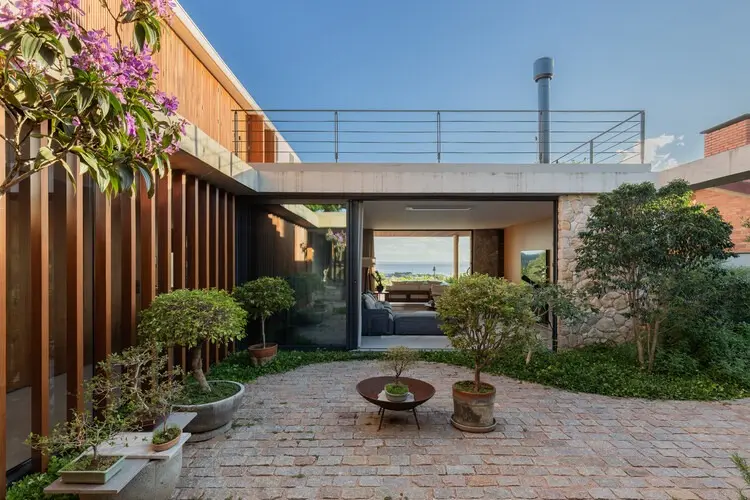
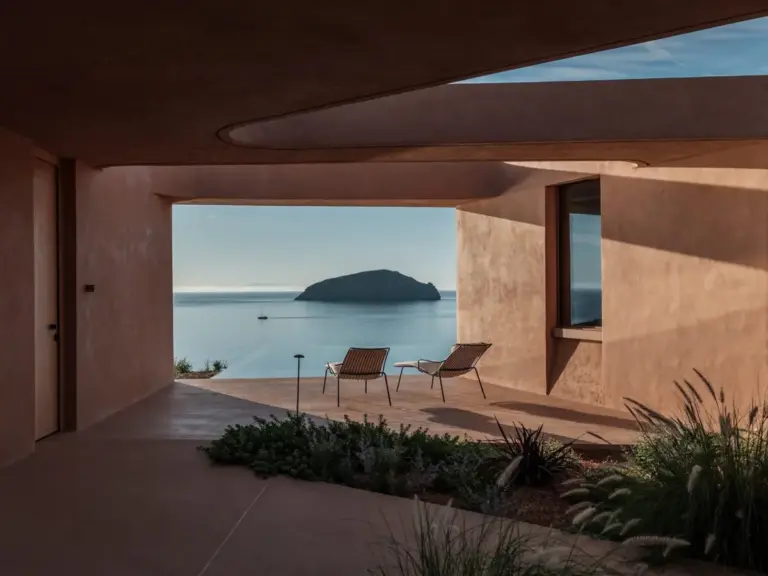
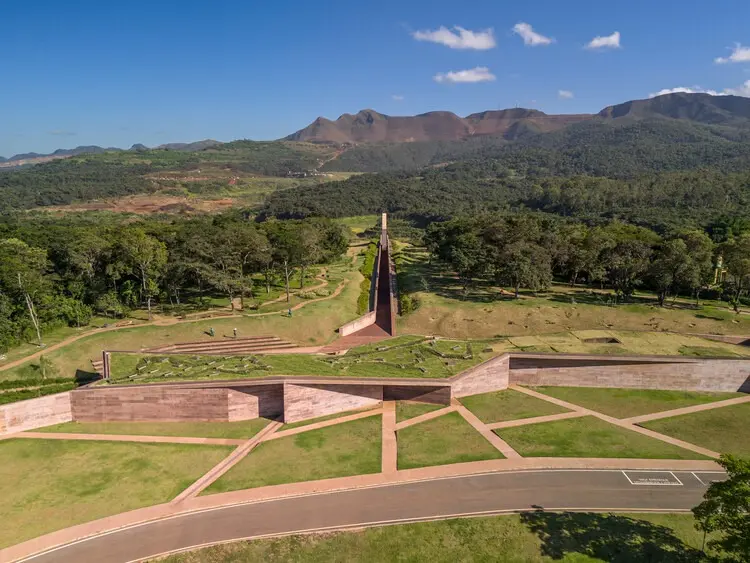
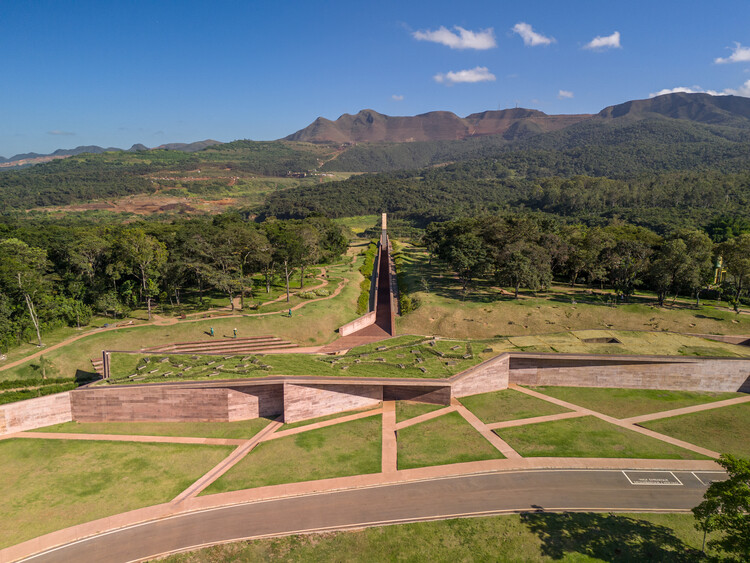
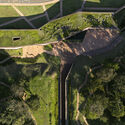
Architectural photography captured by Pedro Mascaro, Leonardo Finotti, and Jomar Bragança reveals a structure shaped by powerful geometric forms that cut into, shelter, and merge with the surrounding terrain. Through sweeping aerial imagery and intimate detail perspectives, the visual documentation of the memorial illustrates how the architecture balances vast open horizons against shielded, sheltered enclosures. Low-slung structural lines emerge organically from the red earth of the region, framing views of the hillsides while creating deep, somber passages that invite visitors to step away from the everyday world into an atmosphere of quiet contemplation.
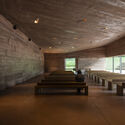
The design relies on a rigorous, restrained material palette that speaks directly to the natural character of Minas Gerais and the industrial context of the tragedy. Carefully crafted timber surfaces, honest concrete, sensitive daylighting, and integrated resting benches define the interior and circulation spaces. The sensitive treatment of light throughout the complex acts as an active architectural element. Sunbeams cut through linear apertures, illuminating darkened subterranean walls and wooden fixtures, creating alternating sequences of shadow and clarity. These spaces are intentionally calibrated to evoke pause, encouraging those walking through the memorial to connect with the weight of the lives commemorated.
The architectural initiative responds directly to the profound societal wound left by the Córrego do Feijão disaster. When the dam ruptured, a deluge of mining waste surged down the valley, erasing administrative facilities, community structures, and surrounding natural ecosystems in mere moments. The sheer scale of human devastation demanded an architectural response that went far beyond symbolic aesthetics. Recognizing this imperative, the design team at Gustavo Penna Arquiteto e Associados pursued an intensive collaborative methodology with the victims’ relatives, ensuring that the finished complex would faithfully represent their emotional needs, personal recollections, and enduring quest for dignity.
In doing so, the architecture operates as both a personal sanctuary and a broad civic statement. For surviving family members and local residents, it serves as a serene environment to remember loved ones whose physical resting places were in many cases erased by the catastrophic flow of mud and debris. The personal histories of the 272 victims are woven into the spatial narrative of the complex, transforming raw statistics into vivid, deeply human testimonies. By preserving their names and individual stories within the very fabric of the building, the memorial counters the natural erosion of public memory that so often follows corporate and environmental disasters.
At the same time, the memorial functions as an educational and cultural institution for visitors from across Brazil and around the globe. Its spatial progression is arranged to foster critical awareness regarding industrial accountability, environmental stewardship, and the preservation of human life over corporate expediency. The building does not shy away from confronting visitors with the reality of what occurred; instead, it establishes an architectural narrative of resistance, warning against complacency and reminding future generations of the human cost of regulatory and operational failures.

The spatial configuration of the memorial fosters an immersive journey. Visitors are guided through transitional outdoor plazas and introspective interior chambers, where the relationship between open sky, heavy stone, and warm wood creates an unfolding spatial dialogue. Benches made of warm-toned wood are placed strategically within intimate interior alcoves, allowing individuals or small groups to sit in silence, pray, or reflect. The careful modulation of scale—shifting from expansive views of the scarred horizon to narrow, protected corridors—mirrors the interior psychological movement from collective grief to quiet, deeply personal remembrance.
The curation of the project, highlighted by architectural curator Susanna Moreira and featured globally across architectural platforms, emphasizes the critical role of architecture in facilitating civic healing and historical justice. By engaging the affected community as central collaborators throughout the design process, Gustavo Penna Arquiteto e Associados demonstrated how the built environment can become an instrument of social solidarity. The finished work does not merely document a historical tragedy; it stands as a permanent civic anchor in Minas Gerais, holding space for the living while maintaining an eternal tribute to the 272 lives lost.
Through its quiet dignity, uncompromising materiality, and deep rootedness in the earth of Córrego do Feijão, the Brumadinho Memorial transforms a site of profound grief into an enduring space of remembrance. In an era where tragedies risk being forgotten amidst the rapid flow of current events, the memorial ensures that the names, memories, and lessons of Brumadinho remain indelibly inscribed upon the landscape.