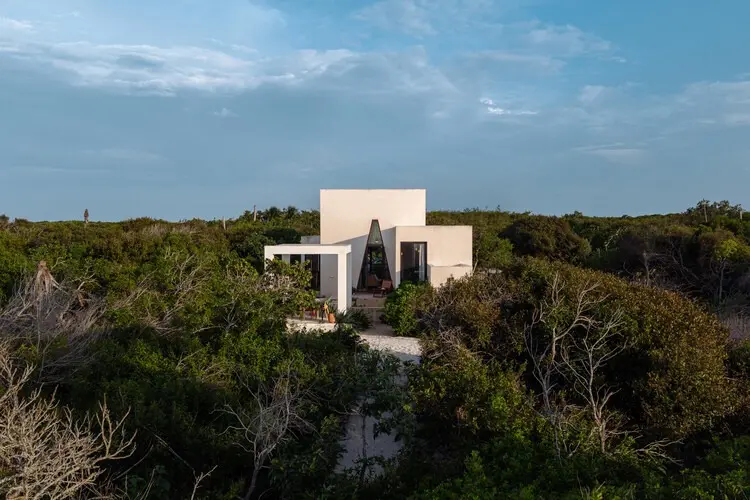
Along the windswept northern coast of the Yucatán Peninsula, where the emerald currents of the Gulf of Mexico meet quiet stretches of pale sand, architecture studio Nutum Estudio has completed KatNap House. Located in the historic seaside town of Sisal, this small residential project presents a focused exploration of contemporary coastal retreat, shaped not by aggressive intervention or ostentatious scale, but by an acute sensitivity to the delicate coastal dunes that define the region. Photographed by Rodrigo Hermida and curated for publication by Valentina Díaz, the project serves as a compelling study in how modern domestic design can anchor itself within an ancient maritime landscape while honoring the fragile balance of its surroundings.
The setting of Sisal carries deep historical resonance. Long before the rise of neighboring commercial ports, Sisal operated as an ancient fishing enclave and the principal commercial gateway through which Yucatán exported its famed henequen agave fiber to markets across the globe. Today, while the bustling trade routes of the nineteenth century have faded into memory, the community retains its distinct character as a tranquil coastal settlement where life remains closely tied to the rhythms of the tides and the natural environment. The town’s coastal fringes are characterized by a dynamic, windswept ecosystem where sand dunes, salt-tolerant brush, and open sky form an unbroken horizon. It is within this unvarnished coastal geography that KatNap House establishes its quiet presence.
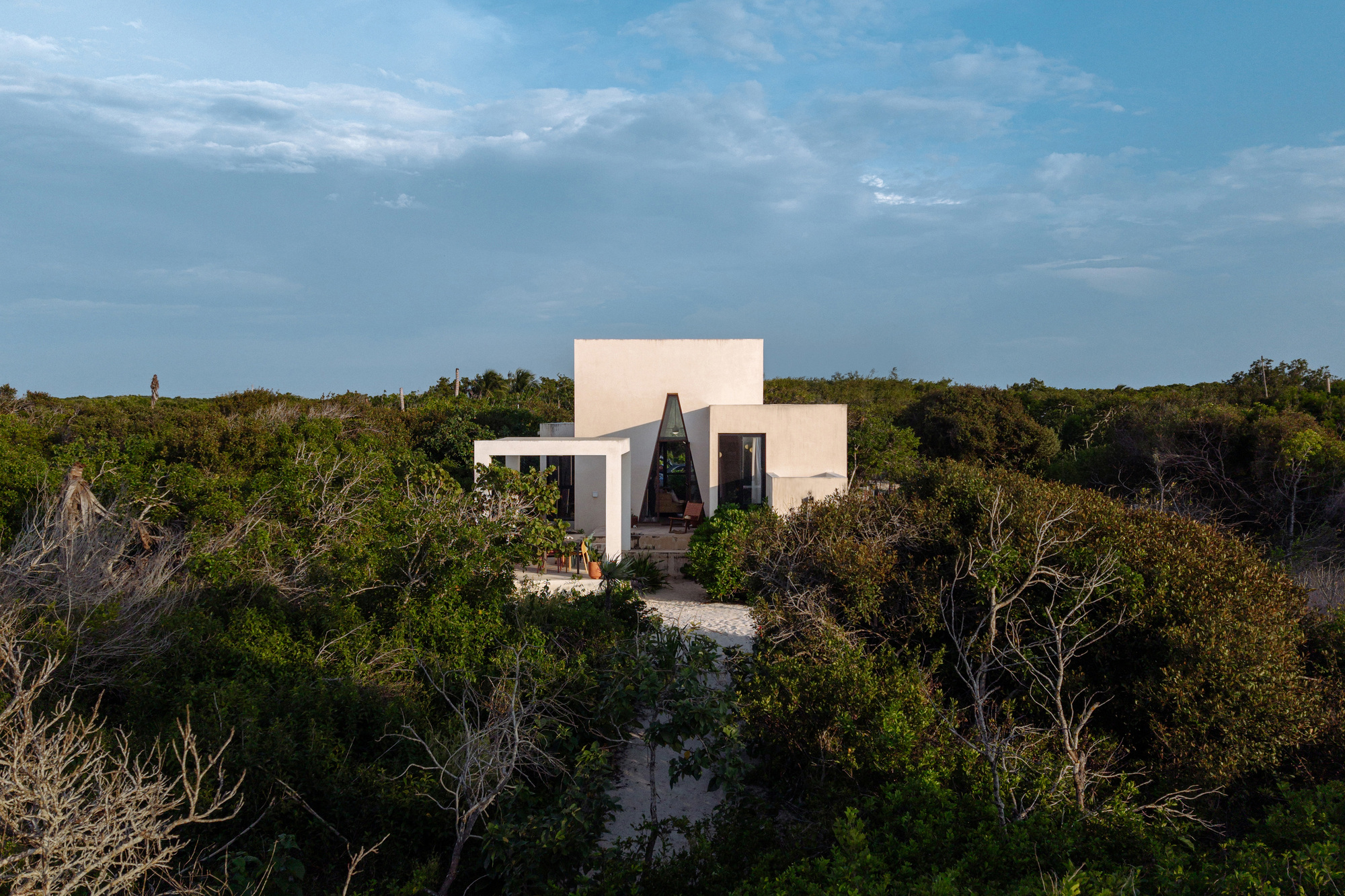
From the outset, the design philosophy championed by Nutum Estudio rejects the conventional trappings of suburban or luxury seaside estates. Rather than attempting to tame the terrain or introduce an artificial, manicured lawn foreign to the coastal scrubland, the architects embraced a radical premise: there is no garden; there is only the beach. In relinquishing the traditional boundaries of domestic landscaping, the house does not treat the sand as an obstacle to be paved over, nor does it view native vegetation as an inconvenience to be cleared. Instead, the surrounding environment is recognized as an active ecological system that predates the intervention and dictates the parameters of daily life.
This ethos is felt immediately upon arrival. Access to KatNap House is deliberately understated and gradual. Visitors approach the home along a narrow, winding footway that cuts through a dense swath of indigenous coastal scrub. This journey through native flora creates an atmospheric decompression chamber, shielding the house from immediate view and gently easing travelers out of the public realm. By choreographing the approach as a sequence through unmanicured wilderness, the design heightens the sensory experience of coastal living: the rustle of wind through coastal shrubs, the soft resistance of sand underfoot, and the gradual emergence of the salt-laden sea breeze long before the building or the water comes into full sight.
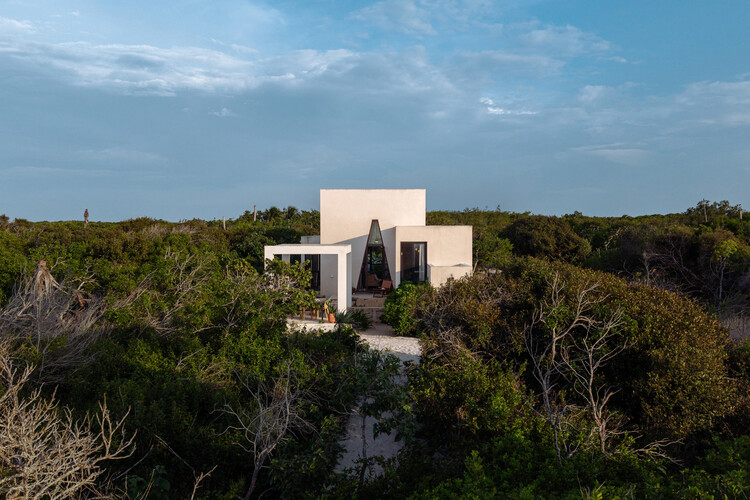
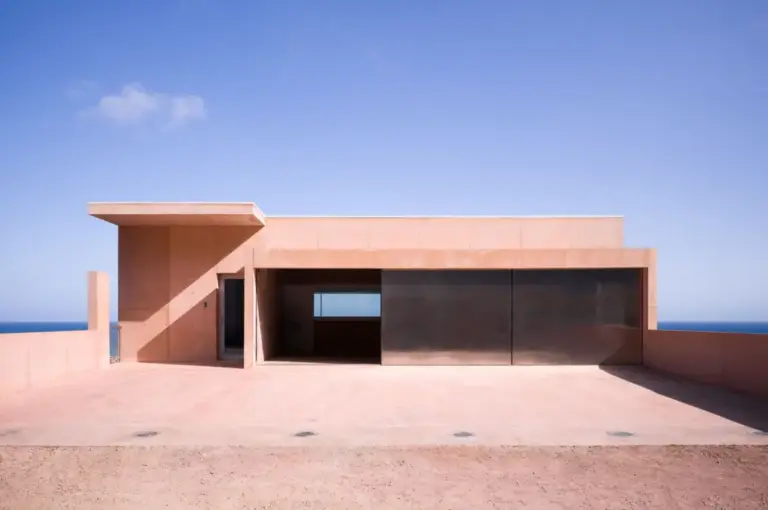
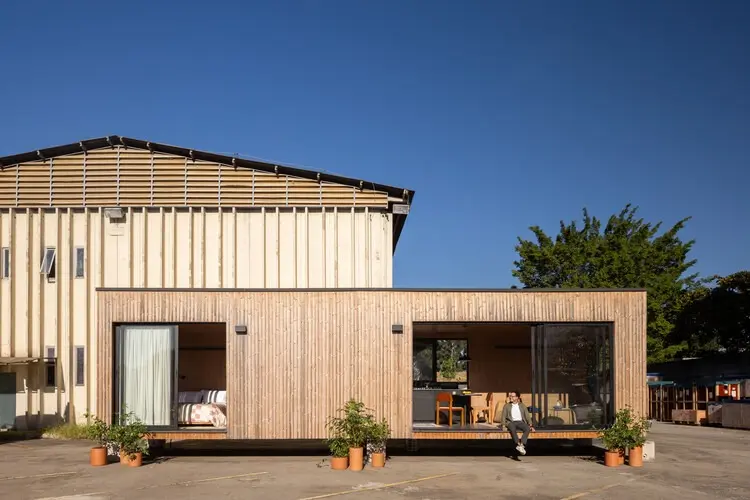
When the structure finally appears, it presents itself as a compact, grounded volume that sits lightly upon the terrain. As a modest residence, KatNap House avoids expansive footprints that would otherwise displace significant portions of the dune field. The massing reflects an exercise in restraint, functioning as a contemporary shelter designed to withstand the harsh elemental conditions of the Gulf Coast while cultivating an intimate interior sanctuary. In coastal Yucatán, building near the water demands a careful reconciliation between intense solar radiation, high humidity, and persistent salt spray. Nutum Estudio responded to these forces by crafting an architecture of protective enclosure and strategic transparency, balancing defensive solidity against the elements with deliberate openings that welcome the ocean’s atmospheric presence.
The relationship between the house and its immediate physical substrate—the sand—is central to the project’s identity. Sand dunes are notoriously unstable and ecologically sensitive environments, acting as nature’s first line of defense against storm surges, high tides, and coastal erosion. By keeping the residential footprint modest and allowing the natural vegetation to cluster closely around the perimeter, the intervention respects the dune’s role as a living, stabilizing barrier. The home does not assert dominance over the topography; rather, it perches among the coastal hummocks, acknowledging that the shoreline is in constant motion and that longevity in such environments depends on deference to natural processes.
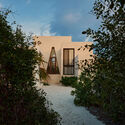
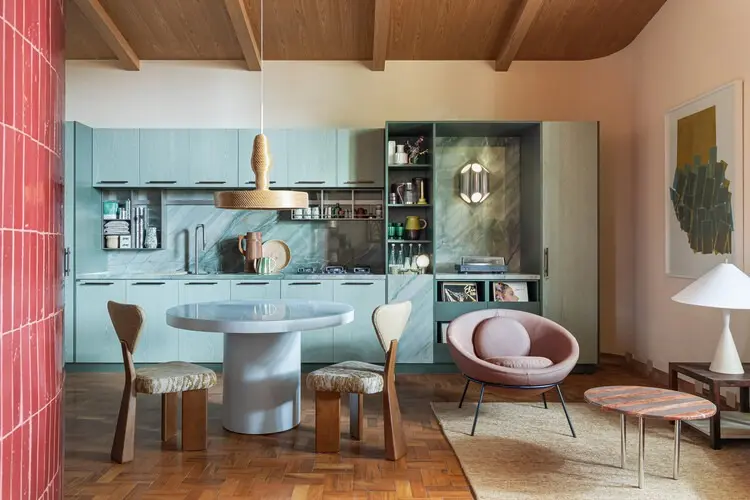
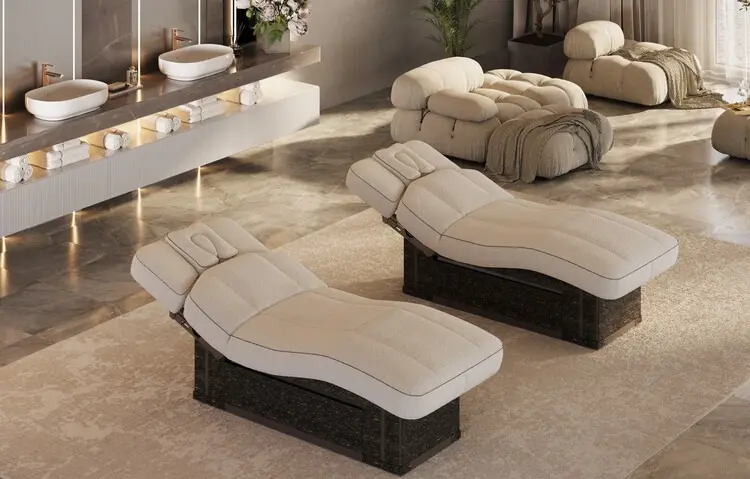
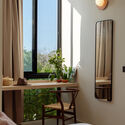
Internally, KatNap House is calibrated around rest, stillness, and spatial clarity, qualities clearly signaled by its playful name. The residential spaces, documented through Hermida’s visual lens, prioritize an atmosphere of composed serenity. Within the private sleeping quarters, the interior composition relies on honest materials, clean geometric alignments, and softly modulated lighting that counters the piercing glare of the midday coastal sun. The bedrooms do not simply look out toward the horizon; they provide deep, shaded sanctuaries where the residents can step back from the elements, cool down, and experience genuine respite. The interplay between shadowed interiors and bright exterior thresholds frames views of the landscape not as detached panoramas, but as ever-changing canvases of light and wind.
Moving through the communal and ocean-facing portions of the house, the architectural narrative pivots outward toward the sea. The sea facade establishes a direct visual and spatial dialogue with the Gulf of Mexico. Generous apertures dissolve the threshold between the interior floor plates and the open sand, inviting the ocean into the everyday life of the home. Here, the absence of an ornamental garden becomes most poignant: stepping out of the living spaces means stepping directly onto the shore, placing the inhabitants in immediate contact with the natural elements. The expanse of the Gulf becomes the true living area, constantly shifting with the movement of the tides, the passage of maritime birds, and the changing quality of light throughout the day.
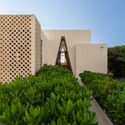
The photographic survey by Rodrigo Hermida captures this equilibrium with notable clarity. Across exterior and interior compositions, the imagery documents how KatNap House balances crisp contemporary lines with the raw, untamed textures of the coastal landscape. Aerial views emphasize the solitary grace of the volume nestled amidst the green tapestry of dune vegetation, while close-up interior shots highlight tactile surfaces, minimalist joinery, and the quiet choreography of natural and artificial lighting. These visual perspectives underline a recurring theme in contemporary Mexican coastal architecture: the transition away from ostentatious oceanfront villas in favor of restrained, climate-responsive dwellings that seek harmony with local habitats.
Within the broader architectural discourse, curated and amplified through international platforms like ArchDaily by editors such as Valentina Díaz, KatNap House reflects a growing recognition of the value of architectural modesty. Along fragile shorelines worldwide, rapid development often brings irreversible disruption to coastal ecosystems through overbuilding, soil sealing, and the introduction of non-native plant species requiring heavy irrigation. By demonstrating that a contemporary home can achieve elevated comfort and aesthetic refinement while leaving the native landscape untouched, Nutum Estudio offers an inspiring alternative model for coastal residential practice. The residence proves that meaningful luxury lies not in expansive square footage or lavish decorative flourishes, but in the authentic, unmediated experience of place.
Ultimately, KatNap House stands as a thoughtful testament to the poetic and ecological possibilities of building on the Yucatecan coast. In Sisal, where historical memory converges with the raw power of the Gulf of Mexico, Nutum Estudio has created a residence that functions simultaneously as a protective sanctuary and a quiet lens onto the natural world. By honoring the wild vegetation, respecting the shifting sands, and embracing the simple truth that the true luxury of coastal living is the beach itself, KatNap House demonstrates that contemporary architecture achieves its highest expression when it knows precisely when to step back and let the landscape take center stage.