
Workers abruptly cleared more than 500 trees over the weekend at a historic Washington, D.C., public golf course currently undergoing a controversial remodeling effort linked to President Donald Trump. The rapid and unauthorized felling of the canopy has ignited a swift legal battle, drawing sharp condemnation from preservationists, local stakeholders, and a federal judge who labeled the actions taken by the administration as inexcusable.
The emergency unfolded rapidly at East Potomac Park, a prominent public golf course managed by the National Park Service located on a small island in the Potomac River just south of the National Mall. Throughout the weekend, heavy machinery and work crews moved onto the property, removing a total of 529 trees before preservation groups could fully mobilize a legal defense.
On Sunday, attorneys representing the D.C. Preservation League, alongside a pair of local golfers, rushed to court to ask a federal judge for an emergency order to halt the sweeping environmental changes. By Monday, the presiding judge sharply rebuked the Trump administration’s Department of Justice, blasting the sudden execution of the project as an inexcusable circumvention of standard regulatory processes.
According to legal filings submitted by the plaintiffs, the tree removal occurred much faster than anticipated. Attorneys argued that the Trump administration completely failed to meet its mandatory obligations under the National Environmental Policy Act (NEPA), which requires comprehensive environmental reviews, public notification, and impact assessments before major federal undertakings can alter historic public lands.
The sudden loss of vegetation has devastated a landscape that carries deep historical and horticultural significance for the nation’s capital. The affected course features a diverse mix of mature elms, oaks, pines, and willows, interspersed with historic specimens including some of the legendary Japanese flowering cherry trees gifted to the United States by the government of Japan in 1912.
For more than a century, these plantings collectively charted the historical evolution of golf course architecture in America. The course’s design history transitioned from a predominantly open, treeless landscape typical of early American coastal golf layouts to a lush, heavily vegetated environment that came to define the sport’s twentieth-century expansion. Now, preservationists warn that a century of careful landscape design history has been abruptly torn up and irrevocably altered without public input or environmental oversight.
Legal representatives for the plaintiffs argue that this weekend’s operation is part of a broader, recurring pattern by the current administration. Abbe D. Lowell, a founding member of Lowell & Associates—the firm representing the plaintiffs alongside advocacy groups Democracy Forward and Democracy Defenders Fund—issued a scathing public statement condemning the administration’s tactical approach to public property and historic landmarks.
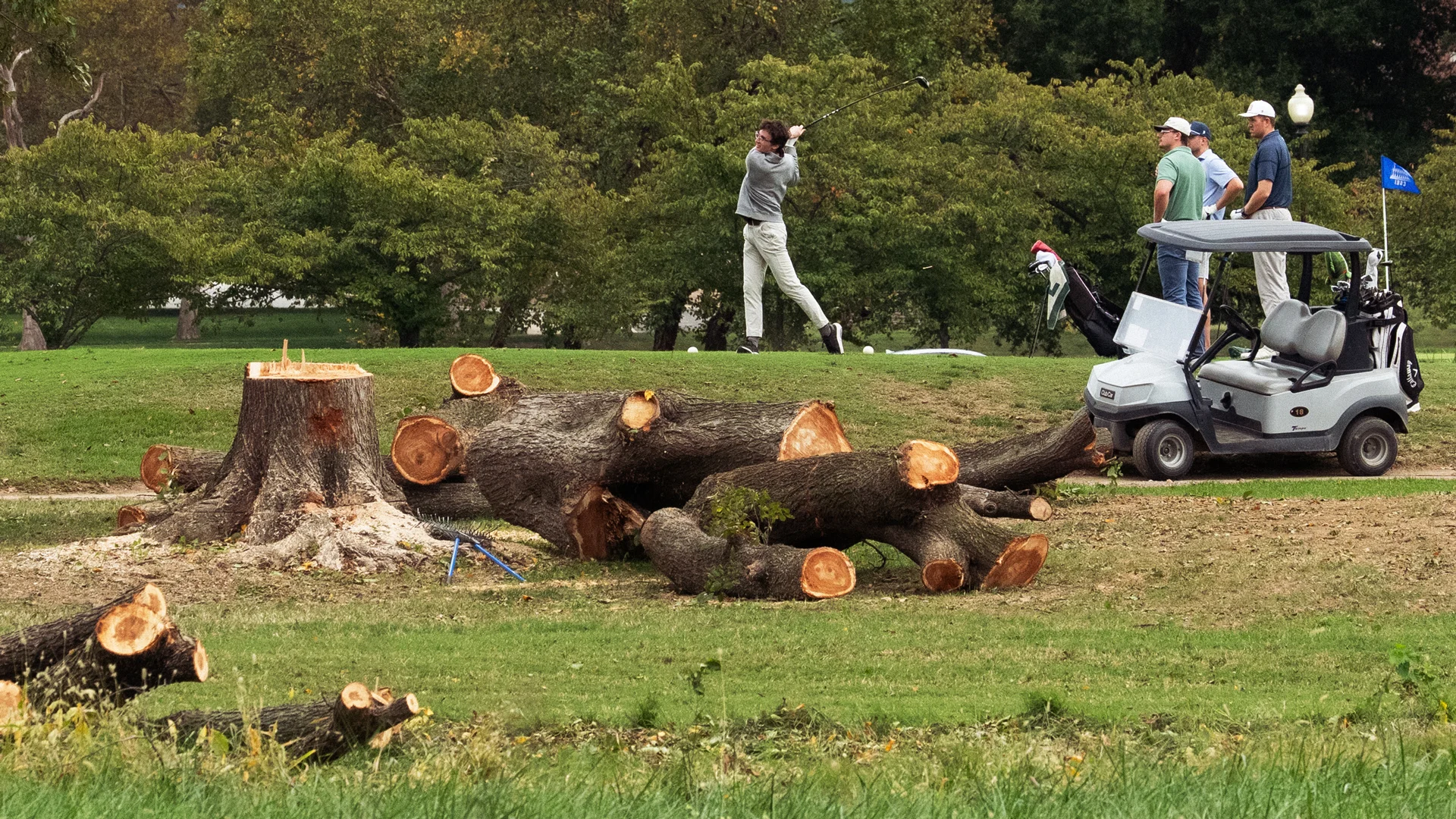
"Pulling a fast one has become the model this administration uses to circumvent the laws intended to protect the environment and D.C. landmarks," Lowell said in the statement. He pointed to other recent, highly contentious federal projects around the District, noting that similar surprise tactics were deployed during controversial construction and remodeling efforts involving the White House East Wing and the Kennedy Center. "We are continuing our effort to stop them before they succeed in destroying D.C.’s historic public golf course," Lowell added.
A Brief History of Parkland Courses
To understand the magnitude of the weekend’s alterations, preservationists and architectural historians point to the unique origins of East Potomac Park. Situated on land reclaimed from the Potomac River, the park’s earliest landscape consisted largely of native tall grass and stands of willow trees. Most of this original vegetation was cleared during the initial design and construction of the first golf course layout in 1917.
That foundational course was designed by renowned golf course architect Walter J. Travis. In his original blueprint, Travis cleared the fairways of most native willows but intentionally preserved selected trees along the perimeter of the course to establish natural boundaries separating the front and back nines.
As decades progressed, changing aesthetic tastes and architectural philosophies led to further plantings. According to a comprehensive 2017 cultural landscape inventory of the course conducted by the Urban Heritage Project from the University of Pennsylvania’s Stuart Weitzman School of Design, subsequent generations added numerous trees to adapt the property to the emerging parkland style of golf architecture that gained immense popularity across the United States during the 1920s.
This parkland design philosophy relied heavily on dense vegetation, mature trees framing the fairways, and carefully curated groves to create a visually striking and challenging environment for players. The 529 trees removed over the weekend represented the living embodiment of that historical design philosophy, providing both ecological value to the Potomac River island and a tangible link to the development of recreational spaces in the nation’s capital.
As the legal proceedings continue in federal court, the immediate focus remains on preventing any further unauthorized alterations to the property. With the judge’s sharp rebuke on the record and preservationists pressing for strict adherence to environmental laws, the future of the remaining landscape at East Potomac Park hangs in the balance as the administration’s controversial remodeling initiative faces heightened judicial scrutiny.