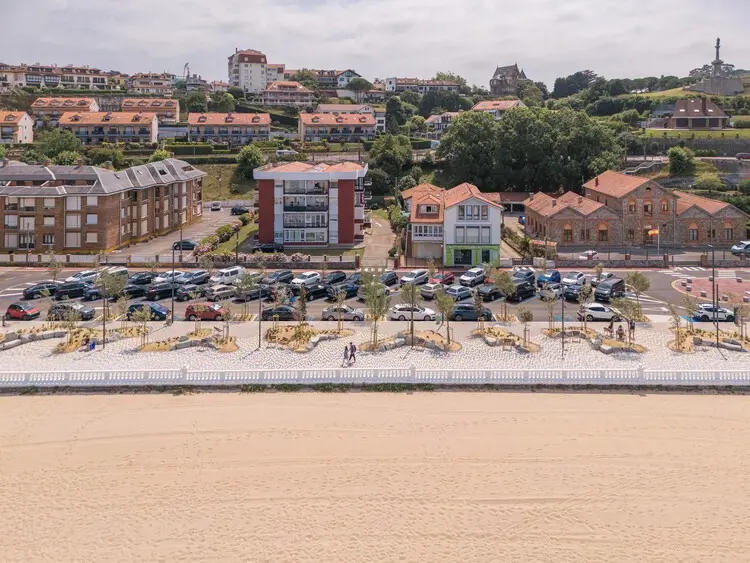
In the historic coastal town of Comillas, along the rugged northern shores of Spain, a transformative public infrastructure project has redefined the relationship between the built environment and the sea. Designed through a collaborative partnership between architect Hector Navarro and the multidisciplinary studio ARKHITEKTON, the newly completed Comillas Waterfront Promenade represents a fundamental shift in how civic spaces engage with coastal geography. Rather than treating the maritime boundary as an edge burdened by vehicle storage, the intervention establishes a generous pedestrian corridor that reclaims an exceptional stretch of Cantabrian shoreline for public life, formally integrating the natural waterfront into the broader network of civic spaces across the municipality.
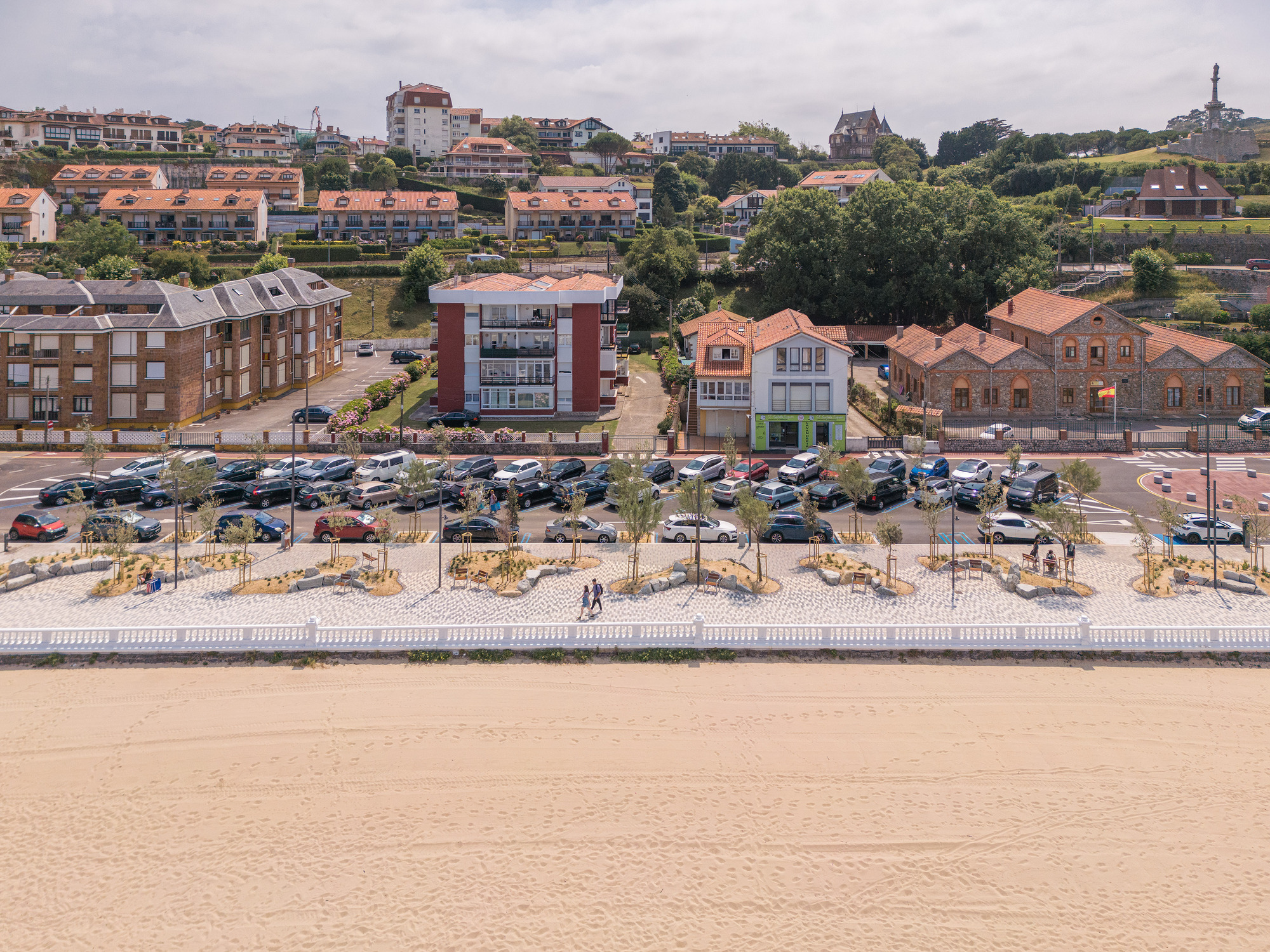
Captured in extensive photographic documentation by the architectural photography practice imagensubliminal, led by Rocío R. Rivas and Miguel de Guzmán, the completed promenade highlights an intervention rooted in spatial clarity, tactile materiality, and contextual sensitivity. The project does not present itself merely as a cosmetic resurfacing or a conventional repair of existing municipal infrastructure. Instead, the architects approached the site as an opportunity to generate an entirely new seafront identity, asserting that high-value coastal land ought to serve the collective public realm rather than the temporary storage of private automobiles.
For decades, the site had suffered from the utilitarian planning paradigms typical of twentieth-century coastal developments. Prior to the architects’ intervention, the waterfront edge was severely constrained, allocated primarily to a narrow, precarious sidewalk that ran alongside an extensive, asphalt-dominated surface parking lot. This spatial arrangement effectively severed the public from the natural beauty of the coastline. Pedestrians attempting to navigate the waterfront were confined to a cramped corridor, constantly flanked by parked cars on one side and a precipitous coastal drop on the other. The asphalt footprint created a physical and psychological barrier that privatized sightlines and discouraged visitors and residents alike from engaging with the shoreline on foot.
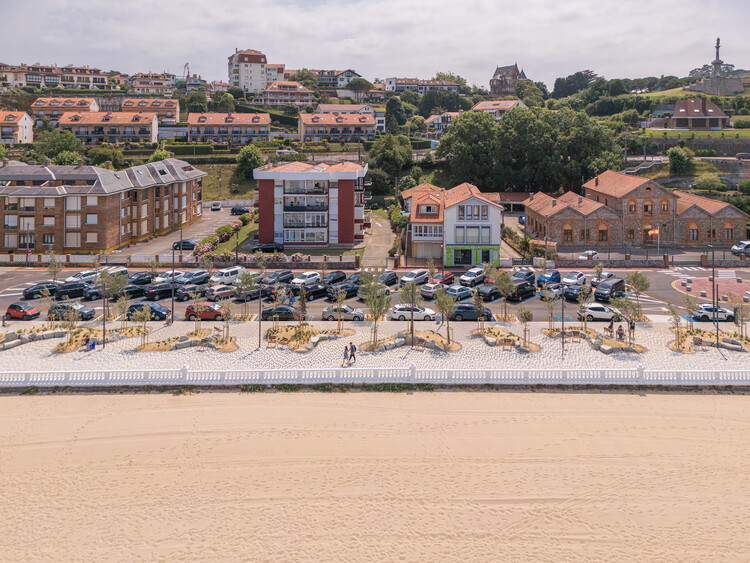
Recognizing the latent potential of this compromised coastal zone, Hector Navarro and ARKHITEKTON devised a master plan centered on spatial reclamation and civic continuity. By removing the sprawling parking lot and reorganizing circulation along the water’s edge, the design team unlocked a wide swath of public land, transforming what had been a vehicle-first transit corridor into a serene, expansive pedestrian realm. The project reconceives the seafront as a continuous urban balcony—a place designed not only for purposeful movement between different districts of Comillas, but also for unhurried strolling, quiet contemplation, and spontaneous communal gathering.
A key conceptual priority of the design was ensuring that the new promenade did not exist as an isolated architectural gesture severed from the surrounding town. Comillas possesses a rich cultural and architectural history, characterized by distinctive topographies, historic landmarks, and intimate urban fabrics that cascade downward toward the Atlantic. Historically, however, the direct pedestrian linkages between the town center and the maritime edge had become fragmented by modern vehicular infrastructure. The promenade actively mends this fracture, serving as a vital connective seam that links preexisting urban trails, plazas, and pedestrian walkways into a cohesive, uninterrupted network. By integrating the waterfront into the town’s larger urban system, the project encourages both residents and visitors to explore the coastline on foot, creating a legible and welcoming threshold where urban life meets the open water.
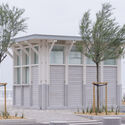
Material selection and tectonic execution play a defining role in grounding the promenade within its dramatic coastal setting. Tasked with designing for an environment exposed to the persistent humidity, salt spray, and seasonal storms of the northern coast, the architects favored materials that balance structural durability with visual warmth and tactile appeal. Substantial timber decking and precisely detailed wood elements feature prominently throughout the intervention, introducing an organic texture that softens the dialogue between the built framework and the coastal landscape. The rich, natural grain of the wood provides an inviting walking surface that weathers gracefully over time, acquiring a silvered patina that mirrors the tonal shifts of the coastal rocks and shifting sea.
The transition between paved pedestrian zones, timber surfaces, and the natural maritime terrain is articulated with deliberate precision. Low-profile boundaries, refined handrails, and open sightlines maintain an uninterrupted visual connection with the sea, ensuring that the sweeping views across the water remain entirely unobstructed. Rather than imposing monumental or overbearing architectural forms onto the natural topography, the design adopts a low-slung, horizontal language that defers to the grandeur of the surrounding landscape. The promenade hugs the coastline, negotiating subtle elevation shifts through gentle transitions that prioritize full accessibility for pedestrians of all ages and mobility levels.
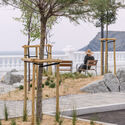
The resulting spatial sequence offers visitors a diverse range of environmental experiences. Along certain expanses, the promenade widens to create expansive viewing platforms and resting nodes where seating elements allow individuals to pause, sit, and observe the horizon. In other stretches, the walkway narrows slightly to encourage steady forward movement along the undulating coast, guiding pedestrians along the natural curves of the shoreline. This alternating rhythm between movement and repose transforms a previously utilitarian thoroughfare into a destination in its own right, where the sound of breaking waves and the changing tides become an integral part of daily life in the town.
The visual narrative crafted by imagensubliminal effectively underscores this nuanced architectural philosophy. Photographers Rocío R. Rivas and Miguel de Guzmán captured the project across a spectrum of ambient light, from crisp daylight that illuminates the clean geometric alignment of the timber walkways to atmospheric coastal conditions where the boundary between sky, sea, and architecture softens. Their imagery illustrates the promenade’s understated elegance, depicting how local citizens inhabit the space—walking dogs, resting on integrated benches, and looking out toward the ocean—while highlighting the disciplined construction details that allow the structure to endure the harsh marine climate.
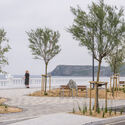
Beyond its local significance for the community of Comillas, the project reflects a broader paradigm shift currently gaining momentum in contemporary European urban planning and coastal landscape architecture. In coastal settlements around the globe, municipal authorities and design professionals are increasingly confronting the legacy of car-centric planning that dominated the mid-twentieth century. Waterfronts, which historically served as vibrant working harbors or open civic gathering grounds, were frequently converted into highways, service roads, and surface parking lots to accommodate seasonal vehicular traffic. Today, communities are recognizing the urgent environmental, economic, and social costs of prioritizing automobiles in prime ecological locations.
The Comillas Waterfront Promenade offers a compelling precedent for how small-to-medium coastal towns can reclaim their most valuable public assets without relying on extravagant or disruptive architectural interventions. By removing the extensive surface parking lot, Hector Navarro and ARKHITEKTON did not simply eliminate cars; they reestablished civic equity along the waterfront. The shore, which had been reduced to a passive backdrop visible through rows of parked vehicles, has once again become a democratic, freely accessible public space belonging equally to all members of the community.
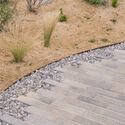
The project demonstrates that sustainable urban regeneration does not always require large-scale civic buildings or heavy infrastructural feats. Often, the most profound transformations emerge from a disciplined act of subtraction—removing vehicular congestion, eliminating redundant barriers, and allowing the natural and civic qualities of a place to reassert themselves. In transforming a narrow sidewalk and parking lot into a generous seafront corridor, Comillas has not only enhanced its coastal resilience and pedestrian connectivity, but has also reaffirmed the enduring civic value of the maritime edge.