For gamers of a certain vintage, the mention of the word Stuntman evokes a very specific mixture of high-octane excitement and white-knuckle frustration. Released in 2002, the original game—developed by the Newcastle-based studio Reflections Interactive and published by the now-defunct French industry giant Infogrames—was a unique proposition. It was not a traditional racing game, nor was it a open-world driver in the vein of Reflections’ own Driver series. Instead, it was a highly demanding, precision-based simulator that cast players as a Hollywood stunt driver, tasking them with executing highly specific, dangerous maneuvers on active movie sets.
The game proved that virtual environments could provide the perfect consequence-free arena for players to live out their cinematic action-hero fantasies. It spawned a well-received sequel, Stuntman: Ignition, in 2007, but the franchise subsequently fell into a long period of dormancy. For nearly two decades, the IP seemed destined to remain a fondly remembered relic of the PlayStation 2 era.
Now, however, Saber Interactive is looking to change that. The developer and publisher is currently deep in production on Stuntman: Hollywood, a modernized reboot designed to bring the classic stunt-driving gameplay into the current generation. Slated for an unspecified release date in 2027, the title promises to merge the core mechanics of the classic franchise with some of the most beloved cinematic properties in pop culture history. But in an era dominated by live-service giants and open-world epics, can a resurrected franchise built on bite-sized, precision driving challenges transcend nostalgic branding to find a foothold with modern audiences?
The Road to Resurrection: Corporate Shifts and Hollywood Partnerships
The road to reviving Stuntman has been anything but straightforward, tracing a path through some of the video game industry’s most turbulent recent corporate histories. According to Saber Interactive’s Chief Creative Officer, Tim Willits, the project’s origins date back to a period that the company might not otherwise look back on as its easiest era: its time under the ownership of the Embracer Group.
Embracer acquired Saber Interactive in 2020 during a massive, multi-year buying spree that saw the Swedish conglomerate absorb dozens of independent development studios and intellectual properties. However, following a shift in market conditions and corporate restructuring, Embracer sold Saber Interactive in 2024 for $247 million to Beacon Interactive, a company controlled by Saber’s own co-founder, Matthew Karch.
Despite the corporate upheavals, Saber walked away from the relationship with several key intellectual properties. "Stuntman was an IP that Embracer owned, so when we were in the Embracer family, we were like, ‘Hey, we love driving games,’" Willits explained during an interview at Gamescom. "The team that we had, which was coming available, had experience in that driving genre, and we had a great relationship with Universal because we have Jurassic Park and Turok, and Universal was like, ‘Yeah, let’s do this.’"
This collaboration with Universal Pictures has proved to be the cornerstone of Stuntman: Hollywood’s development strategy. While the original games featured thinly veiled parodies of famous films—such as "A New Hope" becoming "Empire" or "James Bond" turning into "Live Twice, Die Twice"—Saber’s reboot has bypassed the need for pastiche entirely. By leveraging their strong relationship with Universal, the developers secured the rights to some of the most iconic film and television franchises of the past forty years.
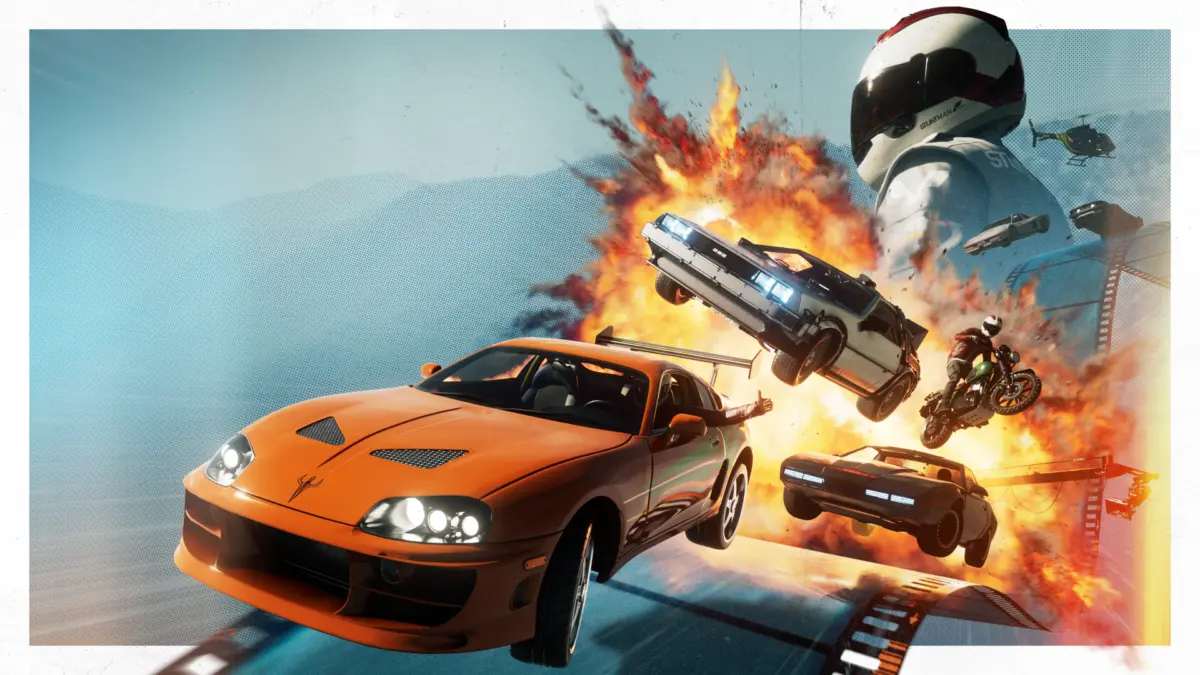
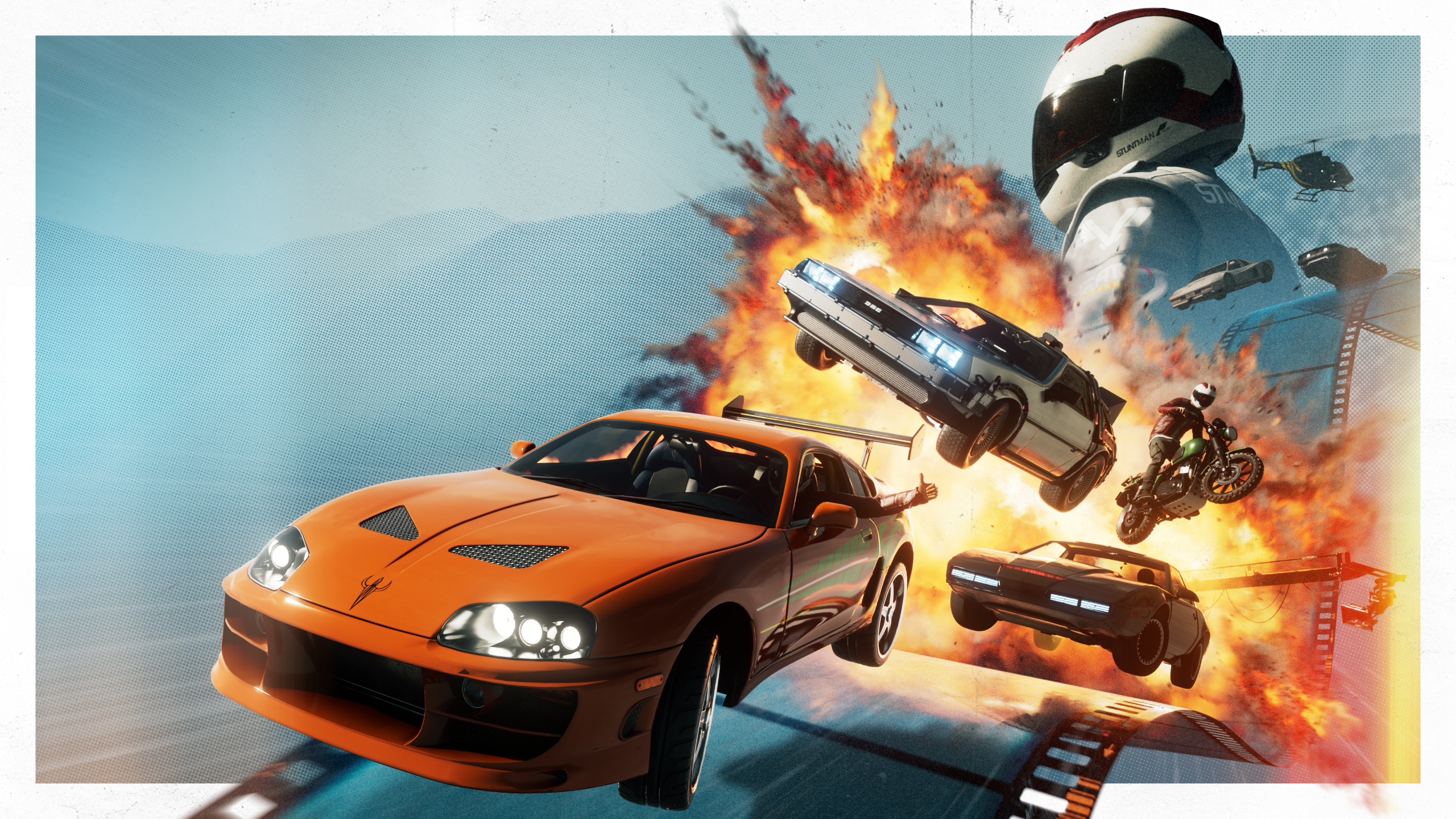
The resulting roster is a dream lineup for action cinema enthusiasts. Players will find themselves performing high-stakes maneuvers on sets inspired by The Fast and the Furious, Knight Rider, Miami Vice, Back to the Future, and Jurassic World.
According to Willits, the partnership with Universal extended far beyond simple licensing agreements. "The movie people were really excited—they gave us ideas, and they even helped us with some assets and stuff," Willits said. "It’s been a dream to work with Universal on this."
Saber’s proactive approach to cultivating relationships with major Hollywood players is becoming a defining characteristic of the publisher’s business model. While many game publishers treat film licenses with caution due to the historically mixed track record of movie tie-in games, Saber has embraced them. In addition to their work with Universal, the company is also collaborating with Lionsgate on an upcoming John Wick video game.
"Working with Lionsgate has been great; working with Keanu [Reeves] and Chad Stahelski directly is amazing—those guys are so awesome," Willits noted. "Chad, the director, is a big video game fan, and if you watch a John Wick movie, it kind of feels like a video game."
Hands-On: The High-Octane Action of Stuntman: Hollywood
At Gamescom, a hands-on demo of Stuntman: Hollywood provided the first real look at how this fusion of classic gameplay and licensed film properties translates to the controller. Willits described the game’s core loop as "bite-sized awesomeness," a description that aligns closely with the structure of the demo.
The preview build featured five distinct stunt-driving runs, each meticulously themed around a different intellectual property. Each of these runs was relatively brief, lasting between five and ten minutes, but the intensity was sustained from start to finish. Rather than allowing for aimless driving, the game demands strict adherence to the director’s vision.
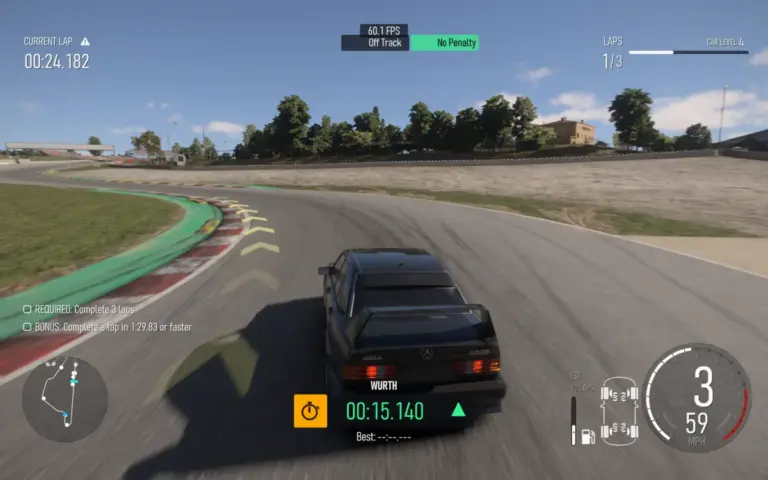
Throughout each run, a virtual director speaks directly into the player’s headset, barking out immediate instructions, warnings, and occasional words of encouragement when a stunt is executed flawlessly. To assist the player in navigating the chaotic, explosion-filled sets, the game features a dynamic UI that includes a visible "ideal route" line on the road. Other visual indicators help manage spacing, such as proximity alerts that flash when the player is instructed to perform a "near-miss"—passing as close as possible to an obstacle or oncoming vehicle without actually colliding with it.
The original 2002 Stuntman was notorious for its punishing difficulty, where a single mistimed turn or missed cue could result in an immediate "cut" and force a complete restart of the level. Stuntman: Hollywood takes a more balanced, modern approach to player frustration. While it still demands precision, the game is notably more forgiving than its predecessors, allowing for a designated number of mistakes or "howlers" per run before forcing a restart.
During the Gamescom demo, taking a wrong turn or completely losing track of the required route still resulted in a failed run, requiring a retry. However, minor scrapes and slightly mistimed drifts no longer completely ruin a run. At the end of each sequence, players are awarded a performance rating based on their speed, accuracy, and style. For players looking to master the game, this rating system provides a natural incentive for replayability, encouraging them to perfect their lines and timing to achieve a flawless five-star rating.
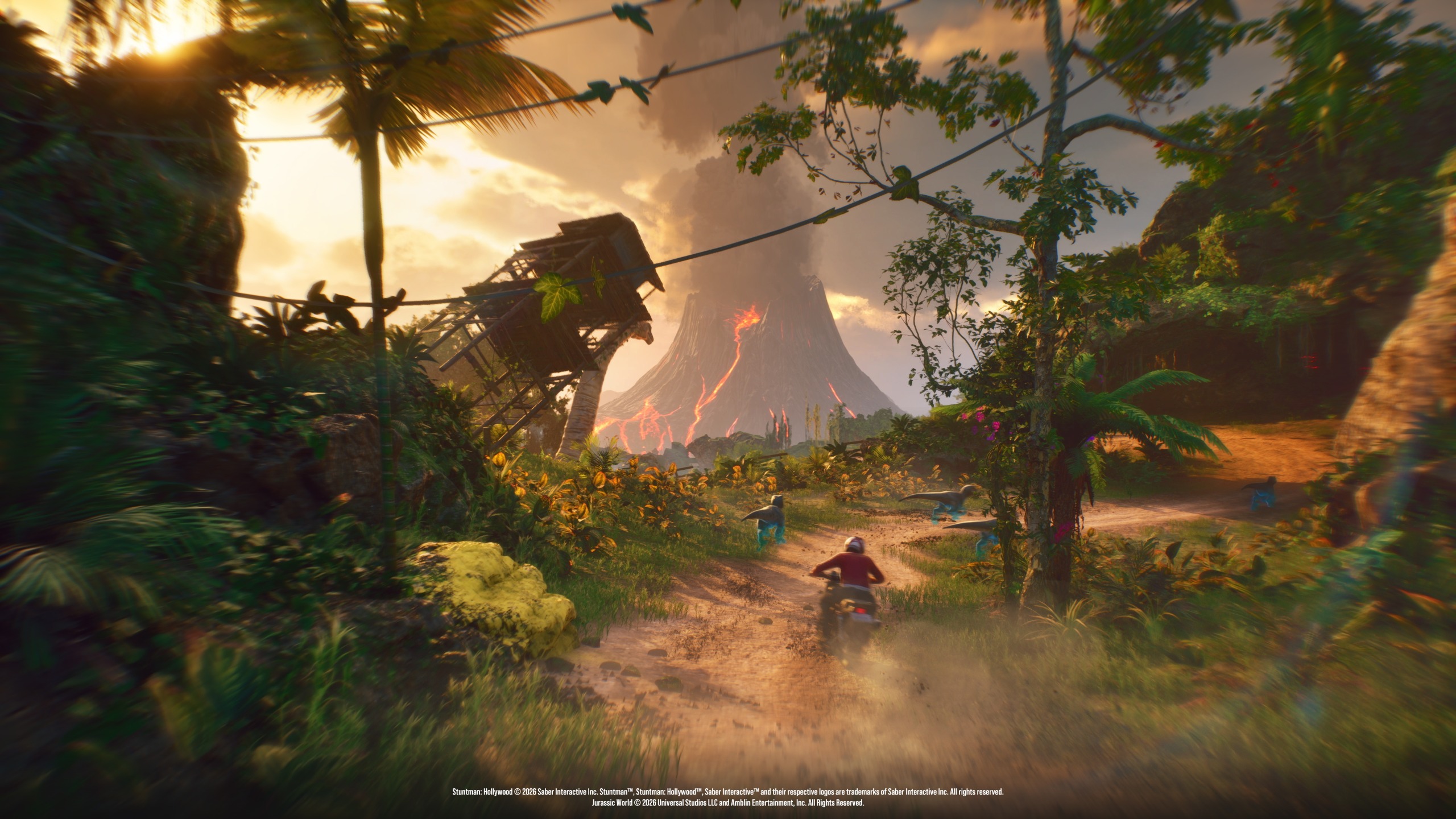
The variety of tasks required within a single run keeps the gameplay feeling fresh and frantic. Players must initiate drifts at specific checkpoints, hit ramps at the exact speed required to clear massive gaps, weave through heavy traffic, and intentionally smash through designated props to create cinematic destruction. Naturally, classic Hollywood tropes—such as towering stacks of cardboard boxes positioned perfectly at the apex of a corner—are present and ready to be scattered across the set. Each run steadily builds in tension, culminating in a high-speed precision sequence that leads directly into a spectacular, show-stopping final stunt, such as launching a classic sports car onto the deck of a moving super-yacht.
Recreating Classic Cinematic Fleets and Environments
The distinct identity of each film property in Stuntman: Hollywood is reinforced by the vehicles assigned to each level. The game avoids explicitly naming the films in a loud, arcade-like fashion, relying instead on the visual design and the iconic nature of the cars to establish the setting.
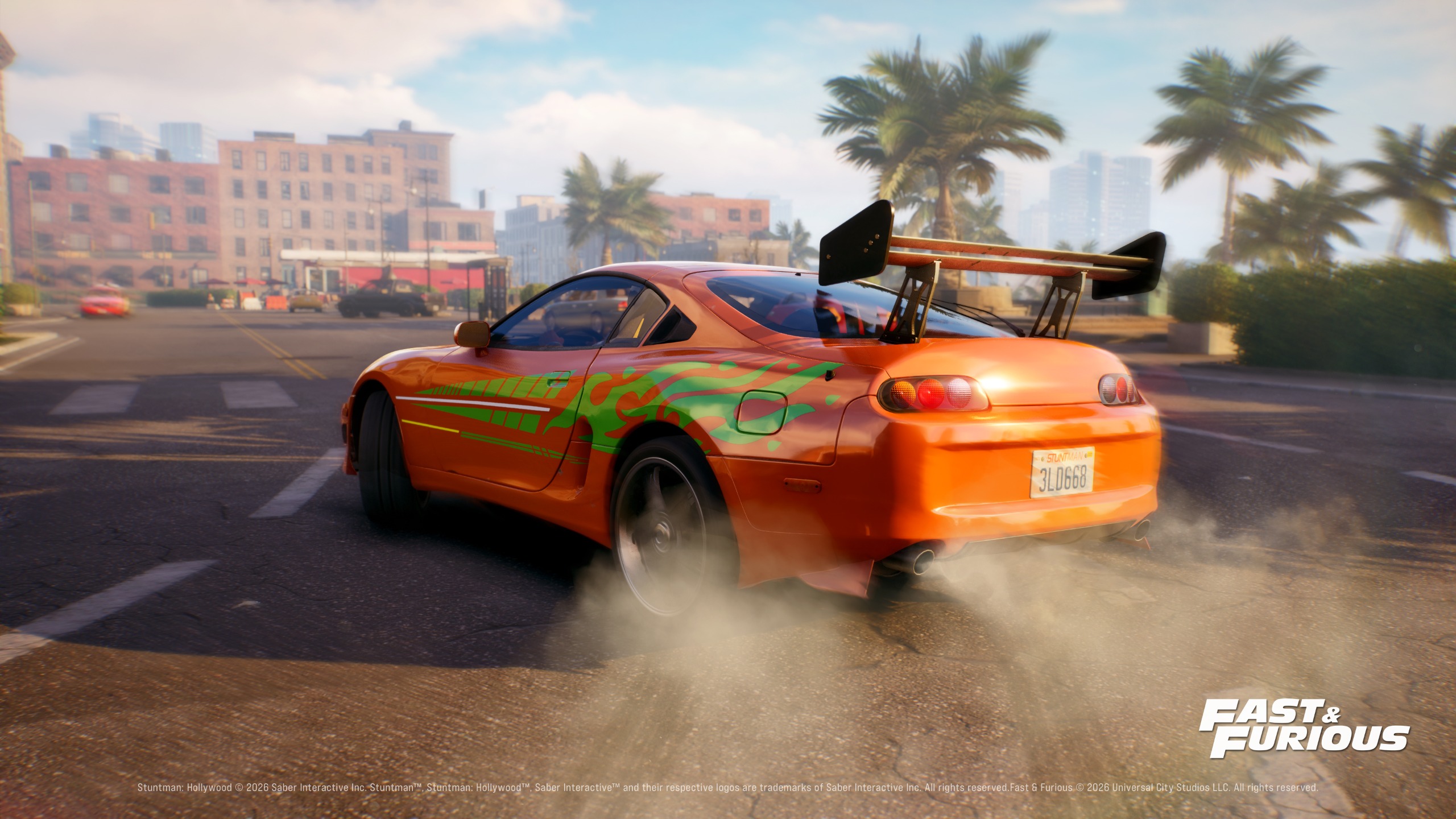
In the Miami Vice sequence, players take control of a sleek, white Ferrari Testarossa, navigating streets bathed in the neon pinks and pastel blues of 1980s Florida. For the Jurassic World level, the gameplay shifts to a nimble, off-road motorbike, requiring quick reflexes to navigate rough terrain and avoid prehistoric hazards. The Knight Rider level puts players behind the wheel of KITT, the famous modified Pontiac Firebird Trans Am, while the segment inspired by The Fast and the Furious features a heavily tuned Toyota sports car built specifically for high-speed drifting.
The full game will also feature the time-traveling DeLorean from Back to the Future and a heavily armored, weaponized muscle car from the action-thriller Death Race.
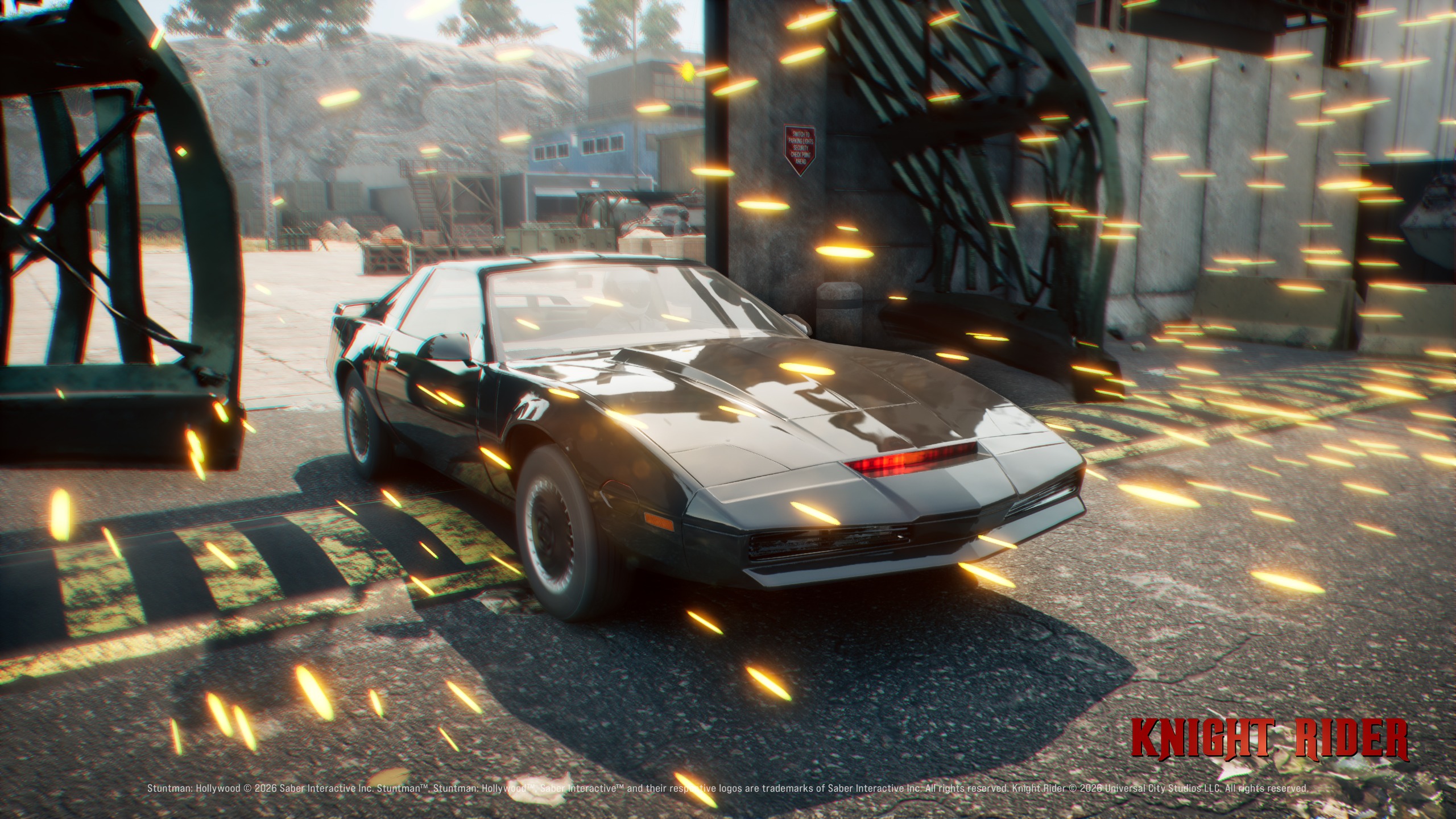
The handling model of the game is tailored to match the character of each vehicle, though it remains firmly rooted in accessible, arcade-style physics rather than simulation realism. A dedicated drift button allows players to break traction easily, making it possible to slide heavy muscle cars or nimble drift machines around tight corners with satisfying responsiveness.
Visually, Stuntman: Hollywood leverages modern hardware to deliver high-resolution environments filled with detailed lighting, smoke, and debris effects. However, Saber has avoided the trap of photorealistic brown-and-gray color palettes. Instead, the game adopts a slightly stylized, vibrant aesthetic that suits its cinematic subject matter. Each movie set features its own distinct color grading and art direction, successfully capturing the specific visual style of the era and franchise it represents.
By preserving the challenging, fast-paced spirit of the original franchise while softening its most frustrating edges, Saber Interactive appears to be crafting a title that honors its roots while remaining accessible to newcomers. Whether Stuntman: Hollywood can capture the wider gaming public’s attention when it launches in 2027 remains to be seen, but for those who have always wanted to perform a perfect, Hollywood-grade barrel roll through a wall of fire, the game is shaping up to be an incredibly appealing ride.