Introducing this month’s Style Special, our editor in chief, Andrew Tuck, contemplates the impact of beauty in the things we create and surround ourselves with, exploring how design, aesthetics, and urban planning intersect to influence modern life, economics, and human well-being.
There are many people who will tell you that being cool just doesn’t matter. That, while style might be a nice add-on, it’s really not something that you should be spending too much time thinking about. That appearances are fundamentally irrelevant in a world that supposedly values substance above all else.
Yet, those who hold this view are fundamentally mistaken. How things look and making places that are genuinely cool can serve as a positive, potent driver in everything from economics to architecture and urbanism. Aesthetics are not merely superficial veneers; they are structural components of how communities thrive, how economies attract talent, and how citizens feel about the places they call home. One place that seems to have finally cottoned on to this profound truth is New Zealand’s largest city.
Poor old Auckland has been the target of some rather waspish comments over the years, often struggling with its international reputation and identity. Travel writer Paul Theroux famously described arriving in the city a few decades ago as feeling like “touching down on a distant star.” When former Singapore prime minister Lee Kuan Yew came to town in the 1990s, he is said to have described Auckland as “shut,” capturing a sense of isolation and a lack of cosmopolitan vibrancy. Now, I am sure that many Kiwis were entirely indifferent to these sharp arrows, and for a long time, the city was quite happy to be the urban equivalent of a dad in flares—comfortable, unbothered, and entirely unfashionable.
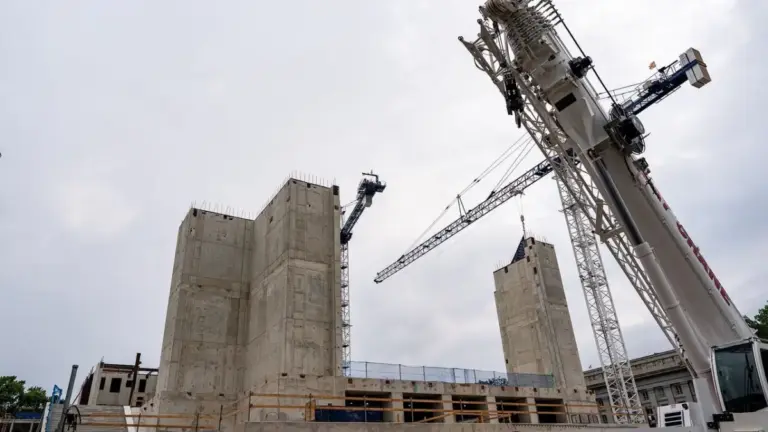
However, other residents understood the deep, tangible damage that this cultural isolation inflicted, including a severe brain drain that saw numerous ambitious young people packing their bags to find fun, culture, and career opportunities in distant global hubs such as Sydney, London, and Los Angeles. Change was desperately needed. Over the past 20 years, the city has been systematically rebuilt, with its post-industrial waterfront taken back from shipping and industry for public use, green spaces, and community life. As this issue goes to press, Auckland is also preparing to open the largest infrastructure project in the country’s history, marking a monumental shift in its urban trajectory.
The City Rail Link represents New Zealand’s first underground metro system and comes complete with a series of beautifully designed, striking stations that have already been attracting thousands of visitors on special preview days. Its imminent unveiling provided the ideal cue for us to send reporter Gordon Peake to assess how the city managed to acquire its new look, and how shedding its old image to embrace a bit of contemporary cool is fundamentally changing local and international perceptions.
The often-surprising, transformative impact of beauty in the things that we build and make is a recurring, unifying theme in this issue. It certainly runs deeply through a wonderful interview conducted by Grace Charlton with the Lebanon-born, Paris-based architect Lina Ghotmeh.
I first met Ghotmeh when she participated in our Quality of Life Conference in the French capital in 2022. I was immediately transfixed by her rare ability to rise above the day-to-day fray to talk about what architecture can genuinely do for people and countries. Coming from a nation scarred by decades of wars and internal infighting had clearly given her both an extraordinary clarity of thought and an unwavering determination to deliver meaningful change through her work. It is a mindset that has resulted in Ghotmeh winning prestigious international competitions to design everything from a meticulously crafted factory for luxury house Hermès to national exhibition pavilions, such as the Bahrain pavilion for Expo 2025 in Osaka. Now, she is taking on the monumental task of redesigning the Western Range galleries of the British Museum in London, the historic spaces that house priceless objects from ancient Greece, Egypt, and Rome.
Reading her interview, one will immediately sense her unique ability to harness architecture and design to deliver so much more than just a functional or efficient exhibition space. “How do we allow a piece of architecture to become a place that builds our knowledge, that allows you to experience the work better but also to open up to dialogue?” she asks. “The museum is not a static place that just showcases objects from the past. It’s also a contemporary place that has to allow for debate and learning from our ancestors.” Her architecture is deliberately designed to act as a Trojan horse, delivering big, enduring ideas that will stay with visitors long after they leave the building.
Debate, intellectual rigor, and continuous learning have been the common threads running through Monocle since our launch in 2007, with our very first issue going on sale on February 14 of that year. Over the coming months, in the run-up to our upcoming 20th-anniversary celebrations, we will be putting the spotlight back on some of our own history, examining how our editorial philosophy has evolved alongside the world.
This month’s Expo pages document what has become a defining part of our brand: our annual Quality of Life Conference, which this year unfolded against the backdrop of Lisbon. The event is essentially the magazine brought to life—a physical display of all the topics, urban dilemmas, and design philosophies that we care about most deeply. It is also a moment when we are able to underline some bigger, foundational ideas: that listening to citizens and experts is good, that we can find some of the best answers to modern urban problems in fields far beyond our own, and that, yes, being cool can genuinely be a very good thing for a society.
If you would like to send me ideas, thoughts, or style tips, I can always be found at [email protected].