In an era where artificial intelligence can generate campaigns, draft copy, and optimize media spend in seconds, marketers are frequently forced to confront a fundamental vulnerability. When the mechanics of execution become automated and commoditized, brands are left to answer one persistent, defining question: Why should anyone choose you?
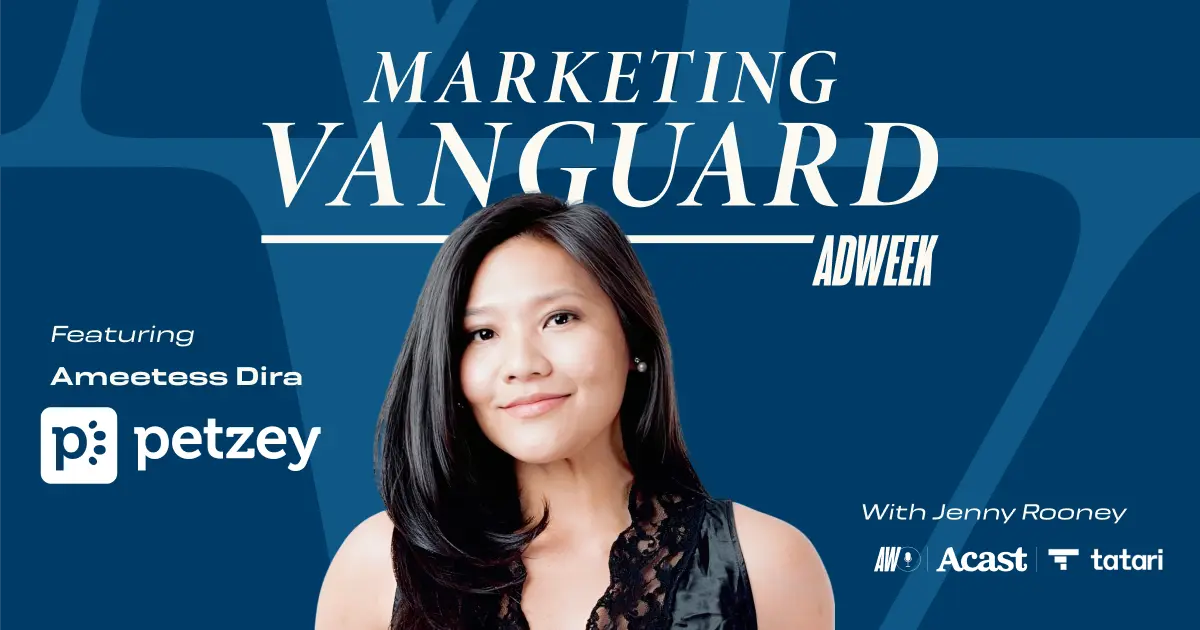
This central dilemma took center stage live from the Marketing Vanguard stage at Brandweek 2026, where Adweek’s Jenny Rooney sat down with Ameetess Dira, Chief Marketing Officer of Petzey. Their conversation offered a deep dive into the strategic choices that become exponentially more important as marketing grows easier to automate, challenging industry leaders to look beyond immediate metrics and rethink the fundamental role of the modern CMO.
For Dira, whose career spans broadcasting, radio, print, agency leadership, technology, and international market expansion across Asia and the United States, navigating the modern marketing landscape requires a strict adherence to personal and corporate purpose. Her move into the pet health sector was not a calculated career pivot, but a deeply personal mission. Following the loss of her senior dog, Dira deliberately sought out work that could directly improve access to care for animals and the people who love them. That driving purpose now shapes how she thinks about everything from unconventional brand partnerships and crisis response to the vital role marketing should play inside the wider executive suite.
The conversation, recorded live as part of a special vidcast series presented in partnership with Tatari, explored how top-tier marketing leadership must evolve when technology levels the playing field for execution. Rather than relying on superficial tactics, Dira argued that modern brand building begins with uncompromising alignment and an active refusal to stay confined to traditional marketing silos.
Purpose Alignment Is Not a Nice-to-Have
For Dira, belief in a company and its leadership is an absolute, non-negotiable requirement. She emphasized that she wants to work with people she trusts deeply enough to navigate difficult challenges together, specifically because the work serves something far greater than the individuals involved.
Making a clear distinction for the Brandweek audience, Dira explained that purpose cannot simply be treated as a cosmetic layer applied to a marketing campaign after the strategy has already been finalized. Instead, true purpose serves as the primary filter that determines whether she wants to commit her time and expertise to a brand in the first place. When marketing is guided by genuine alignment, every subsequent decision—from product positioning to customer service—carries an authenticity that automated tools simply cannot replicate.
Look Where Everyone Else Says “That’s Too Small”
In a crowded marketplace where brands constantly chase massive, mainstream demographics, Dira advocates for a vastly different approach. She points to senior dog adoption as a prime example of an issue that is difficult, expensive, and easily ignored by major corporations; yet, that is precisely why she pays attention to it.
Her strategic philosophy is to observe how culture is shifting, identify where people and communities remain genuinely underserved, and determine where a brand can contribute something truly useful. Rather than fighting for the exact same obvious audience as every other competitor in the category, Dira encourages marketers to find value in the margins by solving real, human—and animal—problems.
Marketing Has No Business Staying in Marketing
One of the most pressing warnings Dira shared during the live session was directed at marketers who limit their scope to campaigns and communications. She deliberately inserts herself into conversations with product, technology, and finance teams, viewing the executive suite as her primary team.
Her reasoning is straightforward: everyone sitting around the executive table shares joint responsibility for the overall health and direction of the business. The CMO who restricts their influence to traditional marketing channels is voluntarily giving up their seat at the table before the organization’s most critical strategic decisions are even made. By engaging directly with product development and financial planning, marketing can help shape the actual utility of the business rather than just communicating it after the fact.
Sometimes the Right Decision Is the One the Spreadsheet Hates
Corporate leadership frequently demands immediate, quantifiable returns, but Dira’s tenure at Petzey has proven that short-term financial logic must sometimes take a backseat to corporate integrity.
During the devastating Los Angeles fires, Dira made the immediate decision to open Petzey’s platform for free wellness checks to anyone affected by the crisis, extending the service to first responders, teachers, displaced businesses, and animal shelters. While standard short-term financial logic might have pointed toward monetizing a surge in demand during a crisis, she consciously chose the exact opposite path.
Her argument remains firm: doing the right thing for communities in need matters far more than hitting an immediate quarterly number, particularly when a crisis provides an undeniable opportunity to prove what a brand actually stands for in the real world.