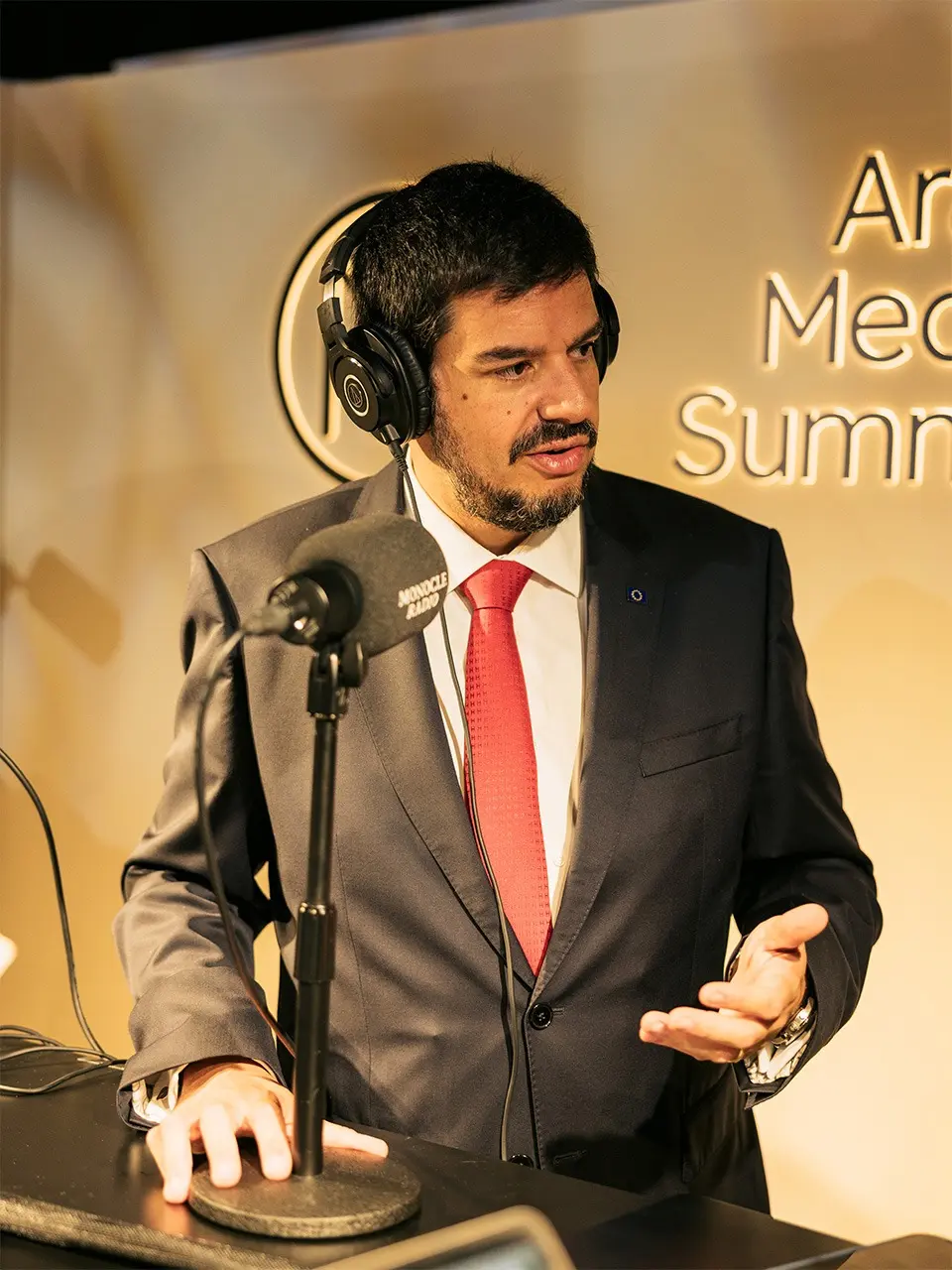
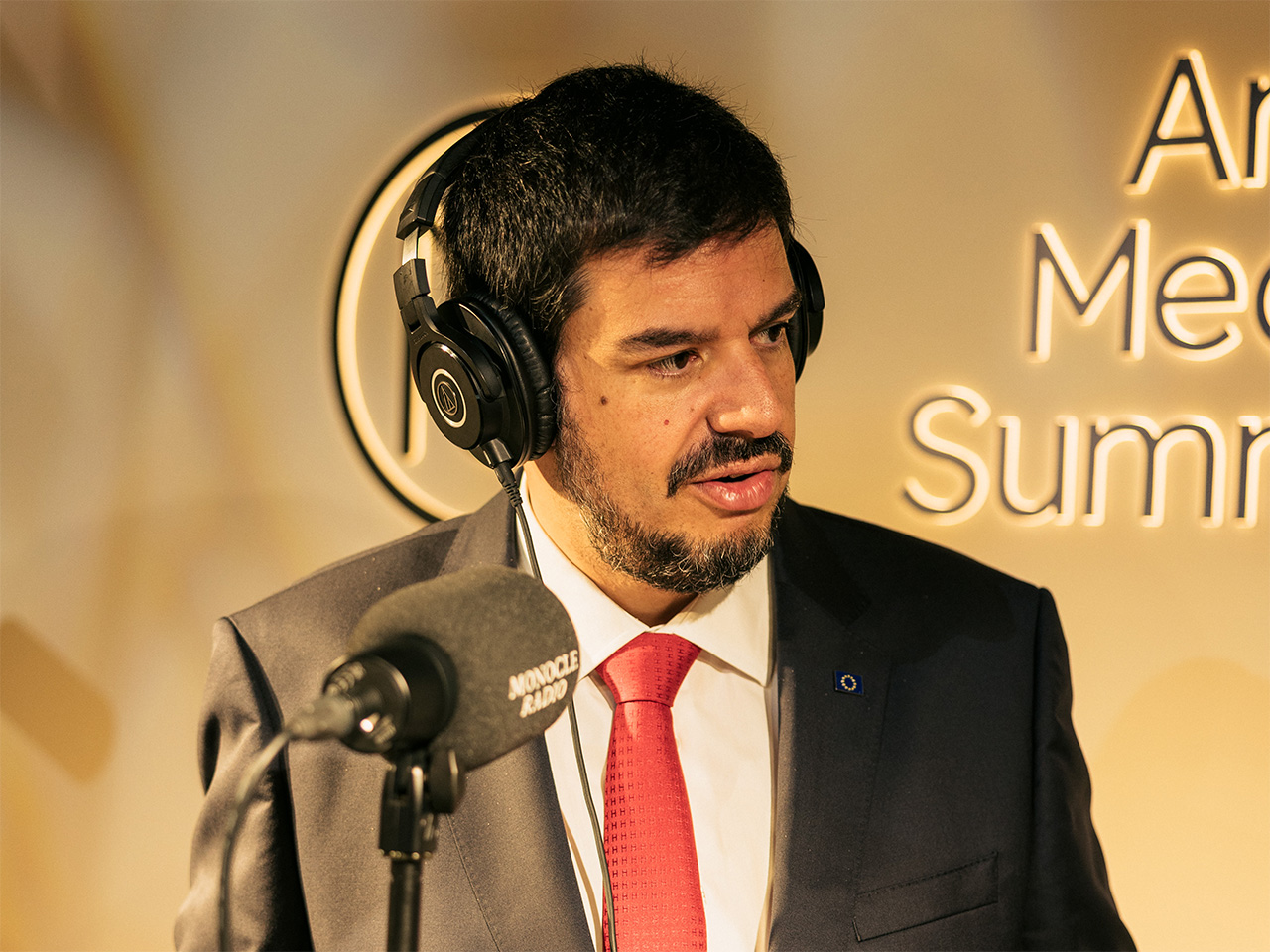
DUBAI — Speaking at the Arab Media Summit in Dubai in an interview with Monocle Radio, Euronews chairman Pedro Vargas David has delivered a sharp critique of both European journalism and Middle Eastern geopolitics. In a wide-ranging discussion, Vargas David argued that European media outlets suffer from critical blind spots regarding international affairs, while urging Middle Eastern capitals to stop using newsrooms as proxies to settle political scores and damage the reputations of their neighbors.
The media executive’s remarks shed light on the evolving relationship between European broadcasters and the Middle East, the shifting dynamics of global news consumption, and the pressing need for traditional television networks to adapt to a rapidly changing technological and economic landscape.
A Call to End Regional Infighting in the Newsroom
One of the central messages delivered by Vargas David during his appearance at the summit was directed squarely at political actors and media stakeholders across the Middle East. He issued a direct request for rival capitals to cease attempts to weaponize the news media against neighboring countries. According to the Euronews chairman, campaigns designed to tarnish a neighbor’s reputation ultimately backfire, leaving the entire region with a diminished and distorted image in the eyes of European audiences.
Vargas David pointed out a fundamental disconnect in how international news is perceived abroad. He questioned whether the average European audience member makes a nuanced distinction between different countries within the region during political disputes. While acknowledging that political and economic elites may perceive subtle differences, he emphasized that the vast majority of everyday viewers do not. When neighboring states utilize international platforms to engage in mutual attacks, the collective regional reputation suffers globally.
By calling for an end to these proxy information battles, Vargas David positioned responsible journalism as a victim of localized power struggles. He asserted that media platforms should serve as channels for factual reporting and objective analysis rather than instruments for diplomatic or political retaliation.
European Media Blind Spots: Looking Beyond Iran to Sudan
Reflecting on his interactions with regional media figures and local populations during the summit, Vargas David offered an unvarnished assessment of European journalism’s blind spots. He shared an illuminating anecdote regarding expectations versus reality when engaging with individuals in the Middle East. Going into panel discussions, he anticipated that conversations would inevitably center heavily on Iran and its geopolitical footprint. Instead, he found that local stakeholders were far more preoccupied with crises unfolding in Sudan, Libya, and Egypt.
This realization prompted a moment of self-reflection for the media executive regarding the geographic priorities of European newsrooms. He candidly admitted that while European media frequently fixates on certain headline-grabbing conflicts, other critical humanitarian and political catastrophes—such as the devastating conflict in Sudan—are largely ignored.
Vargas David expressed concern that European audiences remain profoundly under-informed about developments in Sudan, noting that mainstream European media coverage is sparse and that the general public often remains detached from these human tragedies. For the chairman of a major international news channel, bridging this awareness gap is essential if European media wishes to maintain genuine relevance on the global stage.
The Strategic Importance of the Middle East to Europe
Explaining the rationale behind Euronews’s ongoing expansion within the Middle East, Vargas David emphasized that the region has long been integral to the broadcaster’s identity. As a continent closely intertwined with the Middle East through geography, history, and commerce, Europe cannot afford to view its southern and eastern neighbors through a detached lens.
Euronews operates a dedicated Arabic service and has steadily strengthened its editorial footprint and physical presence across key Middle Eastern capitals. During recent regional conflicts, the network maintained permanent journalistic staff on the ground in nearly all relevant locations. Vargas David explained that this boots-on-the-ground approach is driven by direct audience interest. Events unfolding in the Middle East have immediate, tangible consequences for European citizens, directly influencing global energy markets, petrol prices, tourism, and broader security concerns.
However, Vargas David acknowledged that European institutions and media organizations must fundamentally shift their perspective when engaging with the region. He noted that European commentary has occasionally been marred by a lingering, outdated colonial mindset. Moving forward, he argued, European media must cultivate a deeper, more respectful understanding of Middle Eastern societies, engaging with local populations on their own terms rather than through paternalistic assumptions.
Journalistic Freedom and Wartime Restrictions
When questioned about potential reporting constraints faced by Euronews journalists as the United Arab Emirates and other Gulf nations became central to ongoing regional conflicts, Vargas David defended the integrity of his reporting teams. He confirmed that journalists on the ground reported no undue pressure or interference from host governments.
At the same time, Vargas David maintained a pragmatic stance regarding the realities of wartime reporting. He observed that Euronews operates as a responsible media organization that strictly avoids broadcasting real-time tactical intelligence, such as the precise locations of strategic military targets that could be exploited by hostile forces.
Furthermore, he contextualized wartime restrictions by noting that temporary measures imposed by governments during active conflicts are not unique to the Gulf region. Every nation implements controls based on national security imperatives during times of crisis, and such security considerations inherently take precedence over open information flows. Throughout the recent escalations, Euronews staff operated under standard wartime limitations while maintaining editorial independence, refusing to propagate dictated narratives or external agendas.
Drawing comparisons with the network’s extensive coverage of the war in Ukraine, Vargas David asserted that human suffering commands an equal editorial response regardless of geography. A tragic loss of life in the Middle East carries the same weight as a tragedy in Eastern Europe. He highlighted the courage of Euronews correspondents who continued live broadcasts during active bombings, noting instances where staff members in locations such as Doha had to take cover as missiles flew overhead. The network’s mandate, he stressed, remains focused on documenting reality: the physical destruction, the human toll, and the geopolitical consequences.
Tech Giants, Industry Infighting, and the Future of Television
Shifting the discussion from geopolitics to the economics of modern journalism, Vargas David addressed the existential financial pressures facing traditional broadcasters. In an era dominated by streaming giants like Netflix and Amazon Prime, the Euronews chairman rejected the notion that television as a medium is becoming obsolete, though he conceded that the business model requires radical restructuring.
Vargas David placed a significant share of the blame for the media industry’s financial struggles on broadcasters themselves. He argued that traditional media companies have allowed major technology firms and digital platforms to dominate advertising revenue and audience engagement simply because media executives spend too much time engaged in internal rivalries. Rather than uniting to establish a collective front against digital monopolies, media companies have frequently chosen to undermine competitors. Using an evocative metaphor, he suggested that the media sector has allowed tech giants to "eat their lunch" due to a lack of industry-wide solidarity.
Addressing the cost structures of modern television news, Vargas David advocated for a leaner, more agile operational model. While traditional television sets continue to occupy a central physical space in living rooms around the world, broadcasters can no longer rely on legacy revenue streams or bloated budgets. He pointed out that producing high-quality news no longer requires excessively expensive studios costing tens of millions of euros. Modern technological advancements enable networks to produce exceptional journalism at a fraction of the cost, with reporters capable of broadcasting directly from mobile devices when necessary.
Ultimately, Vargas David expressed strong optimism for the longevity of the news industry. By pairing a low cost-base with innovative revenue strategies and a commitment to rigorous, independent reporting, he believes television news has decades of viable business ahead, provided it continues to adapt to the realities of the twenty-first-century media landscape.