There is an old, popular philosophical thought experiment which suggests that if you were to give an infinite amount of time to a monkey randomly hitting keys on a typewriter, it would almost surely reproduce Shakespeare’s complete works word for word. But reality, as it turns out, is rarely so poetic or forgiving. What happens, instead, when you give three monkeys with severely restricted access to their senses a very limited amount of time to defuse a complex, ticking bomb? As it turns out, the answer is remarkably simple: the bomb almost always explodes.
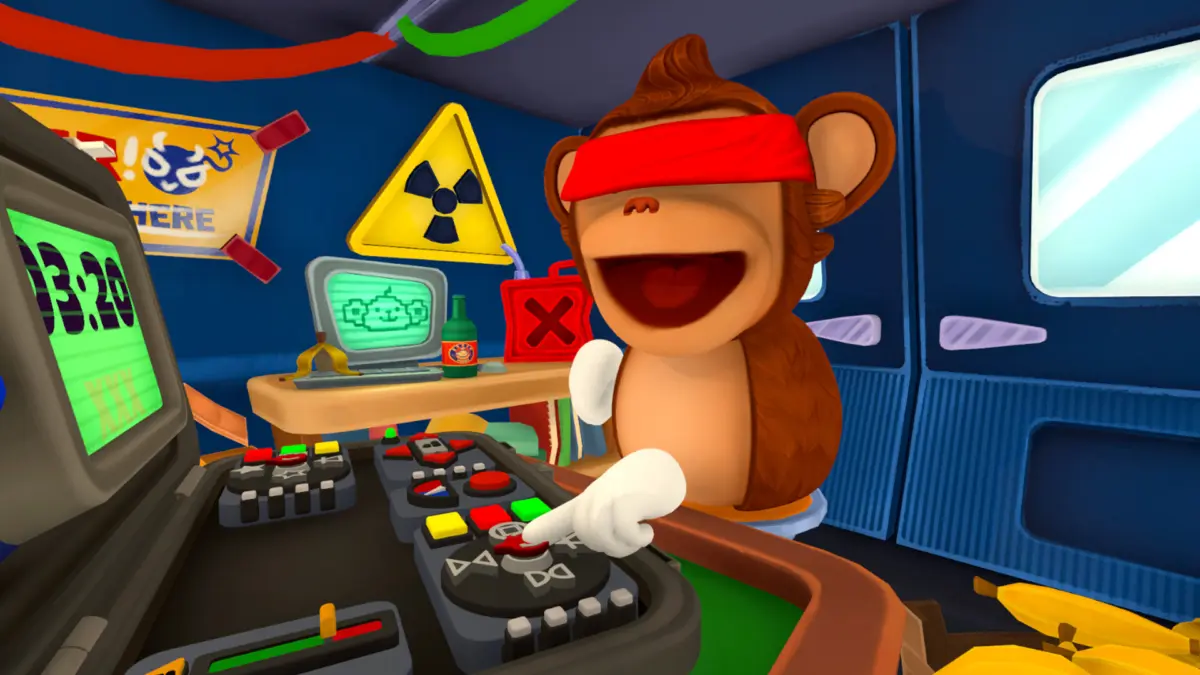
This is the chaotic, high-stress reality that players must face in Bombanana, a brand-new cooperative bomb disposal game developed by TARK. In this frantic title, you and up to three friends step into the virtual paws of primates tasked with saving the day. While playing as a monkey adds a layer of whimsical charm to the experience, the true core of the gameplay challenge lies elsewhere: one player cannot see, one cannot hear, and one cannot speak. This clever, sensory-deprived setup throws an immediate wrench into the works, forcing players to rely entirely on unconventional teamwork, broken communication channels, and sheer trial and error.
The concept bears a striking conceptual resemblance to Team 3, the popular cooperative building game that is similarly built around the ancient motif of the three wise monkeys who see no evil, hear no evil, and speak no evil. However, translating that proverb into a high-stakes bomb defusal scenario introduces an entirely different tier of panic, laughter, and explosive failure.
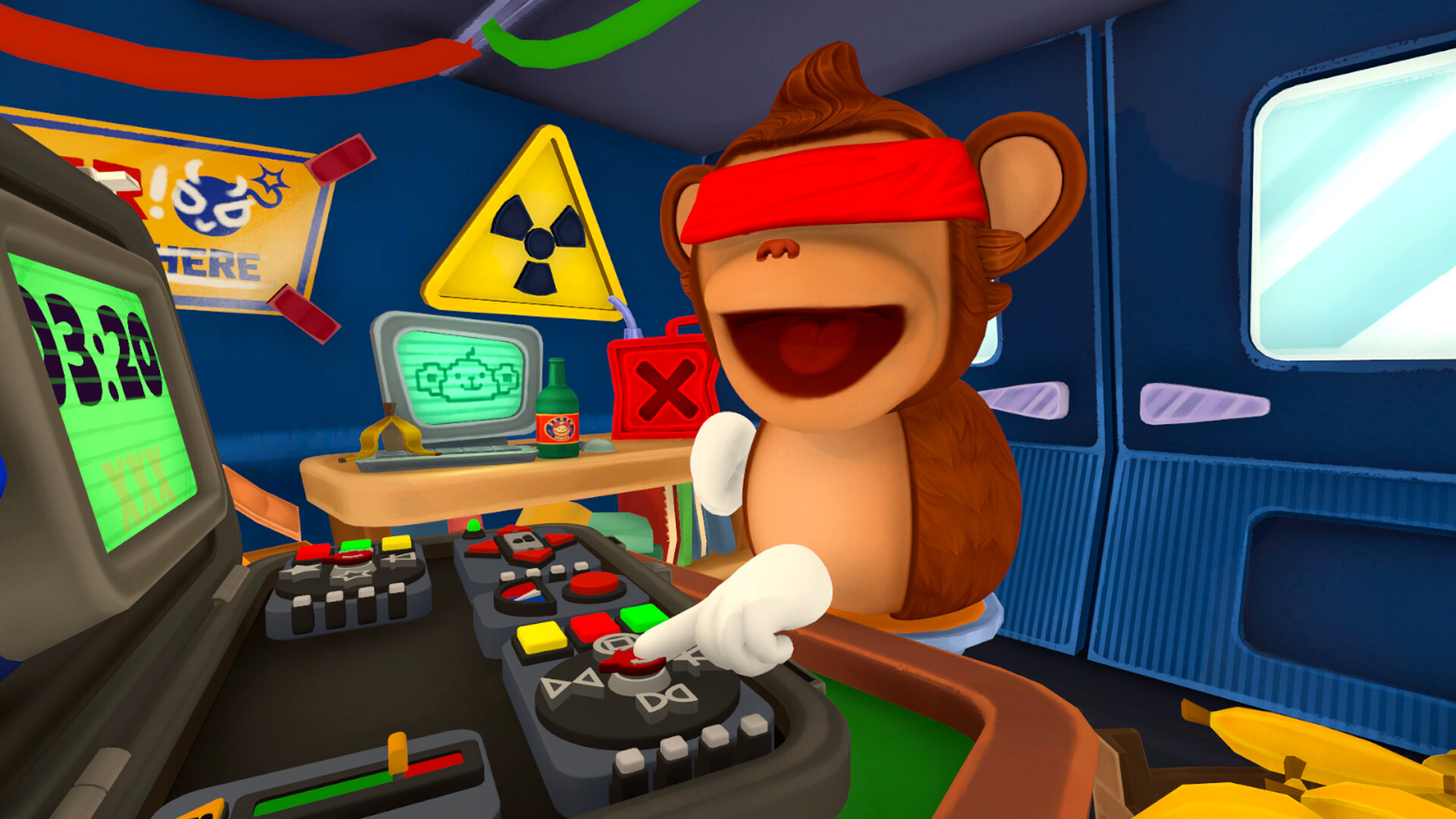
Diving headfirst into the experience with a group of friends reveals just how punishing the design can be. Starting out as the monkey who cannot see—who also happens to be the unfortunate soul directly responsible for handling the tools and trying to defuse the bomb—proves to be every bit as tricky as one might expect. In the opening rounds, none of the participants have any real clue what is going on or how they are supposed to establish a functional communication loop.
The division of labor creates an immediate logistical nightmare. The person holding the crucial instruction manual cannot speak a word to guide the team. The only player who can actually see what they are doing cannot hear any instructions, warnings, or clarifying questions fired their way by teammates. Meanwhile, the blind player attempting the actual defusal has no visual feedback whatsoever, relying completely on intermediaries while grappling with the universal human weakness of performing poorly under intense pressure.
In these initial moments of confusion, the logical response often gives way to pure silliness. Rather than executing a precise tactical operation, players frequently resort to sitting back, throwing virtual bananas at each other across the digital workspace, and simply waiting for the inevitable explosion to put everyone out of their misery. Once the smoke clears and the team is wiped out, players can finally regroup, strategize, and try their luck all over again with a slightly better understanding of their limitations.
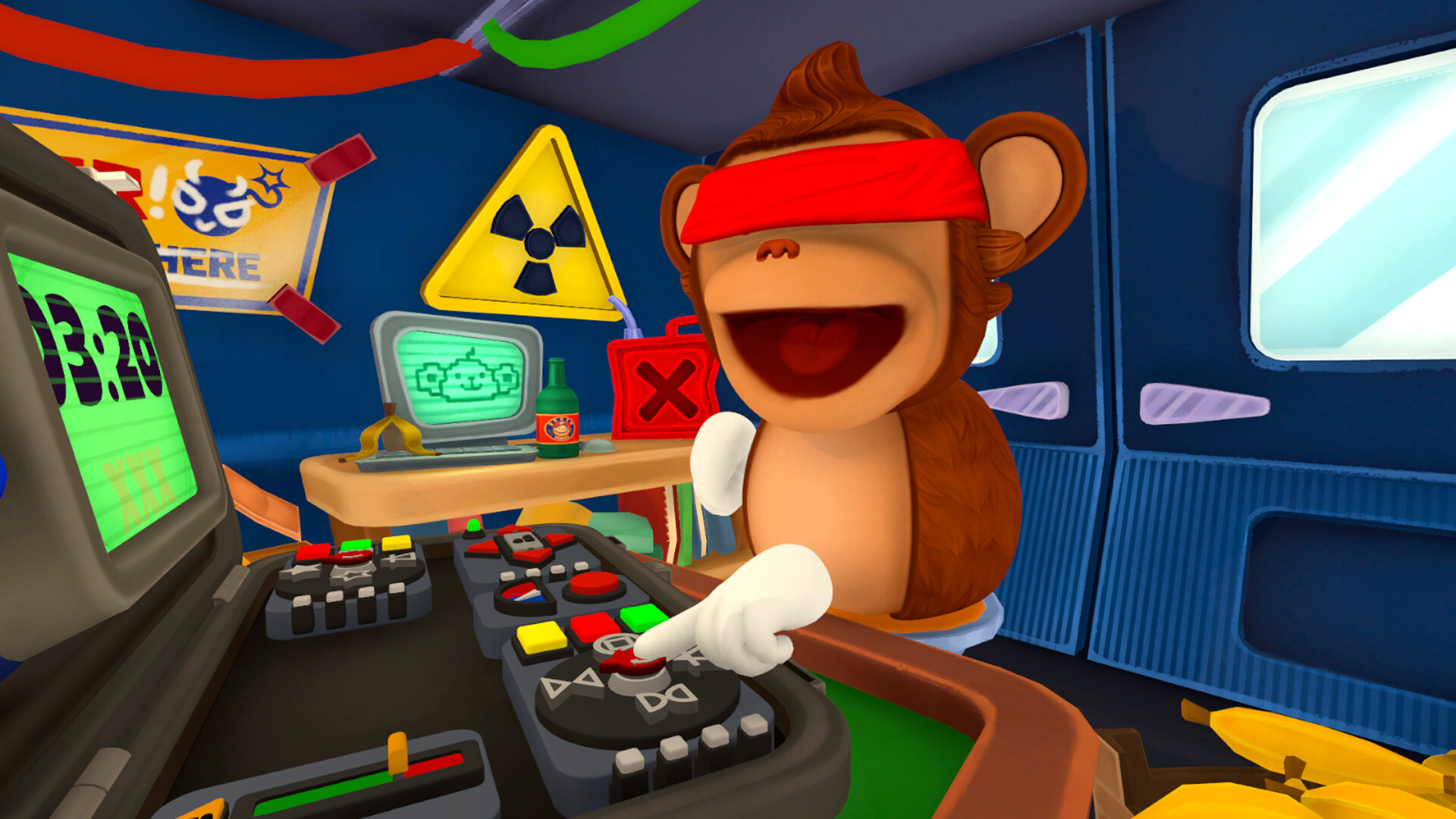
Eventually, groups that stick with the game manage to hammer out a vague, albeit fragile, strategy to conquer the chaos. The middle monkey—the one blessed with the gift of sight but cursed with total deafness—takes on the role of the primary observer. They must carefully examine the internal mechanics of the bomb, detailing every single wire, color, and blinking light they see so that the monkey holding the manual can frantically flip through the pages to understand what needs to be done.
Once the manual reader figures out the theoretical solution, they must somehow convey it through non-verbal means. The middle monkey then focuses on specific components inside the bomb, such as a panel of four tricky switches, and must ask targeted questions like, "The first switch is red, should it be up or down?" They then have to wait patiently as the manual-holding monkey breaks their neck looking up at the ceiling or stares blankly at the floor to communicate the answer through whatever rudimentary signals the game allows. Finally, the middle monkey must verbalize that information to the blind monkey, who then hopes they pull the right lever or cut the correct wire.
The core challenge of Bombanana, however, is that it refuses to stay simple. As players successfully progress through the initial stages, the difficulty scales dramatically. Each subsequent level introduces an additional puzzle to solve, a higher volume of environmental distractions, and an increasingly finicky little gauge that gradually slides upward toward the danger zone. If the team fails to actively manage and push that gauge back down while juggling their sensory handicaps, it triggers an immediate, catastrophic explosion.
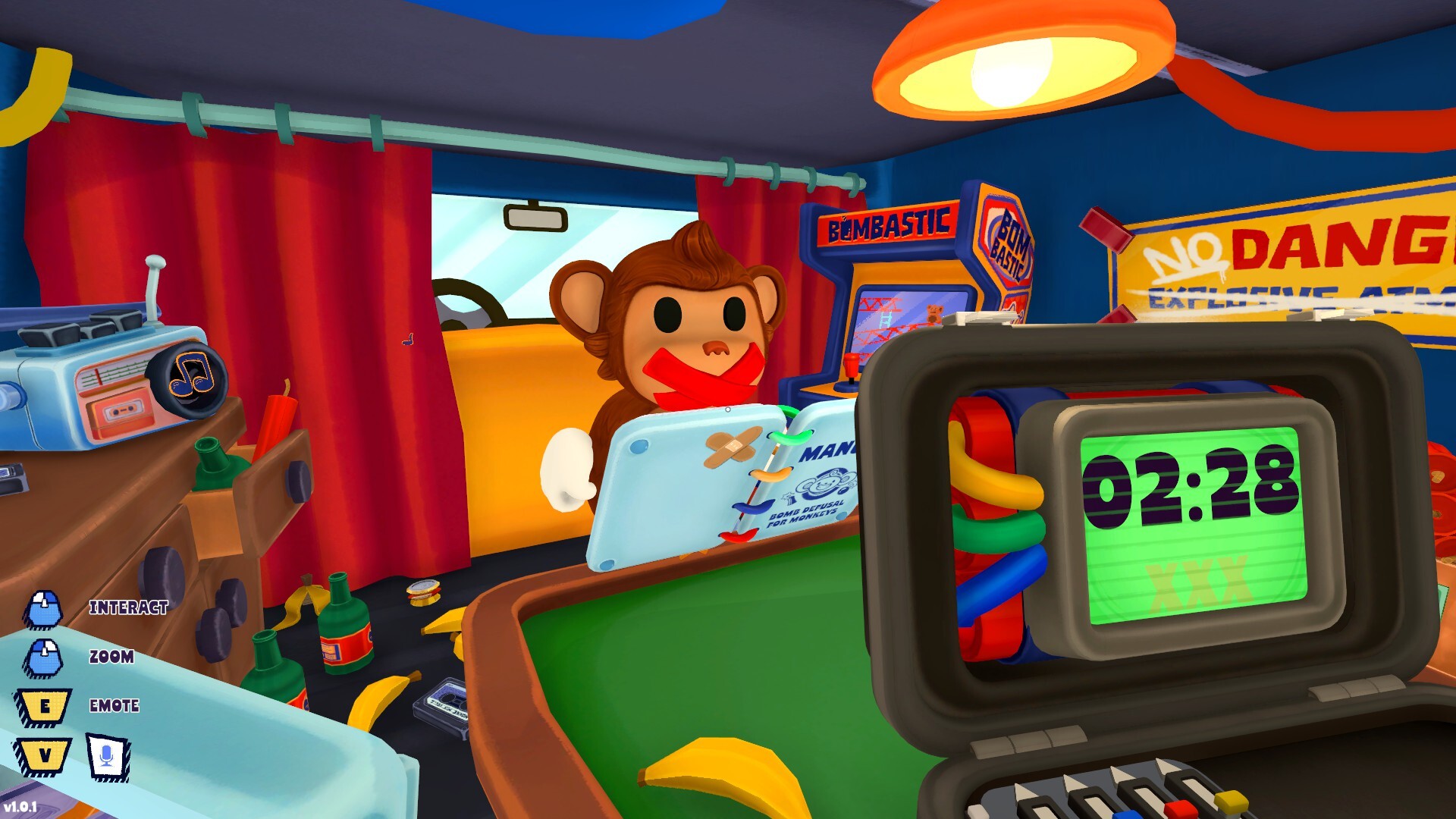
While some highly coordinated gaming groups might eventually master the intricacies of every level, ordinary players will likely find themselves cracking under the pressure. When anxiety sets in and the human brain inevitably goes blank, finding oneself in possession of the instruction manual after a stint as the blind defusal monkey can spell instant disaster. Yet, despite the recurring failures and the constant threat of blowing up, Bombanana succeeds in delivering a tremendous amount of fun. It purposefully facilitates the kind of chaotic, loud, and memorable cooperative moments that fans of party games live for. Even if everyone in the lobby ends up slightly singed by the end of the session, the sheer entertainment value makes every fiery wipeout feel like a win.