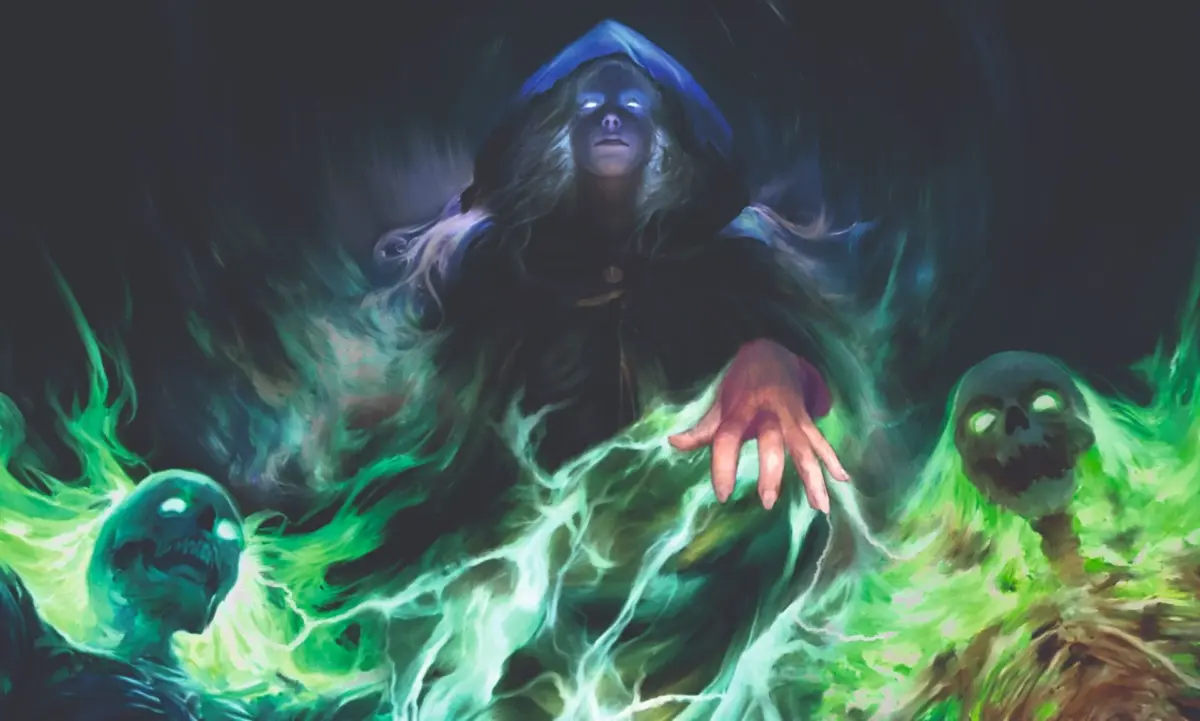
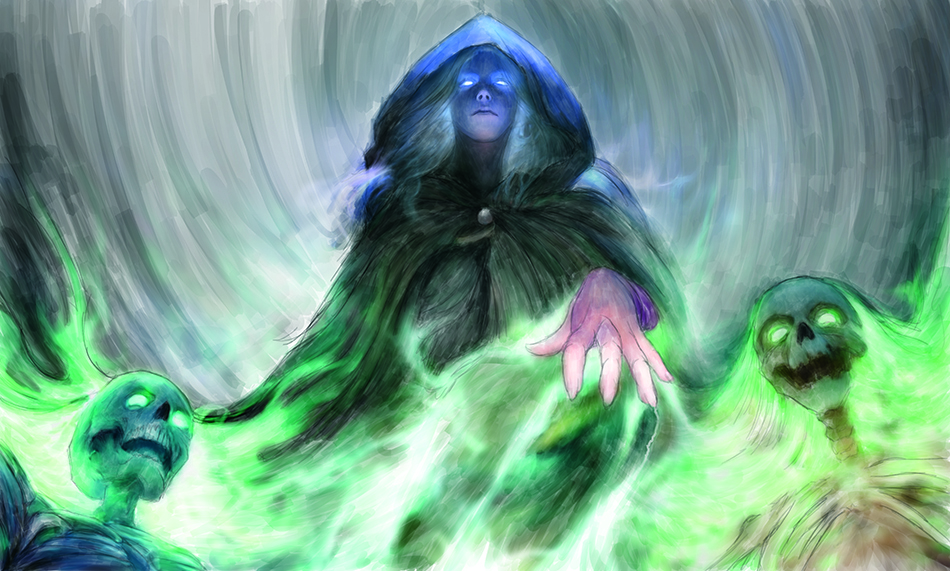
Digital artist Fredrik Löfgren Eriksson has shared an in-depth look into his conceptual and technical workflow for creating high-level fantasy art, specifically tailored to fit the stringent aesthetic and compositional standards of the iconic trading card game Magic: The Gathering. Pursuing a long-held career ambition to contribute official artwork to the franchise, Eriksson developed an illustration depicting a classic fantasy visual trope: the casting of a destructive "Disintegrate" spell.
The project showcases how contemporary digital illustrators combine classical compositional theory with modern software workflows in Procreate. By detailing every phase of development—from structural geometry and initial palette selection to low-opacity brushwork and post-processing texture filters—Eriksson provides valuable insights into the craft of commercial fantasy illustration.
Conceptualization and Compositional Strategy
Creating artwork for collectible card games presents unique design challenges. Because the final image is often displayed at a small physical scale on a gaming card, the composition must remain instantly readable while conveying complex narrative action and visual drama.
To solve this, Eriksson anchored his illustration around a classic triangular composition featuring three distinct figures. In visual arts, the triangle provides immediate structural stability, allowing the artist to manage dynamic or violent subject matter without causing visual confusion for the viewer.
At the focal center of the composition is the magic caster, portrayed as a powerful sorceress. To visually convey the wild nature of destructive magic, Eriksson designed the spell forces to appear chaotic in their individual tendrils yet structured overall. The energy cascades up and around the sorceress in a rhythmic circular sweep. This deliberate looping motion creates visual harmony, directing the viewer’s eye continuously back to the primary figure while framing the secondary characters within the scene’s geometric bounds.
Choosing the "Disintegrate" spell provided an ideal opportunity to contrast raw elemental power against high-level character rendering. The magical energy required a distinct palette and lighting approach to stand out against the environment while maintaining atmospheric realism.
Basic Sketching and Base Color Application
Eriksson executed the initial stages of the illustration using Procreate on an iPad, a combination that has gained widespread adoption among professional fantasy artists and conceptual designers. The digital environment allows for rapid iteration of layout ideas and seamless layer management during the blocking-in phase.
Establishing Proportions with Flat Brushes
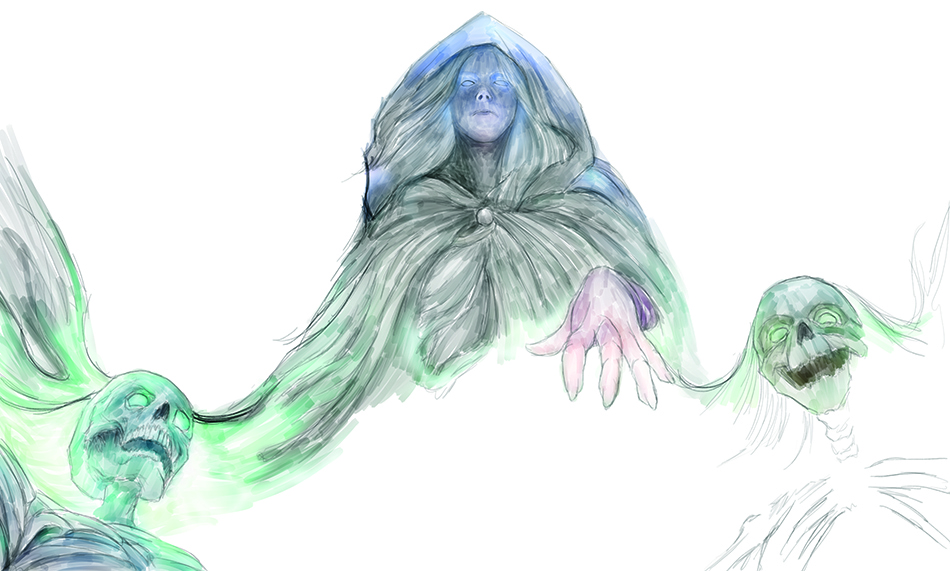
The painting process began with a foundational sketch aimed exclusively at establishing proportion, anatomical accuracy, and broad spatial balance. Eriksson utilized a basic digital flat brush to quickly block out the forms. At this preliminary stage, fine detail is deliberately omitted in favor of defining the silhouetting and focal points within the frame.
Evaluating the artwork at this early stage ensures that the triangular structure carries sufficient weight before any complex lighting or coloring is introduced.
Palette Selection and Base Color Blocking
Once the initial sketch established a solid structural framework, Eriksson created a new digital layer beneath the line art to apply the base color scheme. Color selection is critical when depicting magical phenomena, as the light emitted by the spell must interact logically with surrounding figures and environmental elements.
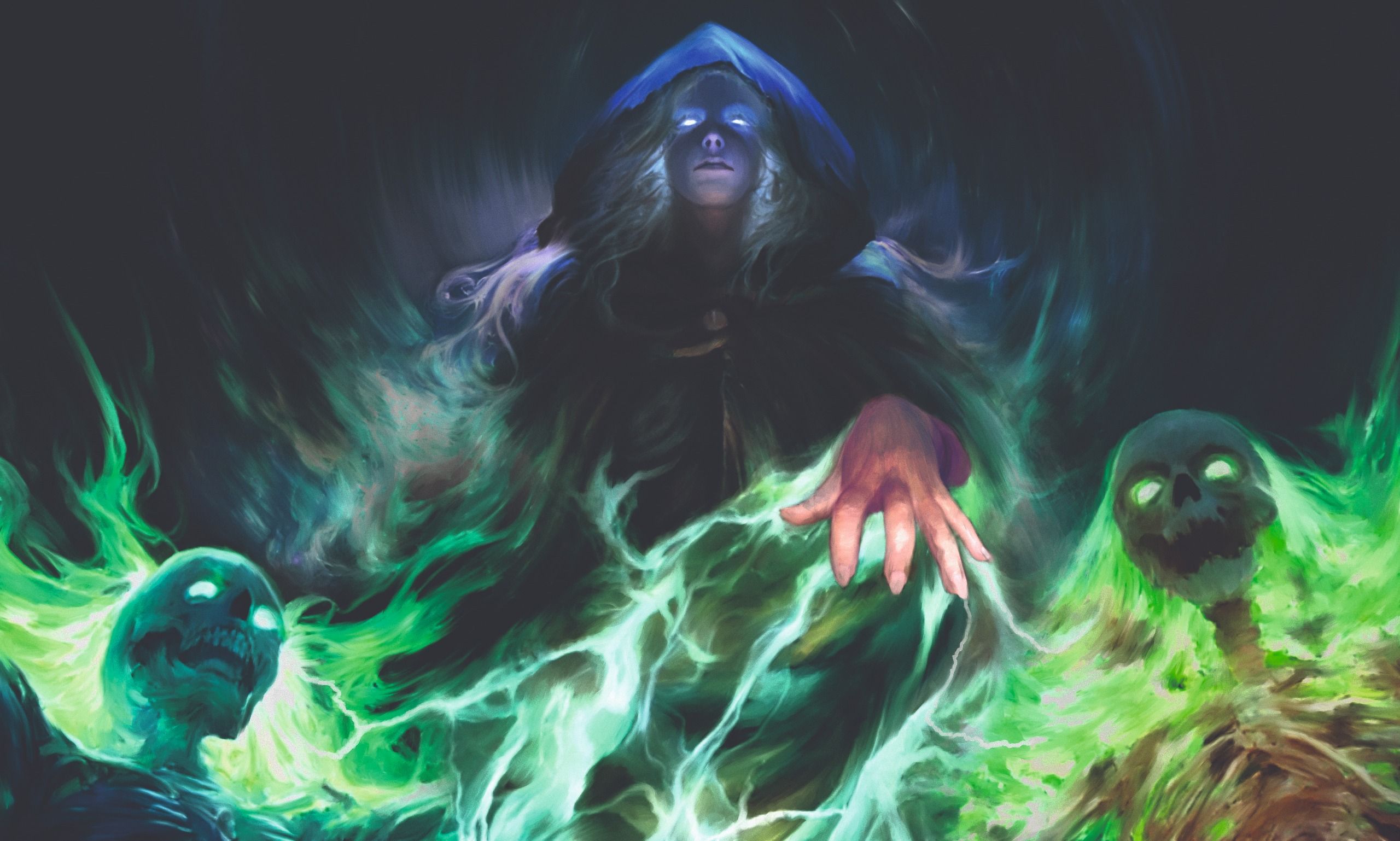
To maximize the visual impact of the spell, Eriksson selected a vibrant green energy source. To make the green magic pop dynamically off the canvas, he chose a rich, complementary blue palette for the background. Using a medium-sized flat brush, he laid down the core color blocks, setting the ambient temperature and value relationships for the entire painting. This cool background baseline allowed the hot, luminous green energy of the Disintegrate spell to act as the primary light source for the foreground elements.
Creating Atmospheric Depth Through Low-Opacity Contrast
With the fundamental colors and shapes in place, Eriksson turned his attention to establishing spatial depth and form definition. Achieving a sense of three-dimensional space within a two-dimensional digital frame relies heavily on the strategic application of contrast and value separation.
Foreground Contrast vs. Background Softness
To guide the viewer’s eye and simulate realistic atmospheric decay, Eriksson applied high-contrast values to the foreground figures, while maintaining softer, lower-contrast tones in the background. High contrast naturally draws human vision, ensuring that the sorceress and the immediate effects of the spell retain focal priority. The lower contrast of the background elements pushes them backward in visual space, creating an illusion of depth within the scene.
Additive Painting and Low-Opacity Strokes
Rather than relying on smooth digital gradients or harsh linework, Eriksson built the forms using flat digital brushes set to low opacity. By laying down numerous thin, translucent lines over one another, he progressively sculpted the forms of the sorceress, her targets, and the surrounding environment.
A key aspect of Eriksson’s technique is his refusal to use the eraser tool to correct mistakes during form building. Instead, he paints directly over missteps. Because the brush strokes are applied with low opacity, the underlying layers of paint remain partially visible beneath the corrections. This additive methodology creates rich internal variations in tone and texture, adding organic complexity to the artwork that mimics traditional media.
Adapting Traditional Oil Techniques for Digital Finishing
The transition from raw color blocks to a fully polished fantasy illustration requires careful edge control and textural refinement. To achieve a classical, painterly finish that aligns with modern fantasy card art standards, Eriksson adapted several traditional oil painting techniques into his digital workflow.
Smudging and Edge Transition Management
In traditional oil painting, artists frequently blend wet-on-wet paint directly on the canvas to soften harsh edges, model anatomical curves, and simulate realistic light diffusion. Eriksson replicated this effect digitally by using Procreate’s smudge tools to smear and blend adjacent color strokes together.
This technique creates smooth tonal transitions along skin tones, flowing garments, and magical energy fields while preserving sharp, hard edges where light abruptly hits solid surfaces. The balance between hard and soft edges adds visual interest and prevents the digital painting from looking overly mechanical or artificially smoothed.
Sub-Layer Painting and Environmental Depth
To further enhance depth without damaging top-level details, Eriksson worked extensively on sub-layers positioned beneath the primary character render. By inserting ambient glow, atmospheric dust, and secondary magical reflections on these lower layers, he could refine the background and mid-ground elements independently. This approach ensured that the complex interactions between the glowing green spell and the ambient blue environment could be tuned without altering the crisp silhouette of the sorceress.
Applying Noise Filters for a Printed Aesthetic
As a final finishing step, Eriksson applied a low-intensity digital noise filter across the completed image. Modern digital art software can sometimes produce images that look unnaturally pristine or overly smooth. By introducing a subtle grain structure over the painted surfaces, the noise filter breaks up perfect digital gradients, imparting a tactile, traditional print feel reminiscent of classic fantasy flash art and physical trading card stock.
The Evolving Landscape of Digital Illustration Tools
Eriksson’s workflow highlights the broader technological shift within the commercial art industry. Hardware and software solutions such as Apple iPads running Procreate, alongside professional Wacom Cintiq pen displays, have democratized high-end digital illustration. Artists aspiring to work for major fantasy properties can now execute studio-quality art from anywhere, utilizing tools that bridge the gap between traditional painting methodologies and modern digital speed.
Publications such as ImagineFX continue to highlight these technical pipelines, offering insights into how independent fantasy artists develop competitive portfolios targeting major industry publishers like Wizards of the Coast. As digital painting tools continue to refine their emulation of traditional media, techniques like low-opacity layering, edge smudging, and textural noise integration remain vital for artists seeking to stand out in the competitive landscape of fantasy art.