Democratic Senator-elect Abdul El-Sayed of Michigan campaigned on a platform centered on passing “Medicare for All,” a universal single-payer national health insurance system designed to guarantee coverage for every American from cradle to grave. He believes in the policy initiative so passionately, however, that he has proven willing to rebrand it under an unlikely and politically audacious name to secure bipartisan traction.
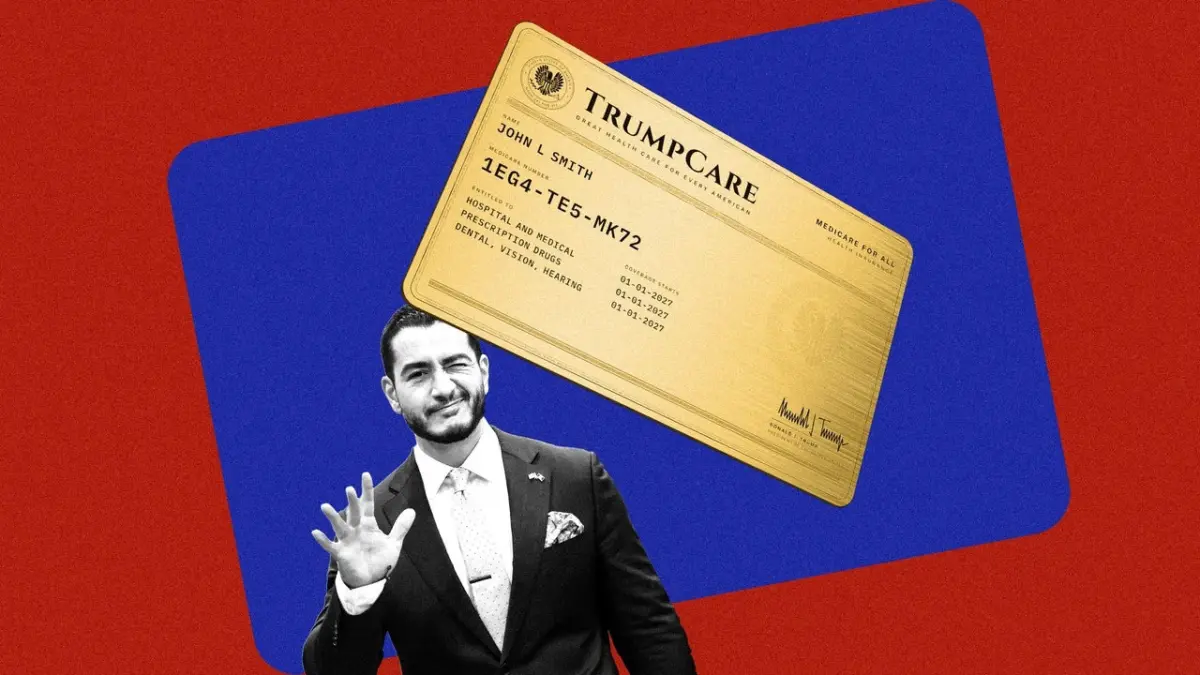
In mid-November, El-Sayed posted a striking digital image on social media featuring a gleaming gold card emblazoned with the name “TrumpCare.” The digital mock-up was a remarkably convincing depiction of what a hypothetical TrumpCare luxury insurance card might look like in practice. The visual design prominently incorporated Donald Trump’s name and signature in the bottom right-hand corner, complete with a presidential-style seal and the bold tagline, “Great Health Care for Every American.”
“Donald, this is on the table. Guarantee healthcare for every American, from cradle to grave,” El-Sayed wrote on the social media platform X on November 12.
The provocative design was intentionally crafted to capture President Donald Trump’s attention in a crowded political landscape—and the strategy yielded immediate results. On Saturday, Trump reshared a screenshot of the digital card on his personal social network, Truth Social, without adding any critical commentary of his own. Capitalizing on the digital engagement, Vice President JD Vance’s office subsequently reached out to El-Sayed’s legislative and political team to set up a formal meeting, as NBC News reported on Sunday.
Political observers note that Republicans and various political strategists have long understood that a reliable key to winning Trump’s attention and approval is visual flattery, particularly when it centers on bold design, luxury branding, and personalized aesthetics. Over successive administrations and political
cycles, this phenomenon has manifested in numerous commercial and governmental branding exercises. There are already limited-edition Trump passports circulating among supporters, the high-profile “Trump Gold Card” concept applied to high-skilled H-1B visa fees, and “TrumpRx,” a prescription drug discount website designed to mirror existing platforms like GoodRx.
Branding strategies have similarly influenced major federal policy proposals. Proposed children’s investment accounts—which were originally given the bureaucratic title “Money Accounts for Growth and Advancement,” deliberately acronymized as “MAGA”—were eventually renamed “Trump Accounts” to secure a coveted spot in the previous year’s legislative package known as the One Big Beautiful Bill Act. Even architectural and engineering firms submitting proposals to Trump’s Department of Transportation for a sweeping new terminal design at Dulles Airport just outside Washington, D.C., leaned into the aesthetic by prominently slapping Trump’s name directly onto their conceptual renderings.
El-Sayed’s tactical proposal to translate complex single-payer Medicare for All policy into visual concepts that appeal directly to Trump’s well-documented appreciation for personal branding is part of a broader, emerging Democratic playbook. A notable parallel occurred when New York City Mayor Zohran Mamdani brought a physical mock-up of a New York Daily News front page—complete with the headline “Trump to City: Let’s Build”—directly into the Oval Office to pitch the president on federal grants for urban housing construction in New York City.
The senator-elect’s rebranded healthcare proposal clearly demonstrates that a faction of Democratic lawmakers has picked up on how to effectively capture Trump’s favor when attempting to advance their legislative agendas: meet him directly where he is aesthetically and rhetorically. After initially floating the concept of “TrumpCare” in an Instagram video last week as a viable mechanism for the president to potentially rebound from low national approval ratings, El-Sayed appeared on NBC’s Meet the Press on Sunday to further champion the concept, referring to the rebranded universal health plan as “the ultimate Trump card.”