For any
young footwear company attempting to break into the hyper-competitive world of professional sports, securing the endorsement of elite athletes is the ultimate holy grail. Imagine tuning into professional football on any given Sunday and watching generational talents and household names like Joe Burrow, Caleb Williams, and Cooper Kupp all lacing up in your brand’s cleats. To a traditional marketer, this level of organic adoption would look like an unmitigated marketing coup, the kind of splashy industry breakthrough that startups spend millions of dollars and years of strategic planning trying to achieve.
Yet, for Caddix, an up-and-coming footwear company making waves in professional sports equipment, this dream scenario has unexpectedly morphed into a complex marketing conundrum.
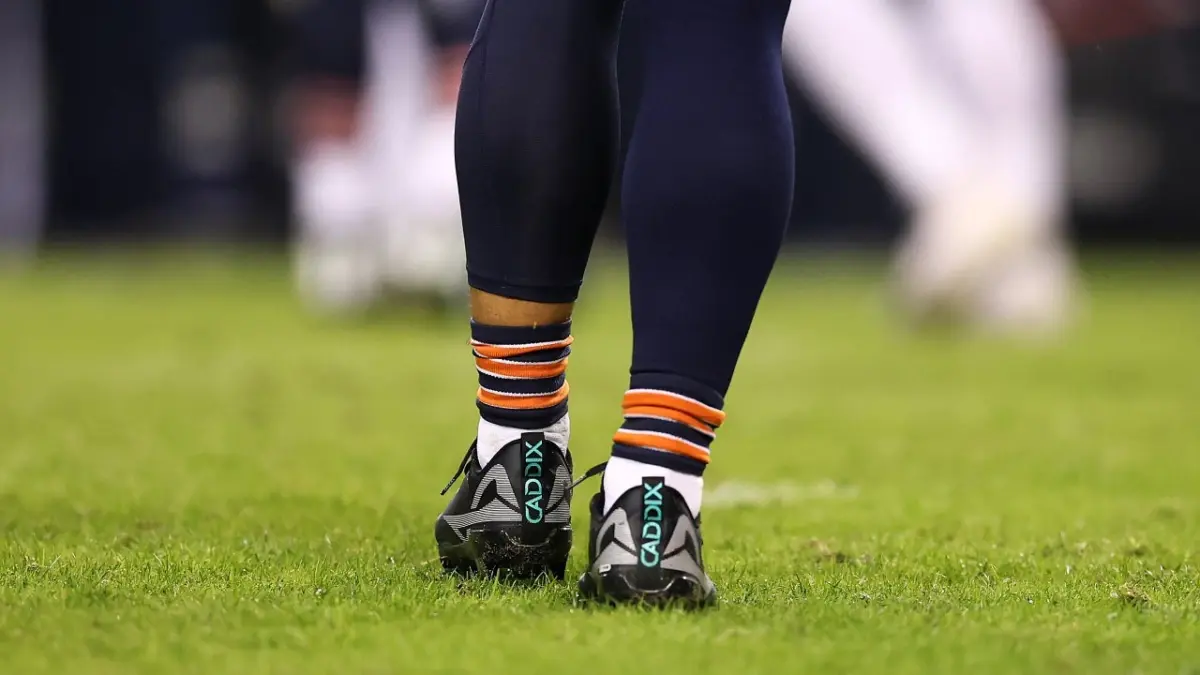
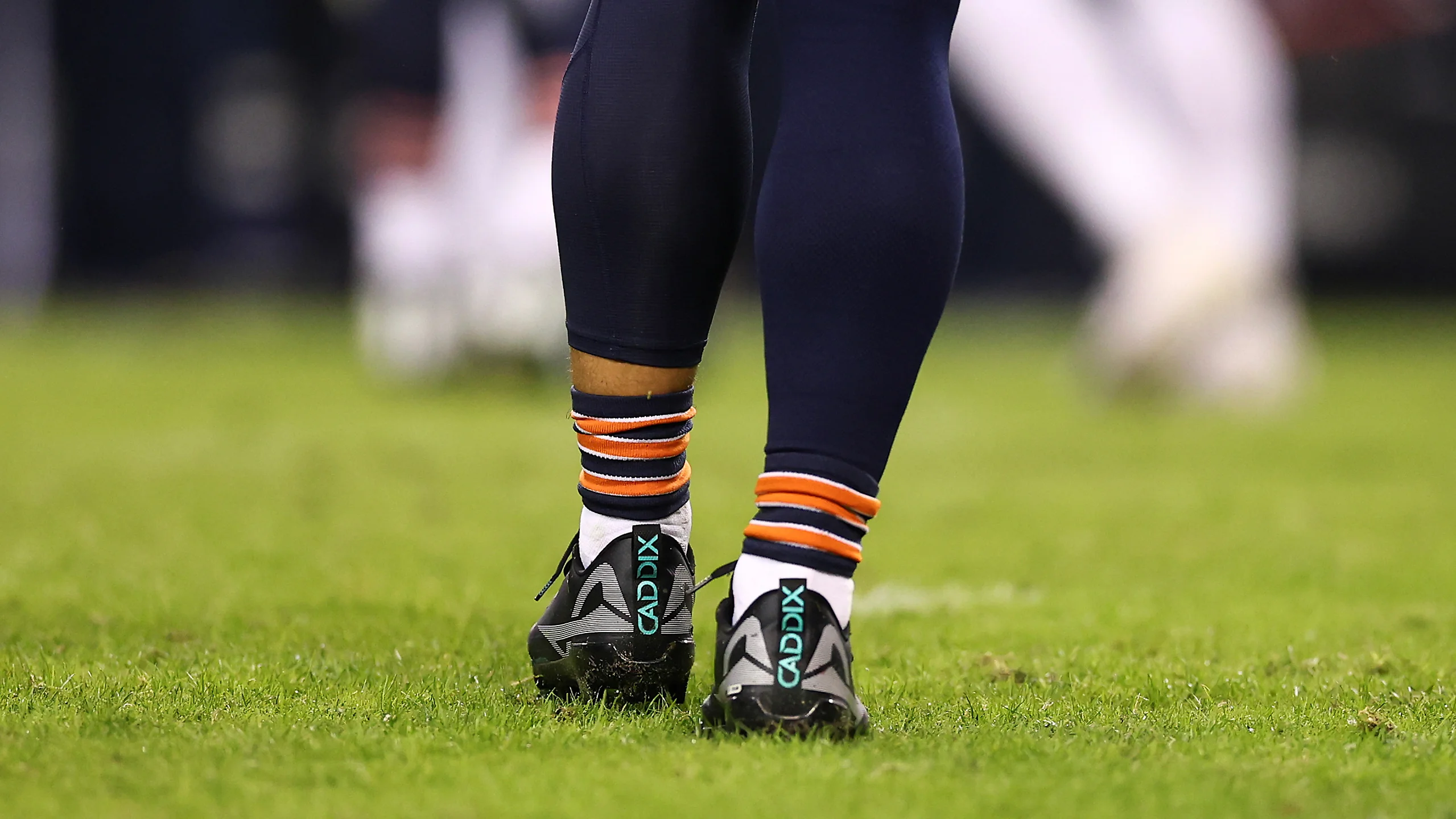
The scope of their locker room penetration is undeniable. During Week 9 of the National Football League season, all three star players notably took the field wearing Caddix cleats. According to internal counts kept by the company, more than 80 different players across the league have worn Caddix footwear during games this year alone. The momentum reached a dramatic peak in October, when Chicago Bears rookie quarterback Caleb Williams stepped onto the gridiron and left the company’s distinct logo clearly visible in back-to-back games. The league took swift notice, penalizing the young quarterback with a hefty $35,823 fine for violating uniform regulations.
The root of the issue lies in the strict corporate licensing agreements that govern professional football. While the NFL has officially approved Caddix cleats for game-day use from a safety and performance standpoint, the company is notably absent from the league’s exclusive roster of three licensed footwear partners: Nike, Adidas, and Under Armour. Because Caddix lacks a lucrative league sponsorship contract, NFL regulations forbid players from displaying unauthorized branding on the field. Consequently, players who swear by the performance benefits of the footwear are forced to meticulously tape over the company’s logo or wear the cleats completely unbranded.
In short, Caddix has managed to solve what is arguably the most daunting and critical problem facing any sporting goods startup: convincing elite, highly compensated professional athletes to voluntarily adopt and trust its product over established global giants. But this triumph has immediately thrust the company into an unusual second dilemma—figuring out how to get the general public to notice a brand whose identity is quite literally taped over on national television every weekend.
Why players wear them
To understand why professional athletes are willing to risk league fines and wear unbranded footwear, one has to look closely at the engineering happening underneath the shoe. At first glance, a Caddix cleat looks remarkably similar to any other piece of specialized athletic footwear on the market. The true divergence is hidden entirely in the sole.
In traditional athletic footwear, standard studs are rigidly fixed to the bottom of the shoe. When an athlete plants their foot into the turf, these conventional studs dig deeply into the ground and hold firm. For the most part, this is precisely what a player wants when accelerating, cutting, or changing directions on natural grass or artificial turf. However, that high level of traction creates a dangerous biomechanical trap. When a player’s foot stays firmly planted in the turf while the rest of their body and upper leg continues to turn with momentum, the resulting torque places immense stress on the lower extremities. This is precisely when vulnerable joints twist unnaturally and ligaments, such as the anterior cruciate ligament, can suffer catastrophic tears.
Caddix attempts to mitigate this inherent risk through a radically different approach to sole design. The company’s proprietary studs are engineered to flex and swivel slightly in any direction under specific pressure thresholds. According to the manufacturer, these innovative studs grip the turf just like normal, high-traction studs during standard movements, but are designed to give way and allow the player’s foot to come free once the rotational force reaches a dangerous level.
The underlying safety debate surrounding rotational traction is far from new. A widely cited 2013 study examining 555 high school football players revealed a stark correlation between cleat design and lower-body injuries. The researchers found that players whose cleats possessed the highest degree of rotational grip suffered noncontact leg injuries at more than four times the rate of athletes whose footwear featured the lowest degree of rotational grip.
Despite the compelling logic connecting reduced rotational friction to lower injury rates, whether Caddix’s specific cleats actually reduce injuries on the field has not yet been independently established by the scientific community. Jack Rasmussen, the founder and chief executive officer of Caddix, maintains that internal company testing showed their cleats performed better than any competing product on the market. However, Rasmussen has publicly characterized those crucial test results as being "privately owned," and the underlying data has not been made publicly available for independent peer review.
The lack of transparent, verifiable data has drawn scrutiny from experts in the field. John Wannop, the University of Calgary researcher who spearheaded the 2013 study on football footwear and rotational traction, addressed the situation candidly in an interview with Yahoo Sports, noting that the majority of Caddix’s specific performance and safety claims simply are not supported by publicly available data. As the startup continues its organic ascent through the locker rooms of professional sports, it must now navigate the delicate balance between winning the trust of elite athletes on the field and satisfying the demand for transparent scientific validation off it.