The current rush across the corporate world to integrate artificial intelligence often resembles a costly exercise in misplaced priorities rather than a coherent strategic movement. Across industries, enterprise leadership teams are making sweeping declarations about an automated future, yet the operational reality inside many organizations feels almost satirical. Management buys into high-level technology promises, enterprise licenses are procured, and employees are left to navigate a chaotic transition with minimal meaningful support.
For veteran observers of enterprise technology shifts, this scenario carries an overwhelming sense of familiarity. The missteps unfolding in executive suites today mirror the exact structural errors that plagued the enterprise landscape a decade ago during the height of the digital transformation era.
In 2014, digital strategy consultant Paul Boag authored Digital Adaptation, a book published by Smashing Magazine that analyzed how organizations were mishandling digital transformation and offered alternative frameworks for genuine organizational adaptation. Looking at today’s AI rollouts, the similarities between past and present enterprise blunders are striking. The primary mistake dominating corporate strategy remains identical: viewing a profound human and organizational shift as a mere technological upgrade.
It’s About People, Not Technology
While both digital transformation and artificial intelligence rely on sophisticated technological infrastructure, the software itself represents only the visible tip of a massive organizational iceberg. The underlying bulk of that iceberg consists of human behavior, workplace culture, operational habits, and communication structures.
During the digital transformation era of the 2010s, enterprise IT departments routinely focused their resources on deploying complex software suites. Enterprise resource planning systems, content management platforms, customer relationship management tools, and internal intranets were implemented across organizations. On customer-facing fronts, companies spent heavily to launch new websites, mobile applications, and early personalization engines.
However, management consistently overlooked the human element. Internal systems were frequently unintuitive and difficult to operate, while external customers often ignored the newly built features because the systems failed to align with their actual daily needs or desires.
Today, enterprise AI deployment is proceeding along a virtually identical track. Senior leadership teams, captivated by industry promises of immediate efficiency, are acquiring company-wide licenses for tools such as Microsoft Copilot Studio and declaring the deployment complete. In many cases, organizational preparation consists of little more than a generic high-level training presentation sent to staff, after which leadership considers its strategic duty fulfilled.
This approach leaves employees adrift. Workers are expected to seamlessly integrate complex modern tools into their daily workflows without guidance, all while facing intense top-down pressure to deliver measurable operational gains.
The pressure is significantly worse in the AI era due to widespread anxiety over job security. Today’s workforce has spent months reading media coverage about potential automated job displacement. Generic reassurances from senior leadership do little to alleviate these anxieties, particularly when technological implementations are introduced without clear human-centric strategies. Organizations must realize that adopting artificial intelligence represents a sweeping cultural change, carrying profound psychological and operational implications for their workforce.
Why Would Staff Want To Adopt AI?
To understand why enterprise AI initiatives are stalling, executive leadership must examine the transition from the perspective of the individual worker. From the baseline viewpoint of an average employee, the immediate personal benefits of enterprise AI adoption are far from obvious, particularly when weighed against fears that management might eventually use automated productivity gains to downsize the workforce.
Executive enthusiasm for AI is almost universally driven by the promise of increased productivity—enabling staff to perform significantly more tasks within shorter timeframes. However, within standard workplace structures, increased productivity rarely translates into direct personal benefits for the individual employee.
Under standard working conditions, employees remain required to fulfill their customary working hours. If an AI tool enables a worker to complete their standard daily output in less time, the typical institutional reward is simply an increased volume of work assigned within the same schedule. Without accompanying financial compensation, career advancement opportunities, or reduced working hours, staff members have little organic incentive to eagerly embrace tools that primarily increase their work velocity.
Before expecting employees to actively champion AI integration, organizations must build meaningful motivational frameworks. A practical starting point involves identifying the repetitive, tedious, or frustrating aspects of daily tasks that employees openly dislike, and explicitly framing AI tools as solutions to reduce those workplace friction points. Workers are substantially more open to operational change when it is presented as a direct mechanism to improve their daily working conditions.
However, identifying operational pain points should serve only as an initial step. To drive sustained engagement, management must align adoption efforts with tangible incentive structures, including clear pathways for career progression, adjusted compensation, or formal reductions in required working hours for those driving operational improvements.
Staff Need Time And Support To Adopt AI
Integrating artificial intelligence into a professional routine is not a simple operational adjustment. It requires individuals to re-examine, unpack, and rebuild procedural knowledge—the deeply ingrained habits and standard operating practices built over years, or even decades, of professional experience. Dismantling and replacing established workflows requires immense cognitive effort, yet most enterprise employees are attempting to do so under challenging daily conditions.
The modern corporate employee is frequently overloaded with existing tasks, operating under high pressure simply to keep pace with basic daily responsibilities. Expecting staff members to independently carve out hours to analyze complex new tools, experiment with prompt structures, and reinvent their operational workflows while maintaining standard output demands is unrealistic.
True adaptation requires dedicated time, thoughtful planning, and systematic experimentation. Sending employees to generic, one-size-fits-all training courses is fundamentally insufficient to unlock the real potential of emerging technologies.
Instead, organizations must invest in specialized, context-aware training programs tailored specifically to distinct departmental functions. A general overview of AI capabilities cannot provide the tailored insights needed by specialized teams, such as user experience (UX) design groups, who require focused methodology on applying AI to their distinct tasks. Enterprise training strategies must provide deep, function-specific education backed by sustained operational support.
Furthermore, formal top-down instruction represents only one component of successful technology adoption. Historically, the most effective institutional support emerges organically from peer-to-peer collaboration within the workplace.
Rather than focusing energy on convincing resistant staff members, organizations achieve far greater momentum by empowering early adopters. In almost every business, a small contingent of enthusiastic employees is already experimenting with AI tools independently, often without official directives. Leadership should actively group these early champions together, providing them with the dedicated time, authority, and resources to test applications and share practical discoveries.
This peer-led model reflects successful strategies from the digital transformation era. A decade ago, internal corporate gatherings where staff demonstrated actual digital tools they had built to their immediate colleagues proved far more effective in driving widespread software adoption than executive directives or broad corporate memos. Employees are significantly more inclined to modify their working habits when they observe a direct peer in a comparable role successfully applying a tool to solve everyday challenges. Leveraging this natural social proof allows enthusiasm to spread organically across departments.
However, fostering an environment of active experimentation introduces a critical operational reality: employees will inevitably make mistakes along the way.
It Needs To Be Safe To Fail
A dominant obstacle to successful AI integration is the risk-averse culture present in many corporate environments, where operational mistakes are routinely interpreted as evidence of personal incompetence. Because learning to leverage unpredictable, non-deterministic technology like AI inherently involves trial, error, and missteps, a punitive company culture creates a powerful barrier to meaningful adoption.
This dynamic closely mirrors the breakdown seen during earlier digital transformation initiatives. Senior leadership frequently demanded rapid digital modernization, only to express frustration when organizational change stalled. The root cause was clear: leadership was issuing contradictory directives. While asking employees to innovate and adopt unfamiliar digital tools, executives maintained rigid legacy key performance indicators (KPIs) and strictly penalized operational errors during annual performance evaluations. Under those conditions, employees recognized that attempting new approaches carried heavy career risks with minimal upside, making adherence to legacy routines the safest path.
Today, this dynamic has re-emerged in acute ways. Workers across various sectors report being admonished by management for consuming too many API tokens just weeks after receiving corporate directives to aggressively explore AI platforms. In other instances, staff members are subjected to such exhaustive lists of compliance warnings and behavioral restrictions that they become terrified of interacting with the tools altogether. When faced with mixed signals, employees logically conclude that sticking to traditional, manual workflows remains the safest professional strategy.
If management genuinely expects staff to adopt advanced digital tools, leadership must construct an environment where experimentation is safe. This requires actively adjusting baseline KPIs during adoption periods, modifying annual review criteria to reward learning, and deliberately relaxing certain operational metrics while employees work through the initial learning curve.
Handle Governance With Care
Acknowledging the need for experimentation does not mean enterprise AI can be deployed in a total regulatory vacuum. Clear governance is essential for protecting organizational assets and maintaining operational integrity. However, compliance frameworks are frequently mismanaged, falling into extremes that severely hinder adoption.
During digital transformation campaigns, corporate governance tended to swing between two damaging extremes: either it was entirely non-existent, leading to operational disarray, or it was so excessively rigid that it smothered creative problem-solving. This exact dynamic is unfolding again in the context of enterprise AI.
Employees require straightforward governance to understand operational boundaries, establish security parameters, and clarify institutional expectations. Yet organizations frequently default to distributing extensive compliance manuals filled with dense restrictions detailing what staff must not input into AI systems. This heavy-handed oversight reinforces employee anxiety and discourages practical engagement.
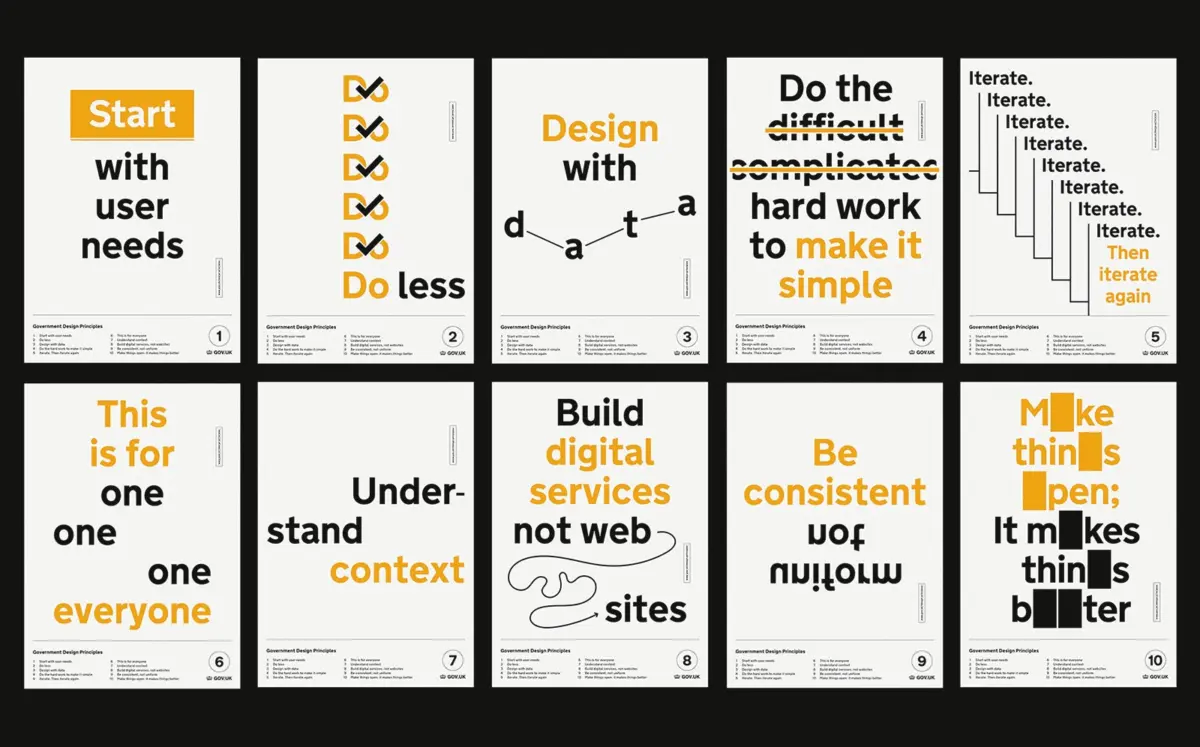
A far more effective approach is to establish a concise set of core guiding principles designed to be easily read, understood, and recalled—simple enough to fit onto a set of office posters.
This model draws direct inspiration from successful frameworks like the public-sector design principles pioneered by GOV.UK, which replaced sprawling corporate rulebooks with clear, memorable guidance. Beyond these foundational boundaries, executive leadership must demonstrate trust in their workforce, relying on staff common sense for day-to-day application.
Occasional errors will occur, but minor missteps are an unavoidable cost of organizational evolution. Management must accept this reality and design tech rollouts to absorb and mitigate small failures without shutting down employee initiative.

Adaptive Technological Rollout
From an IT perspective, rigid technology rollouts represent another major point of failure. Locking down software environments to a single enterprise vendor inevitably stifles innovation and limits practical utility.
A decade ago, overstretched IT departments regularly selected uniform software packages and forced them across entire enterprises with minimal consultation with the end-users. Any employee request for alternative software was subjected to exhaustive approval chains and sluggish steering committees. This extreme rigidity crippled the pace of operational change and contributed heavily to the high failure rate of digital transformation initiatives.
Today, enterprise IT divisions are repeating this pattern by mandating single, standardized platforms like Copilot across all departments and deeming the enterprise AI strategy complete. However, standardized systems often fail to meet the specialized needs of distinct internal teams.
Consider the experience of a specialized UX design team operating within a corporate enterprise. Management issued directives pushing for aggressive AI integration, and the UX team enthusiastically devised a plan to build an AI-driven user research repository and develop dynamic AI personas to streamline their design work. On paper, the scenario represented an ideal enterprise case study: forward-thinking management, an engaged team, and high-value internal use cases.
However, practical progress ground to a complete halt because the corporate-mandated platform lacked the technical capabilities required to realize the team’s project. The design group found itself trapped in corporate bureaucracy, attempting to convince a slow-moving AI steering committee to approve an alternative software suite tailored to their technical requirements. As weeks stretched into months, the team’s initial excitement dissolved into frustration and disengagement.
When corporate infrastructure fails to support daily operational needs, employees inevitably seek workarounds. During the digital transformation era, this dynamic sparked the rise of "Shadow IT," as staff members bypassed corporate firewalls to use unapproved consumer platforms like Dropbox or Google Docs to fulfill basic work duties.
Today, corporate rigidity is driving an identical trend: Shadow AI. When internal corporate AI platforms prove inadequate for specific tasks, employees quietly use personal ChatGPT or Claude accounts on personal smartphones or home laptops to complete their work.
This practice introduces severe enterprise security risks far worse than the scenarios official restrictions were designed to prevent. Sensitive corporate data and proprietary information end up uploaded into unauthorized third-party platforms operating entirely outside corporate visibility, security monitoring, or compliance oversight. By attempting to completely lock down the software environment, management simply pushes operational risks into invisible, unmanaged spaces.
The instinctual corporate reaction to Shadow AI is to enforce harsher bans, restrict external websites, and issue warnings of disciplinary action. However, punitive measures rarely resolve the root issue and invariably drive the behavior deeper underground. Management must recognize that Shadow AI is an invaluable diagnostic symptom, highlighting precisely where officially sanctioned software options are failing to support employee workflows.
Instead of penalizing staff, leadership should use Shadow AI as a learning mechanism. Management should engage in open, transparent discussions with staff to identify which unauthorized tools are being utilized and uncover the specific operational gaps in the current enterprise tech stack. Those insights should directly guide the next phase of official software procurement.
Managing an evolving, flexible software environment presents clear technical challenges for IT departments, but during early adoption phases, organizations must tolerate a degree of flexibility. Allowing staff to test varied AI applications enables departments to identify which specialized platforms align with their distinct operational needs. Standardized software locks can be introduced later, once actual organizational needs are fully understood.
A Dangerous Time
For many corporate risk management teams, adopting a flexible, human-centered deployment strategy feels inherently risky. Corporate leadership naturally inclines toward centralized control, structured policy rollouts, and defensive compliance structures designed to prevent mistakes.
However, true organizational evolution cannot occur without managed risk. In a rapidly shifting technological landscape, the long-term enterprise danger of moving too slowly, alienating talent, and missing structural opportunities far outweighs the immediate risk of allowing controlled operational experimentation.
The single greatest danger facing enterprises today is treating artificial intelligence strictly as a technical rollout while ignoring the complex human dynamics underlying organizational change. AI integration is fundamentally not a software installation task; like digital transformation before it, it is a challenge of human behavior, workplace culture, and operational strategy. Organizations that recognize this reality and pivot their focus toward supporting, incentivizing, and empowering their workforce will navigate the transition successfully, while those relying strictly on software licenses and corporate mandates will find themselves repeating the failures of the past.