Over the past several decades, the definition of what it means to be a "creative professional" has undergone a continuous transformation. The industry was once populated almost exclusively by classically trained veterans working in specialized disciplines such as print publishing, desktop design, and traditional post-production. Today, design has been radically democratized. Tools are more accessible than ever, media consumption habits have fragmented across platforms, and the boundaries of artistic production continue to shift.
As artificial intelligence platforms like Adobe Firefly mature and autonomous or agentic tools become embedded into everyday creative applications, the technology landscape is experiencing one of its most pivotal shifts to date. These rapid developments have sparked essential conversations across design studios, agency floors, and freelance networks. How does a creative software leader innovate for an AI-driven future without alienating the dedicated community of professionals who built their careers on its foundational tools? And what will the creative professional look like in the years ahead?
To examine how the industry is adapting, Deepa Subramaniam, Adobe’s Vice President of Product Marketing for Creative Professionals, shared insights into how the software giant views the evolving workforce, the anxieties surrounding generative AI, and the shifting dynamics between human artistic vision and machine-assisted productivity.
Redefining the Modern Creative Professional
The shift from analog to digital, from web to mobile, and now from static tools to artificial intelligence has fundamentally altered creative workflows and client expectations. Yet despite these monumental technological shifts, Adobe maintains that the core identity of the creative professional remains unchanged.
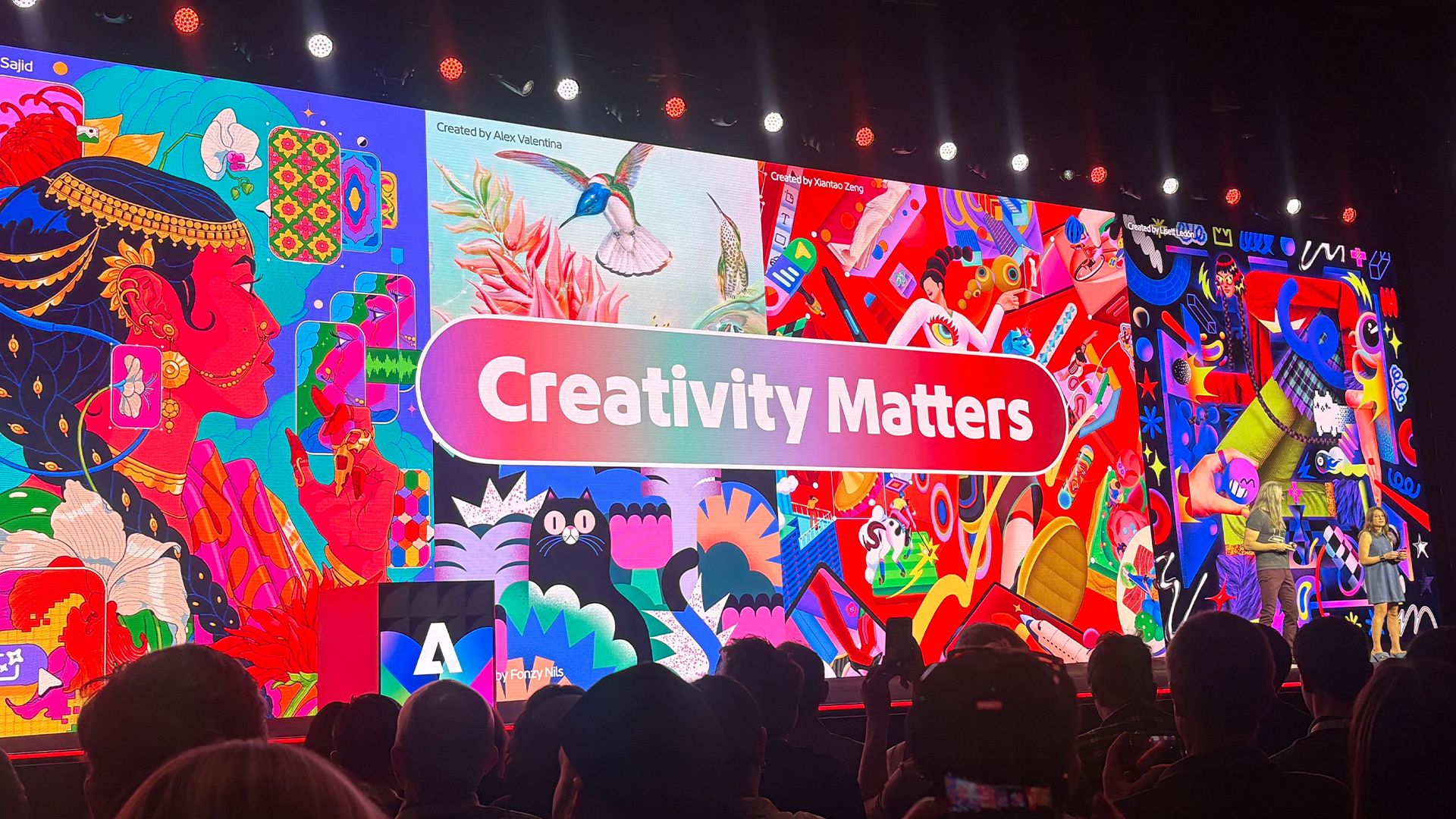
"Ultimately, a creative professional is someone whose job it is to be creative — that can be as broad or as narrow a definition as you want," Subramaniam explained. "The job of a creative professional has dramatically changed: print to digital, digital to web, web to mobile, and now we are in this moment of things changing with AI. Workflows are changing; the expectations around creative work are changing because of what AI unlocks."
While technical tools, workflow architectures, and distribution channels evolve, Subramaniam emphasizes that software alone cannot replicate the core elements of creative work: personal style, critical judgment, and conceptual vision.
"How they express that taste and how they put their creative expression out into the world is changing," she noted. "They have more options for how they want to create: tools, agentic features, workflows in an app, mixing of modalities and categories. But still, the creative professional is the person with taste, creative vision, and creative expression."
Navigating AI Anxiety Through User Agency and Choice
The rapid arrival of generative AI tools across commercial art and design software has created palpable apprehension throughout the creative community. Concerns over job displacement, loss of artistic control, and algorithmic automation have left many creators questioning their place in an automated landscape.
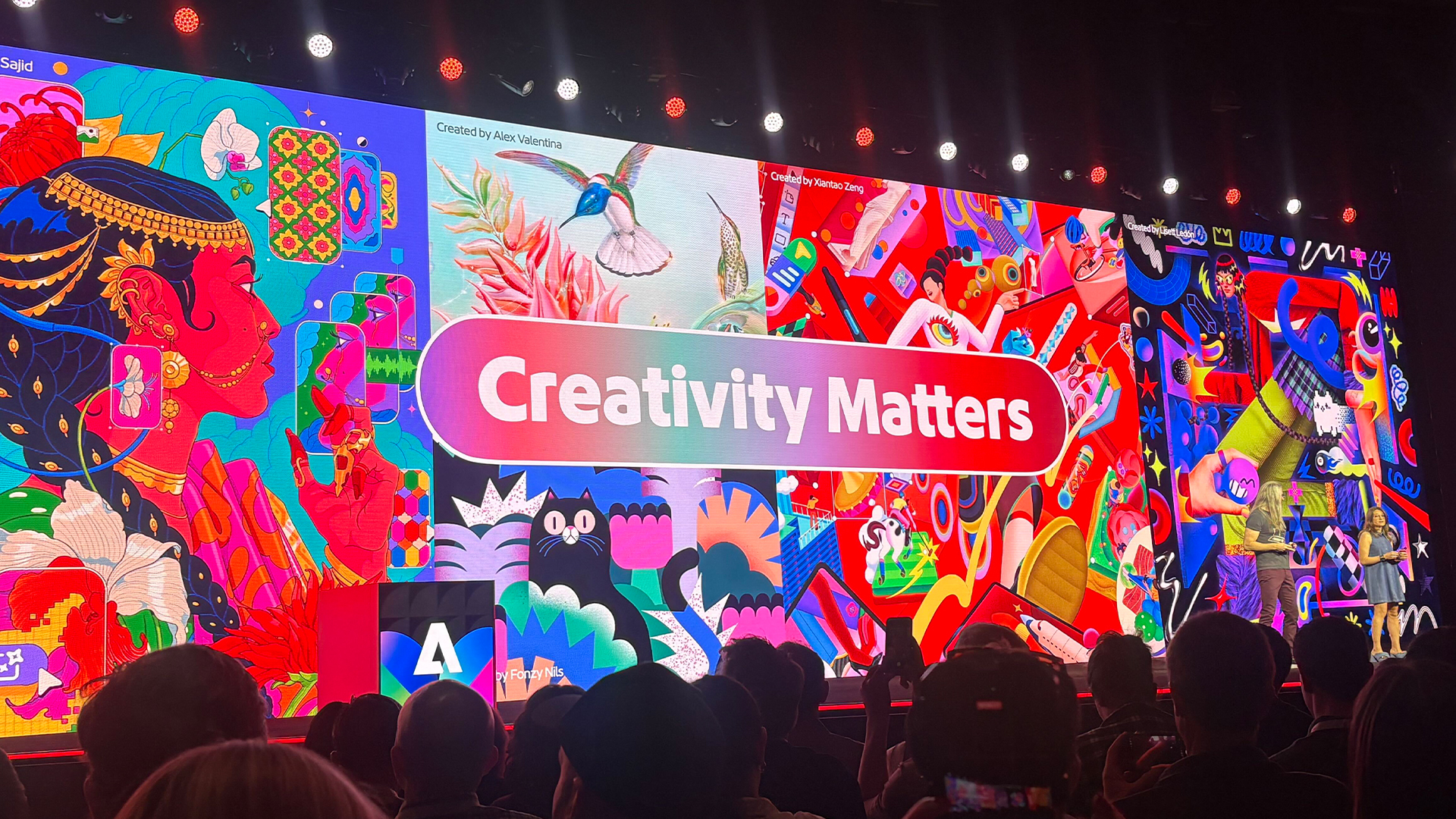
Subramaniam believes that mitigating AI-related anxiety starts with granting creators total autonomy over how—and if—they integrate artificial intelligence into their personal artistic process.
"It’s not our job to tell you how to create — it’s our job to support you in how you want to create," Subramaniam stated. "It comes down to giving you choice. The anxieties get flared when you feel that there is no choice for you, like you’re being led down a particular path rather than choosing that path intentionally for yourself."
Providing choice means structuring tools so users can decide how deeply AI assists their work. Creators can choose to work entirely within flagship applications designed for hyper-specific disciplines—such as Adobe Photoshop for image editing or Adobe Premiere Pro for video and audio editing—or experiment within multimodal platforms like Adobe Firefly. Furthermore, creators can decide whether an AI assistant functions as a passive background tool ("in the sidecar") or takes on more active task execution ("in the driver’s seat").
"We’re just trying to give you a lot of choice," Subramaniam added. "I find that when you give creatives a choice, they make an informed decision. The anxiety lessens because it’s the creative taking the steering wheel and making that choice. We want to give them a menu of options to see what kind of shots they can call."
Addressing the Content Demands of a Multi-Platform World
Beyond technological displacement, modern creative professionals face another persistent challenge: an insatiable commercial demand for content volume. Today’s designers, videographers, and marketing teams are expected to produce assets tailored across dozens of screen sizes, aspect ratios, target audiences, and digital channels at unprecedented speeds.
Acknowledging this operational pressure is crucial to developing tools that support creators rather than burn them out.
"Acknowledging that it’s happening is the first step; then it’s about helping to alleviate the pressure from the insatiable need for content," Subramaniam said. "The need to create across different media formats, for different audiences, on different device types — it’s challenging to stay on top of that."
Rather than using automated tools to replace the creator’s role, artificial intelligence can serve as a productivity multiplier that handles time-consuming asset variations and formatting adjustments.
"Staying on top of that is important and necessary to keep navigating the industry. Acknowledging that is powerful — people look to Adobe to acknowledge and guide the way sometimes," she noted. "AI does give a few ways for you to stay on top of that pressure for content, but not replace your creativity. It can augment your productivity so you can stay on top of all that growing expectation."
The Rise of the ‘Generalist Specialist’ over the Next Decade
Looking ahead at the next decade of creative work, the traditional boundaries separating specialized creative disciplines are blurring. Historically, creative departments were organized around strict siloes—photographers shot imagery, graphic designers built layouts, video editors managed cuts, and sound engineers mixed audio. Modern digital workflows increasingly demand that individuals operate across multiple disciplines seamlessly.
Subramaniam envisions a future where creative professionals maintain a core domain specialty while expanding their skill sets as generalists across adjacent fields.
"I wish I had a crystal ball. We’re seeing an increasing need to touch every part of the creative lifecycle," Subramaniam observed. "You’re ideating, you’re creating, you’re doing the post-production, you’re scaling — that’s only going to continue."
This trend pushes professionals to broaden their capabilities without abandoning their primary expertise. Graphic designers are now expected to produce video content for social channels, while video editors are increasingly tasked with handling color grading, sound design, and motion graphics within unified software environments.
"There is a move to creative professionals having a speciality, but also embracing being a generalist too," Subramaniam explained. "Like graphic designers being social media whizzes or video editors also being able to do sound and colour. There’s still a need to be a specialist, but augmented with generalist capabilities in other mediums and categories. That’s why we continue to focus on making our applications interconnected and multimodal because that pressure isn’t going to go away."
Creative Vision versus Content Creation: Two Sides of the Same Coin
The rapid growth of the creator economy, powered by social media influencers and independent content creators, has altered how creative output is defined. While some view traditional creative professionals and modern digital creators as distinct groups, Subramaniam sees them as overlapping facets of the same broader ecosystem.
"In my mind, when I hear ‘creative professional,’ that’s distinct from content creator or influencer — but maybe they’re two sides of the same coin," Subramaniam reflected.
As software automates minor, repetitive tasks—often referred to as "atomic tasks"—the distinction between content creation and high-level artistic direction centers heavily on creative strategy and individual taste.
"It’s about creative vision," Subramaniam noted. "The role of a creative professional is changing rapidly from repetitive atomic tasks, allowing them to focus on higher-level creative thinking. Some see that as a blessing and a boon. Others see that as a pretty disruptive change to how they operate. Everyone’s on their own journey of acknowledging and accepting that change. A creative professional’s vision and direction are becoming much more important."
Generational Shifts: From Skepticism to AI-Native Creation
The adoption of artificial intelligence within the creative industries is far from uniform. Established professionals who spent decades honing manual techniques often approach generative software with caution, while emerging talent enters the industry taking these digital assistants for granted.
Subramaniam notes that initial resistance frequently gives way to targeted integration as creators discover how generative tools fit into their personal workflows.
"Oh yeah, definitely. I’ve talked to people who were staunchly like, ‘I have my creative process. Why should I change it? It’s been my process for two decades,’" Subramaniam recalled. "I absolutely meet people who are staunchly not interested in folding AI into their workflow. And when I’ve talked to them sometime down the road, often they have adopted some form of AI into their craft. Maybe it’s subtle, maybe it’s pointed, but I think that just speaks to the fact that everyone’s on their own personal journey of evolving how they create."
At the same time, an entirely new demographic of talent is entering the workforce having known only AI-integrated creative software.
"At the same time, this next generation of creatives is entering the industry only knowing AI," Subramaniam added. "There are creatives who learned and honed their craft well before AI models became a thing, and there are creatives right now who are learning their creative expression in real time alongside it. It’s wild."
Why AI Is Valuable for Creative Professionals
When stripped of marketing hyperbole and industry anxieties, the practical value of artificial intelligence in design software comes down to a straightforward metric: reclaiming lost time. By delegating mechanical, repetitive tasks to intelligent software, creators can dedicate more energy to concept development, artistic exploration, and storytelling.
"Because it can, when wielded appropriately, be a time saver," Subramaniam concluded. "It’s not meant to replace your creativity. It’s meant to enhance your creativity. So you can be creative and get stuff done faster, and be more creative. I really believe that is where AI is valuable."
Ultimately, software updates and machine-learning models aim to make creative work more engaging by eliminating administrative overhead.
"Whether it’s creative craft or software development, AI can take the un-fun parts of your job off your plate to prioritise the fun parts of your job," Subramaniam said. "That’s the journey we’ve been on with integrating AI thoughtfully into our portfolio, and people’s usage and reception of it seems to prove that we’re onto something."