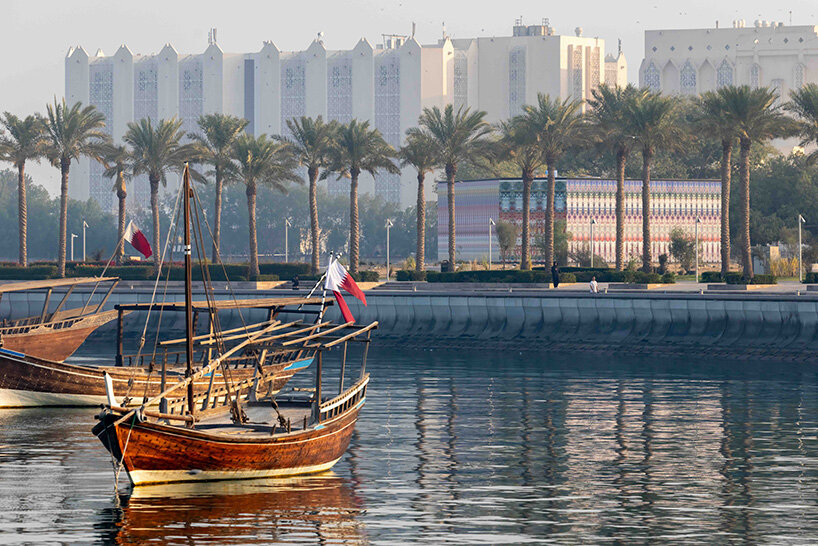
DOHA—Art and architecture converge along the waterfront of MIA Park as the Doha Pavilion: Gerhard Richter officially opens to the public. Conceived as a freestanding work of art and architecture, the permanent pavilion sits outside the iconic Museum of Islamic Art in Doha, Qatar. Realized in close collaboration with Selldorf Architects, the structure houses a carefully curated collection of paintings and sculptures by the renowned German artist, including several works created specifically for the site-specific installation.
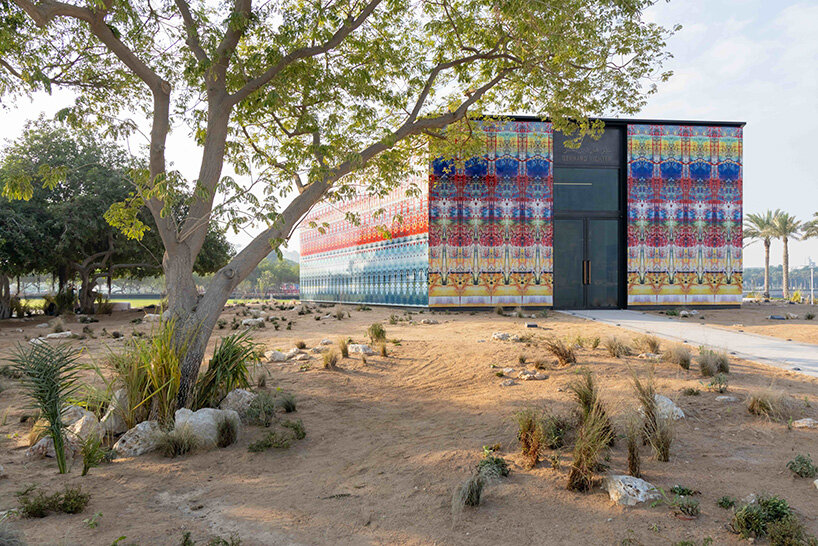
The hexagonal pavilion translates Richter’s decades-long investigation into abstraction, repetition, and perception into a physical spatial experience. Its striking patterned exterior draws a thoughtful connection between the artist’s contemporary methodology and the rich geometric traditions of Islamic art. The opening of the permanent structure coincides with the Qatar Creates Fall/Winter 2026–27 program and the inaugural edition of Rubaiya Qatar 2026, an international visual arts quadrennial running through April 30, 2027.
A Dialogue Between Modern Abstraction and Islamic Geometry
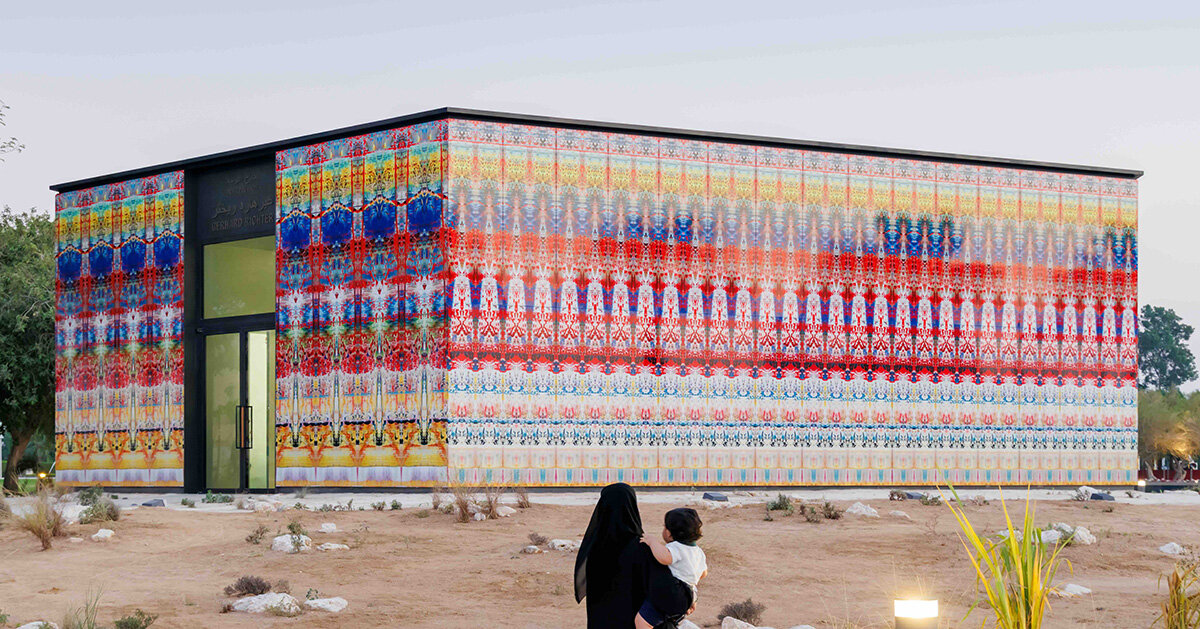
The six exterior walls of the newly unveiled pavilion serve as a canvas, featuring intricate decorative patterns derived directly from Richter’s Abstract Painting (724-4), which was originally created in 1990. The journey toward these exterior facades began years earlier, rooted in a rigorous mathematical process the artist initiated in 2010. During this period, Richter digitally divided his original abstract composition into progressively smaller vertical strips, eventually reaching an astonishing 8,192 distinct sections.
Each individual strip was then mirrored and systematically repeated to produce a symmetrical, mesmerizing horizontal pattern that now wraps entirely around the pavilion’s exterior. These complex geometric rhythms evoke the repeating symmetries and interlaced arabesques historically found throughout Islamic visual culture. By merging his own experimental approach to abstraction with the region’s historic artistic traditions, Richter has established a profound cross-cultural dialogue through the building’s very skin.
Inside the Pavilion: Strip Paintings, Towers, and Mirrored Interiors
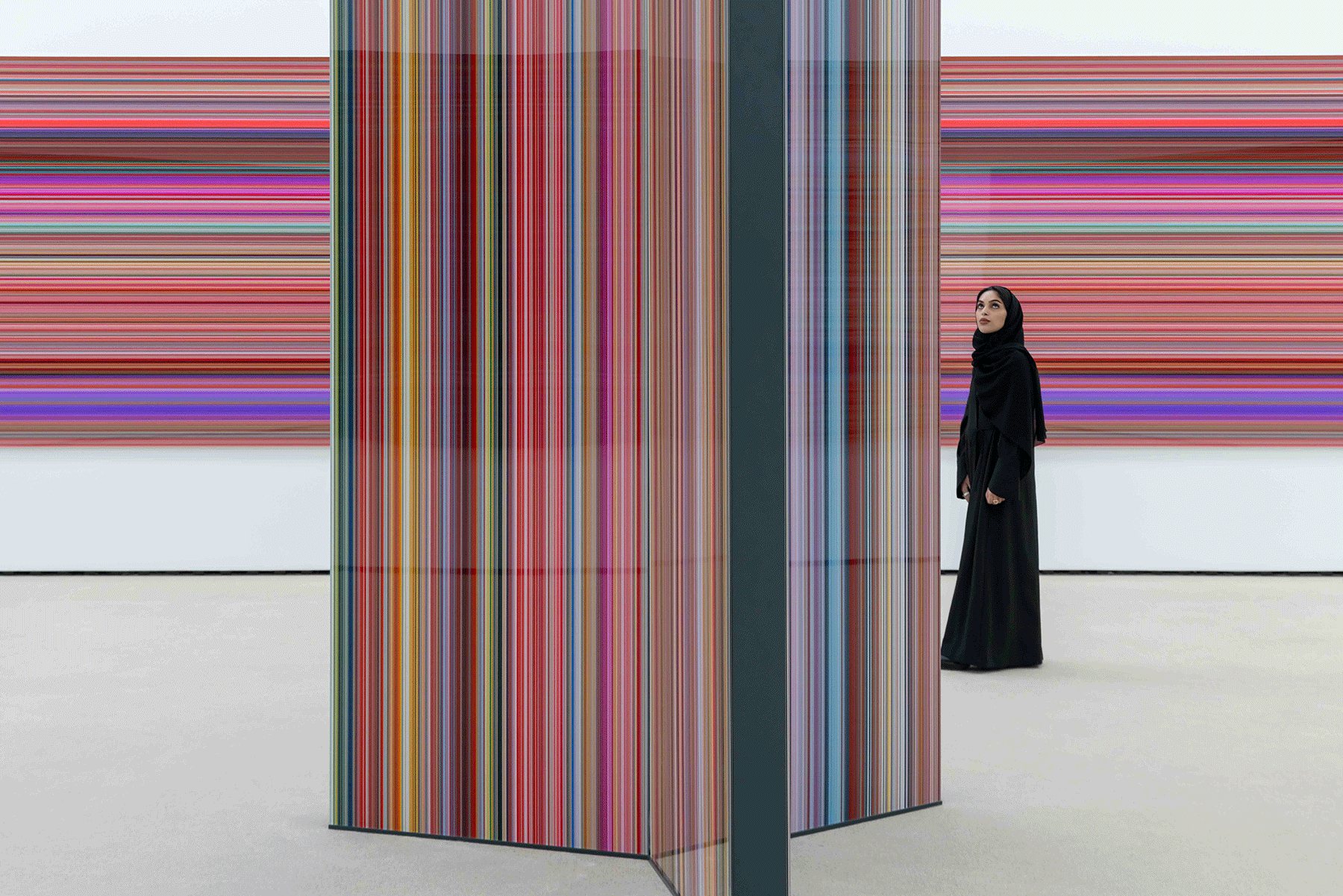
Stepping inside the pavilion reveals an immersive environment defined by light, reflection, and rigorous geometry. Three new large-scale works from Richter’s celebrated Strip series—a body of work that began in 2011—are prominently displayed throughout the interior space. These pieces translate the original abstract painting into thin horizontal slices, each measuring an extraordinarily delicate 0.08 millimeters wide. Through fragmented color and continuous repetition, the compositions challenge traditional notions of painting as a static, two-dimensional medium.
At the literal and conceptual center of the pavilion stands STRIP-TOWER (2026), a tripartite freestanding sculpture designed by Richter specifically for this permanent home. Complementing the central tower are two large, floor-to-ceiling mirrors positioned on the structure’s narrower walls. Belonging to a significant body of reflective work the artist began exploring in the 1980s, these surfaces capture both the surrounding artworks and the visiting public. The mirrors create constantly shifting visual relationships, multiplying the internal geometry and offering an evolving, dynamic sense of space.
Extending the artistic intervention beyond the interior walls, a stone sculpture titled Brunnen (Well) has been installed just outside the structure, anchoring the pavilion firmly within its landscaped park surroundings.
A Vision Realized Through Time and Place
The conceptual roots of the Doha Pavilion stretch back more than a decade. The idea first took shape during a visit Richter made to Doha in 2013, just two years into developing his groundbreaking Strip paintings. Struck by the distinctive architecture, rapid development, and rich history of the city, the artist began to envision a permanent structure that could unite the various thematic threads of his expansive career.
"My trip to Doha in 2013 came two years into developing my Strip paintings, and the city’s architecture and history sparked an idea for a pavilion that could unite the thematic threads of that body of work," Richter explained, reflecting on the long gestation of the project. "Doha is the right place and the only place for my Pavilion."
The realization of this vision was made possible through a partnership with Selldorf Architects and stands as a lasting legacy of the Qatar-Germany 2017 Year of Culture. Situated within MIA Park, the pavilion joins an elite roster of public artworks by internationally acclaimed creators, including Richard Serra, Nairy Baghramian, and Peter Fischli and David Weiss.
According to Qatar Museums Chairperson Sheikha Al Mayassa bint Hamad bin Khalifa Al Thani, the permanent installation fulfills a vital cultural mission. The pavilion aims to connect contemporary artistic practices with the historic geometric traditions of Islamic visual culture, ensuring that world-class art remains accessible as a vibrant part of everyday public life in Qatar.
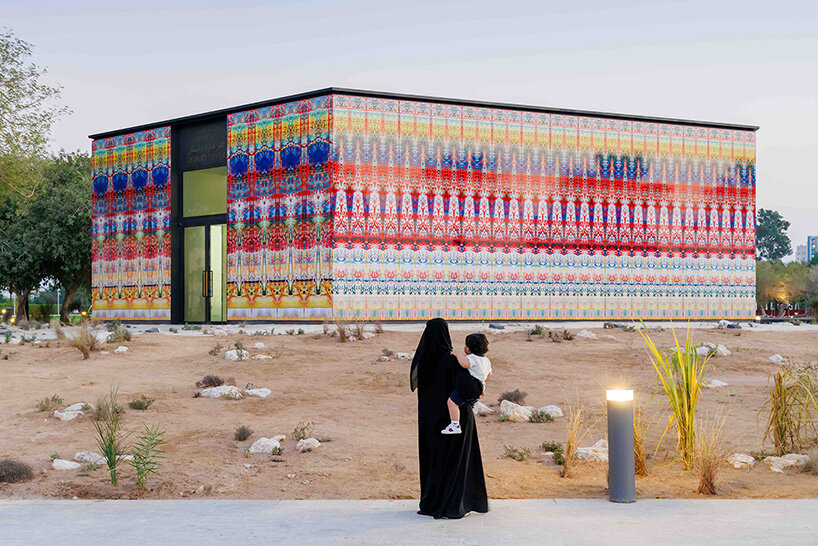
By integrating the building’s exterior facade, interior installations, and reflective surfaces, the pavilion transforms the viewing experience. Visitors do not merely look at paintings on a wall; instead, they move through a living, breathing architectural space that extends Richter’s lifelong interrogation of abstraction into the physical landscape of Doha.