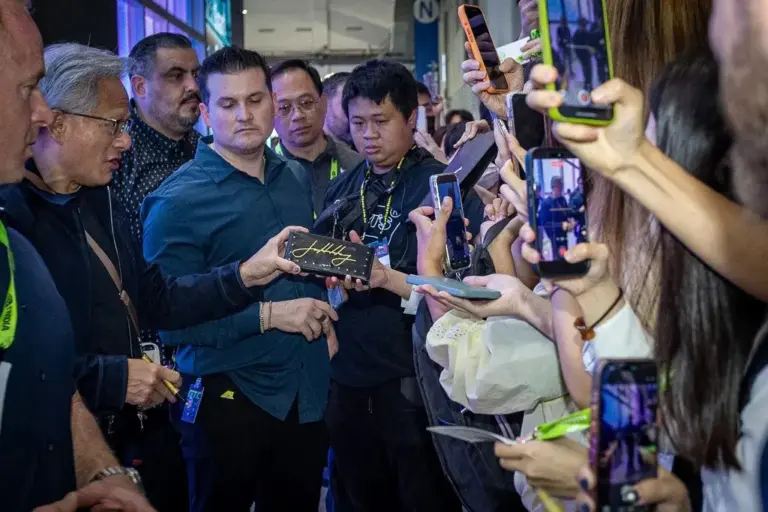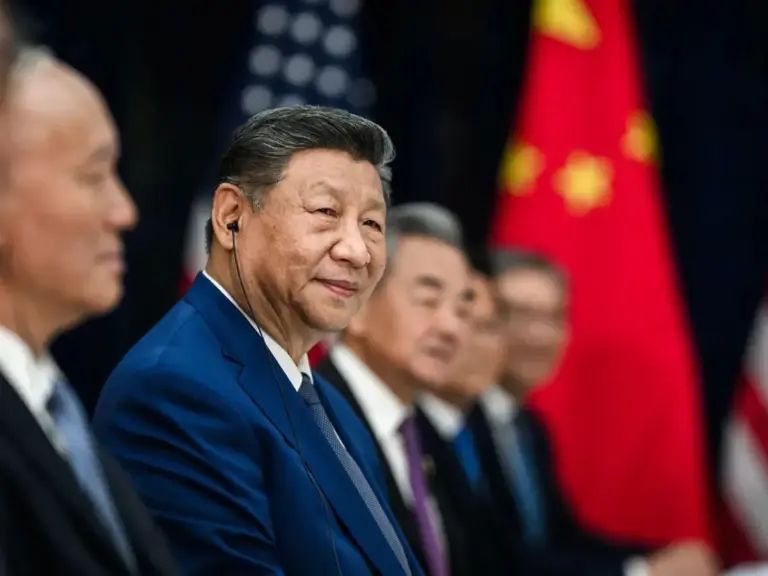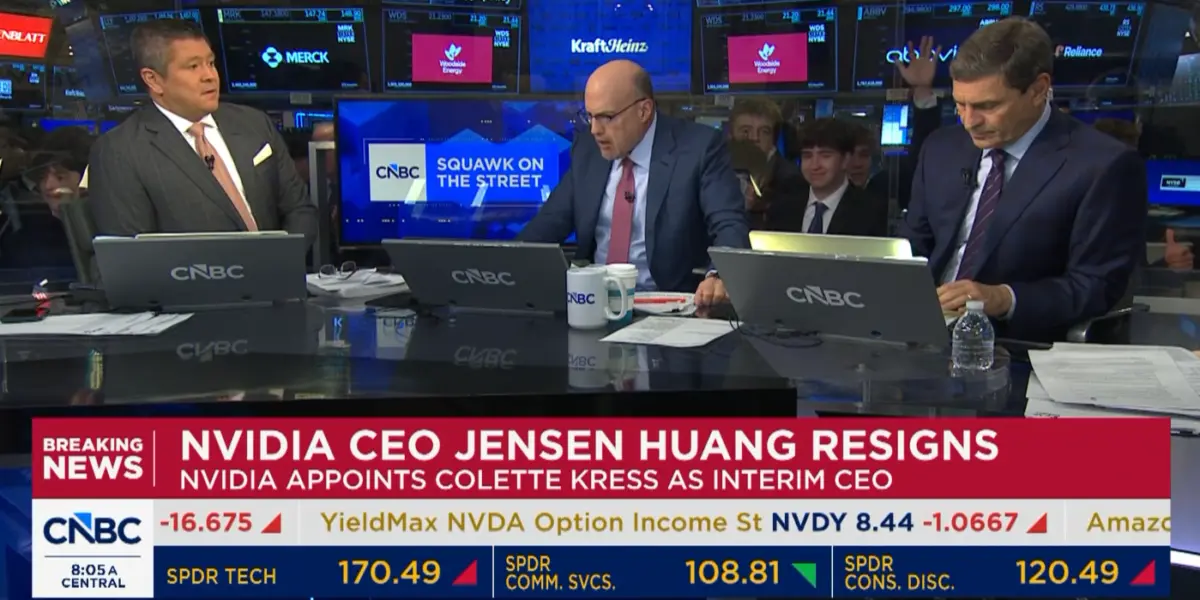
Jensen Huang’s remarkable three-decade reign as the visionary leader of Nvidia came to a stunning and abrupt halt on Thursday morning, following explosive reports detailing multiple extramarital affairs, including allegations involving a woman suspected of being a Chinese intelligence operative. This sudden departure has sent severe shockwaves through the artificial intelligence industry and global financial markets, occurring precisely at a time of unprecedented growth where Nvidia reigns supreme as the premier chip supplier powering the modern technological landscape.
Huang, who co-founded the tech titan in 1993 and guided it from a niche graphics card manufacturer into a cornerstone of the modern global economy, resigned immediately from his roles as president, chief executive officer, and member of the board of directors. In the wake of his sudden exit, Nvidia announced that Chief Financial Officer Colette Kress will step in immediately as interim chief executive officer while the board of directors initiates a comprehensive search for a permanent successor to navigate the company through this unprecedented crisis.
The rapid succession of dramatic events unfolded live on CNBC during prime morning business hours, a vital window when global investors, analysts, and traders tune in for critical updates on the health of the stock market. The network’s flagship program, Squawk on the Street, was broadcasting live when the breaking news hit the newswires. Carl Quintanilla, co-host of the program, sat down with TVNewser for their ongoing "5 Questions For…" series to detail exactly how the chaotic newsroom handled the breaking developments and to analyze the broader, systemic implications of Huang’s shocking resignation.
What happened when the news broke that Jensen Huang had resigned?
Recounting the dramatic moments inside the studio, Quintanilla explained that the network’s morning broadcast Squawk Box was live on air—conducting an interview with a guest regarding developments in the cryptocurrency sector—when the breaking news alert flashed across the terminal wires.
"Our anchors interrupted and got right to the details," Quintanilla shared. "It happened about ten minutes before the top of the hour, so we quickly re-wrote our 9 a.m. lede copy."
Describing the atmosphere inside the studio as the story developed, he noted that while the focus was intense and urgent, it avoided descending into typical newsroom panic. "The vibe on set, I’d say, was focused and urgent—but it wasn’t newsroom ‘chaos’, with producers screaming or anything like that. We’d been bracing for news. This thing had been building up to a crescendo all week."
Why should regular viewers care about what’s going on with Nvidia?
While corporate governance scandals usually remain confined to financial pages, Quintanilla emphasized that the fallout from Nvidia’s leadership crisis extends far beyond Wall Street boardrooms, touching the daily lives and economic security of everyday citizens.
"Well, if they own the stock, they’ve lost nearly $2 trillion. So there’s that," Quintanilla pointed out. "But even if they don’t, it’s a company that designs the backbone of artificial intelligence. It funds and supports dozens of others that are building out AI—which is responsible for nearly half of America’s economic growth."
The implications of the scandal extend deeply into national security and international relations, raising critical questions about the security of domestic technology and federal oversight. "It potentially could reveal a multi-billion smuggling ring of our most precious technology to the Chinese, and worst case: it could show that the government knew about it and looked the other way. It has the potential to be the biggest corporate scandal in decades."
Does Nvidia’s performance affect the global economy?
Addressing concerns over whether the leadership vacuum and associated scandals would immediately trigger broader economic instability, Quintanilla suggested that immediate operational collapse is unlikely, though systemic questions remain.
"Not right away," he noted. "Most of its business for 2027 is already in the books. And even if they lose customers, there are rivals ready to take up the slack. Companies like AMD, Broadcom and Google have already made inroads with their own chip designs."
Despite the massive wipeout of market value, the broader financial markets have demonstrated surprising resilience. "The overall stock market has actually been pretty stable here, and doesn’t seem to be pricing in any kind of economic collapse," Quintanilla said. "The bigger implications may involve the Trump Administration’s oversight, or lack thereof."
What is the biggest challenge in covering a fast-developing story like this?
Reporting on a fast-moving corporate and geopolitical scandal requires immense journalistic discipline, particularly when dealing with a figure who has enjoyed near-mythical status within the technology sector for decades.
"Probably keeping an open mind about what’s still to come," Quintanilla explained when asked about the difficulties of covering the evolving narrative. "There’s a huge contingent that still wants to give Nvidia every benefit of the doubt, and I get it. The company—and Jensen Huang—were revered. They made investors rich and have created some monumental technology."
However, the rapid downfall serves as a stark reminder of the inherent vulnerabilities at the highest levels of global enterprise and government. "As we get reminded every so often, business executives are fallible. Governments and politicians are fallible. We need to be prepared for all kinds of outcomes as the layers of this onion get peeled back."
What is the most riveting part of this story for you?
Reflecting on the psychological and historical dimensions of the crisis, Quintanilla admitted that the most compelling aspect of the unfolding drama is trying to understand the motivations behind the self-inflicted downfall of one of the world’s most influential executives.
"Aw, man. I suppose we’re all just trying to get into Jensen Huang’s head at the moment," he said. "How does a guy squander his level of global influence, wealth, and stardom? And for what? For the affair? Was it recklessness? A false sense of invincibility? Or were there other motivations we don’t know about yet?"
Concluding his assessment of the historic corporate tragedy, Quintanilla noted that financial analysts and observers have quickly adopted a powerful classical metaphor to describe the executive’s unprecedented plummet from grace. "Wall Street analysts have been calling him ‘Icarus,’ which seems appropriate. I just don’t think we’ve ever seen an Icarus fall from this high an altitude."