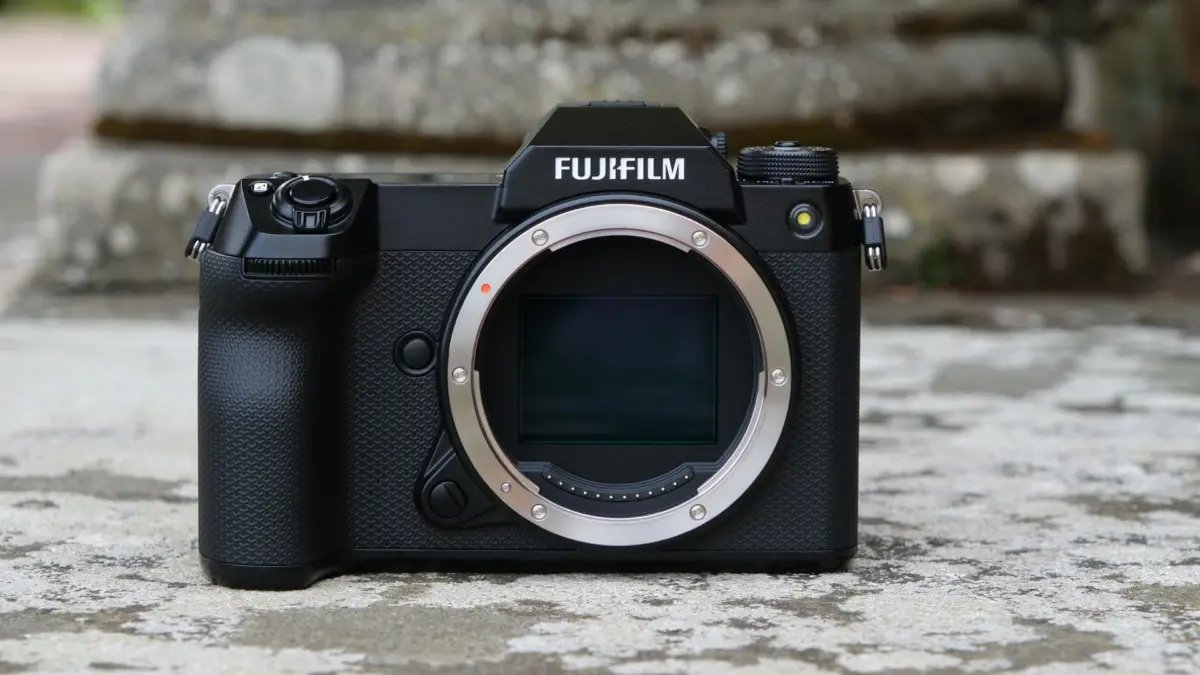
Fujifilm has rolled out a fresh round of firmware updates targeting three of its prominent GFX series medium-format cameras, including the ultra-exclusive and high-profile special edition of the world’s highest-resolution compact camera to date.
The latest software packages are now available for download across several of the brand’s flagship systems, addressing background performance stability and system refinement. While these releases do not introduce major headline-grabbing features or sweeping functional overhauls, they represent an important maintenance step for professional photographers utilizing Fujifilm’s high-end medium-format ecosystem.
The cameras receiving the new firmware include the specialized GFX100RF Fragment Edition, alongside the versatile and widely utilized GFX100S II and the high-performance GFX100 II. According to the manufacturer’s release notes, the updates focus exclusively on minor bug fixes and behind-the-scenes optimizations designed to ensure smooth daily operation.
GFX100RF
The GFX100RF, which stands out as a unique entry in the high-resolution compact category, has been updated to Version 1.14. This specialized variant has generated significant interest among photography enthusiasts and design circles alike due to its distinctive aesthetic approach.

The limited-edition camera features a meticulously hand-polished mirror-like finish applied across its black aluminum body, creating a striking visual contrast that sets it apart from standard production models. Alongside its bold design, the camera packs the immense resolving power characteristic of the GFX lineup into a more portable form factor, allowing photographers to capture extraordinary detail in a streamlined package.
The transition from Version 1.13 to Version 1.14 is straightforward, addressing minor operational anomalies and ensuring continued reliability for users of this high-end compact device. Photographers can access the new installation file directly through the official Fujifilm global support portal.
GFX100S II + GFX100 II
In tandem with the compact edition update, Fujifilm has also released new firmware for two of its core interchangeable-lens medium-format workhorses: the GFX100S II and the GFX100 II.
Both systems play crucial roles in professional studio, landscape, and commercial photography workflows, where system stability is paramount. The GFX100S II serves as a refined evolution of its predecessor, integrating advanced processing power to enhance autofocus performance, burst shooting speeds, and video capabilities, alongside robust In-Body Image Stabilization providing up to an impressive eight stops of correction. Meanwhile, the GFX100 II stands as a powerhouse built for high-speed capture and demanding professional environments.

The new firmware packages for both interchangeable-lens cameras are designed to resolve minor background bugs and refine internal processes. Although these updates do not deliver new simulation recipes or expanded shooting modes, maintaining up-to-date firmware remains a standard best practice for professionals relying on complex digital camera systems.
Update Steps
For photographers preparing to update their GFX series equipment, Fujifilm outlines a standardized procedure designed to safeguard the camera’s internal systems during the installation process.
The update workflow begins with verifying the current firmware version installed on the camera body to determine whether the update is necessary. Users then prepare a correctly formatted memory card, download the appropriate firmware file from the official Fujifilm website, and transfer the file onto the root directory of the card.
Once the file is safely transferred, the memory card is inserted back into the camera, and the update procedure is initiated through the menu system. Detailed instructions and safety warnings regarding battery charge levels are maintained on the manufacturer’s support pages to prevent interruptions during the process.

Pro Advice
The question of when to install camera firmware updates is a frequent topic of discussion among working professionals. Industry experts often advise exercising a degree of caution rather than rushing to install software the moment it goes live.
Waiting a week or two after an update is released allows early adopters to test the software in real-world scenarios, helping to surface any unforeseen complications before a broader rollout. Throughout the history of digital photography, major and minor firmware releases alike have occasionally introduced unexpected quirks—such as minor interface glitches or memory-setting anomalies—prompting manufacturers to quickly issue revised versions.
This cautious approach to system maintenance was recently explored in depth on industry podcasts and digital media discussions, where experienced photographers and gear reviewers weighed the balance between accessing immediate bug fixes and avoiding potential pre-release hurdles. For routine maintenance updates that focus solely on minor bug corrections, careful timing ensures that active commercial shoots remain uninterrupted by software teething issues.
For those looking to expand their kit alongside these system refinements, exploring Fujifilm’s lineup of dedicated GF lenses offers further avenues for maximizing the exceptional image quality inherent to the medium-format platform.