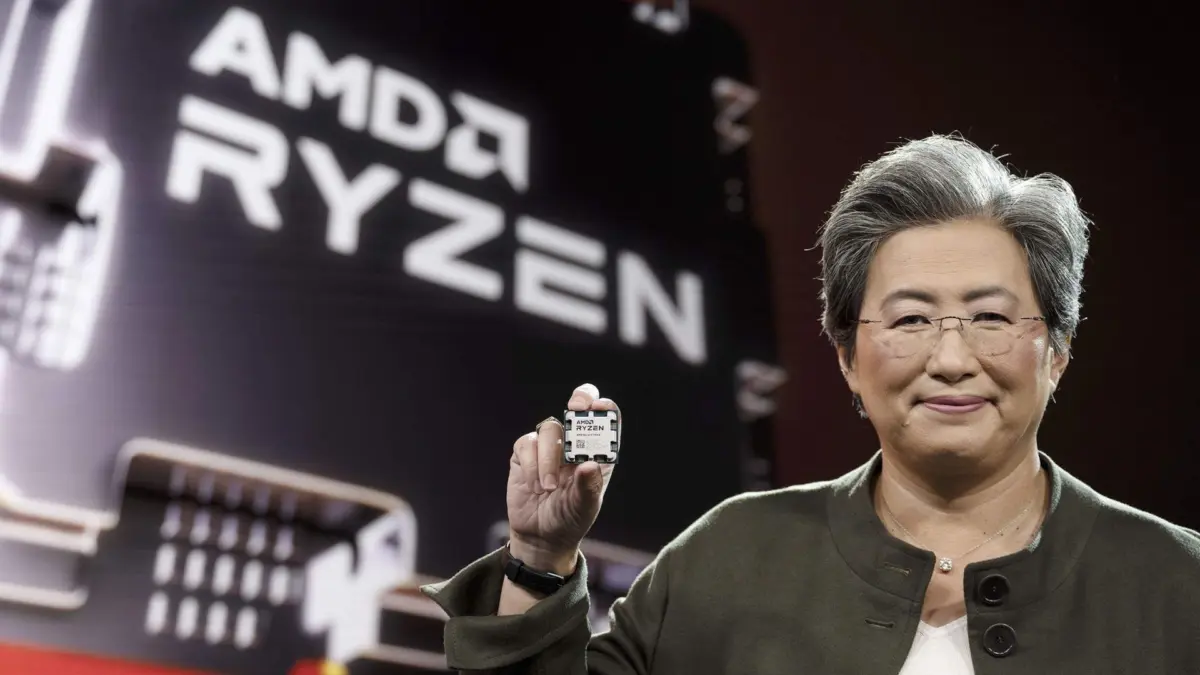
Advanced Micro Devices has posted another record-breaking quarter, with revenue surging past the $13 billion mark and net income reaching a formidable $2.4 billion. The financial results highlight a staggering period of growth for the semiconductor company, reflecting a fundamental shift in the competitive landscape of the PC and server hardware markets. While these financial figures alone mark a massive triumph for the fabless chip designer, the trajectory is expected to climb even higher in the near future.
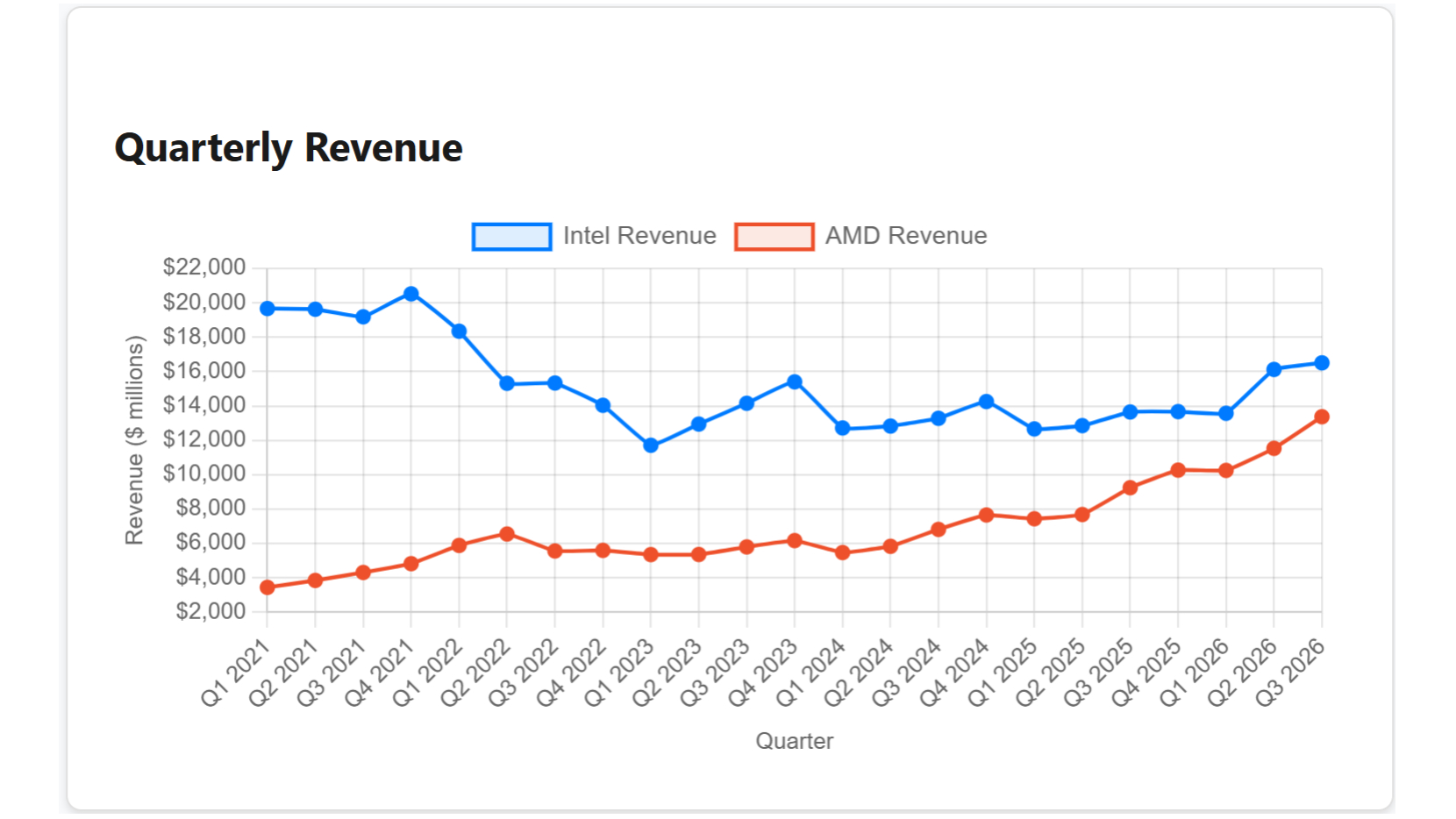
According to projections shared by AMD CFO and treasurer Jean Hu during recent earnings communications, the company anticipates revenue to hit approximately $17 billion in the upcoming quarter. To put this monumental forecast into perspective, traditional rival Intel has projected its own revenue for the same period to hover between $15 billion and $16 billion, representing a comparatively flat or slightly declining financial performance.
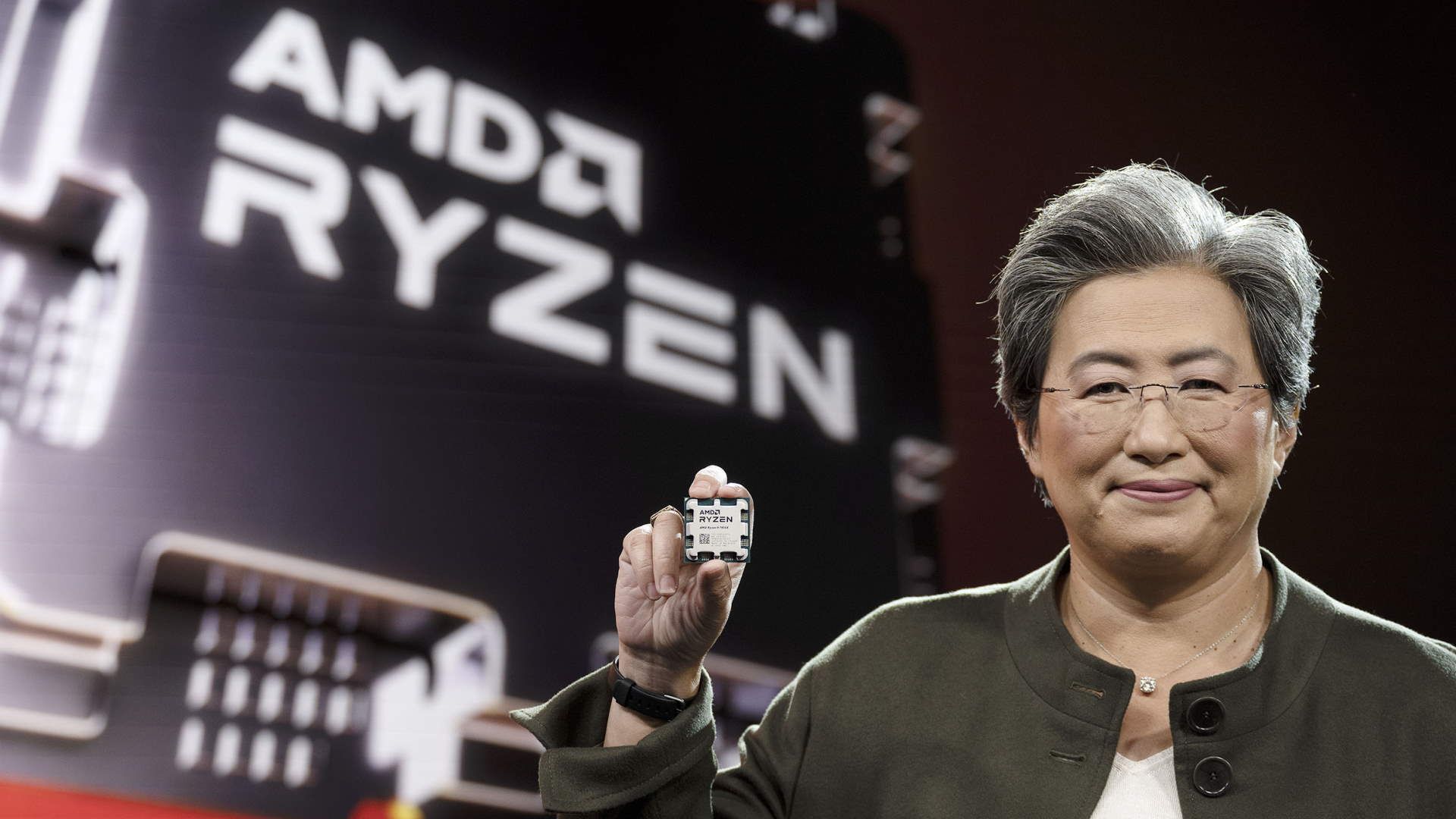
Should these projections materialize, it will mark the first time in corporate history—or at least as far back as reliable public financial records for both entities extend—that AMD generates higher quarterly revenue than Intel. For decades, Intel stood as the undisputed heavyweight champion of the semiconductor industry, dominating both desktop and server landscapes while maintaining a massive financial advantage over its smaller competitor. The shifting tide illustrates how aggressively AMD has expanded its market share, driven by robust demand for its processors and data center hardware.
While capturing the crown in total revenue represents a monumental psychological and historical milestone, translating that top-line success into net income superiority remains a closely watched metric. Intel currently posts net income figures sitting around the $3 billion mark. Whether AMD’s anticipated $3 billion revenue jump will directly push its net income past Intel’s remains to be seen, but financial analysts agree that the margin between the two companies’ profits will be razor-thin.
Net income volatility, however, tells only part of the broader story regarding corporate stability. AMD has maintained a consistent pattern of profitability since 2018, steadily building financial resilience even during turbulent macroeconomic periods. In stark contrast, Intel has weathered severe financial turbulence in recent years. Most notably, Intel reported a staggering $18.7 billion loss for the full year of 2024, while AMD posted a net income of $1.6 billion over the exact same timeframe. Although Intel managed to navigate a punishing subsequent quarter that saw its stock price collapse and subsequently returned to profitability, the long-term momentum has undeniably favored AMD’s agile business model.

A closer examination of historical financial data underscores the dramatic divergence in the trajectories of the two companies over the past half-decade. Back in early 2021, Intel was routinely pulling in quarterly revenues near $20 billion with net income figures soaring past $5 billion, whereas AMD was reporting quarterly revenues in the range of $3.4 billion to $4.8 billion. Over the subsequent years, Intel’s revenue stagnated and occasionally dipped into steep quarterly losses—such as the severe downturns recorded through 2024 and 2025—while AMD experienced an uninterrupted upward surge. By late 2025 and into 2026, AMD’s quarterly revenue regularly exceeded $10 billion, effectively doubling the scale of the business compared to just two years prior.
This massive financial expansion has played out against a complex backdrop for the broader technology industry. Supply chain pressures, shifting data center capacities toward specialized AI and enterprise chips, and fluctuating consumer demand have tested every major hardware manufacturer. Intel has notably navigated these challenges by adjusting manufacturing strategies, such as reallocating capacity for advanced node products like Panther Lake toward data center infrastructure, all while the broader PC market absorbed shocks from memory shortages and shifting consumer priorities. Yet, despite broader market headwinds, AMD has managed to capture substantial market share across both consumer computing platforms and lucrative enterprise environments.
For industry observers who vividly remember the mid-2010s—a period when AMD struggled significantly with debt, uncompetitive architectures, and an uphill battle against Intel’s entrenched market dominance—the current corporate standing is nothing short of extraordinary. The turnaround executed under the leadership of CEO Dr. Lisa Su has frequently been cited as one of the most remarkable corporate recoveries in modern business history. By focusing on highly efficient processor architectures, strategic technological investments, and reliable execution, AMD transformed itself from a struggling underdog into a dominant financial and technological powerhouse.
As AMD prepares for what could be another historic quarter with its sights set on the $17 billion revenue target, the semiconductor industry finds itself in an entirely new era. The traditional hierarchy that defined the CPU market for decades has been thoroughly rewritten, leaving both companies to compete on a much more level financial and technological playing field moving forward.