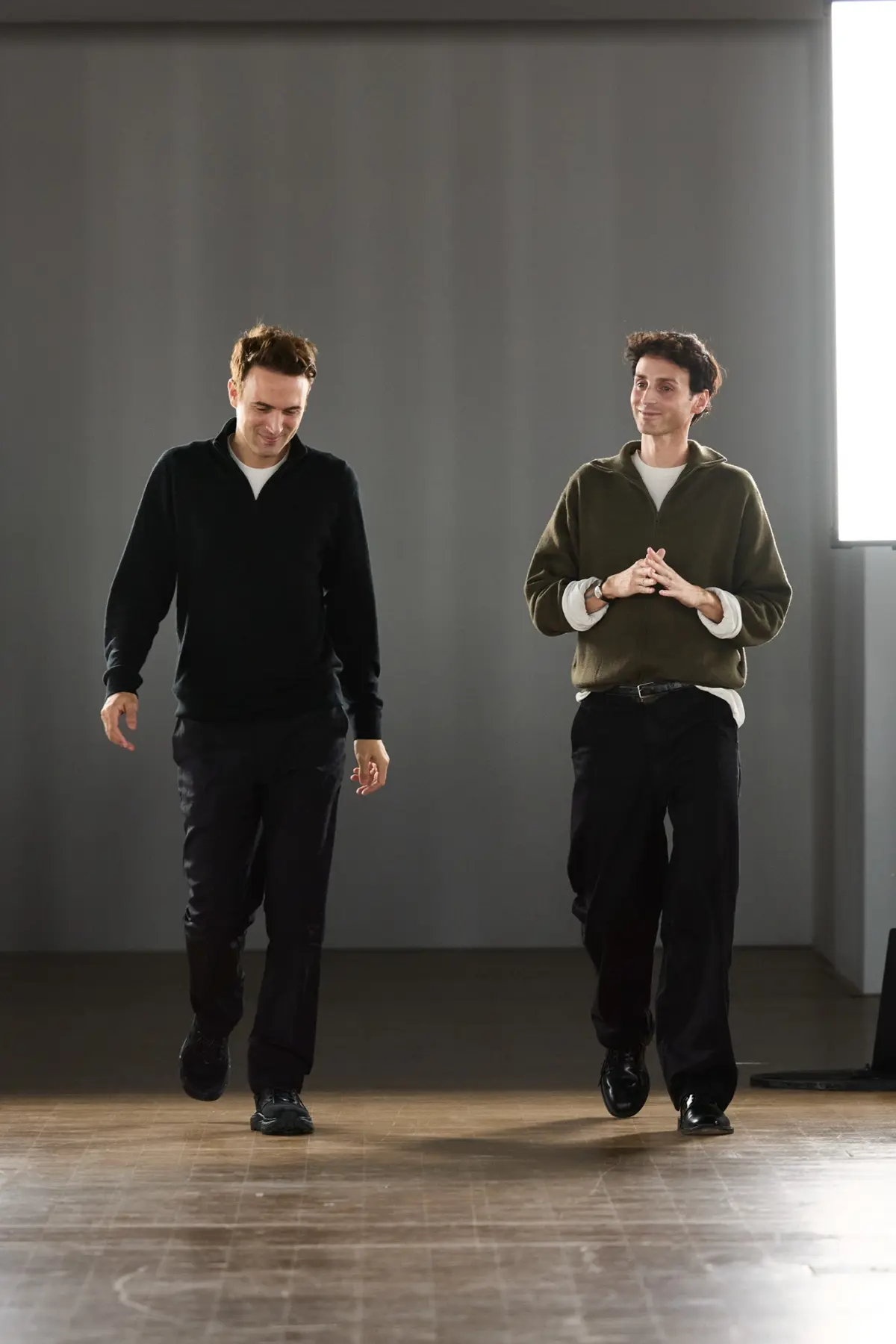
PARIS — Coperni, the avant-garde French fashion house celebrated for blending high fashion with cutting-edge technology and viral showmanship, is shutting down. Founders Arnaud Vaillant and Sébastien Meyer made the announcement on Wednesday in a personal statement sent via email to press and retail partners, bringing an abrupt end to an eight-year run that continuously pushed the boundaries of the global fashion industry.
The closure comes after months of escalating legal and financial turmoil. The brand had entered receivership in June as the founders attempted to untangle themselves from the fashion development platform Tomorrow London Group, which had served as Coperni’s majority shareholder and exclusive global distributor since 2019.
In their joint statement, Vaillant and Meyer expressed deep regret over the outcome while looking back fondly on the brand’s trajectory. “Unfortunately, despite all our efforts, no solution could be found, and we have decided, with great sadness, to stop Coperni’s operations,” the founders wrote. They added that the past eight years had been “extraordinary” and that they remained profoundly proud of everything they had built together since reviving the label.
The journey toward receivership began unfolding publicly earlier this year against a backdrop of corporate restructuring and corporate friction. On June 11, a Paris commercial court officially granted Coperni’s request for court protection, placing the high-end label into receivership. At the time of the filing, Vaillant explained that the company had been placed under severe financial strain following several months during which Tomorrow London Group had stopped paying sums owed to critical industry partners and supply chain suppliers. The legal proceedings were initially intended to provide the label with the necessary breathing room to continue its creative output, safeguard the jobs of its dedicated employees, and carve out an independent path forward.
Determined to regain full control of their creative asset and protect the integrity of the brand, Vaillant and Meyer had already taken the drastic step of pulling out of Paris Fashion Week in March amid the growing dispute. Their absence from the official schedule continued following the receivership, keeping them off the runways for subsequent seasons as the legal battles and corporate negotiations dragged on behind the scenes.
The tumultuous proceedings unfolded just as Tomorrow London Group itself was undergoing a significant shift in corporate ownership. In March, the holding company was acquired by Progetto 11, the parent company of the e-commerce platform The Level Group. That transaction resulted in the complete exit of Tomorrow’s previous shareholders, a group that included founder and chief executive officer Stefano Martinetto as well as Three Hills Capital Partners. Despite the leadership shakeup and changes at the holding company level, a workable solution for Coperni and its founders ultimately remained out of reach.
Throughout its eight-year history, Coperni captured the global fashion imagination through its fearless embrace of modern technology and unconventional, highly theatrical runway formats. Vaillant and Meyer routinely turned their presentations into viral cultural moments that transcended traditional fashion circles. Among their most iconic creations was a headline-grabbing performance during Paris Fashion Week that saw model Bella Hadid walking onto the runway nearly naked, only to have a dress spray-painted directly onto her body using a pioneering liquid fiber formula developed in collaboration with Fabrican. In another memorable spectacle, the design duo staged a whimsical, technology-infused show at Disneyland Paris, featuring celebrity appearances such as Kylie Jenner stepping out in a dramatic princess gown.
These ambitious productions cemented Coperni’s reputation as a brand unafraid to challenge convention, experiment with material science, and leverage digital-age phenomena to capture public attention.
In Wednesday’s concluding statement, Vaillant and Meyer emphasized that their creative ambitions remain unfulfilled, noting that there was “still so much we want to explore and reinvent.” For an industry that watched the dynamic duo bridge the gap between traditional Parisian atelier craft and futuristic innovation, the closure marks the end of a uniquely disruptive chapter in modern fashion history.