For generations, holiday shopping operated under a rigid and largely unspoken rule: never, under any circumstances, gift someone a used item. A preowned present was long viewed through a lens of social stigma, widely perceived by recipients as cheap, lazy, or, worst of all, entirely thoughtless. Giving a previously owned item carried the risk of signaling that the giver had either waited until the last possible moment or simply did not value the recipient enough to purchase something new, sparkling, and fresh off the assembly line.
For decades, this cultural anxiety dictated seasonal retail behavior. But as consumer habits evolve, economic pressures mount, and environmental awareness shifts priorities, that long-standing taboo is rapidly falling away. What was once considered a social faux pas is transforming into a modern retail movement, completely reshaping how people think about holiday generosity.
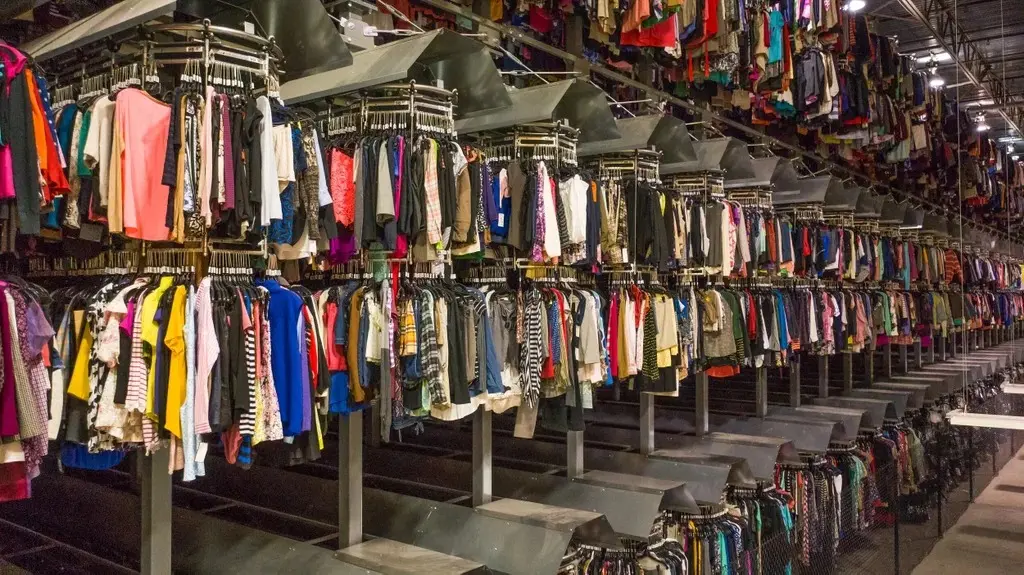
No company has experienced this cultural pivot quite like ThredUp, which bills itself as the world’s largest online thrift store. For the vast majority of its 17-year history, the company witnessed a predictable and pronounced dip in sales over the winter holidays. While traditional brick-and-mortar stores and mainstream e-commerce platforms typically rely on the massive glut of holiday shopping to finally turn a profit for the entire year, ThredUp found itself experiencing the exact opposite economic cycle.
Alon Rotem, ThredUp’s chief strategy officer, recalls the company’s traditional standing against the broader retail tide. "We were the inverse of traditional retail," Rotem explains, noting how the platform historically watched consumers flock to department stores and traditional websites for newly manufactured goods while secondhand browsing temporarily cooled.
Lately, however, ThredUp has noticed a dramatic and undeniable shift in consumer behavior. The company’s holiday sales are no longer lagging behind; in fact, they are now growing at a significantly faster pace than its sales during the rest of the year. The acceleration is measurable and striking. Between 2023 and 2025, the volume of items ThredUp sold during the critical holiday season surged by 37 percent. By comparison, sales for the full year grew at a more modest 22 percent over the same period, signaling that holiday shopping has become a primary driver of the platform’s overall momentum.
To better understand the underlying mechanics of this trend, ThredUp recently commissioned a comprehensive GlobalData survey involving more than 2,000 U.S. adults. The findings paint a vivid picture of a populace that is not only shedding its old prejudices against secondhand goods but actively embracing them. According to the survey, 62 percent of Americans now plan to buy at least one secondhand item during the holiday season. Furthermore, more than 70 percent of respondents stated that they are entirely open to either giving or receiving a preowned gift.
Perhaps most telling for the future of retail is the shifting preference for the nature of the items themselves. The survey revealed that 55 percent of consumers would actually rather unwrap a one-of-a-kind vintage piece or a hard-to-find secondhand item preserved in excellent condition than receive a brand-new, mass-produced product. This desire for uniqueness, character, and individuality represents a profound departure from the cookie-cutter consumerism that has dominated the holiday season for decades.
Secondhand is a Boon in a Tough Economy
This widespread cultural embrace of the secondhand market arrives at a time when millions of Americans are feeling acutely financially stretched. Following years of stubborn, high inflation that has steadily eroded household purchasing power, consumers are looking for creative ways to navigate the holiday season without breaking the bank.
Official figures show that holiday spending did indeed rise last year, ticking up by 4.1 percent according to data from the National Retail Federation. Yet, aggregate spending increases do not tell the whole story of how individual households are experiencing the market. Behind those macroeconomic numbers lie widespread consumer compromises. In ThredUp’s survey, 38 percent of respondents admitted that they refrained from buying something for themselves over the holidays due to budget constraints, while 37 percent spent less on a gift for someone else than they had originally hoped.
Even with these lingering financial pressures, consumer optimism—or at least the determination to maintain holiday traditions—remains remarkably resilient. Fully 84 percent of Americans expect to spend at least as much money this holiday season as they did the year before. Retail analysts frequently point out that consumer sentiment captured in surveys does not always translate perfectly into checkout-line behavior, as spending intentions can shift abruptly once shoppers enter a store or browse an online marketplace.
Nevertheless, shoppers are intentionally planning to lean heavily on the secondhand market to stretch their constrained budgets as far as possible. The survey data highlights a stark generational divide in this strategy, showing that younger demographics are leading the charge. A full 78 percent of millennials and 70 percent of Generation Z plan to purchase at least one secondhand item this holiday season. These younger consumers explicitly cite the financial advantages, noting that preowned goods cost significantly less, allow them to afford markedly better quality brands than they could otherwise access, and ultimately make their hard-earned holiday budgets go much further.
Beyond simple financial survival, shoppers are finding that turning to the secondhand market unlocks other holiday possibilities that would otherwise be out of reach. When asked about the advantages of incorporating preowned items into their shopping routines, 30 percent of survey respondents stated that buying secondhand allowed them to purchase gifts for a larger circle of people. Another 29 percent reported that it enabled them to secure the exact preferred gift they wanted to give without compromising on quality or style, while 20 percent noted that the cost savings finally allowed them to buy something special for themselves after a long year of prioritizing everyone else.