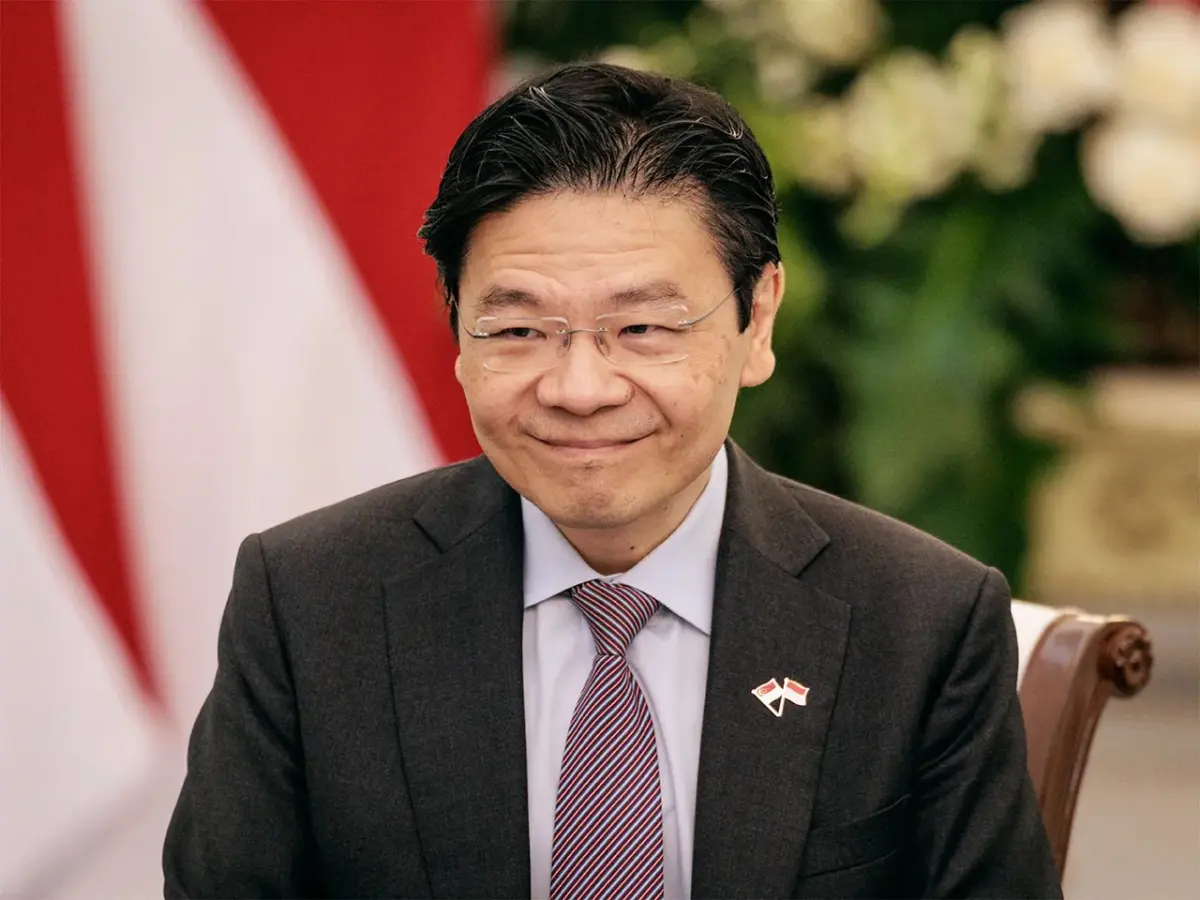
Singapore’s political officeholders were already among the highest-paid public servants in the world, but the city-state has just elevated their compensation packages even further. Under a newly implemented adjustment, Prime Minister Lawrence Wong’s annual pay has climbed by a staggering 64 per cent to reach S$3.6 million, equivalent to roughly €2.51 million. To put this astronomical figure into global perspective, it dwarfs the salaries of other major world leaders: US President Donald Trump earns an annual salary of $400,000 (about €356,000), while British regional leaders such as Greater Manchester Mayor Andy Burnham earn around £174,039 (approximately €206,590).
The announcement immediately stirred public controversy and drew a wave of critical responses. The timing of the pay rise could hardly have been more sensitive. Retrenchments across Singapore have recently reached their highest levels since the height of the coronavirus pandemic, and households throughout the island nation are increasingly grappling with persistent cost-of-living pressures, inflation, and economic uncertainty. In an effort to soften the political blow, Wong offered an explanation and a pledge, noting that ministerial salaries had not been revised for 15 years and vowing to donate his entire pay difference to charity for the next half-decade. Nevertheless, the optics of significantly enriching top politicians while ordinary citizens navigate economic headwinds proved contentious.
The backlash raises a fundamental question that extends far beyond Singapore’s borders: beneath the public dissent and political posturing, is there a rational, defensible argument for paying political leaders multi-million-dollar salaries? And in an era defined by geopolitical turbulence and rapid economic shifts, will higher pay genuinely produce the caliber of leadership required to steady the ship of state?
Wong and his administration firmly believe the answer is yes. Addressing the crowd at the Forbes Global CEO Conference in Singapore, the prime minister posed a direct question to the audience: “Is good government important?” If the answer is yes, he argued, then ministerial salaries must remain “broadly competitive” with the private sector. According to Wong, competitive compensation is essential to reduce “the burden, the financial loss and the hurdle of entering politics” for accomplished professionals who might otherwise choose lucrative corporate careers. The challenge of recruiting top-tier talent is not merely theoretical. Wong revealed that before the previous year’s general election, he approached several senior permanent secretaries and high-profile private-sector chief executive officers to ask them to enter public service, only to be turned down by every single candidate.
While much of the public commentary tends to fixate exclusively on the eye-watering size of these salaries, proponents argue that it is equally vital to consider the hidden personal costs and profound sacrifices involved in serving at the highest levels of national leadership. Carrying the crown of state is heavier than ever in the modern social media age, where public scrutiny has intensified exponentially. Leaders face relentless intrusion into their family lives and microscopic judgments of their every move, where even a minor misstep is swiftly weaponized by critics and online commentators. The human cost of this relentless exposure is real. In July, for instance, Faishal Ibrahim, then acting minister in charge of Muslim affairs, resigned from his position following what officials described as a “lapse in judgement” regarding online messages sent to a woman.
Paradoxically, while high political salaries often provoke outrage, financial compensation also plays a critical role in upholding institutional integrity. Across Southeast Asia, systemic corruption remains a deep-seated and pervasive challenge, reinforcing the necessity for clean, well-compensated governance in regional hubs. Poorly paid politicians can create an administrative environment where corruption is more likely to fester and take root. Singapore’s government has consistently demonstrated that it walks the talk when it comes to penalizing underhanded or unethical behavior, regardless of rank. In 2024, the administration charged former minister Subramaniam Iswaran with accepting more than S$403,000 (roughly €280,500) worth of gifts—including luxury items such as tickets to West End theatrical productions and English Premier League football matches—items that a senior government official could easily have afforded to purchase on their own dime.
Yet, money alone is clearly no silver bullet or guaranteed panacea for producing exceptional political leaders. Finding a genuinely integrous individual equipped with a true sense of public calling remains an extraordinarily tall order, particularly in an era dominated by performative politics and digital spectacle. Contemporary voters hold impossibly demanding expectations for their elected representatives. The public wants leaders who are ambitious enough to run for office and manage complex economies, yet humble enough to downplay personal proclivities for power; figures who are decisive in a crisis yet genuinely open to feedback and fierce criticism; and individuals who can command respect on global international stages while remaining completely approachable to the ordinary person on the street.
If offering a tidy, competitive sum of money can help cushion the profound personal and financial costs of public leadership, supporters contend that the long-term dividends will far outweigh the initial price tag. In governance, as in business, no society can afford to be penny-wise and pound-foolish, especially when an entire nation’s stability, security, and future prosperity are hanging in the balance.