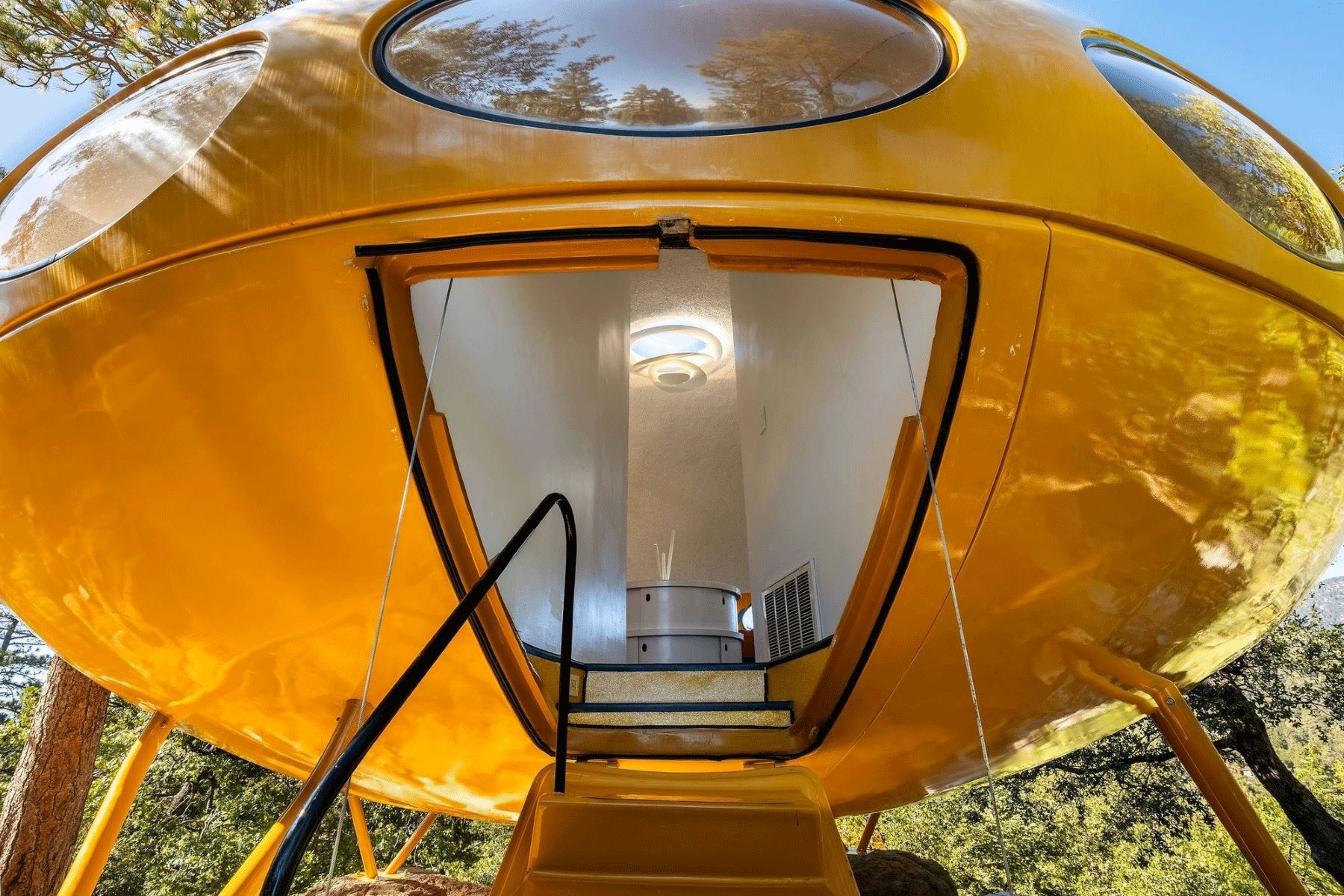
An exceptionally rare, UFO-shaped Futuro house nestled in the mountain community of Idyllwild, California, has officially hit the real estate market with an asking price of $1.495 million. Designed by the visionary Finnish architect Matti Suuronen at the height of the Space Age, the striking prefabricated dwelling was originally conceived as a portable ski cabin that could easily be transported by helicopter and dropped into remote, rugged landscapes. Today, with fewer than 100 examples ever built worldwide, this surviving residential capsule offers a remarkably intact window into a mid-century era when lightweight materials and industrial prefabrication promised revolutionary new ways for humanity to inhabit the earth.
Represented by Desert Sotheby’s International Realty, the property is currently owned by prominent historic preservationist and former Obama administration appointee Milford Wayne Donaldson alongside his wife, Laurie Donaldson. Locally referred to as the Donaldson Futuro, the structure holds a prestigious place in architectural history and is officially listed on the National Register of Historic Places. This designation safeguards an experimental, highly unconventional approach to residential design that flourished during a period defined by intense technological optimism in the late 1960s.
The Genesis of Portable Living and Space Age Materiality
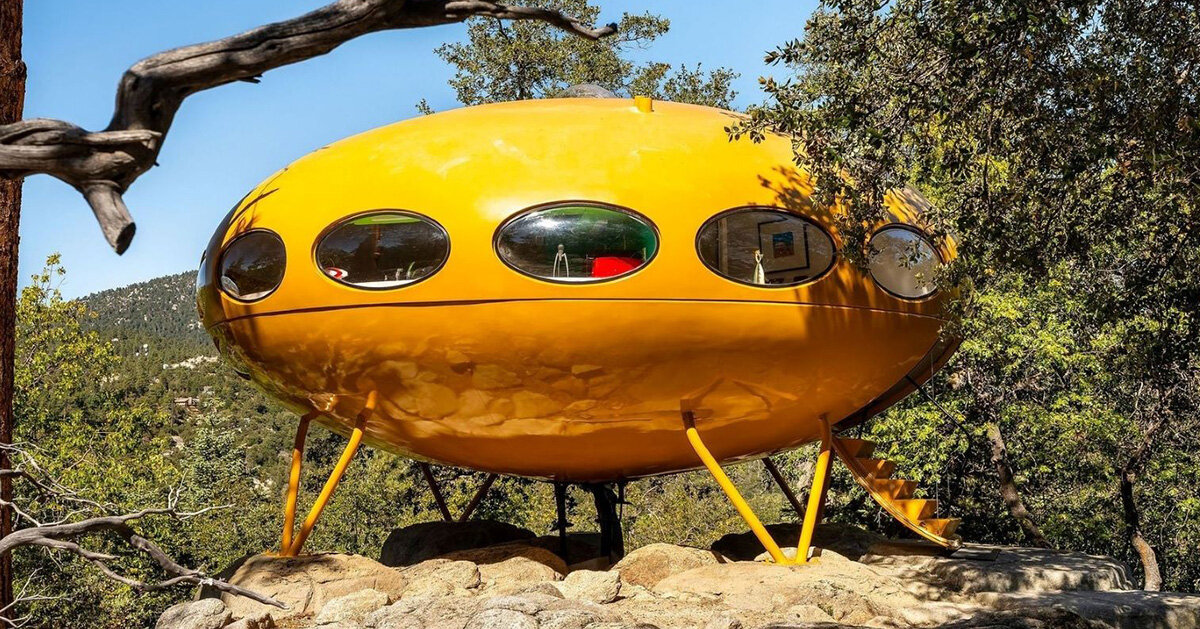
When Matti Suuronen first engineered the Futuro house in the late 1960s, he did so in response to a commission for a ski cabin that could be erected quickly on rough, uneven terrain without disturbing the natural ecosystem. The resulting design was a masterclass in modular innovation. The structure is composed of interlocking fiberglass-reinforced polyester plastic segments insulated with polyurethane, a material choice that ensured the capsule would be remarkably lightweight, simple to assemble, and efficient to heat even in freezing alpine climates.
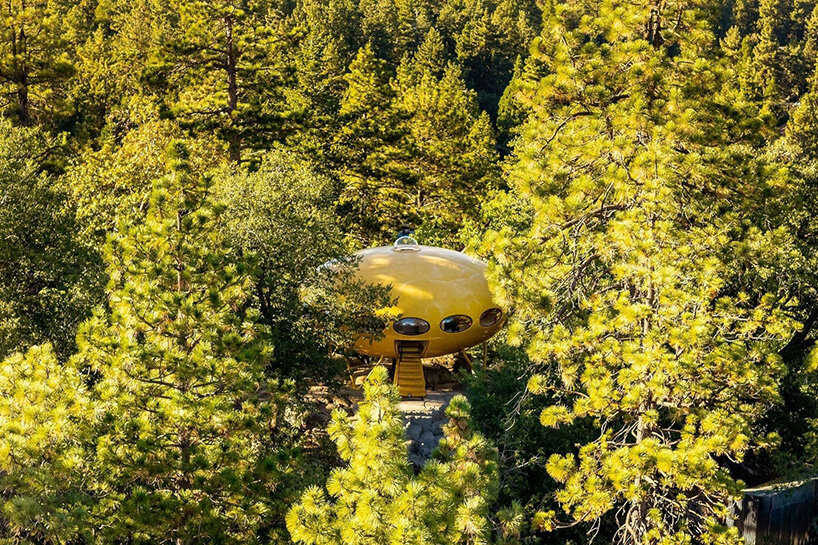
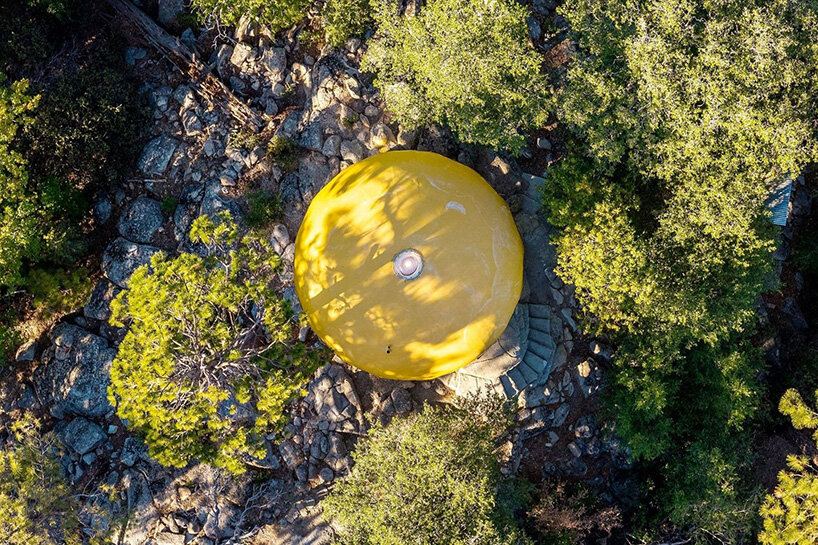
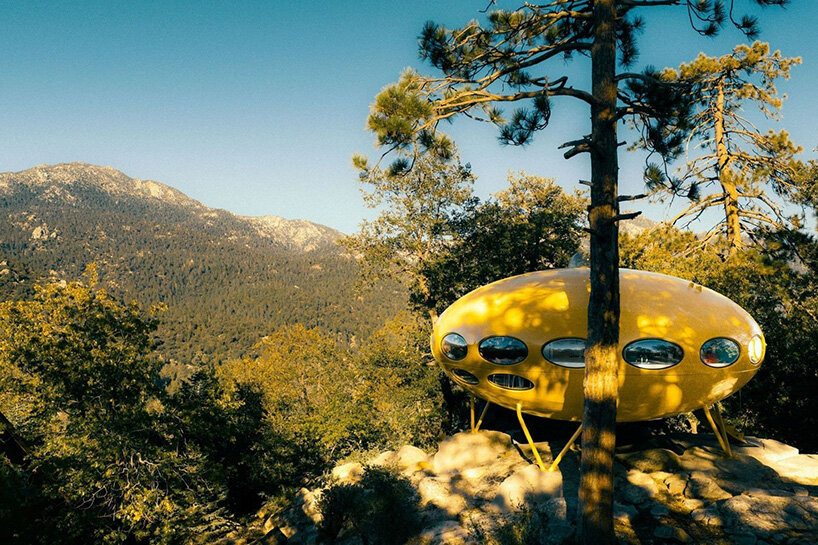
The engineering was famously minimal. The original blueprint required only four simple concrete piers to anchor the entire building, virtually eliminating the need for heavy machinery, extensive excavation, or permanent foundations. Measuring approximately 8 meters in diameter and 4 meters in height, the capsule provides roughly 73.7 square meters of interior living space. Despite its generous volume, the entire dwelling weighs a mere 5,398 kilograms, making the conceptual vision of helicopter transport a plausible reality rather than a mere architectural fantasy. Nestled onto a serene 0.23-hectare plot within the pine-studded San Jacinto Mountains, the striking yellow shell sits proudly upon its angled metal supports, blending a surreal futuristic aesthetic with the organic textures of the surrounding California wilderness.
The Economic and Cultural Hurdles of the Future
Despite its ingenious construction and the widespread public fascination with space travel that characterized the era, the Futuro house ultimately struggled to transition from an avant-garde experiment into mainstream housing. The design was envisioned as an affordable, mass-producible alternative to traditional stick-built homes, leveraging industrial manufacturing techniques to bypass the high costs and lengthy timelines of conventional construction. However, the architectural vision ran into significant societal and economic roadblocks.
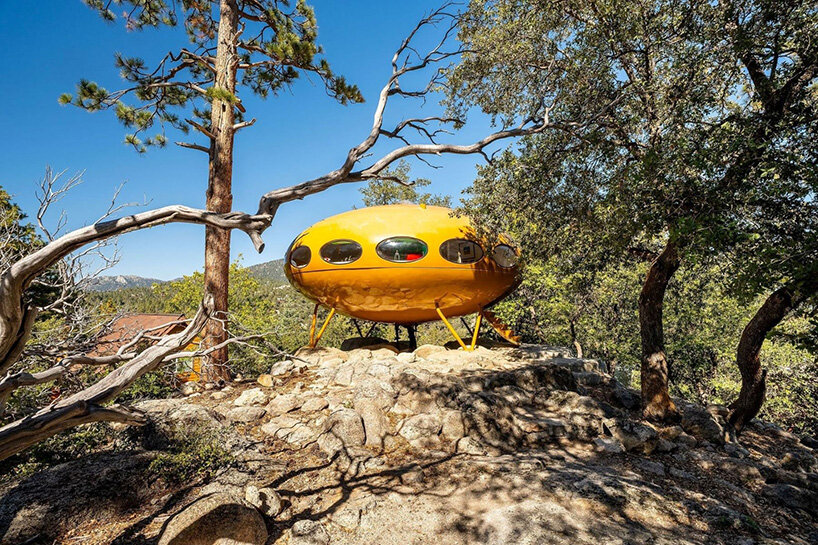
The unconventional, flying-saucer silhouette and unfamiliar plastic construction frequently met resistance from conservative local planning boards and neighborhood associations, many of which imposed strict zoning restrictions against unorthodox structures. Furthermore, securing traditional residential mortgages for a plastic, prefabricated dwelling proved exceptionally difficult for prospective buyers. The final and most devastating blow to Suuronen’s grand vision arrived with the global oil crisis of 1973. As the price of petroleum skyrocketed, the cost of manufacturing synthetic resins and plastics multiplied exponentially, completely undermining the economic viability of plastic-based architecture.
With production grinding to a halt, fewer than 100 Futuro houses were ever constructed around the globe. What was intended to be a ubiquitous, mobile dwelling of the future instead transformed into an ultra-rare architectural anomaly. Over the decades, many of these fragile structures fell into disrepair, were abandoned, or were demolished entirely, making surviving examples exceptionally prized among architecture enthusiasts, museums, and historic preservationists.
Preservation and the Collector’s Market
The Donaldson Futuro stands as a stellar exception to the fate suffered by many of its sibling structures. Meticulously restored by its current owners, the Idyllwild residence faithfully maintains the integrity of its original 1969 design, down to the last detail of its period-appropriate materials, elliptical windows, and aircraft-style hatch entrance. Its official recognition on the National Register of Historic Places underscores its cultural importance, elevating it from a mere quirky real estate listing to an officially recognized artifact of design history.
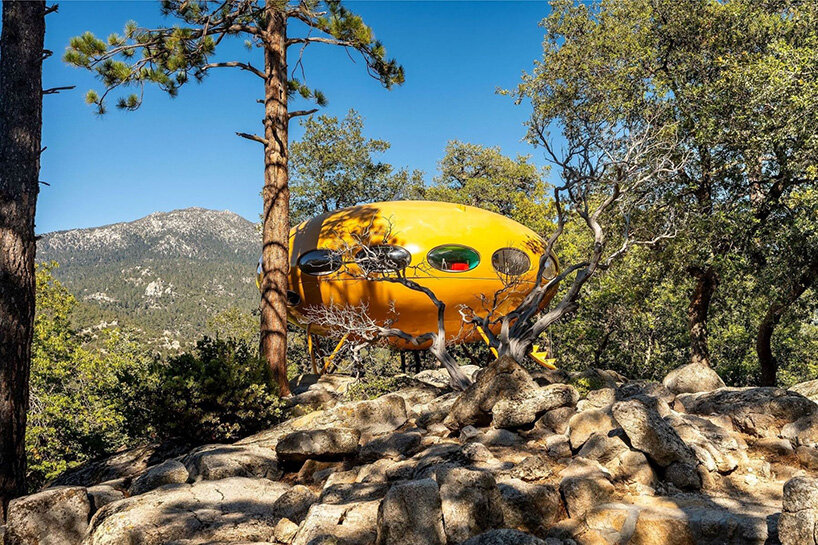
The $1.5 million price tag attached to the property highlights a fascinating paradox at the core of the Futuro’s legacy. Originally conceived as an egalitarian, mass-produced dwelling designed to make remote living accessible to the general public, the surviving houses have now evolved into exclusive collector’s items. Their modern value is driven almost entirely by extreme scarcity, meticulous preservation, and a growing nostalgic appreciation for a time when architects genuinely believed that humanity’s domestic future lay in the stars. As the capsule changes hands once more, it remains a solitary beacon of mid-century futurism tucked quietly among the pine trees of Southern California.