French designer Vincent Darré has brought his signature theatrical imagination to Hôtel Le Magnifique, a striking new hospitality destination situated on Rue de la Gaîté in Paris’s 14th arrondissement. Located in a neighborhood historically celebrated for its theaters, cabarets, and the vibrant artistic life of Montparnasse, the project transforms conventional hospitality into an immersive experience shaped by fantasy, classical mythology, and the performing arts. The building itself carries a rich and unusual history, having originally housed Les Mille Colonnes, a renowned theater dating back to the early 19th century. Its historic façade now introduces a series of eclectic interiors where decorative elements, unexpected color palettes, and deep references to Parisian cultural heritage unfold throughout the property.
The ambitious project was initiated in 2024 by hotelier Jacques Blanc, who envisioned a property that would deliberately depart from standard hospitality design conventions. Already well-known as the owner of the Bellechasse, a Parisian hotel designed by Christian Lacroix, Blanc approached Darré after being introduced through mutual friends. Their collaboration quickly developed around a shared ambition to craft something entirely unconventional. What began as a focused interior design concept eventually expanded significantly under Darré’s creative direction, growing to include bespoke architectural transformations and a dramatic indoor swimming pool. For Darré, who was born in the 14th arrondissement and has spent his life immersed in the culture of the Left Bank, the hotel also became a deeply personal opportunity to revisit the artistic landmarks and cherished memories of his childhood.
Hand-Painted Frescoes and Sculptural Details Animate Interiors
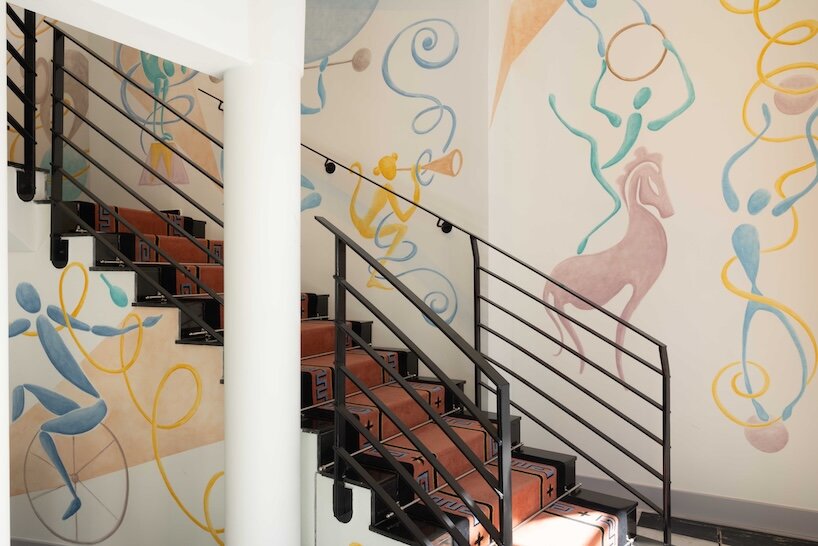
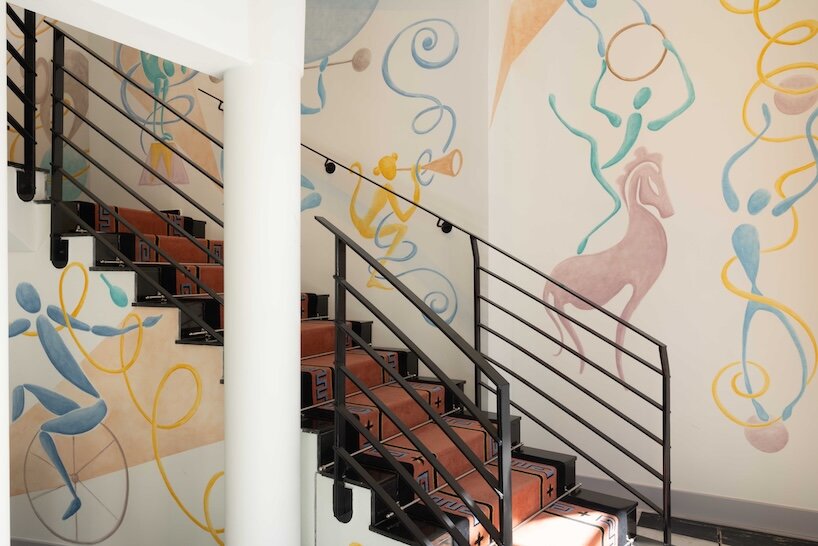
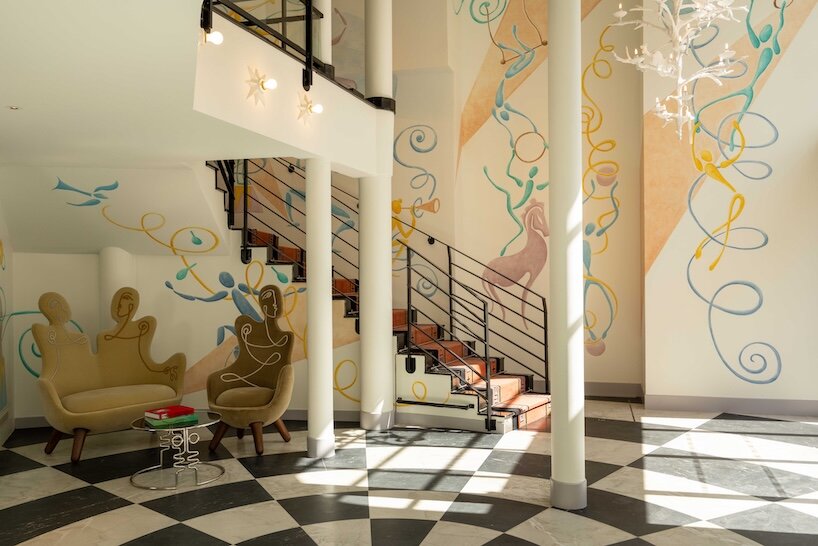
The theatrical narrative of Hôtel Le Magnifique begins immediately upon entering the grand entrance hall, where Darré reinterprets iconic architectural references drawn from the surrounding neighborhood. The columns of the former theater have been meticulously redesigned in homage to those found inside La Coupole, the celebrated Montparnasse brasserie, as well as the former Saint-Germain-des-Prés drugstore, whose historical columns were famously crowned with oversized sculptural hands. Stretching across the walls is a large, hand-painted fresco created by skilled artisans, introducing vibrant figures, whimsical characters, and swirling motifs inspired by fine art and the circus. Delicate white plaster birds emerge directly from the composition, adding a tangible, sculptural dimension to the heavily illustrated surfaces.
Other interior details continue this ongoing dialogue between historic architecture and narrative storytelling. The reception desk is creatively decorated with a collection of antique keys gathered over time, recalling the traditional front desks of classic European hotels while introducing a playful theological reference to paradise and Saint Peter. Nearby, the custom staircase railings evoke flowing musical scores, seamlessly connecting the physical movement through the building to the district’s rich performing arts heritage. These deliberate interventions establish a cohesive visual language in which functional architectural elements become integral parts of a larger decorative composition, drawing visitors directly into an imagined version of Paris shaped entirely by Darré’s personal memories and aesthetic references.
Le Picabia Bar and a Pool Celebrate the Performing Arts
At the beating heart of the hotel lies Le Picabia, a sophisticated bar named in honor of the French avant-garde painter Francis Picabia. The space draws profound inspiration from the atmosphere of historic Parisian theaters. Clad in warm wood and softly illuminated by rows of glowing bulbs, the venue combines a curved counter with richly colored surfaces and intricate decorative details that recall classic theatrical interiors. The bar is thoughtfully designed to operate in direct rhythm with the neighboring performance venues in the district, displaying live showtimes and ringing a traditional bell at the precise beginning of performances and the conclusion of intermissions. A grand piano sits ready to invite spontaneous musical encounters, ensuring the space remains a welcoming hub for theatergoers, local neighborhood residents, artists, and hotel guests alike.
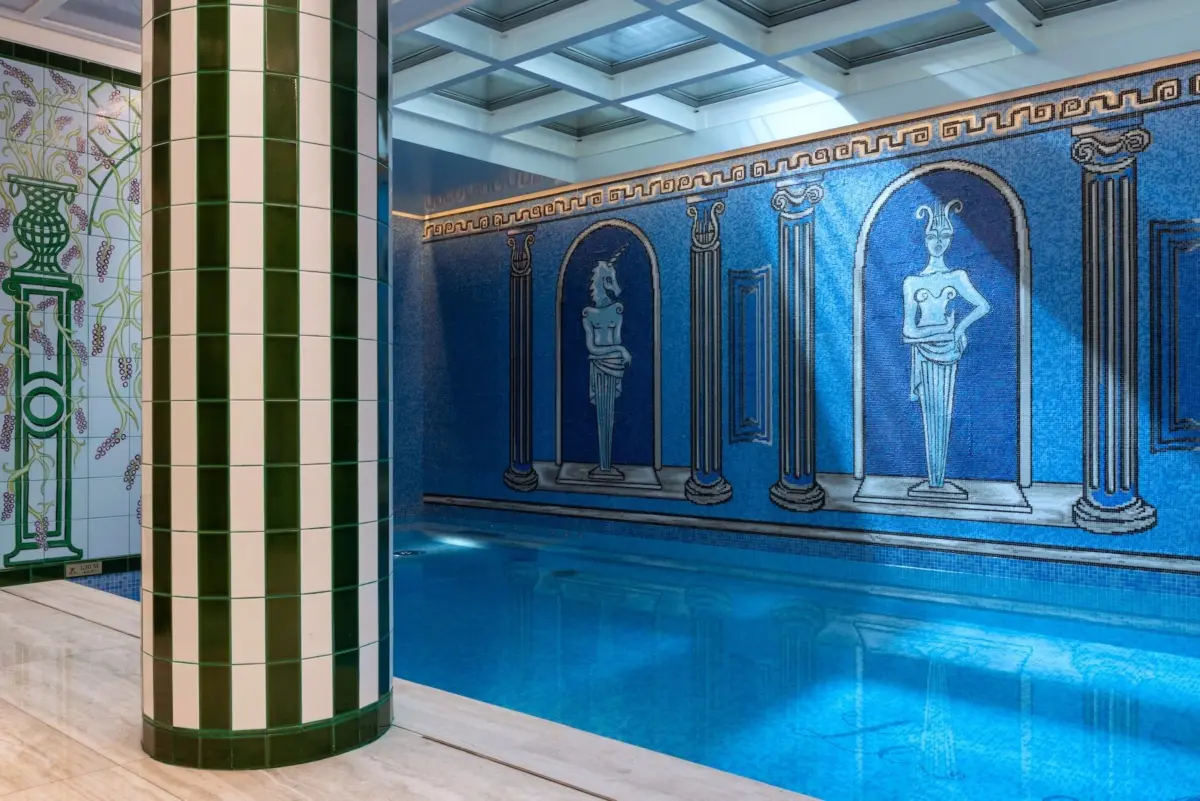
Another unexpected and striking feature of the property is the hotel’s swimming pool, which has been conceived as a serene, mythological retreat hidden within the urban building. Visible directly from the reception area, the pool area is surrounded by stately columns and decorated with elaborate mosaics depicting classical figures, creating an immersive atmosphere reminiscent of an ancient Greek palace. The blue-tiled basin opens outwardly onto a quiet patio, establishing a seamless visual connection between water, architecture, and a secluded garden. Its ornate decorative treatment reinforces Darré’s overarching interest in transporting visitors into entirely imaginary settings, with classical references to antiquity extending the hotel’s overarching narrative far beyond the local history of Montparnasse.
Five Themed Floors Reveal Darré’s One-of-a-Kind Guest Rooms
The journey through the hotel continues across five distinct floors, each conceived around a completely different imaginary universe. A glass elevator decorated with whimsical motifs of mermaids, seahorses, and starfish transports guests between spaces inspired by the Garden of Eden, classical mythology, the deep sea, Art Nouveau, the Milky Way, and legendary artists from Paris’s storied past. Rather than adhering to a uniform decorative scheme across the property, the hotel fluidly transitions between distinct periods and visual references, allowing each individual level to introduce a completely new chapter of the overarching story. This sequence of environments reflects Darré’s signature approach to interior design as a form of immersive storytelling, where architecture, heavy ornamentation, and unbridled imagination remain closely intertwined.
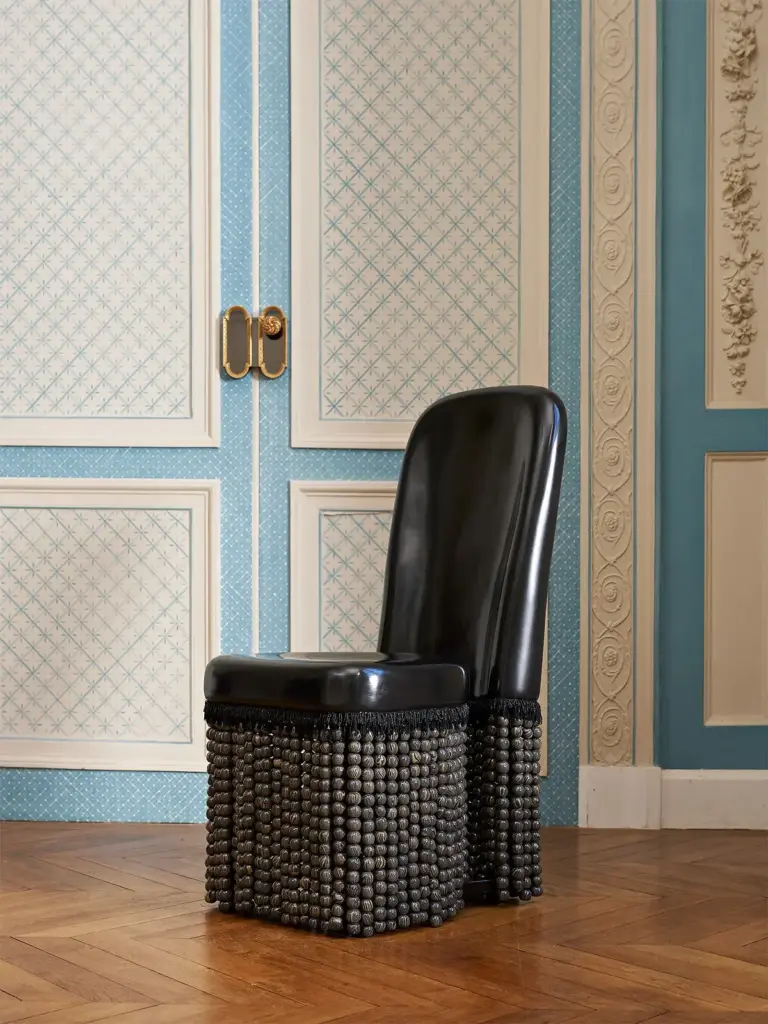
The guest rooms follow this exact same principle, with each room conceived as an independent compositional work featuring original pieces imagined exclusively by the designer. Bespoke furniture, custom lighting fixtures, handcrafted ceramics, unique carpets, and stretched wall textiles contribute to interiors that successfully combine traditional French decorative arts with Darré’s idiosyncratic visual vocabulary. The hotel’s name itself pays homage to the creative artists of Montparnasse, whose initial, the letter M, inspired Le Magnifique, while simultaneously nodding to the independent spirit of the French Nouvelle Vague. Through its deeply layered interiors, the project successfully reconnects the historic building with the creative legacy of the Left Bank, transforming a simple stay in Paris into an unforgettable journey through the designer’s theatrical imagination.