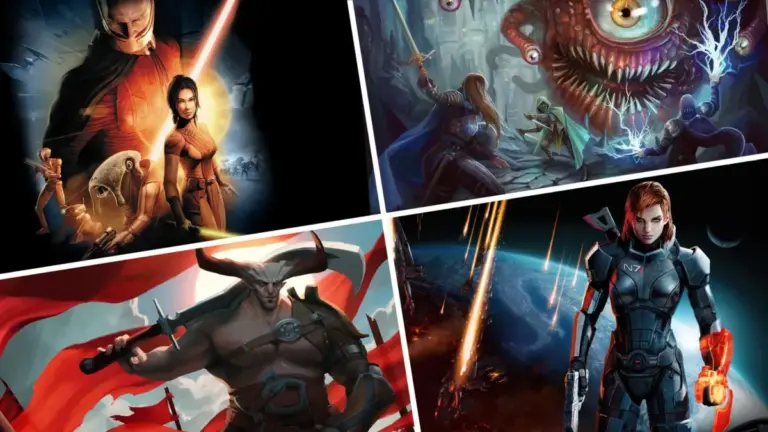
The gaming industry is still reeling from the sudden and devastating closure of legendary role-playing game developer BioWare, a casualty of a massive corporate restructuring at Electronic Arts following its acquisition by Saudi Arabia’s Public Investment Fund alongside two other investment firms. As former employees navigate the sudden loss of their livelihoods and process the end of an era for one of the most celebrated studios in video game history, new details are beginning to emerge about what could have been. A longtime veteran of the studio has broken his silence, shedding light on the ambitious plans BioWare had in place for the now-canceled Mass Effect 4 and the immense technical hurdles the team overcame during the final stretch of Dragon Age: The Veilguard.
Tony de Waal, who served as the cinematic supervisor at BioWare before the studio was shuttered, shared insights into the project on LinkedIn. De Waal boasts a deeply intertwined history with the developer, having first joined the team more than 29 years ago. After a brief departure shortly following the critically acclaimed launch of Mass Effect 2, he returned to the fold in 2021 to lend his extensive expertise to the development of Dragon Age: The Veilguard. According to de Waal, a dedicated core team of approximately 50 developers was actively working on the next installment of the Mass Effect franchise right up until the studio closure was handed down by corporate leadership.
Reflecting on the vision for the doomed sci-fi epic, de Waal painted a picture of a project that aimed to push the boundaries of player agency and narrative branching to unprecedented heights. He noted that the team believed they were crafting something truly special, setting out to achieve a level of player autonomy and choice that no other contemporary role-playing game had been able to match.
The development team was reportedly inspired by the shifting landscape of the modern RPG genre, keeping a close eye on the monumental successes and creative risks taken by rival studios. De Waal specifically pointed to the industry-shifting work done by Larian Studios with their masterclass RPGs and the sprawling narrative achievements of CD Projekt Red. Fuelled by these benchmark-setting titles, the BioWare team had embarked on a development path designed to elevate Mass Effect to the next generation of gaming excellence, all while remaining fiercely faithful to the core legacy established by the original trilogy.
However, this ambitious forward momentum came on the heels of a notoriously arduous development cycle for Dragon Age: The Veilguard. The game served as BioWare’s second major project utilizing EA and DICE’s proprietary Frostbite engine, a piece of technology notorious within the industry for its steep learning curve and lack of out-of-the-box features tailored for traditional role-playing games.

De Waal didn’t mince words when describing the sheer magnitude of the effort required to bring The Veilguard across the finish line. He characterized the development process as a herculean undertaking that pushed even his own legendary workaholic mindset to the absolute limit. Despite the immense technical roadblocks presented by the Frostbite engine, de Waal expressed immense pride in the remarkable level of visual polish and cinematic fidelity the team was ultimately able to pull off.
Providing a rare glimpse into the complex machinery driving modern AAA game development, de Waal highlighted the hidden technical complexities required to deliver a cohesive narrative experience. He noted that outsiders had little to no idea of the sheer level of craziness happening under the hood of The Veilguard just to make a fully variable player character function seamlessly across more than three hours of complex cinematics. The engineering and cinematic teams had to account for an astronomical number of conditional states and narrative permutations, particularly when dealing with the branching, high-stakes scenes toward the end of the game where player choices throughout the series culminated.
The abrupt cancellation of Mass Effect 4 and the closure of BioWare itself form part of a sweeping corporate overhaul at EA. Following its acquisition by the PIF and accompanying investment firms, the publishing giant laid off more than 400 employees as part of a strategic pivot. Moving forward, EA’s corporate strategy is focusing heavily on reliable commercial pillars, specifically leaning into live-service shooters and lucrative sports franchises, while leaving traditional, single-player narrative-driven RPGs under a strict corporate microscope that ultimately sealed BioWare’s fate.
For de Waal, the cancellation of the project represents a profound tragedy for both the players who will never get to experience the story and the close-knit community of developers who poured their hearts into the work. He expressed deep sadness that the gaming public would never get to see what his team was cooking up behind closed doors, emphasizing the exceptional talent of the small group of developers who consistently punched above their weight class to chase artistic excellence. He urged the wider gaming community and industry peers to remember and support those who stayed with BioWare until the bitter end, describing them as some of the most talented professionals he has ever had the privilege of collaborating with across his decades-long career.
In the wake of the mass layoffs, de Waal—like hundreds of other displaced game industry veterans—now faces the daunting task of finding new employment in an increasingly volatile and competitive job market. Drawing on a career spanning nearly three decades, he is actively seeking new opportunities that align with his deep expertise in cinematic production, narrative integration, and technical pipeline management. For now, his public reflections serve as both a bittersweet memorial to a legendary studio’s final unfulfilled ambitions and a testament to the passionate creators who strove to keep the spirit of classic BioWare storytelling alive until the very last moment.