Deep within a natural volcanic lava cave in the rugged Pedregal de San Ángel region of Mexico City, a sprawling, mosaic-adorned residence once stood as a testament to radical modernist architecture and artistic collaboration. Built in 1954, the home was designed and inhabited by the visionary creative pair Juan and Helen Fowler O’Gorman, an architect and an artist respectively. Known as Casa Cueva, the dwelling became an iconic landmark of modernist Mexican design, seamlessly integrating human architecture with the dramatic, organic contours of the surrounding landscape. Although the sanctuary was largely destroyed after the couple sold the property in 1969, its legacy and the profound impact of its natural environment continue to ripple through contemporary art.
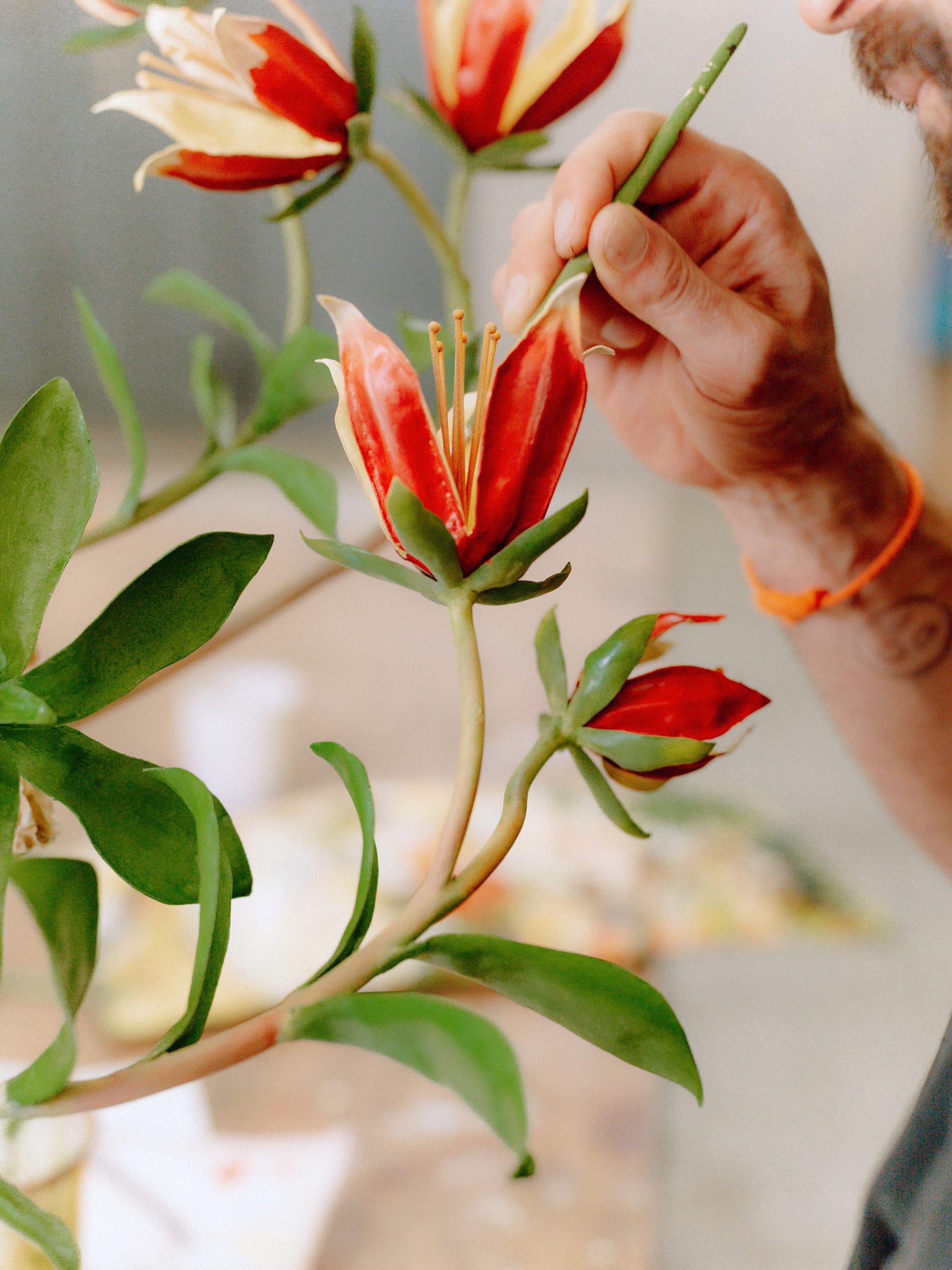
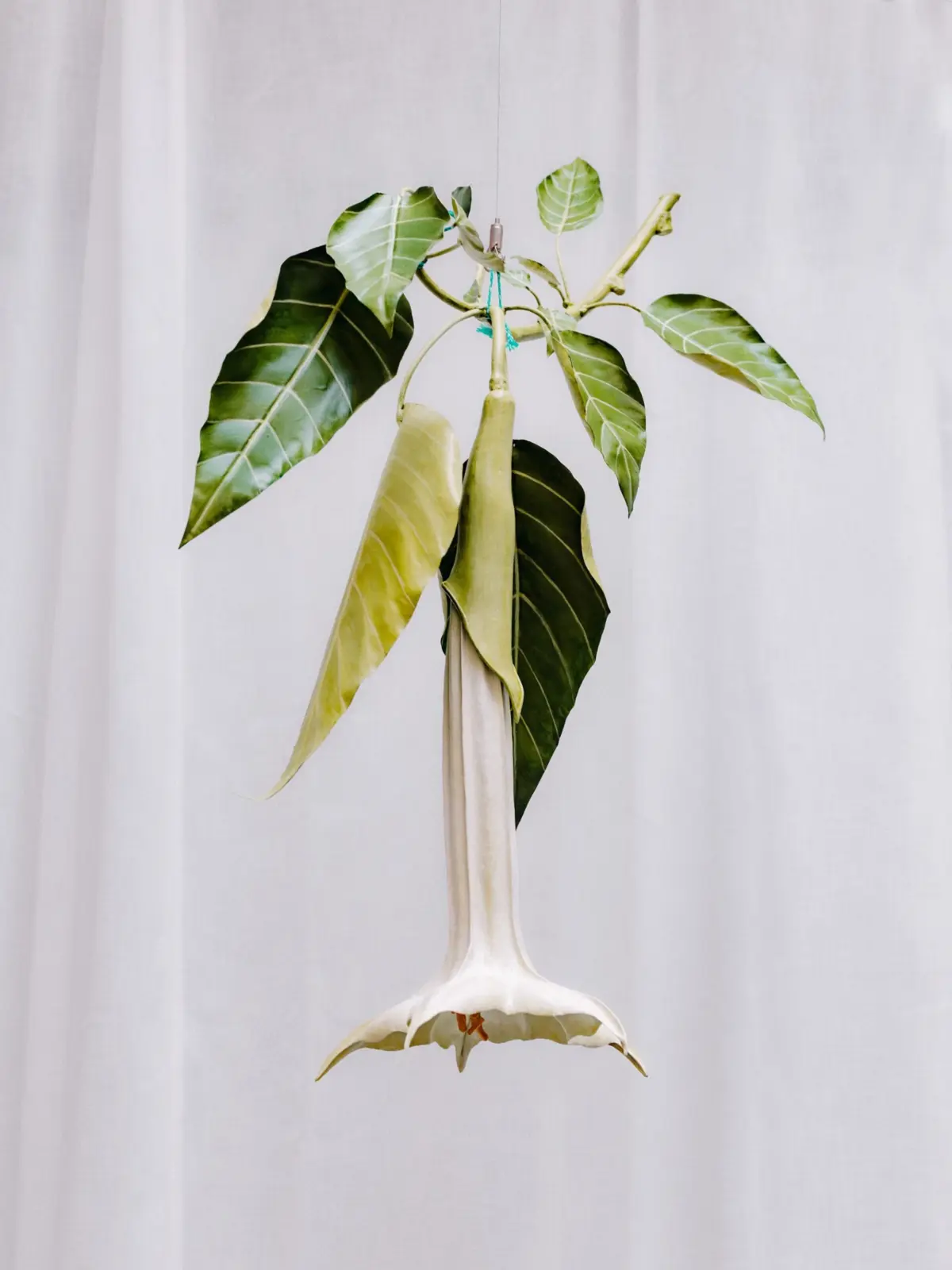
At Museo Jumex, artist Álvaro Urbano has unveiled a deeply evocative solo exhibition titled Helen, serving as a sweeping homage to the architectural and botanical innovations of Casa Cueva. The exhibition draws heavy inspiration from the surrounding gardens that once anchored the cave home and the enduring legacy left behind by Helen O’Gorman. In particular, Urbano’s new body of work is anchored in Helen’s seminal 1961 volume, Mexican Flowering Trees and Plants. Written and illustrated during the years she lived and worked inside Casa Cueva, the rich, meticulously detailed volume documented a vast array of native botanical specimens unique to the region. For Urbano, these historical vegetal renderings have served as the fundamental blueprint for an entirely new collection of metal sculptures.
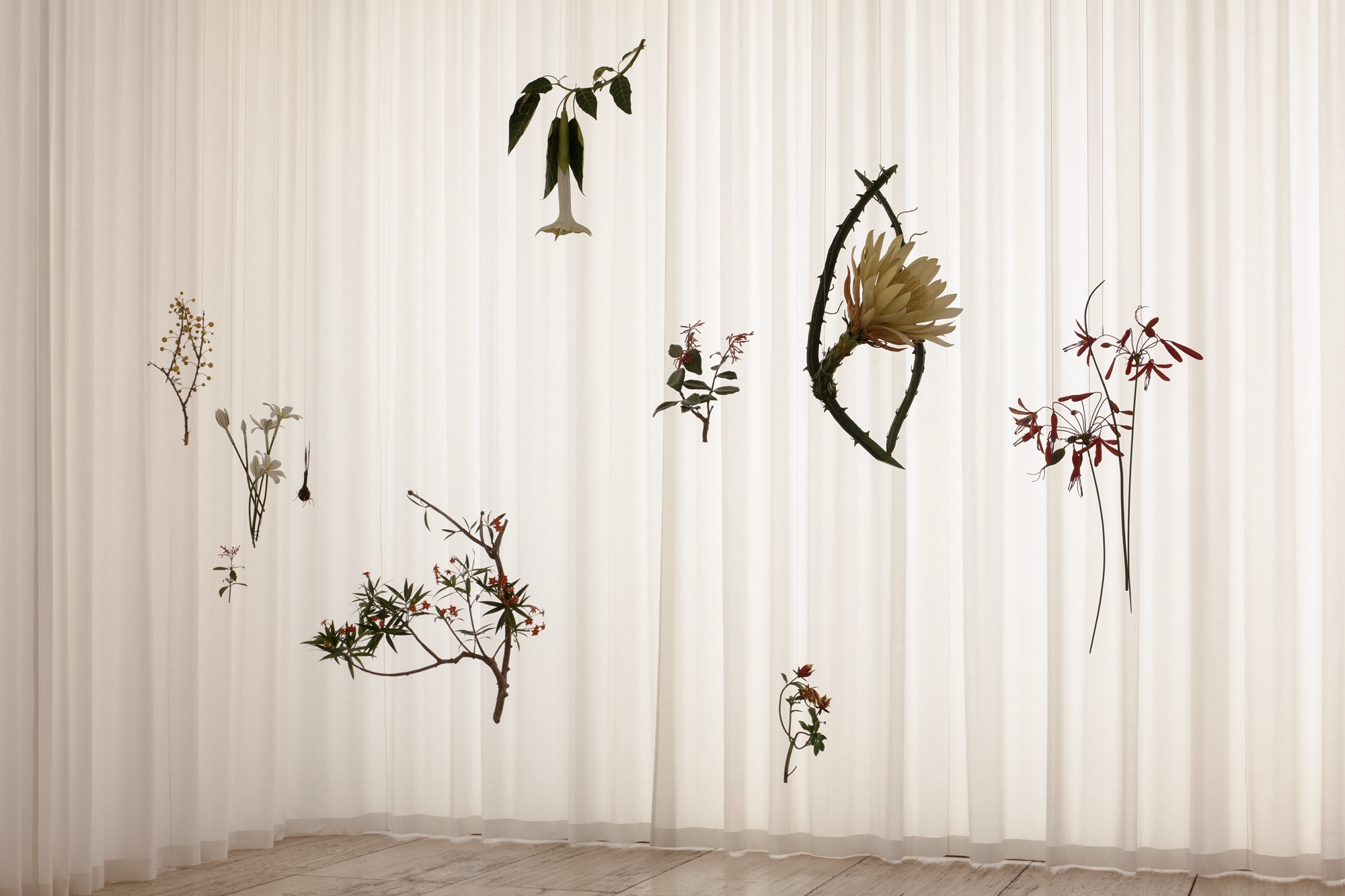
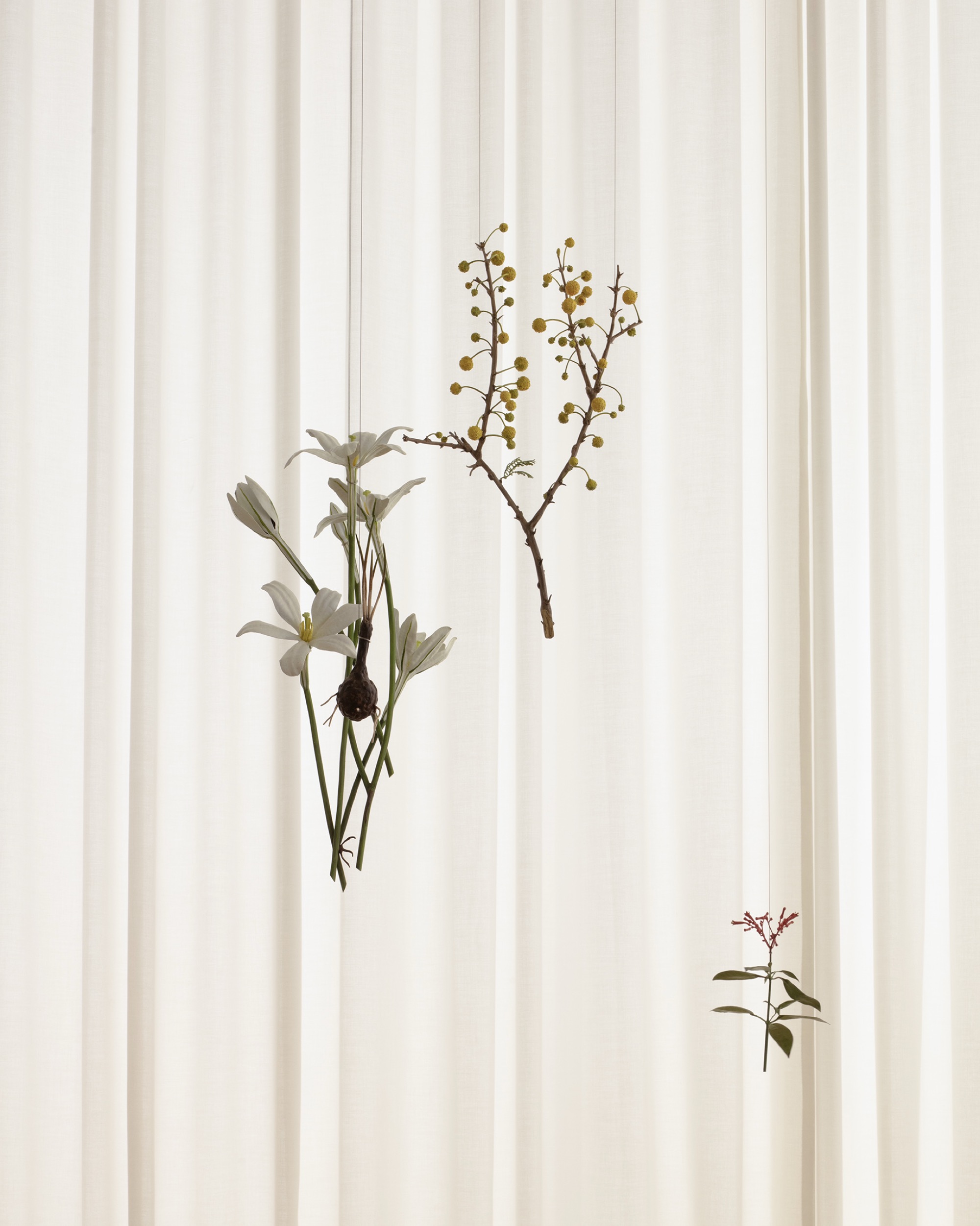
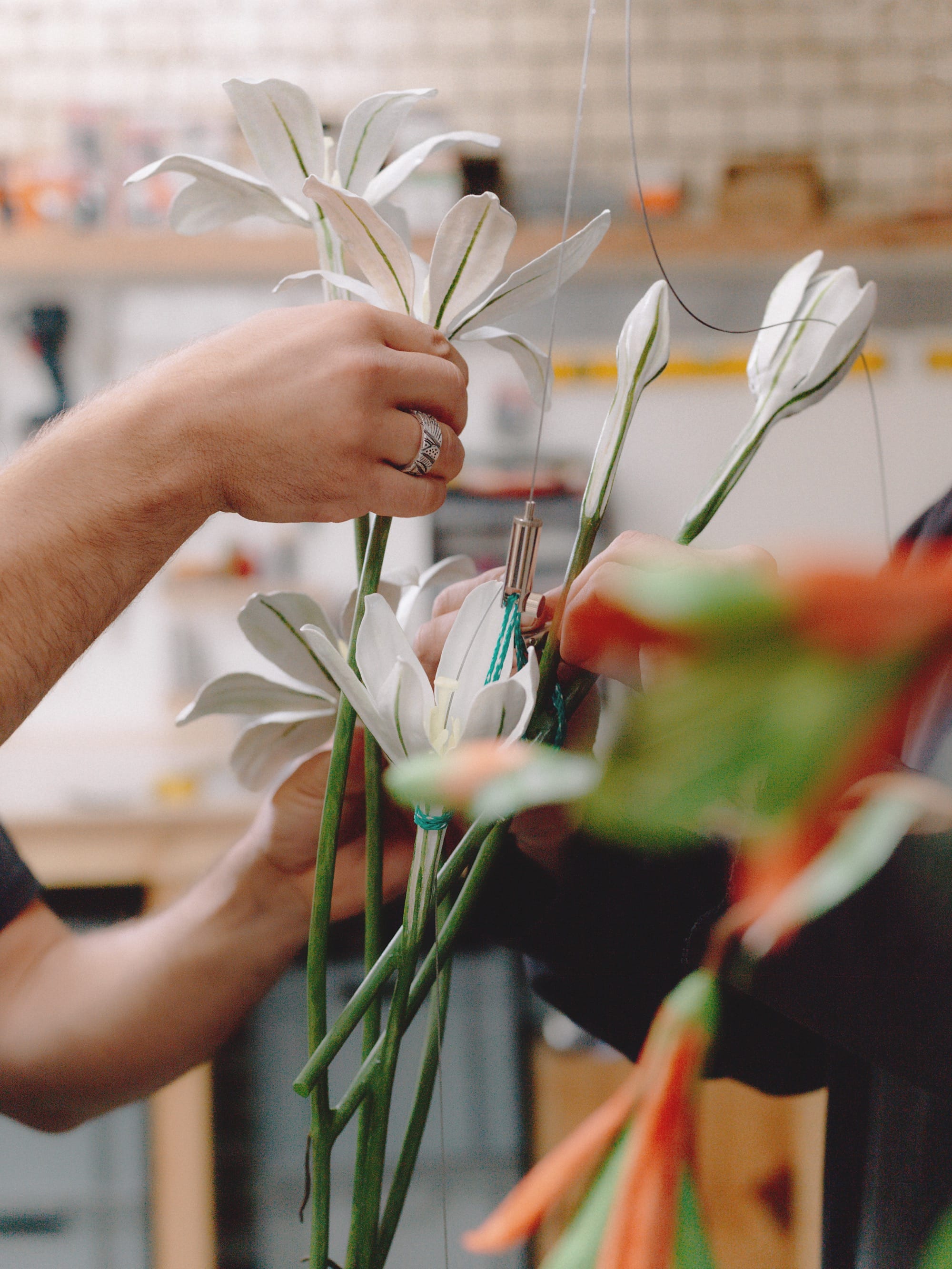
The solo exhibition presents Urbano’s signature painted plants arranged in a delicate, immersive formation. Floating against a diaphanous, translucent curtain, the lifelike metallic sculptures appear almost like botanical apparitions. Hovering in mid-air, they gently guide viewers through the dreamy, contemplative space of Museo Jumex, evoking the quiet wonder of discovering rare flora within a hidden volcanic landscape. Each carefully crafted specimen is directly modeled after a plant that originally appeared in Helen O’Gorman’s 1961 documentation, bridging the gap between archival history and contemporary sculptural interpretation.
Complementing the floating metal flora is a site-specific installation that transforms the gallery floor. A floor of square pavers is interspersed with variegated stone, echoing the raw, geological textures of the Pedregal terrain and the idiosyncratic interior landscape of Casa Cueva. Much like the historic cave house itself, the exhibition unfolds in an organic, fluid manner, establishing a continuous, unspoken dialogue between the built environment, the sculptural plants, and the museum visitors who bear witness to both.
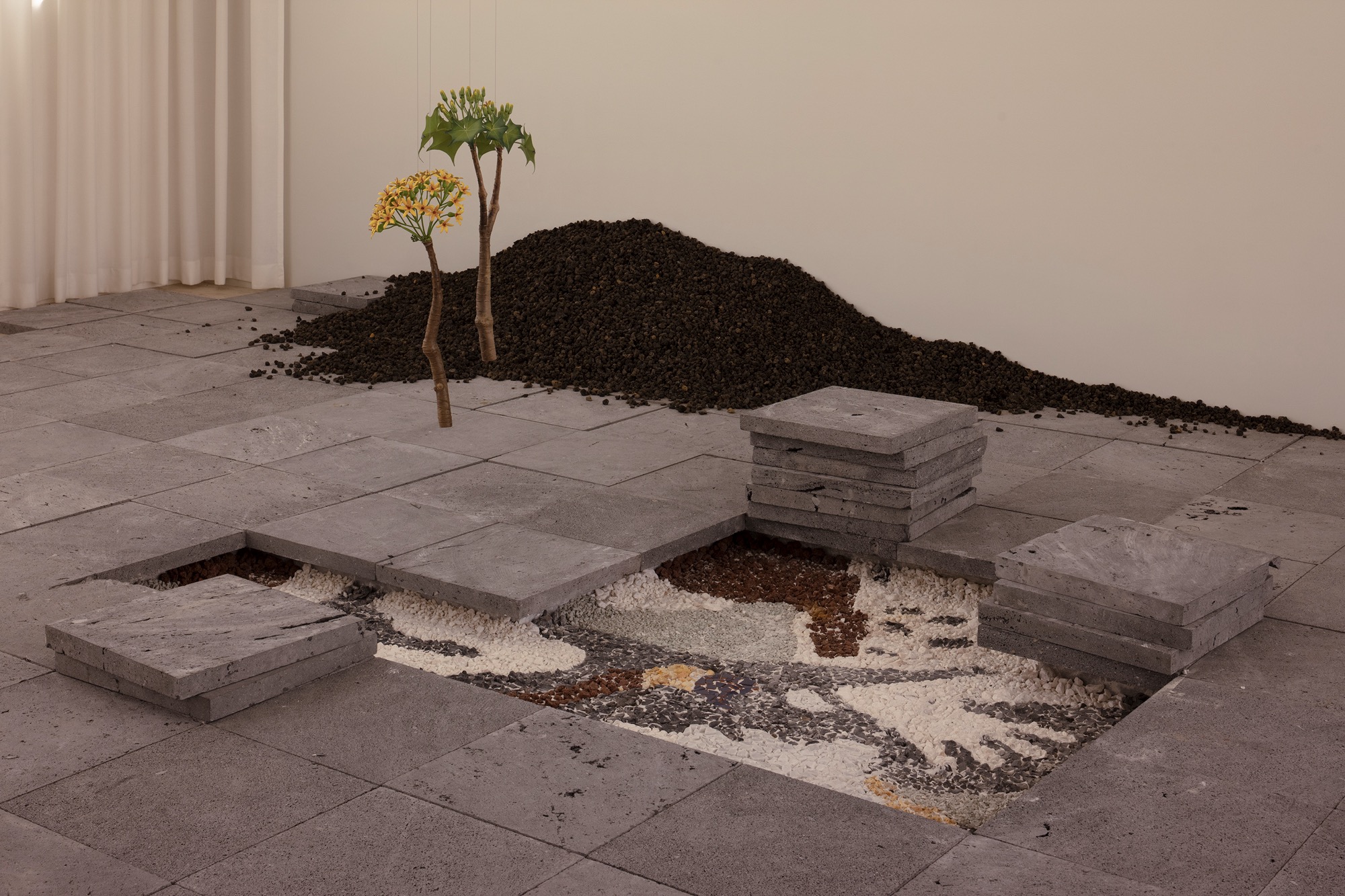
The convergence of history, architecture, and sculpture in Helen highlights a shared fascination with the intersection of human habitation and the natural world. Juan and Helen O’Gorman’s original design philosophy embraced the volcanic topography rather than fighting against it, carving out a living space that honored the raw materials of Mexico City’s volcanic southern landscape. Urbano’s exhibition captures this philosophy, translating the ephemeral beauty of Helen’s botanical illustrations into enduring metallic forms while recreating the atmospheric interplay of stone, light, and vegetation that defined life at Casa Cueva more than half a century ago.
Helen is currently on view at Museo Jumex through February 7.