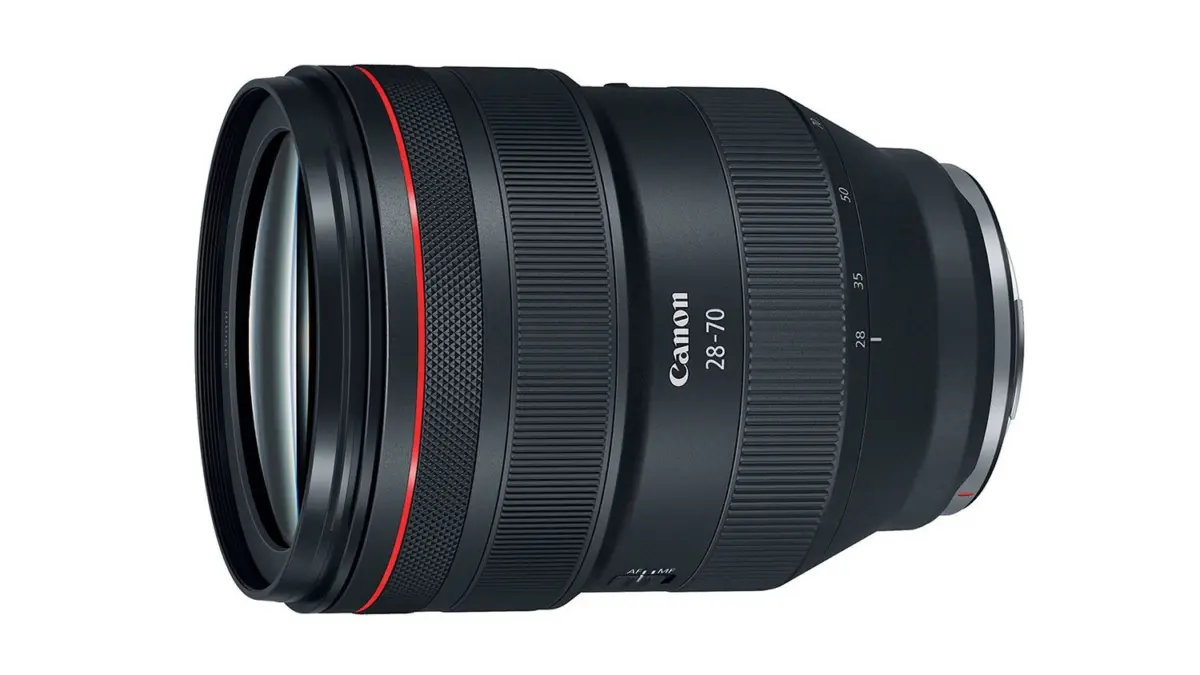
The Canon RF 28-70mm f/2L USM has carved out a unique and celebrated space for itself among professional photographers since its introduction, largely thanks to its unusually bright and fast constant maximum aperture. However, recent intellectual property filings suggest that Canon’s optical engineers are not resting on their laurels and are actively exploring the engineering feasibility of developing an even longer telephoto zoom lens that maintains that same remarkable f/2 brightness.
A newly published patent from Japan details an advanced design framework for compact, high-performance zoom lenses. Rather than relying on the traditional two focusing groups found in many current RF-series lenses, this innovative optical blueprint incorporates three or more distinct focusing groups. Tucked away within the technical drawings and accompanying documentation for various potential lens configurations is a tantalizing reference to a prospective 70-200mm f/2 lens, sparking significant discussion and excitement across the photography community.
The patent, which was officially published in Japan on October 16 and first brought to light by industry monitors at Canon Rumors, outlines a specialized optical architecture designed to reduce the overall physical size of high-end telephoto and standard zooms without sacrificing optical integrity or speed. While the patent document itself is not exclusively dedicated to a single commercial product, the detailed schematic drawings explicitly reference a potential 70-200mm f/2 alongside other ambitious focal length combinations, such as a fast 50-85mm f/1.4 configuration.
Designing an ultra-bright zoom lens has historically presented a formidable engineering paradox for optics manufacturers: while photographers desire the shallow depth of field and low-light gathering capabilities of a wide aperture, they simultaneously demand equipment that remains portable and manageable in the field. Generally speaking, reducing the physical dimensions of a zoom lens requires optical designers to bring the internal lens groups closer to one another. However, the fundamental problem with this traditional approach, as outlined in the patent literature, is that compressing these elements leaves virtually no physical space to accommodate the bulky autofocus groups necessary for swift and accurate subject tracking.

The newly surfaced patent suggests that implementing three or more dedicated focus units could effectively resolve this spatial dilemma. By distributing the focusing workload across a greater number of smaller, independently moving elements, optical engineers can potentially shorten the required internal distances. This sophisticated mechanical arrangement makes it theoretically possible to engineer an ultra-bright zoom lens while avoiding a dramatic, burdensome increase in the physical size and weight typically associated with achieving such wide apertures at longer focal lengths.
Importantly, the concept of utilizing more than two focus groups is not entirely unprecedented within Canon’s modern lens development pipeline. Earlier this year, another patent from the manufacturer explored similar multi-group focusing arrangements aimed at maximizing autofocus speed and precision across complex optical formulas.
Furthermore, the utilization of multiple autofocus driving units is a design philosophy that Canon has already successfully brought to the consumer market. The company’s established Dual Nano USM lenses employ dual autofocus motors to drive different lens groups independently, enhancing speed and reducing aberration shifts during focusing. More recently, innovative Voice Coil Motor (VCM) technology has been paired with secondary Nano USM motors in cutting-edge primes like the Canon RF 35mm f/1.4L VCM, demonstrating Canon’s ongoing commitment to advanced, multi-actuator autofocus systems.
While the latest patent outlines several theoretical designs utilizing three autofocus groups to achieve brighter apertures without producing excessively heavy barrels, the mere possibility of an RF 70-200mm f/2 has naturally generated a wave of enthusiasm. This excitement is largely rooted in the legacy and real-world performance of the existing Canon RF 28-70mm f/2L USM, a lens that fundamentally altered expectations for what a professional standard zoom could achieve.
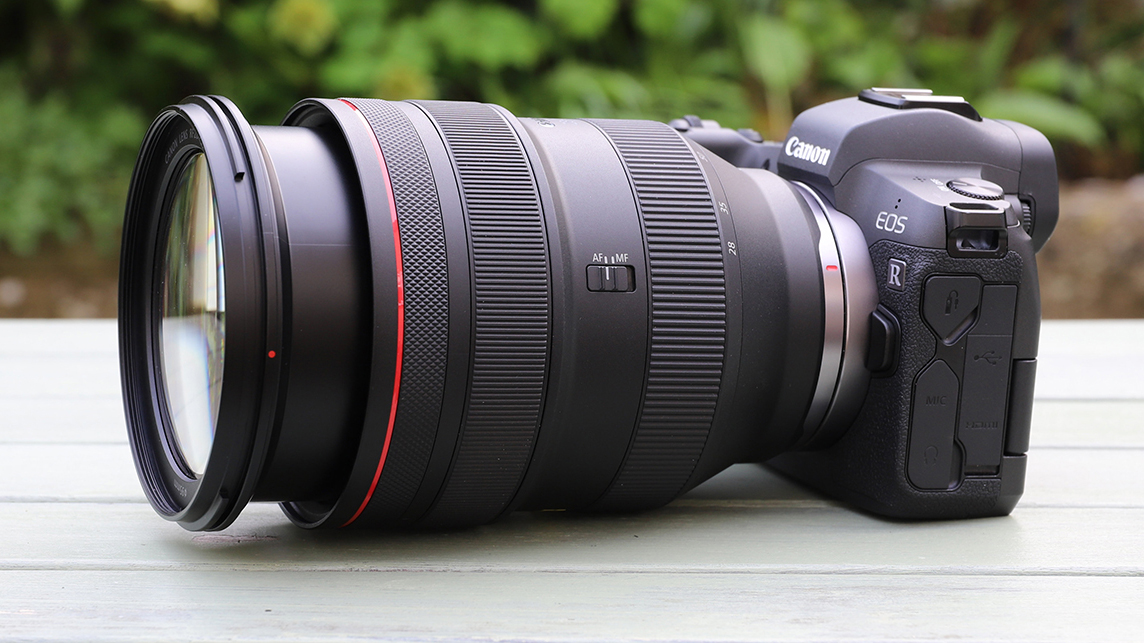
The Canon RF 28-70mm f/2L USM utilizes a powerful ultrasonic autofocus motor and deliberately foregoes the wider 24mm starting point found on conventional professional zooms in order to accommodate its wide f/2 aperture. Even with these optical compromises, the lens remains notably heavier and larger than its variable-aperture or slower counterparts, such as the standard RF 24-70mm f/2.8L IS USM. Weighing in at approximately 3.1 pounds or 1,430 grams, the Canon 28-70mm f/2L is actually heavier than the current Canon RF 70-200mm f/2.8L IS USM. This significant heft serves as a clear, practical demonstration of just how formidable the engineering challenges are when attempting to scale a constant f/2 aperture into the telephoto domain.
Corporate patents of this nature provide a fascinating window into the behind-the-scenes research and development priorities of major manufacturers, but industry observers always emphasize that the existence of a patent does not guarantee a commercial product will eventually reach retail shelves. Canon consistently leads the global photography sector in annual patent filings, a historic streak of research output that frequently sets industry records. Because many experimental optical designs explored in patent applications are engineered purely to protect intellectual property or test theoretical limits, a substantial portion of these concepts never transition into mass production. Consequently, for the time being, the prospect of a native Canon RF 70-200mm f/2 zoom remains firmly in the realm of optical theory and enthusiastic speculation.