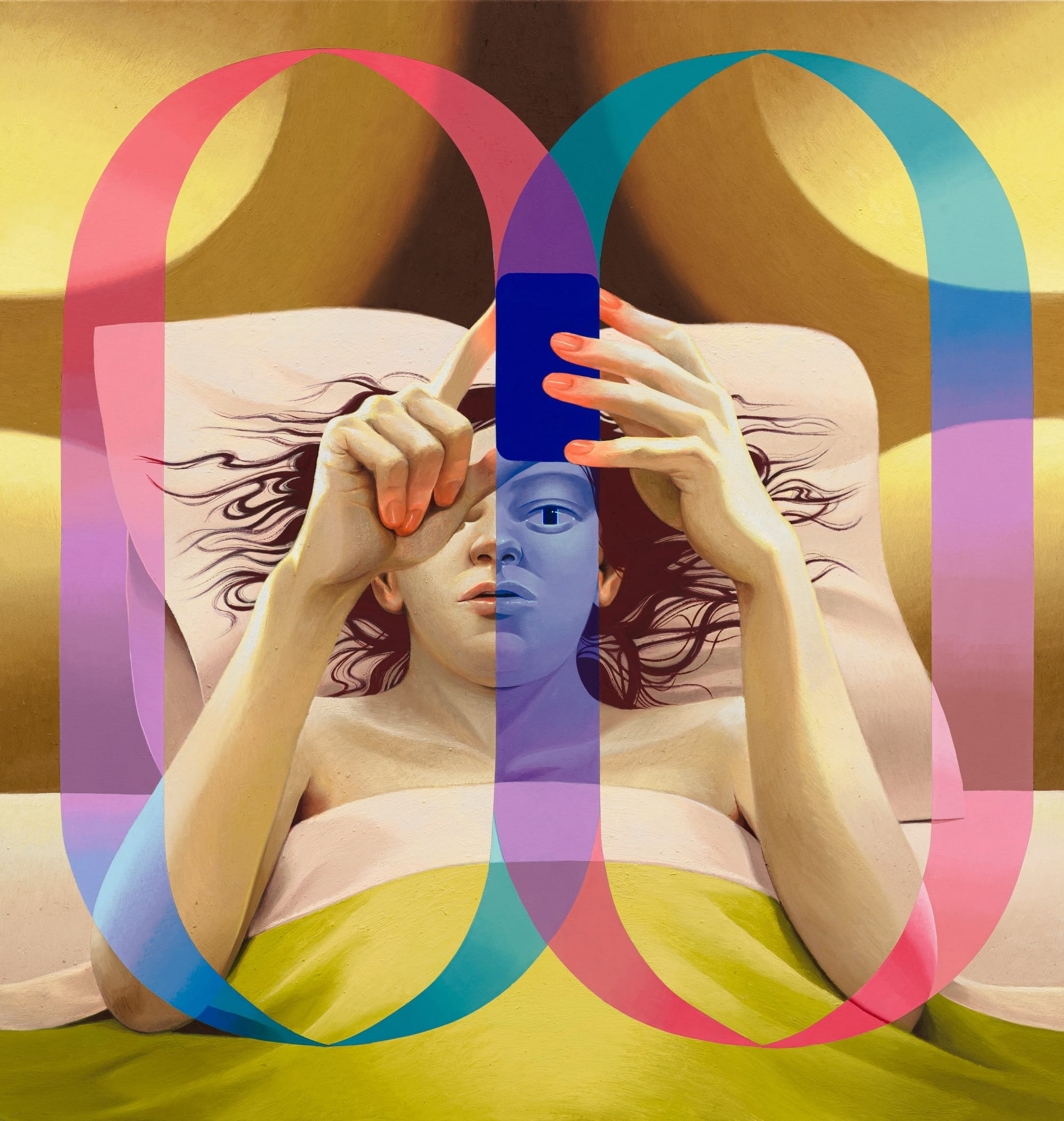
A nude figure with frazzled hair lies motionless in bed, sickly colored linens draped haphazardly across their upper body. With fingertips glowing an intense, inflamed red, the character clutches a navy-blue smartphone, staring catatonically at the screen in a posture instantly recognizable to anyone living in the digital age. Bursting from the handheld device is a vibrant, luminous infinity symbol, emerging in endless loops of hypnotic energy and mesmerizing light.
This all-too-relatable portrait forms the emotional and visual core of a suite of provocative new works by Brooklyn-based artist Robin F. Williams. In her latest exhibition, Williams captures the omnipotent techno-dystopia that contemporary society collectively barrels toward. Extrapolating on the increasingly complex ways humanity and machines merge, the artist presents a mystical, haunting vision of another world—one richly infused with the iconography of modern pop culture and the enduring frameworks of art history.
The exhibition, titled Act Natural, plunges headfirst into the uncanny without settling comfortably into the strange state of things. The too-sleek, frictionless world portrayed across Williams’s canvases exudes both the seductive allure of advanced technology and the immense, quiet horror it elicits. Presented by P·P·O·W gallery as a special pop-up at Frieze’s No. 9 Cork Street venue in London, the body of work invites viewers to confront the digital rituals that dictate modern existence through the elevated lens of oil and acrylic painting.
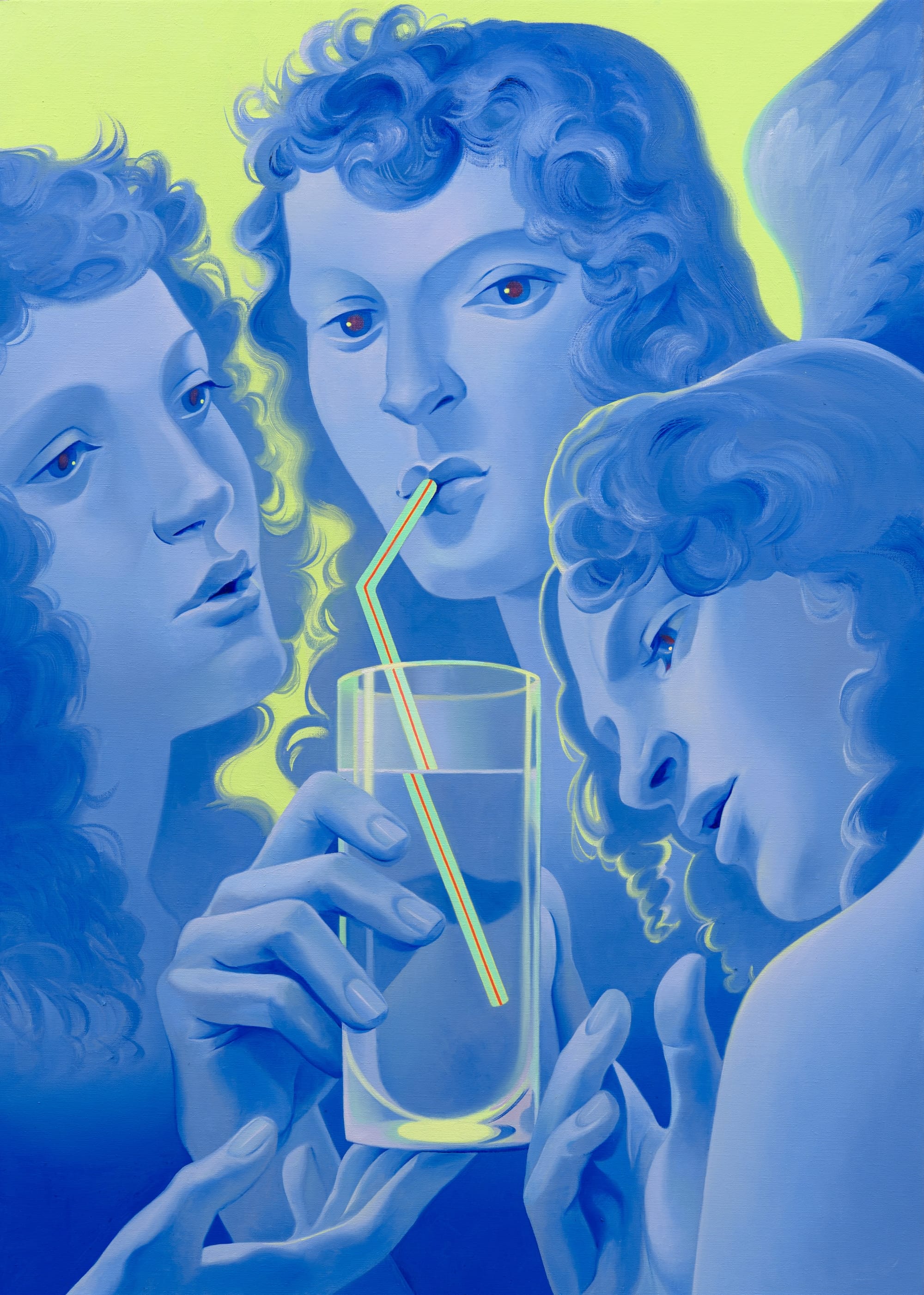
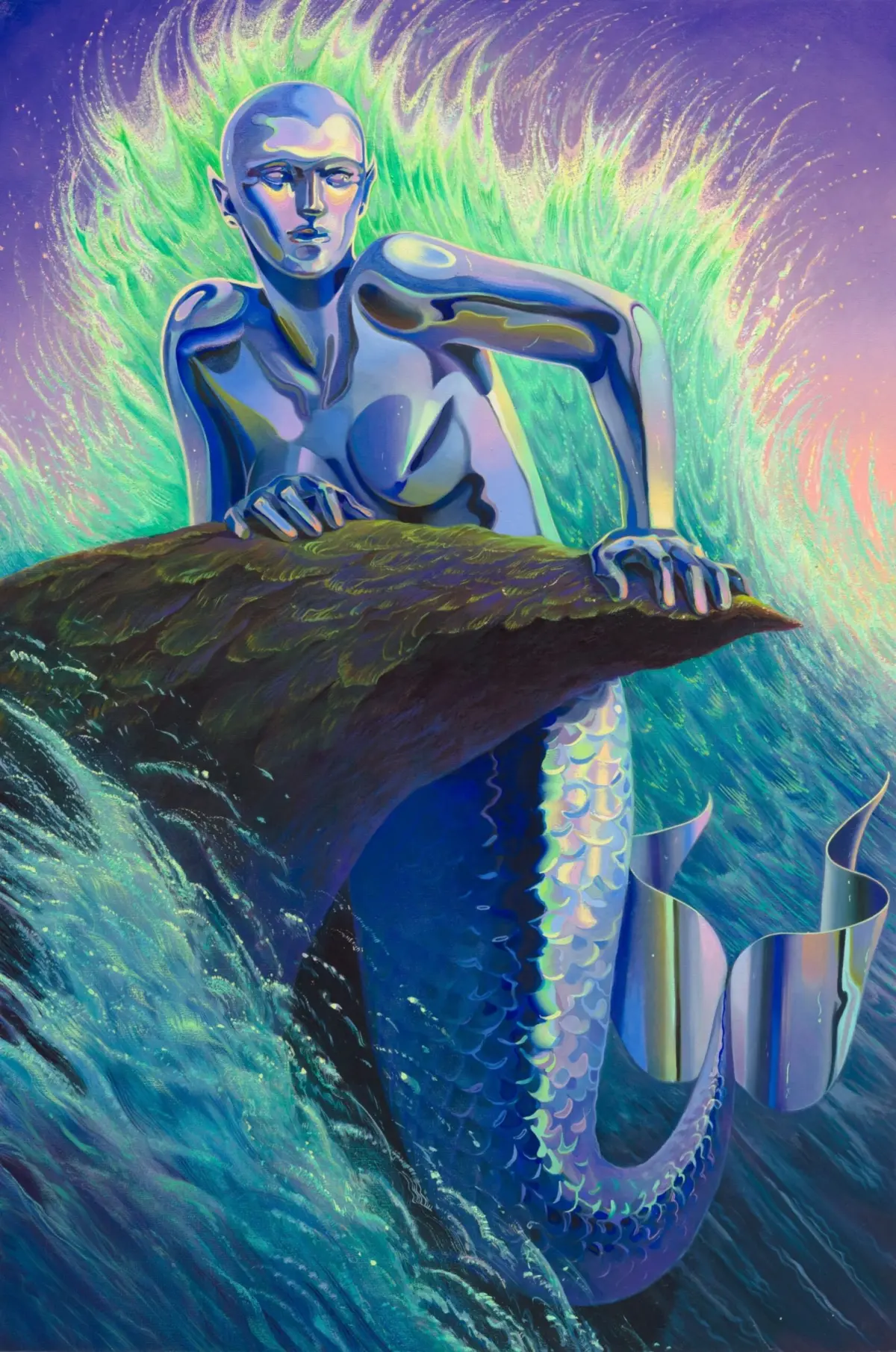
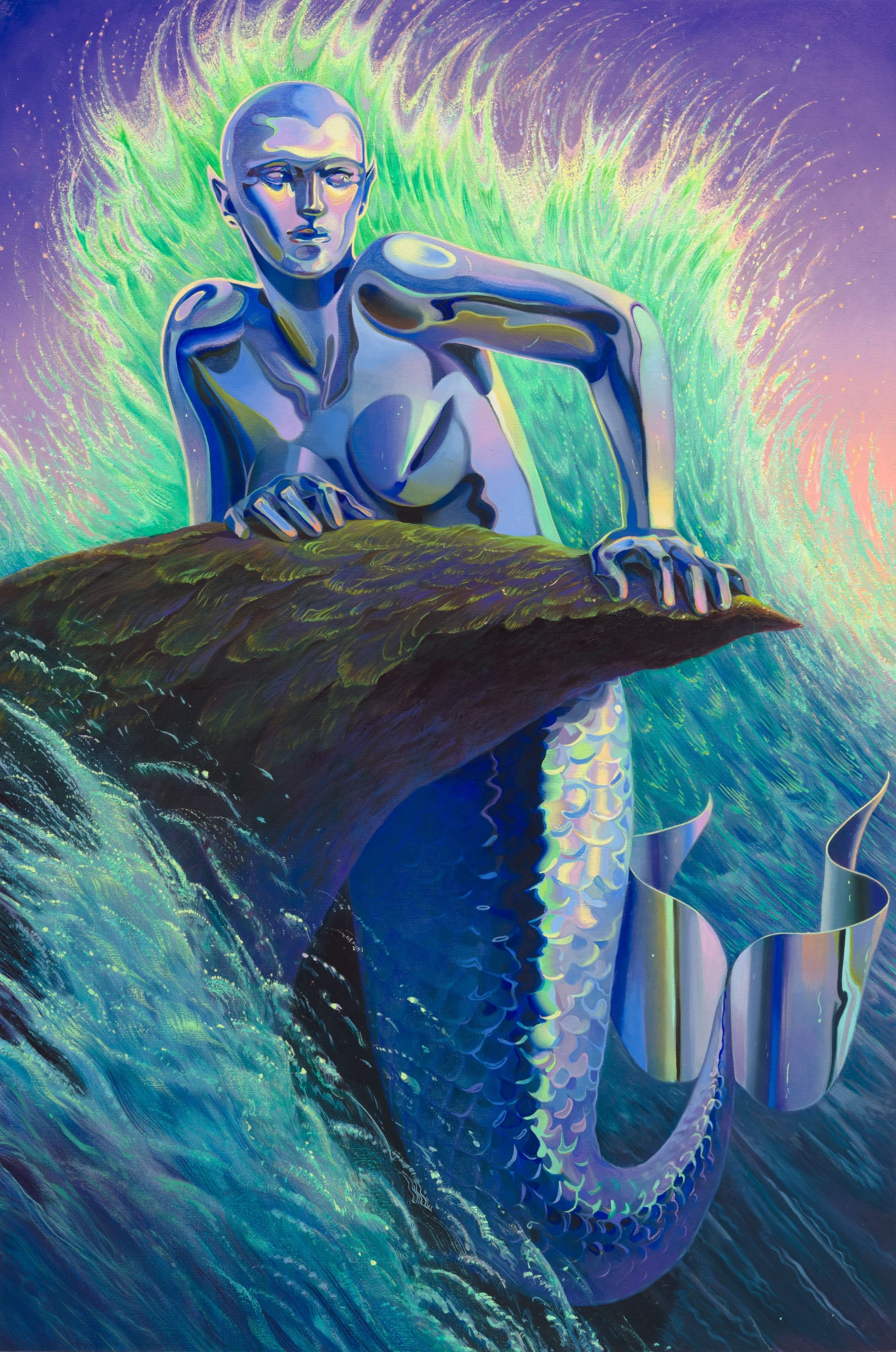
Among the striking pieces on view is The Merminator, a title that playfully yet sharply bridges disparate cultural epochs. The painting combines two iconic characters from the 1980s—a relentless cyborg assassin and a classic Disney princess—to form a strange, metallic bot. Perched menacingly yet vulnerably on a stone, the figure mirrors Ariel as she peers toward a human world she presumably longs to be a part of, while simultaneously recognizing the profound alienation of knowing she will never truly be accepted within it. This clever juxtaposition serves as a metaphor for the human relationship with technology: we build and immerse ourselves in digital realms that promise connection, only to find ourselves fundamentally alienated.
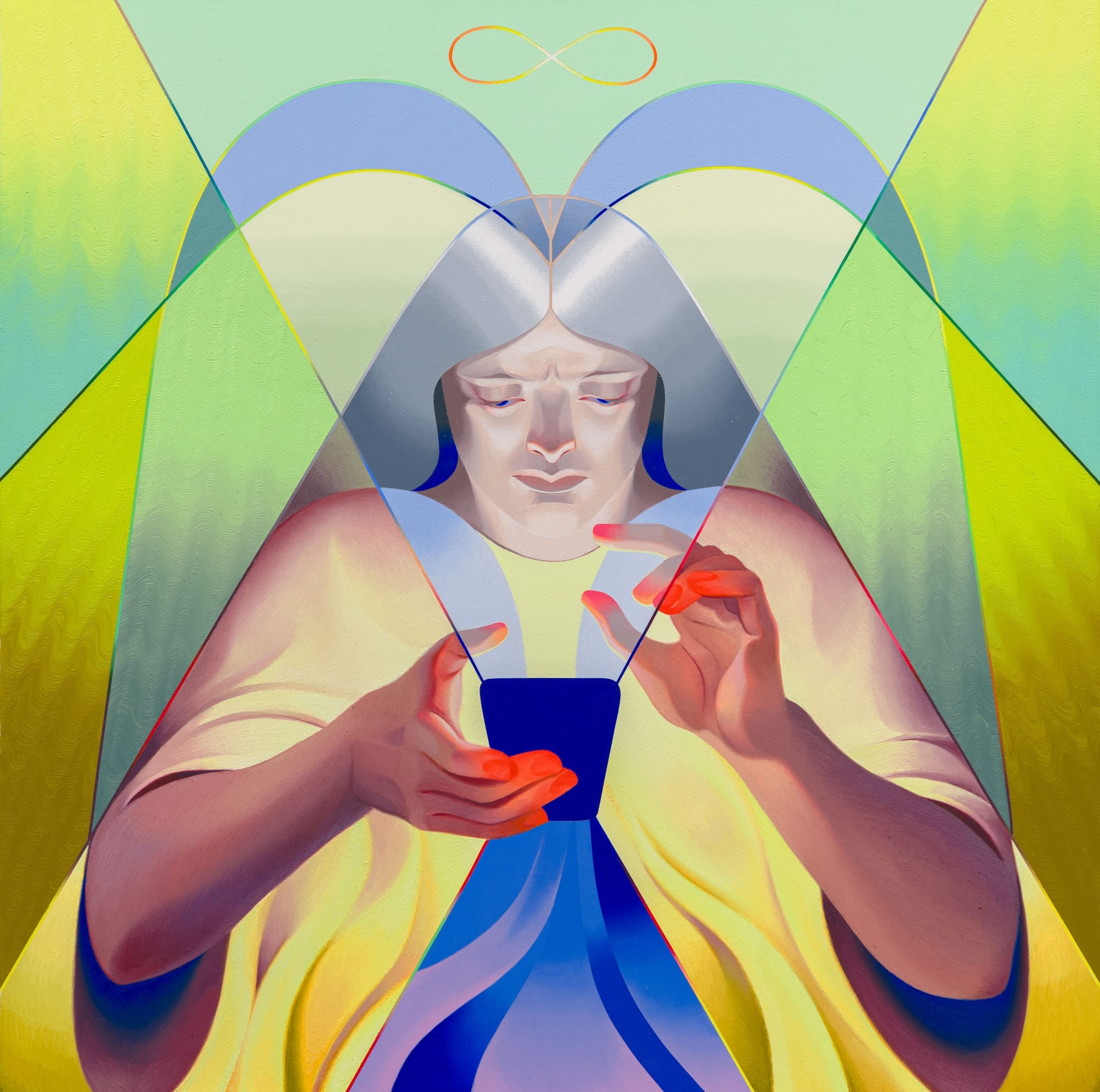
Another standout work, I Am Not a Robot, adopts a deeply symmetrical composition. The piece explicitly takes its visual cues and color palettes from the spiritualist abstractions of pioneering artist Hilma af Klint. At the same time, it draws heavily from Sandro Botticelli’s Renaissance masterpiece Madonna of the Pomegranate, which traditionally presents the titular fruit as a rich visual metaphor for the human heart and divine life. In Williams’s contemporary iteration, however, the human heart is replaced by the smartphone. The device radiates an artificial, hypnotic glow outward from the center of the canvas, functioning as the modern world’s primary life-giving—and life-consuming—source.
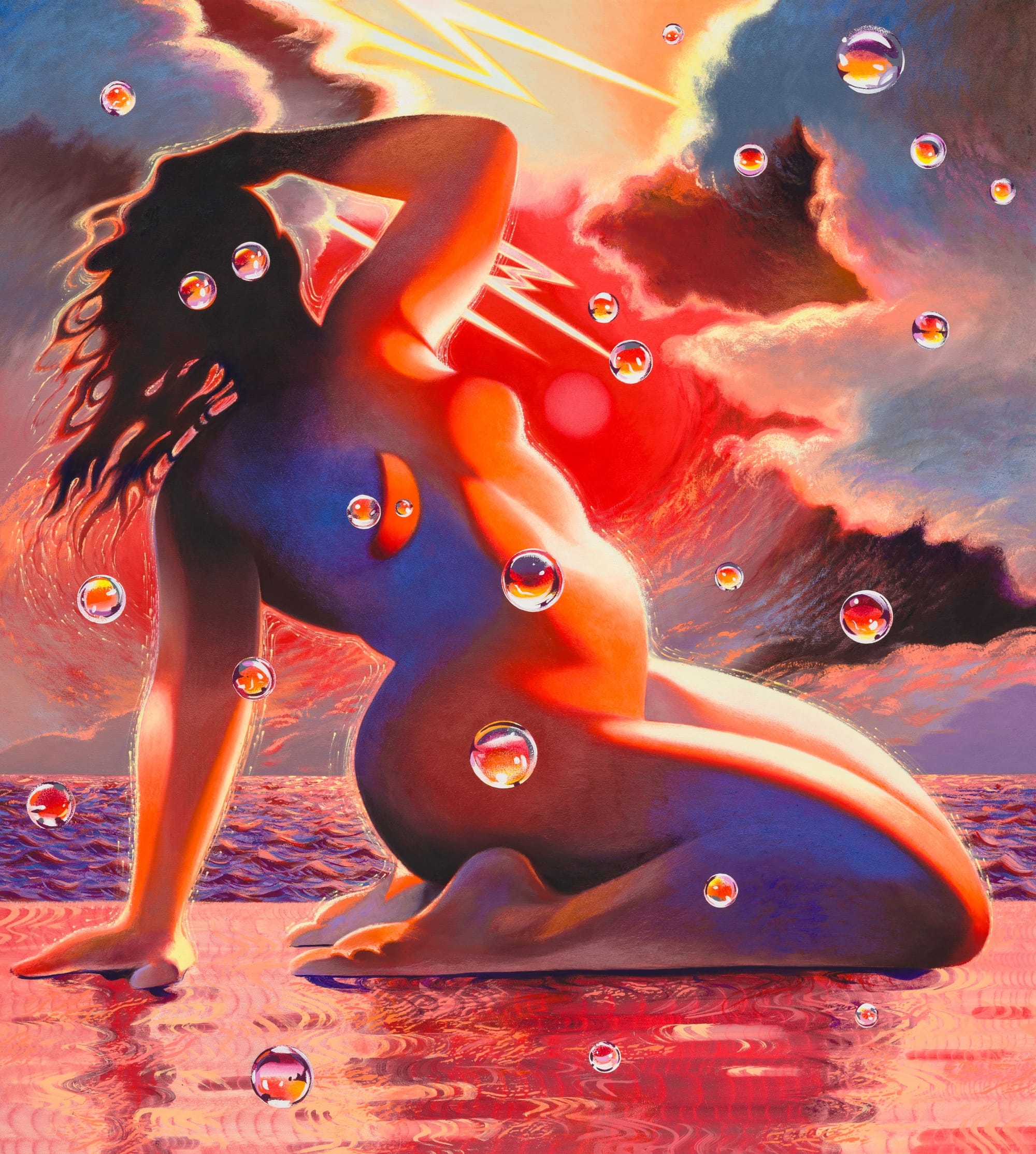
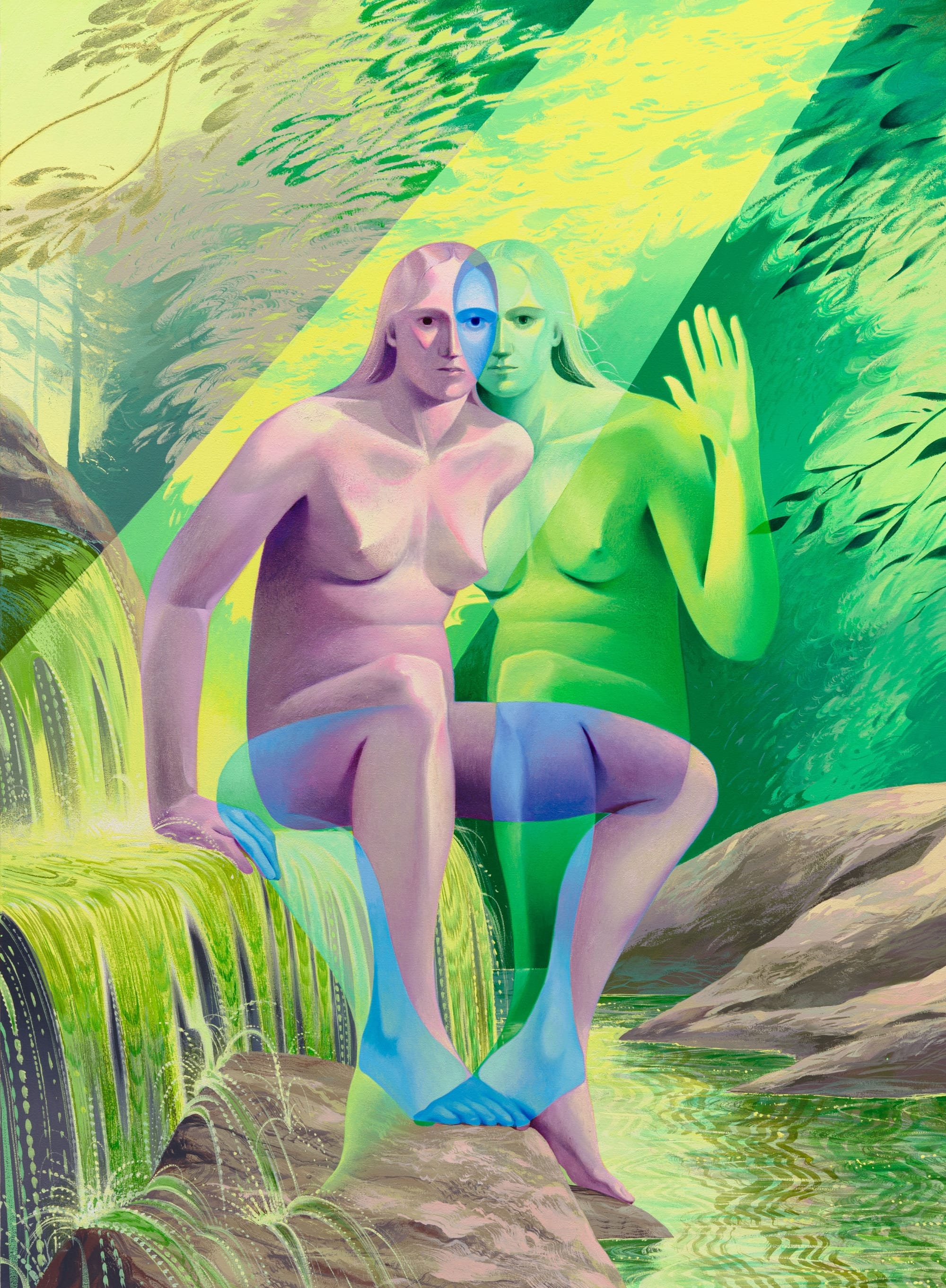
Through Act Natural, Williams examines how deeply digital devices have integrated themselves into the physiological and psychological rhythms of human life. Works like Language Model, featuring a nude figure on a beach posing with an arched back in a striking palette of reds and purples, and Spooky Action at a Distance, which portrays two overlapping nude figures in a lush natural setting, further explore the friction between organic embodiment and digital detachment. The exhibition’s pieces manage to bridge quantum physics terminology, internet slang, and classical artistic traditions without feeling forced or overly academic.
The pop-up exhibition at No. 9 Cork Street in London provides an intimate space for viewers to absorb the scale and intricate detail of Williams’s oil and linen, as well as acrylic and canvas, creations. Act Natural remains on view through October 24, drawing art enthusiasts and critics alike who are eager to witness how contemporary painters are grappling with the psychological fallout of the digital age.