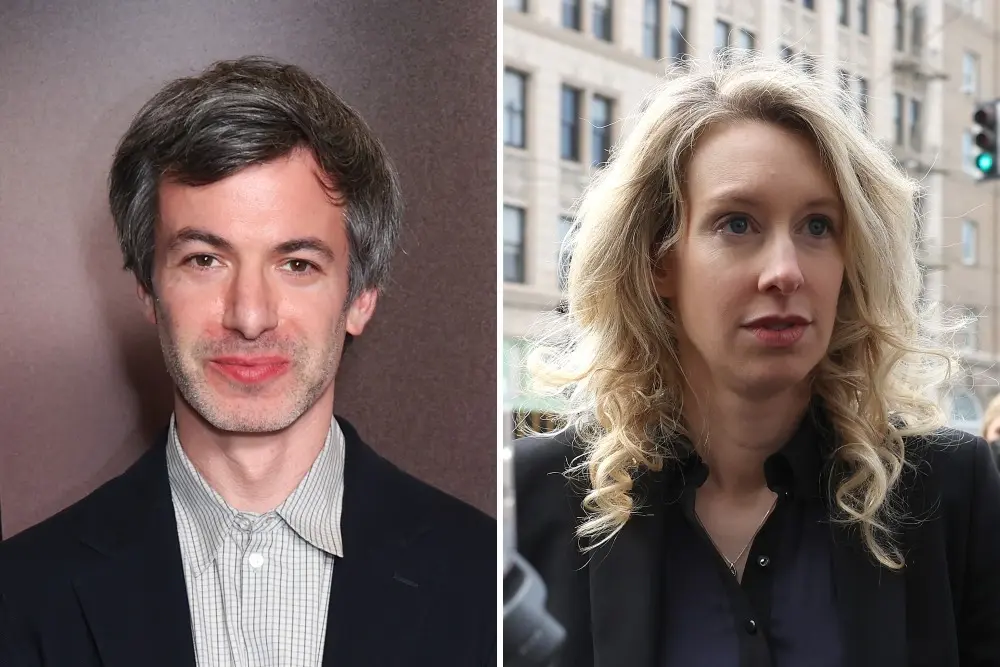
Disgraced Theranos founder Elizabeth Holmes reached out to filmmaker Nathan Fielder with a surprise phone call from federal prison just as his provocative new documentary, “You Can See Everything,” was preparing for its theatrical release.
In a wide-ranging interview with Wired magazine, Fielder disclosed that the unexpected conversation marked the first time the director and his high-profile documentary subject had spoken to one another in over six months. Holmes is currently serving an 11-year federal prison sentence following her conviction on multiple counts of wire fraud and conspiracy related to the collapse of her blood-testing startup, Theranos.
The conversation touched on several personal topics, leaving Fielder somewhat unsettled by its cryptic conclusion.
“She had not called me in over six months. I had not heard from her in any way… she asked how I was doing,” Fielder recalled of the phone call. “I asked her if she had seen any stuff about the film coming out and how she felt about it. She told me she had seen some stuff, but most things she just isn’t seeing, so she’s heard things, but she hasn’t really read anything. And then, at the end, she said to me — ‘I trust you.’ I said, ‘OK, thanks.’”
Fielder noted that the conversation quickly moved beyond the upcoming cinematic project to other personal matters. “We talked about some other stuff. She talked about her kids, and then some updates that are not really my place to share. But then after that, she said again, at the end of the call — ‘I trust you.’ And I don’t know what she meant by that.”
Inside the Making of ‘You Can See Everything’
“You Can See Everything,” co-directed by Fielder and “Primetime” filmmaker Lance Oppenheim, captures an intimate and unprecedented portrait of Holmes and her partner, Billy Evans, during the final 34 days leading up to the commencement of Holmes’s lengthy prison sentence. The filmmakers took the extraordinary step of moving in with the couple to document their daily lives as the legal fallout from the Theranos scandal came to a head.
Fielder explained to Wired that his involvement in the project originated after he learned that Holmes and Evans had previously attempted, unsuccessfully, to pitch a documentary about themselves to the independent film studio A24.
“Months later, I heard that that had happened,” Fielder said. “So I called A24 and said, ‘Well, could I meet her?’ That was the start of it all.”
Yet, the central mystery that continues to perplex Fielder is why someone with Holmes’s legal and public relations history would ever agree to invite a creator known for subversive, highly unconventional television—such as Comedy Central’s “Nathan for You” and HBO’s “The Rehearsal”—into her private sanctuary. Anyone familiar with Fielder’s body of work would recognize that collaborating with him is unlikely to result in a straightforward, sympathetic, or conventional biographical documentary.
“This is part of the mystery that, like, doesn’t make sense to me,” Fielder admitted. “I asked her that on, I think, one of the first days we shot. I still don’t fully understand it. That really messed with my head. Also, I got the sense very early that she hadn’t seen a lot, but she had seen some of what I did, and she had talked to people who had seen what I did. Billy had seen more. I think she found the clip that she said she saw funny. But you know, her relationship to that… to what’s funny? I don’t even know. She said her favorite movie is ‘Elf,’ the Will Ferrell movie.”
Billy Evans Explains the Couple’s Rationale
The day before “You Can See Everything” made its theatrical debut, Billy Evans appeared on the “All-In” podcast to shed light on the couple’s motivations for opening their doors to Fielder and Oppenheim. According to Evans, the primary goal was to bypass the media narrative and allow the public to experience Holmes up close, hoping viewers might judge her character independently.
“It was to have people see who she is,” Evans explained during the podcast appearance. “I have gone through this consistent experience with the people who love me most, from my grandmother to my best friends. They’d hear I knew [Elizabeth Holmes] or I was falling for this person and now we’re going to have a kid… in the beginning, every single one of these people thought I was crazy. ‘Do you know who she is?’ I would tell them, ‘I understand why you feel that way but just meet her.’ And they would meet her and spend time with her and see her in a totally natural environment, like going on a hike or helping a friend. Every opinion of her would radically shift. That was the intention of the film. To help scale that up and allow other people to sit with her and make up their own minds.”
Despite those intentions, the strategy appears to have backfired significantly. Rather than softening public perception, “You Can See Everything” has intensified the fierce backlash against Holmes. Well before the film was even screened for critics, A24 released a chilling teaser trailer that prompted widespread public unease, particularly due to Holmes’s demeanor and her assertions that she committed no wrongdoing during her tenure at Theranos.
The ensuing controversy has nevertheless translated into massive commercial success. “You Can See Everything” has emerged as an unexpected box office phenomenon, pulling in $15 million during its domestic opening weekend—marking the largest theatrical debut for a documentary feature in decades.
“You Can See Everything” is currently playing in theaters nationwide. Nathan Fielder’s full interview can be read on Wired’s official website.