Across the corporate landscape, organizations are making substantial investments in artificial intelligence, purchasing enterprise licenses, deploying automated assistants, and expecting immediate gains in efficiency. Yet, according to user experience and digital strategy expert Paul Boag, many of these initiatives are collapsing into strategic misfires that closely resemble the corporate blunders of a decade ago.
Writing in an analysis of modern workplace technology trends, Boag argues that current corporate approaches to AI adoption mirror the exact organizational missteps that plagued digital transformation projects during the early 2010s. Boag, who documented these structural failures in his 2014 book Digital Adaptation published by Smashing Magazine, warns that leadership teams are once again treating a deep cultural and operational shift as a routine IT software rollout.
The fundamental issue, Boag asserts, is that executives continue to overlook the human element. By prioritizing technology over human motivation, psychological safety, and supportive governance, companies are stalling their own innovation efforts and pushing frustrated employees toward unauthorized "shadow AI" workarounds.
It’s About People, Not Technology
While both digital transformation and artificial intelligence are built on major technological breakthroughs, the software itself represents only the tip of a much larger operational iceberg. The primary reason corporate implementations flounder is that executive leadership routinely mistakes technological deployment for organizational change.
During the height of the digital transformation wave, IT departments focused almost exclusively on installing enterprise software—such as Content Management Systems (CMS), Customer Relationship Management (CRM) tools, and corporate intranets. On the consumer-facing side, companies rushed to launch websites, mobile apps, and personalized digital experiences. However, leadership spent minimal effort understanding how internal staff would actually operate these systems or whether the new software fit established workflows. Consequently, internal platforms proved frustrating to use, while customers frequently rejected digital tools that failed to address their real-world needs.
A near-identical pattern is playing out with AI. Executive management, captivated by high-level market enthusiasm, is instructing IT teams to acquire and deploy enterprise AI licenses, such as Microsoft Copilot Studio, across entire corporate networks. Once the software is provisioned and a generic, company-wide training session is delivered, leadership often considers the job complete.
This leaves employees struggling to determine how to apply complex conversational tools to their day-to-day responsibilities, even as they face mounting pressure from management to demonstrate immediate returns. The situation today is arguably more precarious than in 2014, as staff now contend with intense anxieties surrounding job security and automated displacement—concerns that boilerplate corporate assurances fail to alleviate.
Why Would Staff Want To Adopt AI?
A major structural barrier to successful AI integration is the stark disconnect between executive incentives and employee motivation. From the perspective of senior leadership, AI promises substantial productivity gains, enabling the enterprise to produce more output in less time. However, this value proposition rarely appeals to the individual workers tasked with implementing the technology.
For most employees, higher productivity does not translate into personal benefit. Staff are still required to work standard full-time hours, but they are now expected to manage a significantly higher volume of work within the same timeframe. Without reduced hours or increased compensation, workers have little organic reason to embrace tools that simply elevate their baseline workload.
To overcome this resistance, organizations must actively identify what motivates their workforce before demanding widespread tool adoption. Rather than framing AI strictly around output metrics, management can align technology deployment with employee pain points. Positioning AI as a means to automate tedious, frustrating administrative tasks can make staff significantly more receptive to change.
Furthermore, long-term adoption requires tangible institutional incentives. Organizations serious about integrating AI should tie successful adoption to clear career progression, revised compensation models, or flexible working hours that allow employees to share in the efficiency gains generated by automation.
Staff Need Time and Support to Adopt AI
Integrating AI into daily operations requires far more than learning a new software interface; it requires workers to dismantle and rebuild procedural knowledge developed over years or decades of professional experience. Re-evaluating deeply ingrained habits demands significant time, mental energy, and dedicated experimentation—resources that most overworked employees simply do not possess.
When staff members are already struggling under heavy workloads and dense task lists, they cannot be expected to master complex AI tools on their own time. Formal, generic training seminars are equally insufficient, as they fail to demonstrate how generative models apply to specific daily responsibilities.
To achieve meaningful results, organizations must invest in specialized, role-specific training tailored to distinct operational teams, such as customized AI instruction designed specifically for user experience (UX) and design departments. Employees require structured, ongoing support alongside explicit permission to take time away from routine duties to experiment with alternative workflows.
Beyond formal training programs, peer-led advocacy often serves as the most effective catalyst for institutional change. Rather than attempting to force compliance among resistant staff members, organizations should identify internal "enthusiasts"—employees who are already experimenting with AI independently.
By bringing these early adopters together, giving them space to collaborate, and allowing them to demonstrate practical use cases to their direct colleagues, companies can leverage social proof to drive organic adoption. Demonstrations from peers in identical roles consistently prove far more persuasive to employees than top-down executive mandates.
It Needs to Be Safe to Fail
The transition to new technology inevitably involves missteps, yet many corporate environments operate under rigid cultures of fear where mistakes are interpreted as evidence of incompetence. This zero-tolerance atmosphere creates a severe barrier to innovation and tool adoption.
This dynamic was widespread during the digital transformation era, when leadership demanded rapid digital modernization while simultaneously holding workers accountable to strict, legacy Key Performance Indicators (KPIs) and penalizing minor errors during annual reviews. Trapped between conflicting expectations, employees naturally defaulted to traditional, safer working methods.
Today, this pressure has intensified. In many modern workplaces, employees report receiving stern reprimands over software token usage costs just weeks after being commanded to adopt AI tools, or being subjected to restrictive usage policies that make experimentation feel legally hazardous.
If management expects employees to adopt complex new platforms, leadership must create an environment where safe failure is explicitly permitted. This requires adjusting operational KPIs, modifying performance review criteria during transition periods, and temporarily relaxing strict administrative oversight while staff navigate the learning curve.
Handle Governance With Care
Governance remains one of the most poorly executed components of enterprise technology rollouts. Historically, organizational oversight has swung between two extreme poles: a complete absence of guidance that creates systemic chaos, or heavy-handed restrictions that paralyze employee initiative.
While governance is essential for setting clear boundaries around data security and operational expectations, overly dense rulebooks create an environment of fear. Multipage policy documents detailing dozens of strict prohibitions discourage staff from attempting to use AI tools altogether, as staying within legacy routines feels significantly safer.

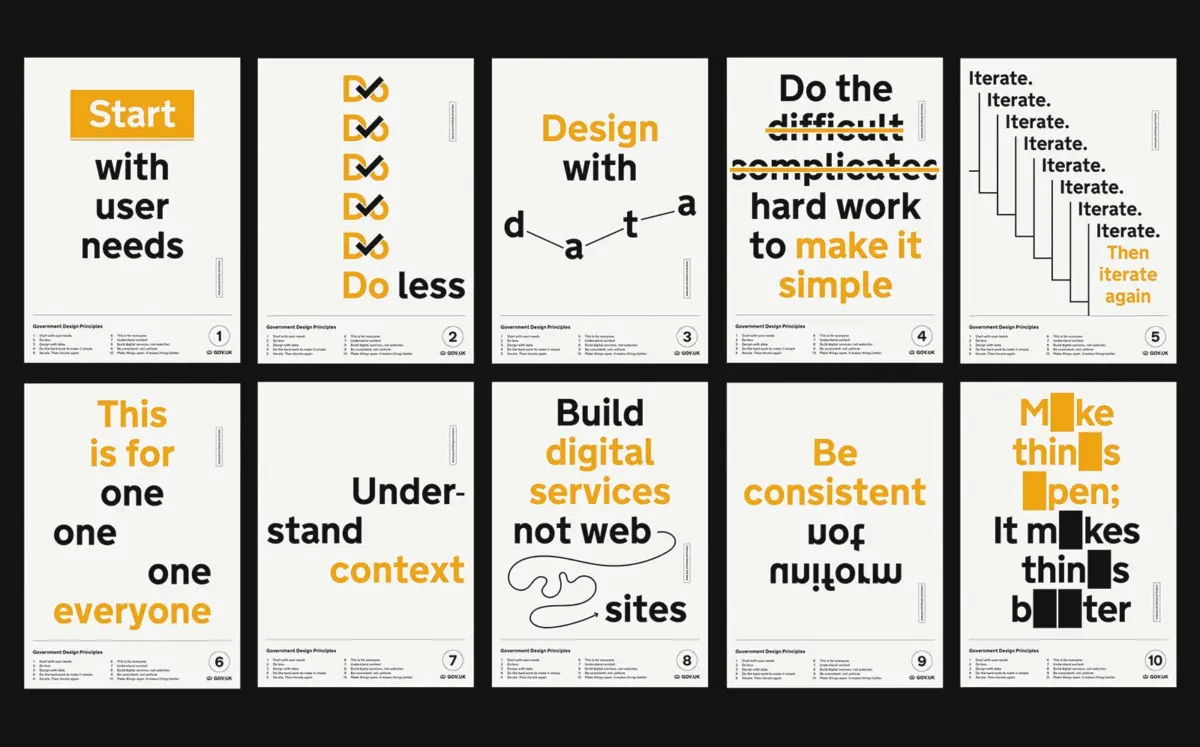
Instead of exhaustive policy documents, organizations benefit from establishing brief, high-level guiding principles—similar to the concise design principles popularized by the UK government’s digital services (GOV.UK)—that can be easily communicated and displayed across the workplace.
Once clear foundational principles are established, management must extend a degree of trust to employees, relying on their professional judgment to handle routine decisions. While occasional mistakes will occur, leadership must recognize those errors as a routine cost of operational evolution.
Adaptive Technological Rollout
From an IT infrastructure perspective, enterprise attempts to maintain absolute control over technology stacks frequently produce the opposite of their intended effect. During the digital transformation era, overstretched IT departments routinely locked down corporate networks to a single approved vendor stack, routing any alternative software requests through slow-moving steering committees. This administrative friction slowed adaptation to a crawl and contributed heavily to widespread project failures.
Today, many enterprise IT departments are repeating this mistake by standardizing exclusively on broad platform tools like Microsoft Copilot and declaring the enterprise AI strategy complete. However, standardized enterprise tools often fail to meet the specialized functional needs of specific departments.
For example, a corporate user experience team seeking to construct an AI-driven research repository and generate dynamic target personas may find that standard corporate AI tools lack the technical capability to support those advanced workflows. When such teams are forced to navigate bureaucratic steering committees to request specialized software, their initial enthusiasm quickly vanishes behind administrative delay.
When official corporate systems prove overly rigid or inadequate, workers routinely seek unauthorized alternatives. Just as employees adopted third-party cloud storage solutions like Dropbox or Google Docs during the digital transformation era to bypass corporate IT constraints, modern workers are increasingly turning to "shadow AI." Employees frustrated by corporate tool limitations frequently access personal accounts on services like ChatGPT or Claude via mobile phones or home laptops to complete their work.
Shadow AI introduces severe security risks to the enterprise, as unmonitored corporate data flows into public models and third-party systems operating outside company oversight. However, attempting to eliminate shadow AI through strict prohibitions, network blocks, and disciplinary threats rarely succeeds; instead, it simply drives the practice deeper underground.
Rather than treating shadow AI purely as a compliance breach, forward-thinking organizations recognize it as a valuable operational signal. Unauthorized tool usage reveals precisely where official enterprise software falls short. By engaging directly with staff to understand why personal tools are being used, leadership can gather actionable data to inform future IT acquisitions and build a more flexible, responsive technology stack.
A Dangerous Time
For many corporate executives, relinquishing centralized control and accepting temporary ambiguity during technology rollouts feels inherently risky. However, in a rapidly evolving technological landscape, the operational risk of moving too slowly out of fear vastly outweighs the risk of managed experimentation.
The most dangerous path an organization can take is viewing artificial intelligence strictly as a software installation project while ignoring the human dynamics that drive adoption. Successful integration requires addressing the fundamental reality that AI adoption is ultimately an exercise in cultural evolution, human motivation, and structural change management. Organizations that acknowledge these human factors will navigate the AI transition effectively, while those relying on top-down mandates risk repeating the costly mistakes of the past.