Across the corporate landscape, the current rush to implement artificial intelligence looks strikingly familiar to observers of past technological cycles. Senior leadership teams are purchasing enterprise licenses, issuing company-wide directives, and declaring their organizations AI-ready. Yet to those who navigated the early waves of corporate technology adoption, many of these efforts resemble a repeating farce rather than a coherent strategy.
Digital strategist Paul Boag points out that the modern struggle to integrate artificial intelligence mirrors the exact missteps companies made a decade ago during the height of digital transformation. In 2014, Boag authored Digital Adaptation, a book published by Smashing Magazine that examined how organizations failed to adapt their cultures and operational models to the rise of digital platforms. A decade later, he argues, executive leadership is making the exact same structural errors with AI.
The central flaw in both eras remains identical: treating a profound shift in workplace culture and human behavior as a simple technological rollout. While implementing AI requires technical infrastructure, software tools represent only the visible tip of a much larger organizational iceberg. Until corporate leaders acknowledge that AI adoption is fundamentally about human management rather than software procurement, their investments risk stalling, sparking internal resistance, or driving critical operations into unmonitored channels.
It’s About People, Not Technology
During the peak of the digital transformation era, corporate IT departments systematically installed Content Management Systems (CMS), Customer Relationship Management (CRM) platforms, and enterprise intranets. Concurrently, customer-facing divisions launched new websites, mobile applications, and early personalization engines. However, leadership consistently overlooked how employees and customers would interact with these tools. Internal systems proved unintuitive and burdensome, while external audiences frequently ignored digital products that failed to address their real needs.
A near-identical dynamic is unfolding with artificial intelligence. Executive teams, captivated by high-level industry promises, are committing substantial capital to enterprise AI software. IT departments are tasked with distributing licenses for platforms like Microsoft Copilot Studio across entire workforces, framing the deployment as complete once access is granted. Beyond minimal, generic training sessions, workers are given little guidance on how to apply these instruments to their day-to-day responsibilities.
This leaves employees in an uncomfortable position: pressured to show immediate results using unfamiliar systems, yet given no clear framework for how to do so effectively. The environment is further complicated by widespread job anxiety. Workers are acutely aware of headlines predicting AI-driven layoffs. When management demands the adoption of tools that employees suspect are designed to render them obsolete, reassurance from executives does little to alleviate underlying skepticism and fear.
Why Would Staff Want To Adopt AI?
From the perspective of an individual employee, standard corporate incentives for AI adoption are fundamentally mismatched with their personal interests. Executive enthusiasm for artificial intelligence is primarily driven by productivity gains—the promise that work can be completed faster and with fewer resources. However, from the worker’s viewpoint, increased productivity rarely translates into personal benefit.
Employees operating under standard work hours find that completing tasks faster simply results in more tasks being assigned to fill the remaining time. Without adjustments to compensation, reduced working hours, or improvements to job quality, workers receive no tangible reward for embracing AI platforms. Consequently, management is asking staff to adopt technology that increases their output expectations while offering no personal upside and heightened job insecurity.
To overcome this resistance, organizations must establish genuine motivations for their staff. A practical starting point involves framing AI as a tool to relieve personal pain points rather than merely an efficiency engine for executive leadership. By targeting repetitive, tedious, or frustrating administrative burdens, management can position technology as a direct improvement to the employee’s daily working life. Beyond alleviating daily frustrations, companies must consider concrete structural incentives to encourage long-term engagement, including clear pathways for career advancement, adjusted performance metrics, potential financial rewards, or greater flexibility in work schedules.
Staff Need Time And Support To Adopt AI
Integrating artificial intelligence into daily workflows is far more complex than learning a new software interface; it requires unlearning established habits. Over years or decades, professionals construct deep procedural knowledge—entrenched mental models and routines that dictate how work is structured and executed. Replacing these entrenched habits requires significant cognitive effort, time, and structured support.
Expecting overworked employees to seamlessly integrate complex tools into their daily responsibilities while maintaining full operational output is unrealistic. Staff members who are already struggling to keep pace with heavy workloads simply lack the bandwidth to pause, learn unfamiliar systems, and reconfigure their processes. True adoption cannot be achieved through a single generic workshop or blanket online training module.
Effective implementation demands role-specific guidance. Tailored programs—such as specialized AI training developed specifically for user experience (UX) and design teams—allow employees to see the immediate practical application of technology within their specific discipline. Organizations must build sustained support systems that grant personnel the time and operational flexibility required to experiment, adjust, and master new methodologies.
Formal, top-down training programs have inherent limits. Experience from the digital transformation era demonstrates that peer-to-peer engagement is often the most effective mechanism for driving internal change. Every organization possesses a subset of employees who naturally explore new technologies out of personal interest. Rather than focusing resources on convincing resistant workers first, leadership should empower these internal enthusiasts.
Creating dedicated forums, workgroups, or internal showcases allows early adopters to share practical applications with their peers. When employees observe colleagues in identical roles successfully utilizing AI to simplify their workloads, adoption spreads through social proof and practical demonstration—a mechanism far more influential than top-down executive mandates.
It Needs To Be Safe To Fail
A dominant obstacle to successful technology adoption is a corporate culture that penalizes mistakes. By definition, mastering complex tools like artificial intelligence involves trial, error, and initial inefficiency. In environments where errors are viewed as evidence of incompetence, employees naturally default to familiar, safe working methods.
This pattern repeated constantly during digital transformation initiatives. Senior leadership frequently demanded rapid digital innovation while simultaneously enforcing rigid Key Performance Indicators (KPIs) and criticizing missteps during annual performance evaluations. Because there was no organizational tolerance for temporary disruption or failure, employees prudently chose to avoid risk, effectively neutralizing the digital push.
Today, similar mixed signals are stalling AI integration. In numerous organizations, workers report being urged to experiment with AI, only to face formal reprimands shortly afterward for exceeding software token limits or breaching rigid, ambiguous guidelines. Exposure to constant warnings about potential risks creates a climate of hesitation. Faced with potential disciplinary consequences or poor performance reviews, workers conclude that adhering to traditional workflows is the safest professional decision.
If executives genuinely expect their workforce to embrace AI, they must cultivate psychological safety. This requires actively adjusting evaluation criteria, modifying short-term KPIs to accommodate the learning curve, relaxing overly restrictive governance during initial implementation phases, and explicitly demonstrating that intelligent experimentation and minor setbacks are acceptable parts of the transition.
Handle Governance With Care
While governance is necessary to safeguard institutional security and operational integrity, restrictive management approaches consistently stifle innovation. During both the digital transformation wave and the current AI expansion, organizations have gravitated toward two damaging extremes: complete structural neglect or overwhelmingly complex regulatory frameworks.
When legal and compliance departments issue extensive, highly punitive lists of restrictions governing AI interactions, they induce operational paralysis. Long compliance manuals detailing severe prohibitions generate fear rather than clarity, making employees reluctant to use the tools at all.
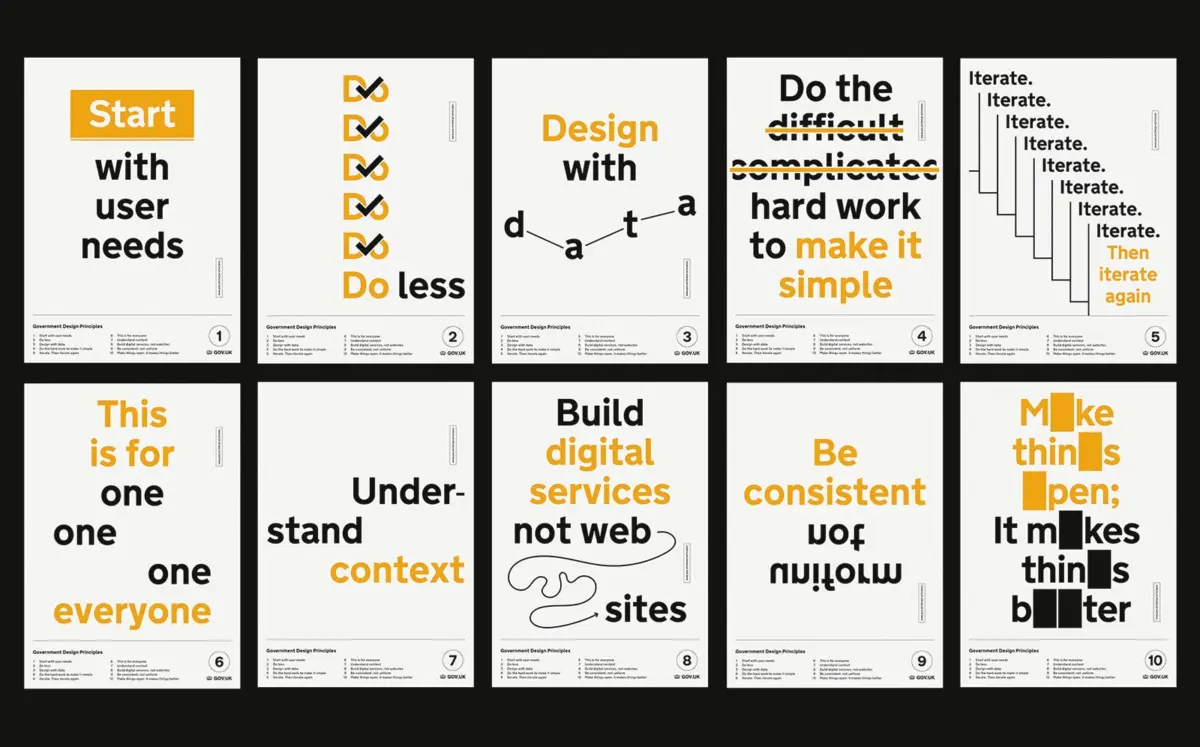
A more effective approach relies on concise, principles-based governance. Rather than attempting to anticipate every scenario with rigid rules, organizations should establish a brief set of clear, accessible guiding principles—similar to the concise frameworks utilized in public-sector initiatives like the UK government’s GOV.UK design principles. High-level principles, capable of fitting on a few reference posters, provide clear boundaries while trusting employees to apply common sense and sound professional judgment.
Executives must recognize that occasional minor errors are an inevitable cost of organizational evolution. Rather than attempting to eliminate all risk through heavy regulation, companies should design resilient deployment strategies that manage exposure while preserving employee flexibility.

Adaptive Technological Rollout
From an IT infrastructure standpoint, rigid centralized control often severely hinders technological adaptation. During the digital transformation era, overextended IT departments routinely standardized software selections across entire enterprises with minimal input from end users. Departing from these pre-selected tools required navigating lengthy approval processes and oversight committees. This bureaucratic friction slowed progress to a crawl and was a major factor in the failure of many corporate digital strategies.
A similar dynamic is emerging with AI tool selection. Many IT divisions are selecting broad, standardized systems like Copilot enterprise-wide and treating software provisioning as a completed task. However, monolithic enterprise platforms frequently fail to meet the specialized needs of specific departments.
Consider the dynamic currently observed within specialized corporate teams, such as user experience researchers and product designers. In many cases, leadership actively encourages these teams to adopt AI, and the designers express strong enthusiasm for building specialized use cases, such as AI-driven research repositories or interactive user personas. However, when standardized enterprise AI software proves incapable of executing these specific functions, the team’s momentum grinds to a halt. Blocked by corporate AI steering committees from accessing specialized external software, employee enthusiasm turns into frustration and apathy.
When formal corporate infrastructure fails to support daily work requirements, employees quietly bypass official channels entirely. Just as the digital transformation era sparked a surge in "shadow IT"—with workers utilizing non-sanctioned personal accounts on platforms like Dropbox or Google Docs to complete their tasks—the current AI landscape is experiencing a rapid rise in "shadow AI."
When official enterprise tools prove inadequate or overly restrictive, staff members routinely turn to personal accounts on public tools such as ChatGPT or Claude via personal mobile devices or home computers. This behavior introduces severe security and privacy risks that far outweigh the dangers IT policies were designed to prevent. Proprietary company data, strategic documentation, and customer information end up processing through unmonitored consumer platforms outside corporate governance, leaving management entirely unaware of data exposure.
Attempting to curb shadow AI through strict bans, network blockades, and threats of disciplinary action rarely succeeds; it merely forces the behavior further underground. Leadership must recognize shadow AI not as a disciplinary problem, but as crucial diagnostic feedback. Unsanctioned tool usage highlights precisely where official enterprise software falls short. Instead of punishing initiative, organizations should engage with staff to understand why personal tools are being utilized, using those insights to iteratively refine and expand official technology stacks.
Early in the adoption cycle, leadership must accept a degree of operational flexibility and fluid software selection while employees explore practical applications across various roles. As clear use cases and functional patterns emerge, IT departments can systematically consolidate and secure the technology stack without stalling early momentum.
A Dangerous Time
For many corporate leaders, relinquishing tight central control, relaxing rigid performance metrics, and permitting flexible tool usage feels inherently risky. Executives naturally seek to control risk, establish uniform corporate procedures, and prevent operational disruptions.
However, major technological transitions carry inherent risk, and in a rapidly shifting competitive landscape, the danger of moving too slowly routinely outweighs the risk of moving too fast.
The greatest danger facing modern enterprises is not the technical complexity of artificial intelligence itself, but the persistent refusal to address the human element of technology adoption. True integration cannot be achieved through executive mandates or software licensing agreements alone. As demonstrated by the history of digital transformation, successful adaptation requires a sustained commitment to organizational culture, effective change management, clear employee incentives, and genuine trust in the workforce.