Italian photographer Giovanna Silva never anticipated that a municipal commission for the Venice Architecture Biennale would plunge her into the subterranean, high-energy labyrinth of European nightlife. Tasked by Monditalia in 2014 with documenting the architecture of Italian nightlife, Silva stepped into a subculture that was entirely unfamiliar to her. At the time, the exhibition was just beginning to take shape, and her lack of prior exposure to discotheques felt like a distinct disadvantage. Yet, looking back, that very detachment provided an unconventional, analytical lens through which to examine spaces usually obscured by darkness, smoke, and heavy bass.
The resulting project eventually evolved beyond the exhibition walls, culminating in the acclaimed publication NIGHTSWIMMING: Discotheques from the 1960s to the Present. Through this comprehensive visual and architectural study, Silva reflects on how the spaces of club culture have transformed over the decades—shifting from purpose-built Italian discotheques to the improvised, transitory dance floors of contemporary underground nightlife.
Researching the Ephemeral Architecture of the Night
Documenting spaces designed specifically for nocturnal hedonism presents a unique challenge for any architectural photographer. Discotheques are remarkably volatile structures. Unlike museums, office buildings, or residential complexes, clubs are constantly locked in a cycle of reinvention. They must rapidly adapt to fluctuating fashion trends, shifting musical genres, and rapid advancements in lighting and sound technology.
Because many of the historic venues Silva sought to study had either closed, been heavily renovated, or fundamentally changed their aesthetic over the years, physical archives and published books became her primary gateway into the history of Italian nightlife. These historical texts did more than just supply floor plans and archival photographs; they introduced Silva to the key figures who shaped the scene. Through pages of architectural theory and club histories, she began to encounter the human ecosystem of the night: critics, visionary architects, pioneering DJs, art directors, and club owners—the figures she affectionately refers to as the "night swimmers."
After mapping the evolution of Italian discotheques from their post-war boom into the modern era, Silva and her collaborators recognized the need to broaden their scope. To understand the contemporary state of club architecture on a broader scale, they turned their attention to four major European cultural capitals: Berlin, London, Paris, and Barcelona.
Selecting venues for this cross-border analysis was no small feat. While the initial research presented at the Venice Biennale aimed for exhaustive comprehensiveness, the subsequent book required a rigorous process of curation. Silva focused on identifying establishments that held profound social and musical significance while also offering compelling architectural narratives.
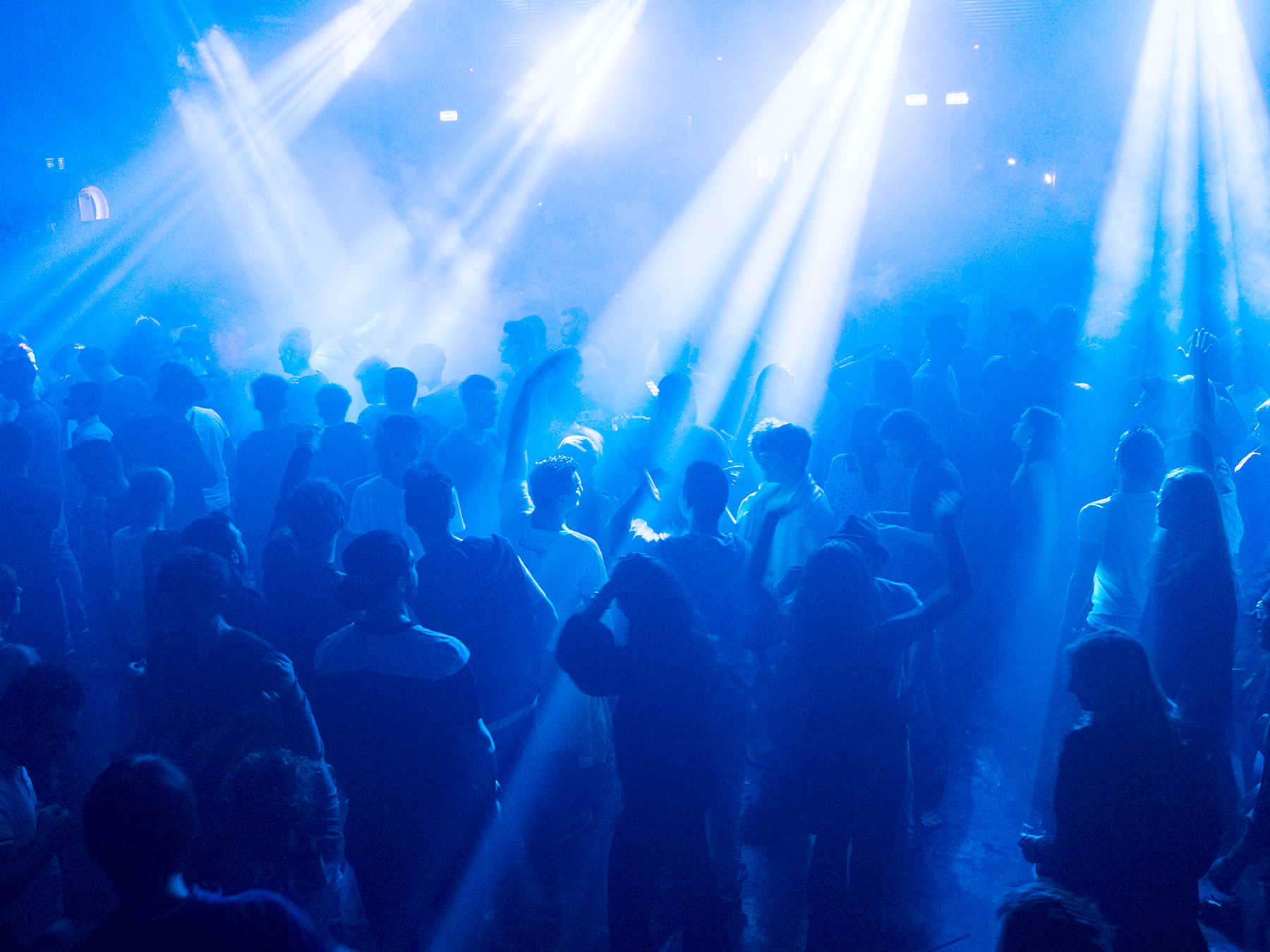
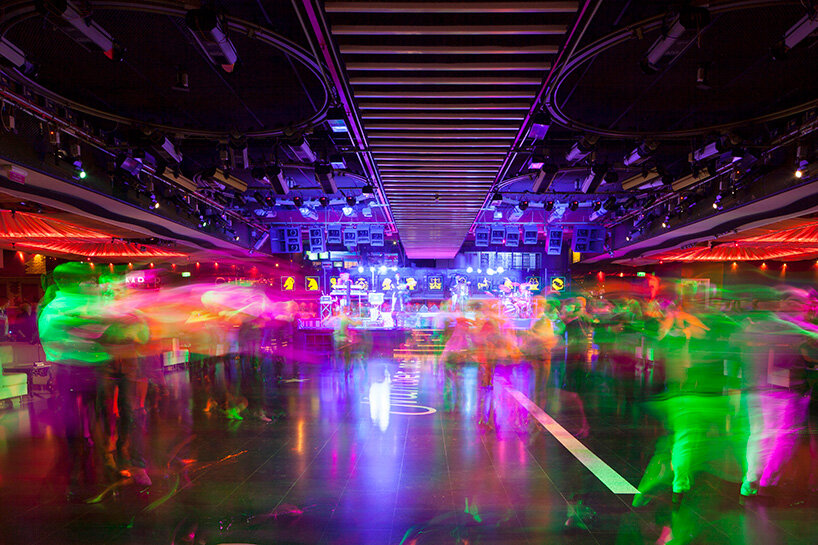
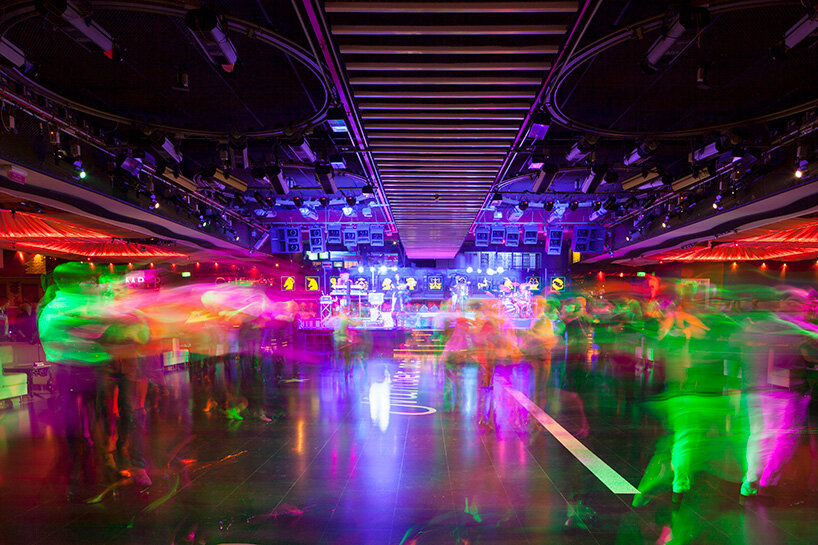
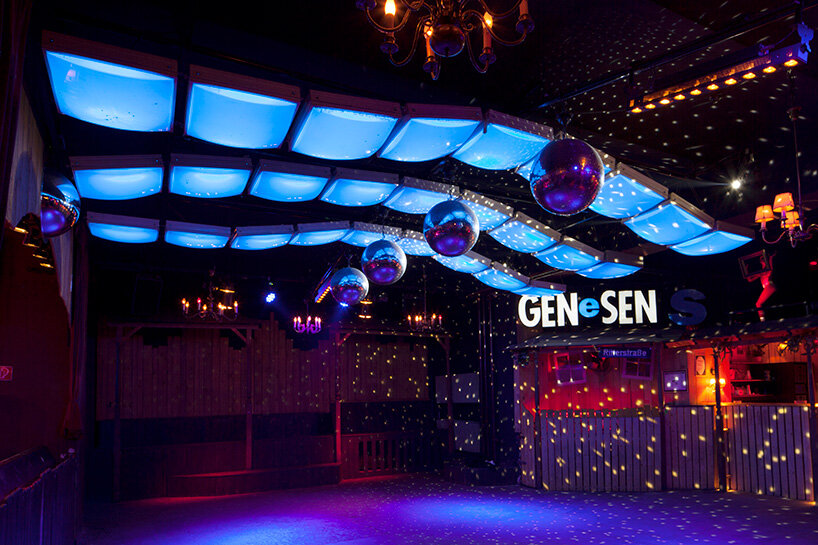
Her photographs capture a distinct modern shift in how cities experience nocturnal culture. Increasingly, contemporary nightlife occupies spaces that were never originally intended to function as discotheques. Abandoned industrial warehouses, disused factories, and unconventional urban pockets are routinely seized and temporarily transformed into high-capacity party locations. Silva notes that this phenomenon represents a sort of institutionalized, daylight-legalized evolution of the illegal rave culture that defined the 1990s. By capturing these venues both completely empty and densely packed with bodies, her photography highlights a fascinating spatial paradox: when the crowds arrive, the physical boundaries of the architecture are entirely dissolved by the collective energy of the crowd.
The Sensory Architecture of the Club
For an architectural photographer accustomed to studying static, well-lit structures during regular working hours, entering a discotheque offered a surreal sensory experience. Because Silva captured the majority of her imagery during the daytime—when the music had stopped, the crowds had dispersed, and the strobe lights were powered down—she was met first and foremost by an unexpected trigger: smell.
Entering club after club during daylight hours, Silva encountered a striking olfactory consistency. Every venue carried the same distinct residual aroma, acting as a strange spatial madeleine. She describes it as an ambiguous mixture of deep-cleaning detergents, human sweat, stale smoke, and the lingering residue of the night before—a scent profile that she suggests might simply be the universal smell of the night itself.
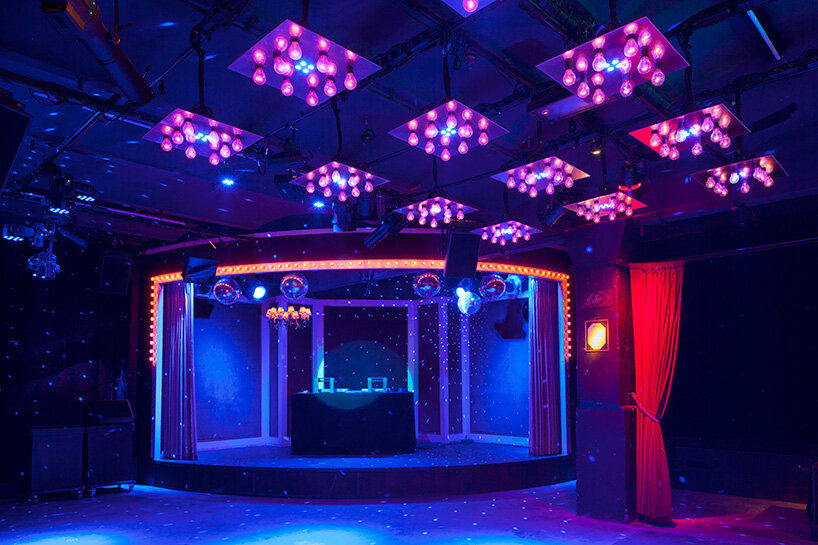
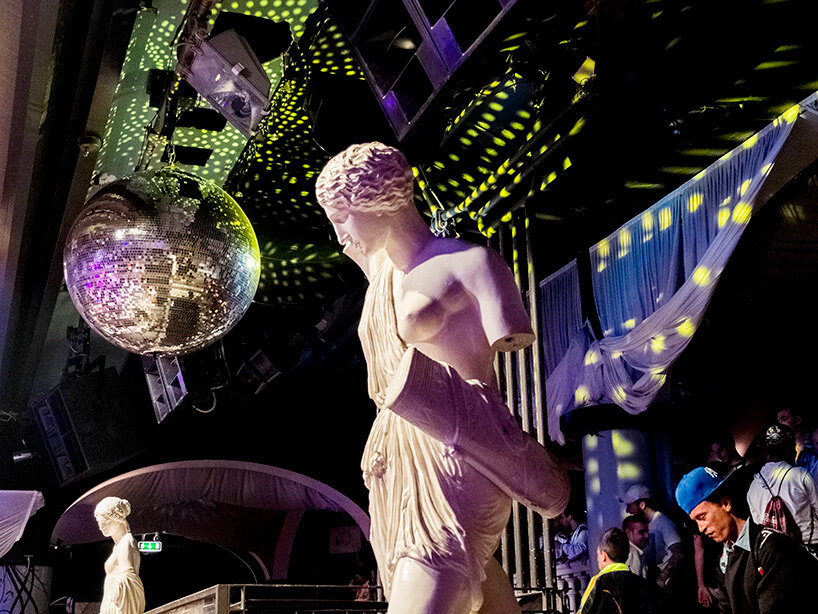
Beyond smell, however, the most transformative element of any club is light. According to Silva, discotheques share a strange kinship with aging theatrical performers: they should never be seen without their makeup. Natural daylight strips away the intentional illusion, revealing bare walls, utilitarian wiring, and raw structural materials. But at the flip of a switch, artificial illumination completely alters the geometry and atmosphere of the room. Some of Silva’s most striking photographs embrace this dichotomy, utilizing stark, flat white light to expose the architectural bones of the venues in a clinical, detached manner.
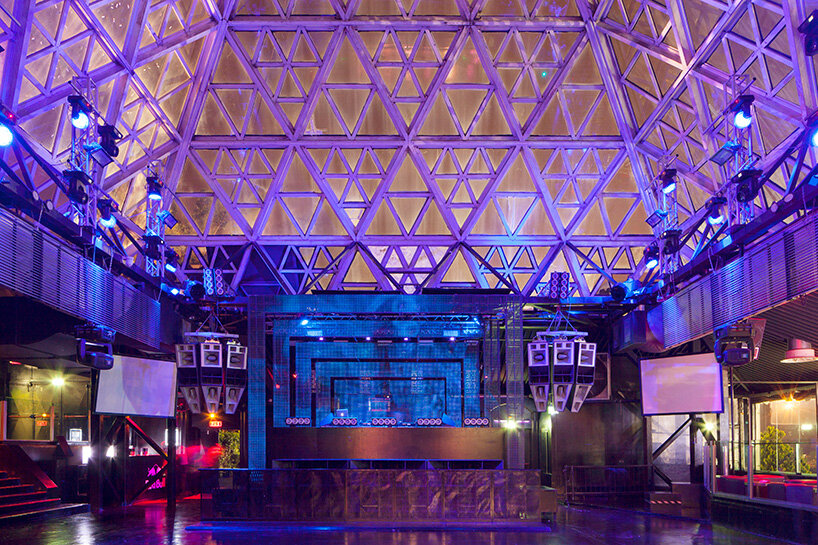
What began as a rigorous, outsider’s academic assignment gradually transformed into a deeply familiar landscape. Through countless hours spent inside darkened rooms and daylight-exposed dance floors, guided by local experts who patiently explained the complex subcultures of European nightlife, Silva developed a profound appreciation for the ephemeral beauty of these spaces.
A Multifaceted Creative Practice
Born in Milan in 1980, Giovanna Silva has established a diverse and prolific career as a photographer, publisher, and educator. Her editorial background includes regular contributions to Domus magazine between 2005 and 2007, followed by a tenure as photo editor for Abitare from 2007 to 2011.
Over the years, Silva’s photographic investigations have taken her across the globe, resulting in numerous published monographs that explore urban landscapes, post-conflict zones, and architectural typologies. Her extensive bibliography includes titles such as Days without Number, *Napoli*, Black Coffee No Sugar, Genova, Milan. City, I listen to your heart, Islamabad Today, Imeldific, Tehran, Baghdad: Red Zone, Green Zone, and Saudiscapes*, among many others.
In addition to her photographic work, Silva is deeply embedded in the contemporary publishing and architectural discourse. She is the founder of Humboldt Books and the co-founder of San Rocco Magazine. Her work has been showcased in prominent cultural institutions, including the MACRO in Rome, the Fondazione Bevilacqua la Masa in Venice, the Triennale in Milan, and the American Academy in Rome. Today, she shares her expertise as an educator, teaching at NABA in Milan and ISIA in Urbino, bridging the worlds of visual arts, architectural theory, and contemporary publishing.