The evolution of club culture—from the purpose-built Italian discotheques of decades past to the improvised dance floors of contemporary nightlife—captures a shifting architectural and social landscape. Milan-based photographer Giovanna Silva has spent years examining this phenomenon, capturing the spaces where crowds gather after dark, how light transforms these interiors, and the ways modern partygoers continue to reinvent the physical boundaries of the night.
Silva’s extensive exploration of nightlife architecture originally began when she was commissioned by Monditalia to develop a project for the 2014 Venice Architecture Biennale. At the time, the architecture of Italian nightlife was an entirely unfamiliar subject for the photographer. Entering the project with fresh eyes provided a unique perspective, though it demanded considerable restraint and a steep learning curve to navigate a world defined by ephemera, shifting trends, and transient spaces.
Documenting a Transient Culture
Because discotheques are inherently fluid environments—constantly forced to adapt to shifting music genres, fashion trends, and rapid advancements in lighting and sound technology—documenting their history required looking backward before looking forward. Silva and her team began by collecting previously published books on the subject. These archives offered a vital window into architectural eras that had long since been remodeled or demolished, while also introducing the key figures behind the scenes: critics, visionary architects, pioneering DJs, art directors, and club owners. These individuals formed the intellectual backbone of what Silva refers to as the "night swimmers."
Following her initial deep dive into Italy’s rich discotheque heritage, the scope of the project naturally expanded to encompass four major European cultural capitals: Berlin, London, Paris, and Barcelona. Selecting representative venues across these metropolises proved to be a formidable challenge. While the presentation at the Venice Architecture Biennale demanded a comprehensive survey, the subsequent book required rigorous curation. Silva sought out clubs that held significant social and musical weight while simultaneously offering compelling architectural characteristics.
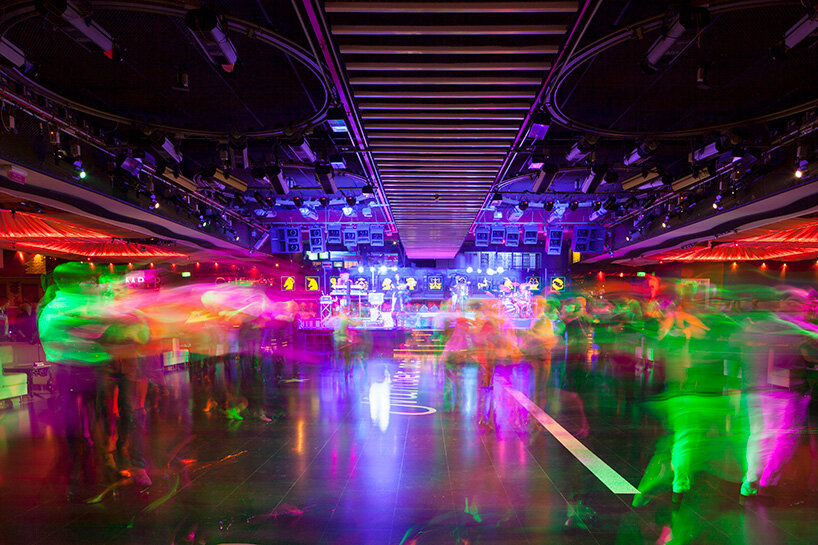
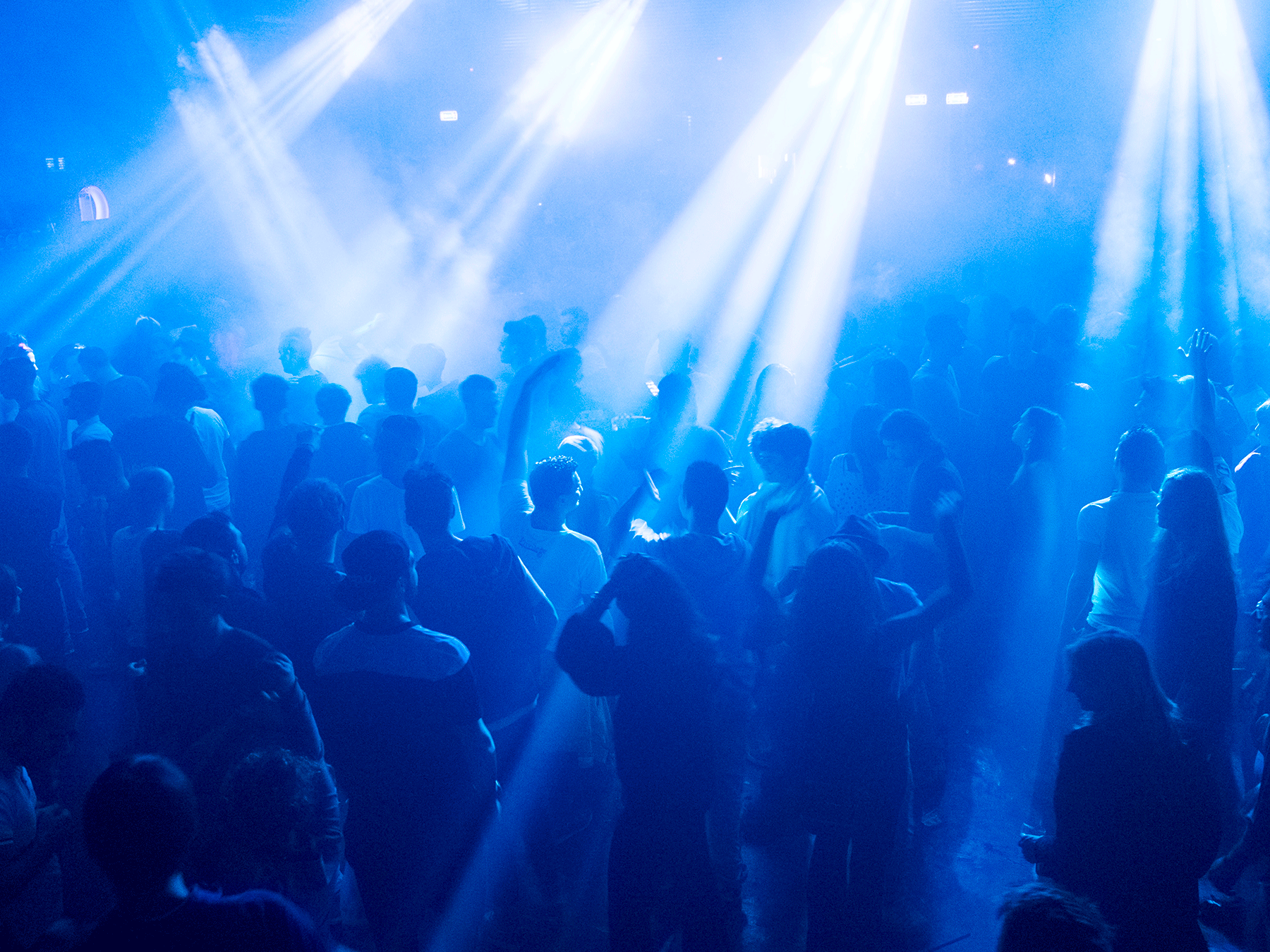
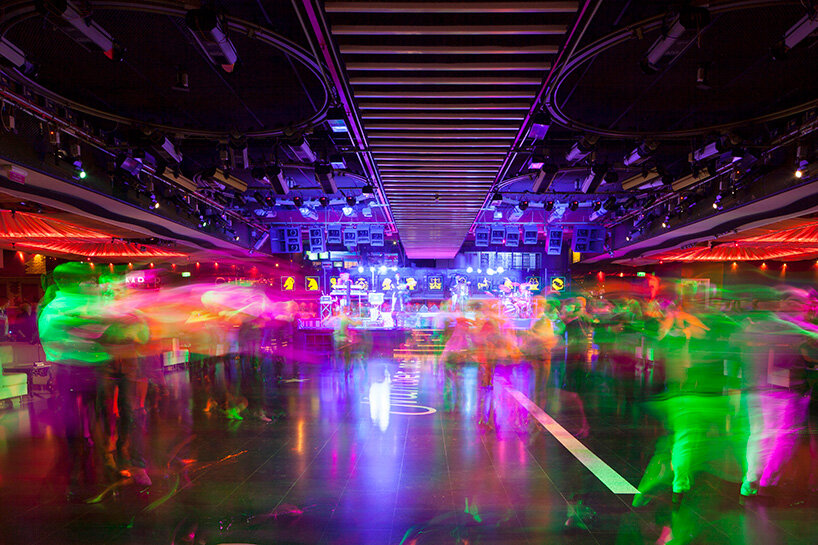
Among the spaces documented are iconic venues such as Number One in Cortefranca and Cocoricò in Riccione, alongside vibrant contemporary Berlin spaces like Ritter Butzke. Through her lens, Silva captures these locations in varying states—sometimes empty during daylight hours, and other times densely packed with crowds. These contrasting views highlight a profound contemporary shift: increasingly, spaces never originally intended to function as nightclubs are being occupied and repurposed as temporary party locations. This modern phenomenon acts as a direct spiritual descendant and legalization of the rave culture that emerged during the 1990s, demonstrating how crowds can temporarily materialize and completely redefine the concept of physical space.
The Sensory Anatomy of the Club
Entering these architectural spaces during daytime hours offered Silva an unconventional sensory experience. Long before switching on the cameras, the first element to greet her in almost every club was an unmistakable olfactory signature. Whether it was the lingering trace of heavy-duty cleaning detergents mixed with the residual atmosphere of human presence, smoke, and sound equipment, this ambient scent served as a universal anchor across disparate cities and decades. It functioned as a sensory trigger—a nocturnal madeleine that united every venue she visited.
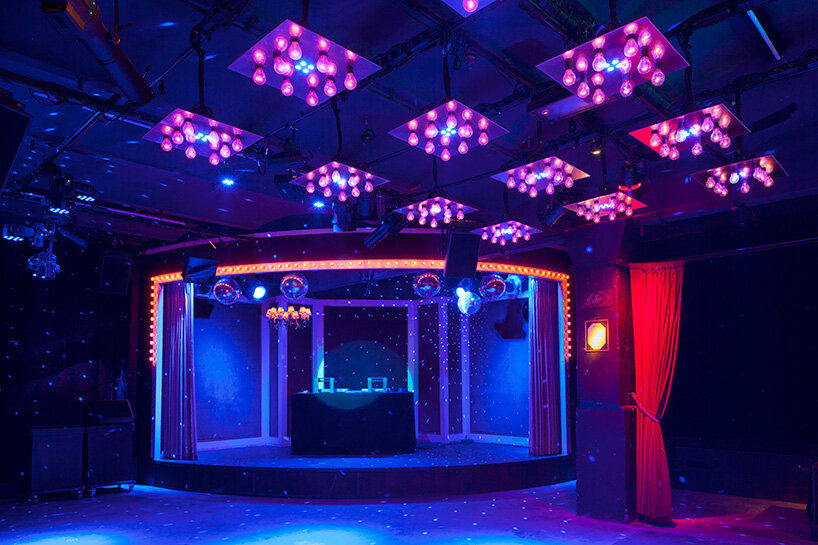
The second, and perhaps most defining, element of the club experience is light. As Silva notes, quoting a common industry maxim, discotheques are akin to aging dowagers who should never be seen without their makeup. Lighting plays an indispensable role in the theatrical illusion of nightlife, completely altering the geometry, mood, and perception of an interior at the simple flick of a switch. To expose the raw skeleton of these environments, Silva occasionally shot select photographs under flat, clinical white light. This stark illumination strips away the nocturnal magic, revealing the bare architectural bones beneath the lasers, strobes, and fog machines.
What began as a detached, academic assignment for the Venice Biennale gradually evolved into a deeply familiar landscape for the Milan-based photographer. Over the course of her research, Silva’s initial outsider status dissolved, aided by the architects, creators, and night dwellers who took the time to explain the complex cultural ecosystem of the night.
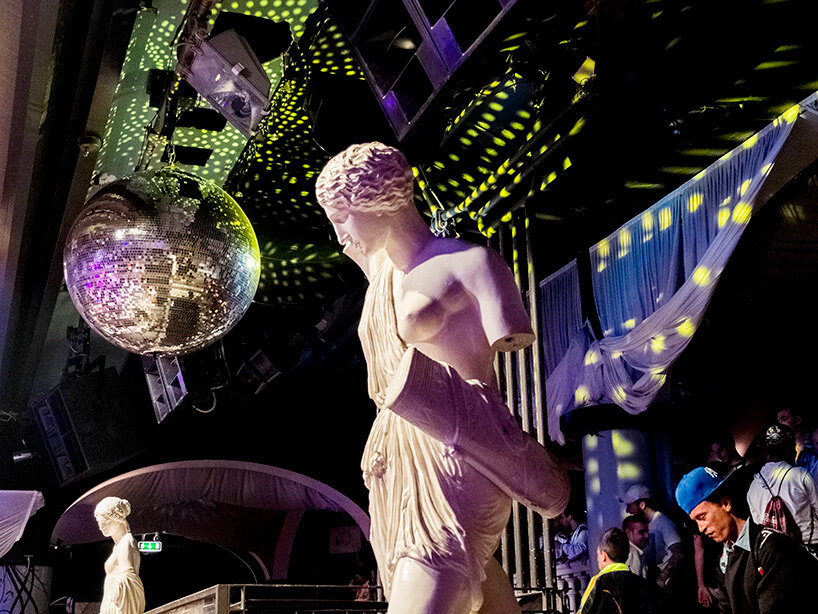
A Continuing Legacy in Photography and Design
Born in Milan in 1980, Giovanna Silva has built a prolific career as a photographer, publisher, and educator. Her extensive bibliography features numerous titles exploring architecture, urban environments, and geopolitical landscapes, including Days without Number, Milan. City, I listen to your heart, Afghanistan: 0 Rh-, and Baghdad: Red Zone, Green Zone. In addition to her photographic practice, she is the founder of Humboldt Books and San Rocco Magazine, and she has shared her expertise as an educator at NABA Milan and ISIA Urbino.
Her architectural documentation of European nightlife, crystallized in the publication NIGHTSWIMMING: Discotheques from the 1960s to the Present, continues to offer a rare analytical look at the structures we build for leisure. By examining the interplay of architecture, illumination, and human movement, Silva’s work preserves the ephemeral spaces of the after-hours world before the lights come up and the crowds fade away.