There have been many verses written about the changing of the seasons, but try finding an ode to autumn composed under a palm tree. Tropical climates do not have four distinct seasons, a reality that can make transition months such as September and October a little unusual for those accustomed to sipping coconuts year-round.
The realization that autumn has officially begun in Europe often arrives via indirect cues, such as the delivery of the new quarterly issue of Konfekt, Monocle’s sister publication, arriving fresh in Bangkok. Unpacking these care packages from headquarters and flicking through the pages helps maintain a sense of connection to distant latitudes. Editor Sophie Grove’s opening letter offers essential reading, though her poetic musings on the season’s transient splendor feel distinctly otherworldly when the air-conditioner is humming on full blast and the sun-drenched scene outside the window features jet planes cutting across clear blue skies.
This is hardly a sob story. Still, as an expat, leaving behind autumn and the deeply ingrained cultural rituals that accompany it can take some getting used to. Many of the signals from youth—both man-made and from Mother Nature—no longer function quite the way they used to. Thai clocks do not shift for daylight saving time, and evenings grow dark at roughly the same hour every day, give or take an hour. Temperatures peak in April, while seasonal health precautions like flu vaccinations are administered as early as May ahead of the oncoming rainy season. For some households, the departure from standard rhythms is even more pronounced due to alternative lifestyle choices, such as homeschooling children, bypassing the familiar September cycle of buying uniforms, navigating first-day-of-school nerves, and experiencing the universal parental sigh of relief that long summer holidays are finally over.
A French resident living in Hong Kong, which shares a similar wet-and-dry cycle with the Thai capital, once missed the distinct autumn hues and spring scents of his childhood so deeply that he relocated to Japan. Yet the question of whether to miss the traditional four seasons yields a complicated answer. Growing up amid the drizzle and gray of south Wales leaves an impression, and decades later, waking up in the tropics can feel like winning a different kind of lottery. Even so, human societies naturally rely on milestones—birthdays, Mother’s Day, or Children’s Day, which is a particularly prominent celebration in Bangkok—to mark the steady passage of time.
Daily life in Thailand demonstrates a profound connection to the actual comings and goings of the Earth rather than the commercial requirements of a fixed calendar. Events like the Royal Ploughing Ceremony, designated as Farmer’s Day, are determined astrologically and announced annually. For new arrivals, Buddhist holidays serve as useful cultural markers for finding a new rhythm, though mastering the intricacies of ancestor worship festivals and traditional Ghost Days requires considerable time and patience.

To fill the narrative gaps left by the absence of traditional autumns and winters, many residents come to rely on alternative seasonal indicators. These local phenomena provide a distinctly tropical framework for tracking the year, categorized by what can be described as five distinct markers.
Fruit
Fruit vendors drive through Bangkok neighborhoods, parking alongside pavements to sell whatever produce is currently in season. While the specific details being broadcasted via loudhailer may remain untranslated for newcomers, paying close attention to the goods piled high on the back of pick-up trucks offers an immediate and reliable weather vane for the time of year: mango season brings widespread celebration, while durian season elicits more polarized reactions.
Household fruit bowls transition over time from mangosteens to pomegranates. Meanwhile, Marian plums, known locally as mayongchid, represent the ultimate seasonal prize. The harvest time in March lasts only a matter of weeks, and the arrival of these hard-to-get, egg-sized fruits—which taste like a cross between a mango and a plum—signals the start of the intense Thai summer and Songkran, the country’s traditional New Year.
Festivals
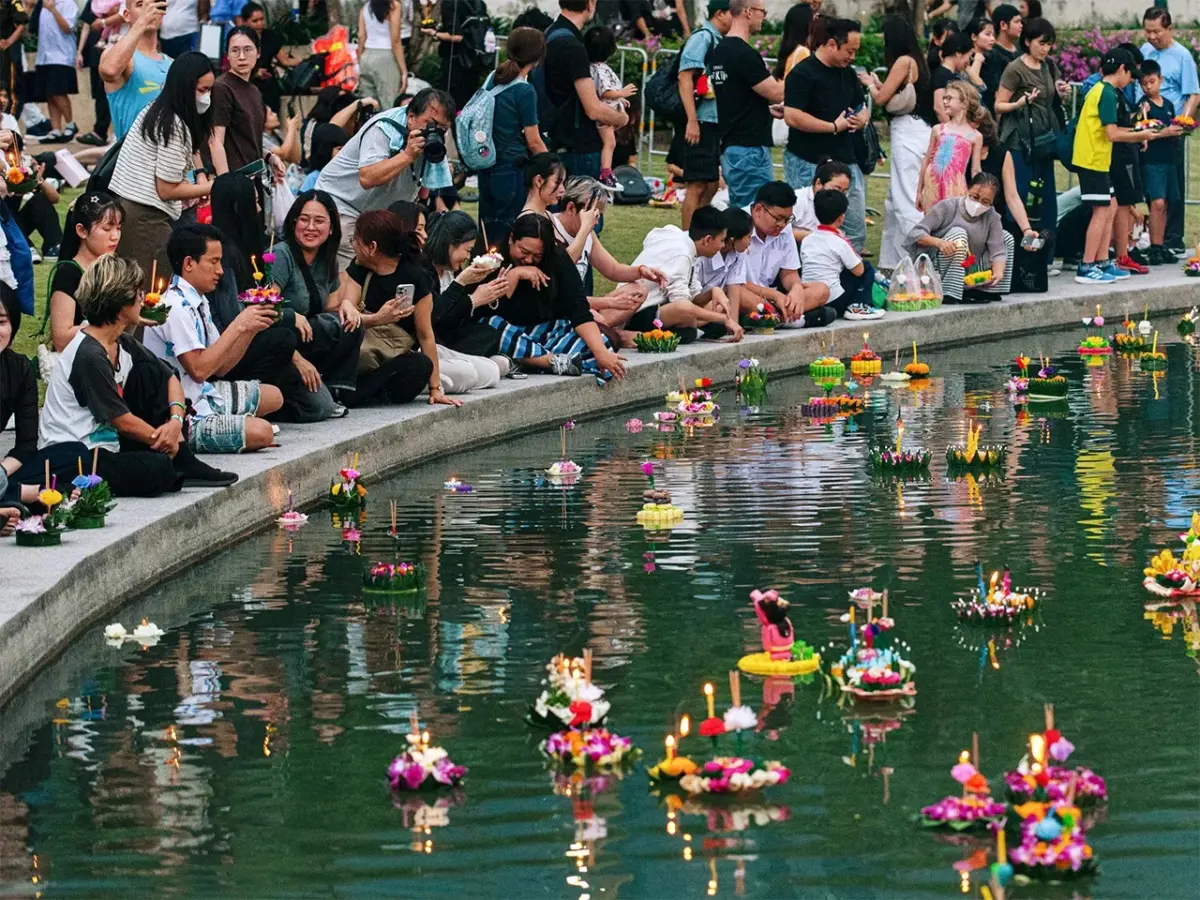
Water fights during the Songkran festival in April offer a high-energy alternative to traditional spring celebrations, while Loy Krathong in November stands out as a personal favorite for many residents. It bears some thematic resemblance to bonfire nights elsewhere, but instead of burning an effigy, participants light candles and float intricately decorated banana-tree vessels onto lakes and rivers.
Meanwhile, the experience of Christmas in Thailand is characterized by its celebration as a major retail event, with shopping districts dressed up in elaborate decorations. A curious quirk for newcomers is that many workplaces, government buildings, and hospitals choose to leave festive tinsel and Santa Claus displays up long after the holiday has passed.
Footwear
While winter approaches in other parts of the northern hemisphere, the primary wardrobe change in Thailand involves footwear. Bangkok’s rainy season brings torrential downpours that can suddenly flood roads and ruin favorite pairs of trainers. Astute residents learn to pack emergency flip-flops in their vehicles, while the local hospitality industry often equips staff with specialized rubber shoes featuring drainage holes. Transitioning into the dry season finally offers the freedom to put the rubber footwear away in favor of leather and suede.
Flags
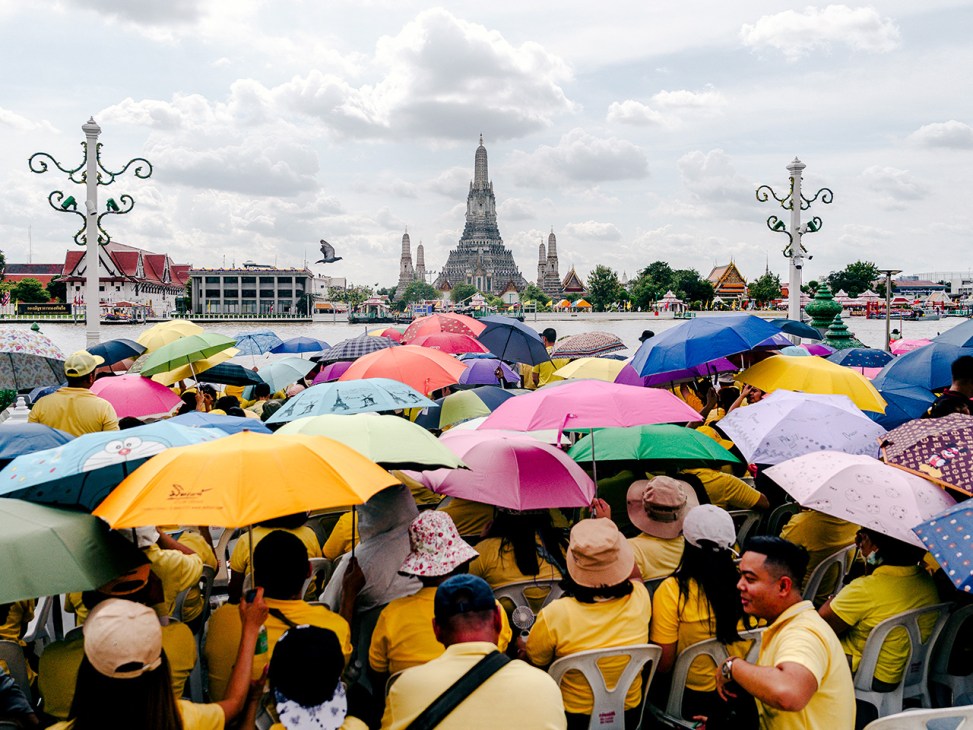
Living in close proximity to major government institutions brings visible civic markers. Flags and bunting outside administrative buildings change color ahead of major royal birthdays, and nearby corporate headquarters often erect elaborate architectural displays. Individual members of the Thai royal family are traditionally associated with a specific color determined by the day of their birth. Because the King was born on a Monday, his associated color is yellow, prompting civil servants and citizens alike to wear yellow polo shirts at the start of the working week to honor the tradition.
Wildlife and Noise
Thailand is blessed with an abundance of wildlife, with local birds and reptiles well-accustomed to coexisting within built-up urban areas. These creatures do not hibernate and are largely harmless, a category that includes the large water monitor lizards frequently seen roaming urban parks in search of food.
The most pronounced environmental shift, however, comes from sound. While the peak mating season for geckos eventually subsides, the turn of the year ushers in a new acoustic reality. Mornings belong to the Asian Koel, a particularly vocal member of the cuckoo family. The persistent mating calls of these early birds—a mounting cacophony of escalating squawks—function as an effective natural alarm clock that easily cuts through the ambient roar of Bangkok traffic.