For Milan-based photographer and publisher Giovanna Silva, the journey into the architecture of nightlife began as an entirely uncharted assignment. Commissioned by Monditalia for the 2014 Venice Architecture Biennale to document the physical spaces of Italian nightlife, Silva found herself stepping into a world she had previously known very little about. What started as a focused biennale presentation eventually expanded into a comprehensive research project and a newly published book, NIGHTSWIMMING: Discotheques from the 1960s to the Present.
Reflecting on her initial involvement, Silva admits that her unfamiliarity with club culture gave her an unconventional perspective. Approaching the subject from a position of total detachment required a deliberate effort to restrain her usual working methods while navigating an architectural typology that is fundamentally transient. Unlike traditional buildings designed to endure for decades with minimal alteration, discotheques are shaped by the rapid ebbs and flows of fashion, shifting musical genres, and continuous advancements in lighting and sound technology.
To build a foundational understanding of this fluid architectural history, Silva and her collaborators turned first to the printed page. They began by collecting existing publications on the subject, recognizing that books were often the only enduring record of spaces that frequently alter their appearances. These texts introduced a human element to the archival research, connecting the physical structures to the people who imagined, built, and inhabited them—critics, visionary architects, pioneering DJs, art directors, and club owners whom Silva describes as the "night swimmers."
Following their deep dive into the evolution of Italian discotheques, Silva and her team expanded their geographic scope to analyze the state of the art in four major European cultural capitals: Berlin, London, Paris, and Barcelona. While the research presented at the Venice Architecture Biennale demanded exhaustive categorization, narrowing down the focus for subsequent publication required a much more rigorous selection process. The goal was to identify and document clubs that held significant social and musical importance while also offering genuine architectural interest.
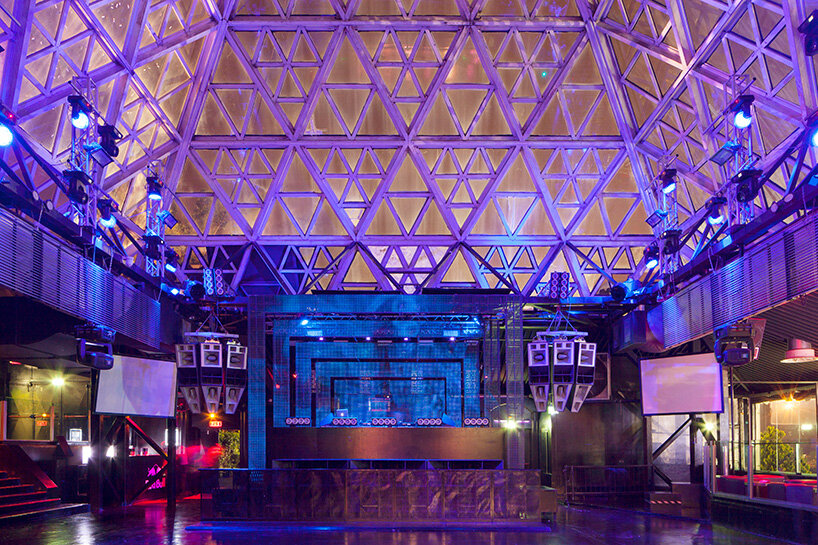
Through her lens, Silva captures discotheques that define the contemporary perception of the night. Her photographs document a striking shift in modern nightlife: increasingly, spaces not originally designed or intended to function as nightclubs are being occupied, transformed, and temporarily repurposed into party locations. This modern phenomenon functions as a sort of contemporary legalization of the spontaneous, underground rave culture of the 1990s.
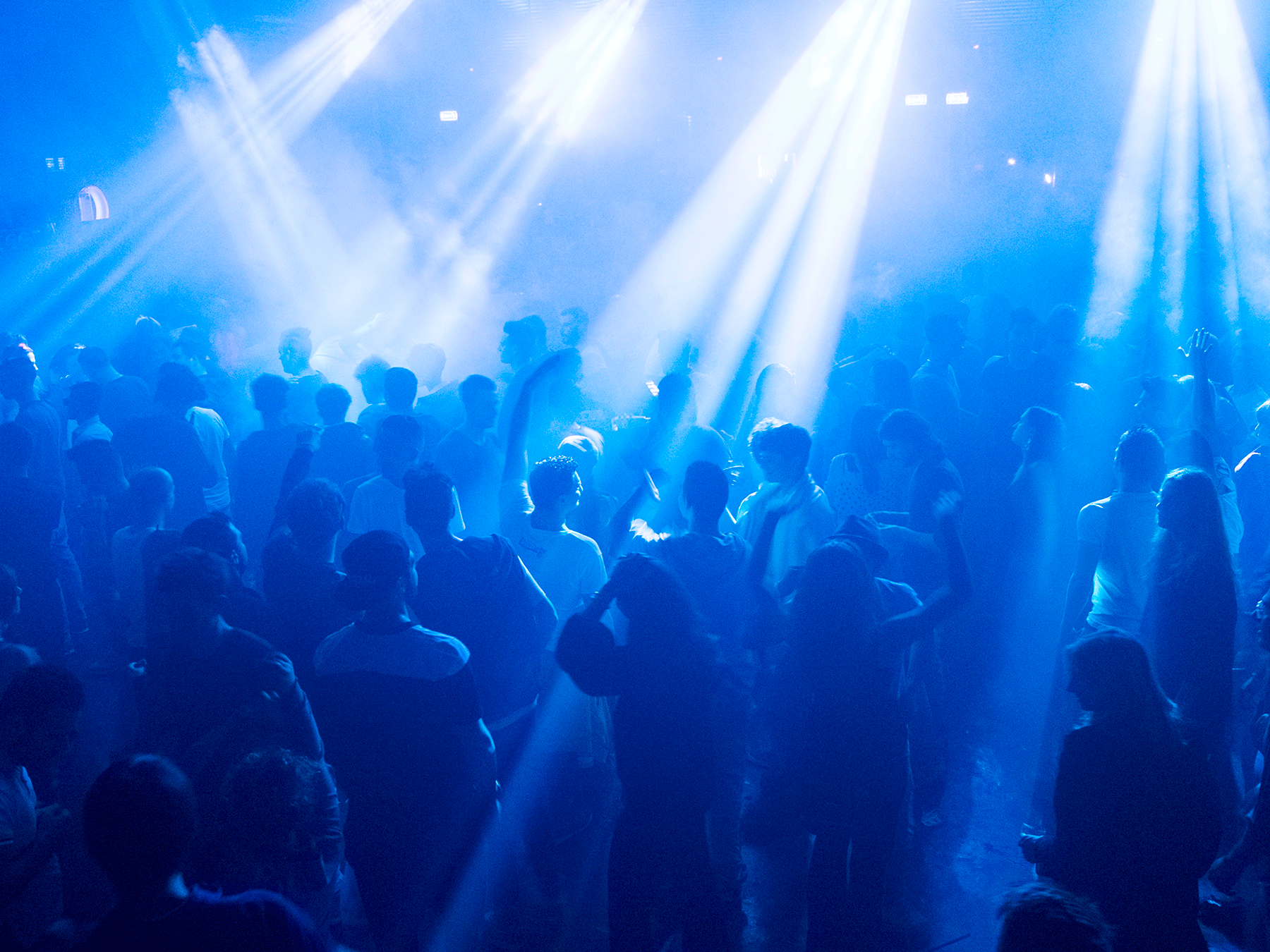
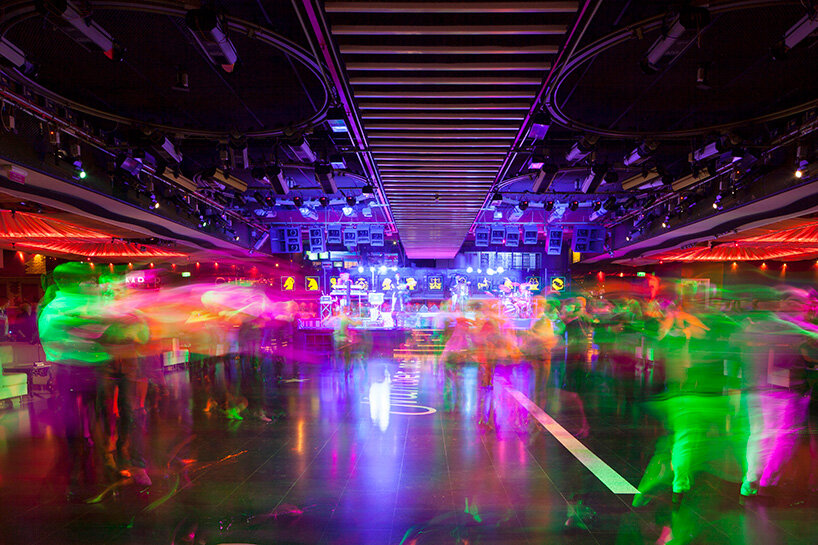
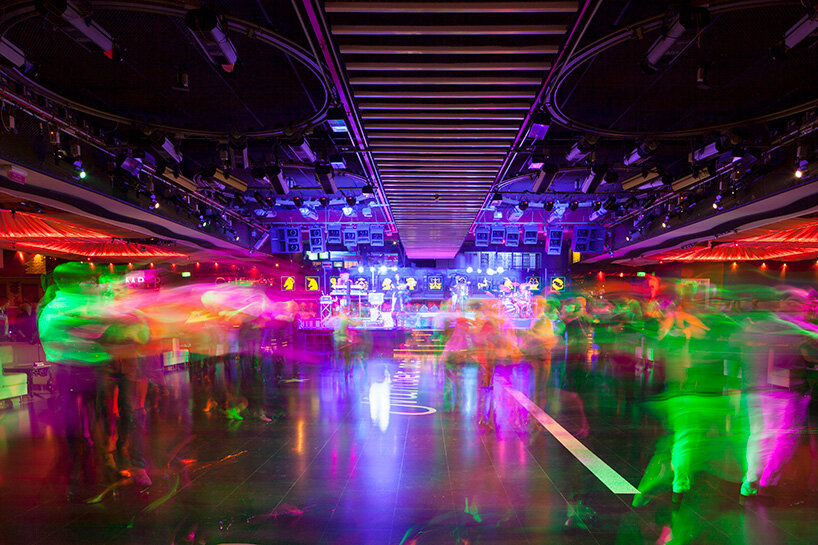
Silva’s photographs capture these venues in various states of being—sometimes entirely empty during daylight hours, and other times packed with crowds. Through this contrast, her work highlights how bodies in motion and dense crowds ultimately erase the rigid definitions of physical space, transforming static architecture into dynamic, fluid environments.
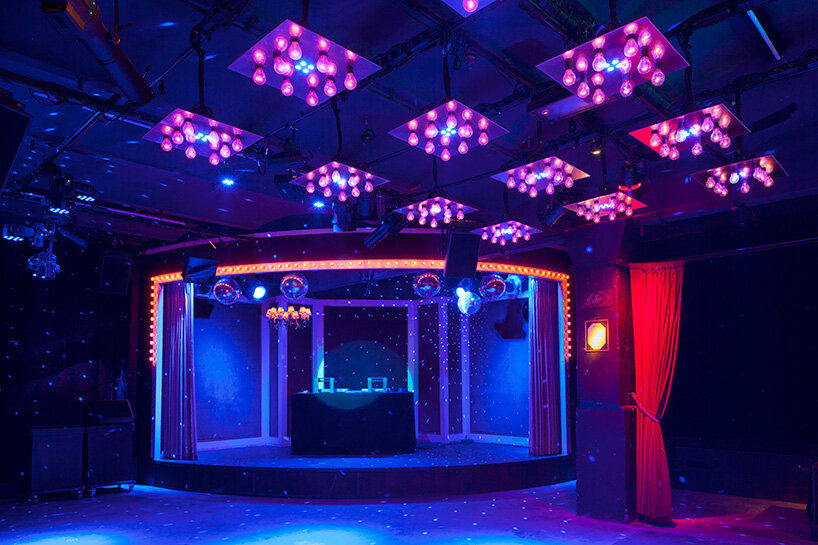
One of the most striking sensory elements of Silva’s fieldwork was discovered during daylight visits when the clubs were closed. Entering these venues out of hours, the first thing that invariably struck her was the smell. Describing it as a universal constant, a sensory trigger akin to Marcel Proust’s madeleine, Silva notes that she is still determining its exact origin. It remains unclear whether the lingering aroma is simply the residual scent of professional cleaning products or the composite smell of the night itself—an intricate mixture of human presence, stale smoke, and detergent.
Beyond scent, the defining element of any discotheque is its manipulation of illumination. As Silva notes, nightlife insiders often compare discotheques to aging figures who should never be seen without their makeup. Light performs the heavy lifting in transforming these interiors, fundamentally altering the perception of space at the simple flick of a switch.
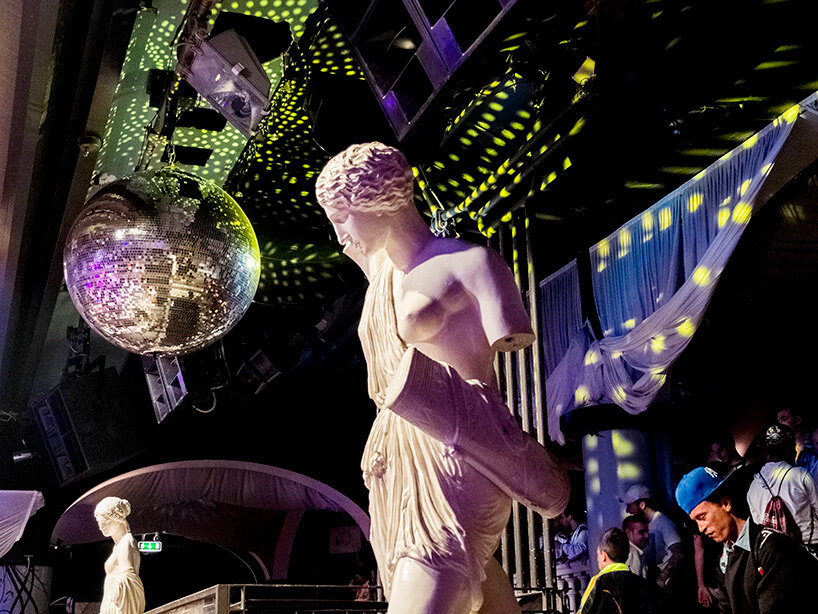
To emphasize this architectural theatricality, some of Silva’s photographs were deliberately shot under stark white daylight. This clinical illumination strips away the atmospheric illusion, exposing the raw structural bones of rooms that are typically experienced only through colored lasers, strobes, and shadows. What began as a detached, academic architectural assignment gradually evolved into a deeply familiar landscape, aided by the patience of club owners, designers, and partygoers who guided the photographer through the nuances of nocturnal culture.
Born in 1980 and based in Milan, Silva has built an extensive career spanning documentary photography, publishing, and architectural education. Between 2005 and 2007, she was a regular contributor to Domus magazine, subsequently serving as the photo editor for Abitare from 2007 to 2011. Her extensive bibliography includes numerous photography and travel books focusing on urban landscapes, geopolitical zones, and global architecture, published by imprints such as Mousse Publishing, Nero Editions, Bruno, Art Paper Editions, Motto Books, and Hatje Cantz.
Alongside her photographic practice, Silva is the founder of Humboldt Books and San Rocco Magazine, and she shares her expertise as a faculty member at NABA Milan and ISIA Urbino. Her work has been exhibited widely at prestigious cultural institutions, including the MACRO in Rome, the Fondazione Bevilacqua la Masa in Venice, the Triennale in Milan, and the American Academy in Rome.