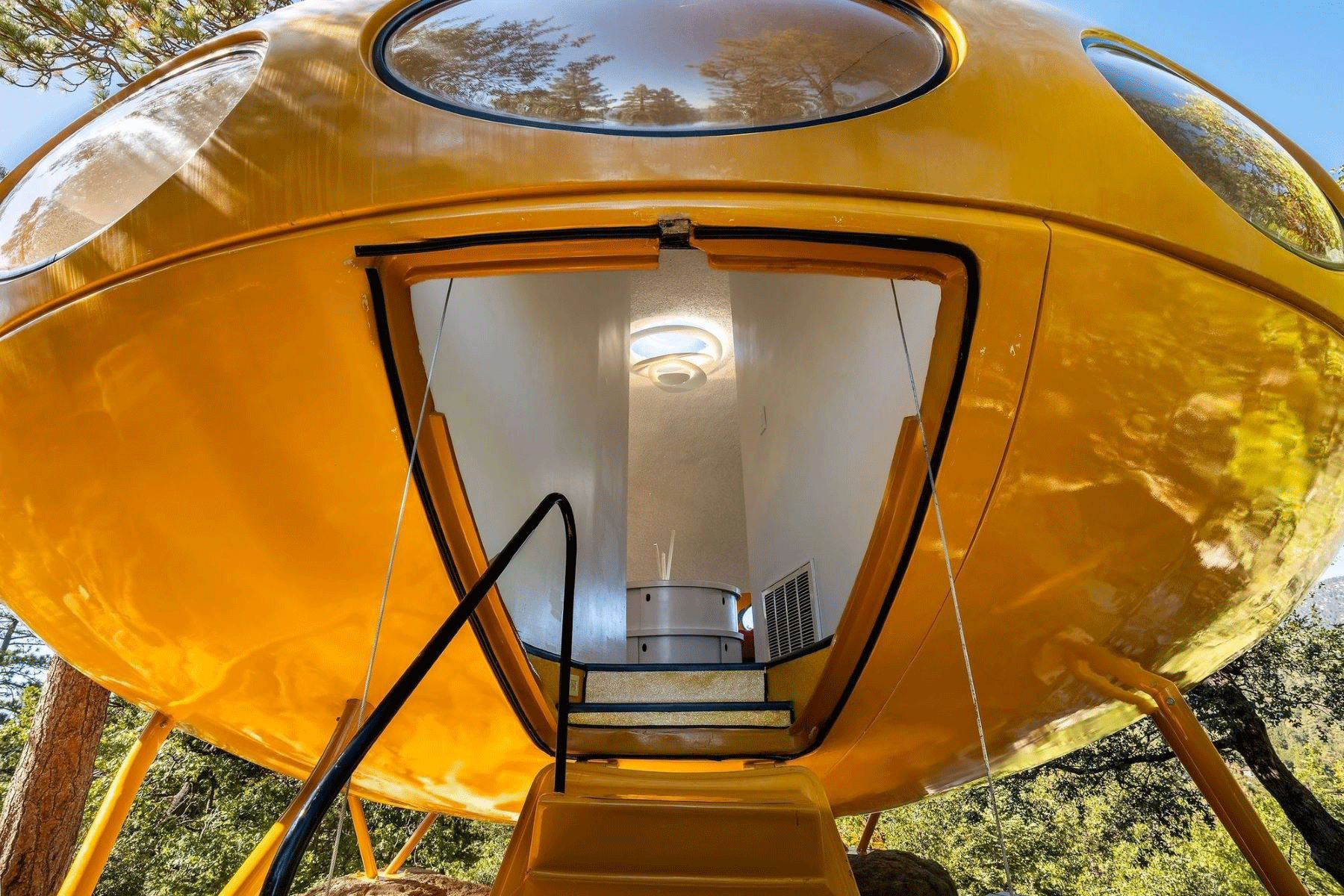
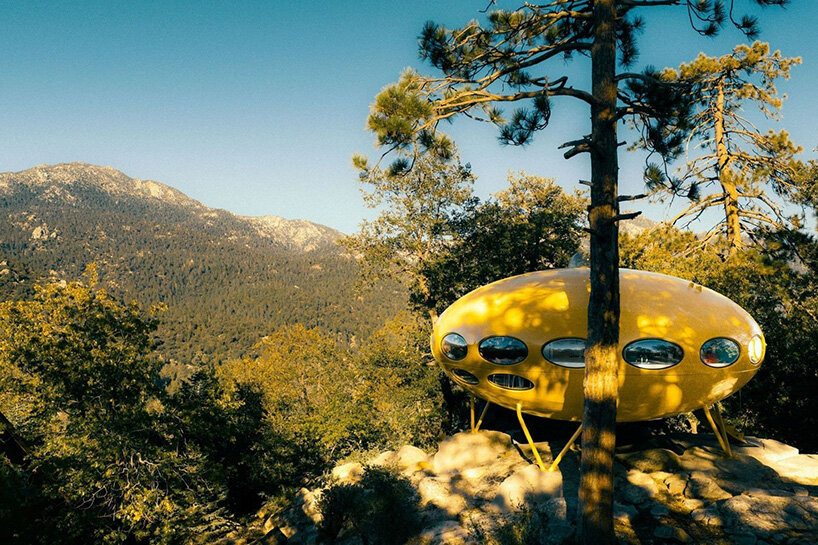
Nestled among the pine trees and rugged granite outcrops of the San Jacinto Mountains in Idyllwild, California, a remarkably rare piece of architectural history has officially listed for sale. Known as the Donaldson Futuro, this striking, UFO-shaped dwelling is on the market for $1.495 million through Desert Sotheby’s International Realty. Designed in the late 1960s by Finnish architect Matti Suuronen, the futuristic structure stands as a vivid, tangible reminder of a bygone era when technological optimism, the Space Age, and rapid advancements in synthetic materials promised entirely new ways for humanity to inhabit remote and challenging landscapes.
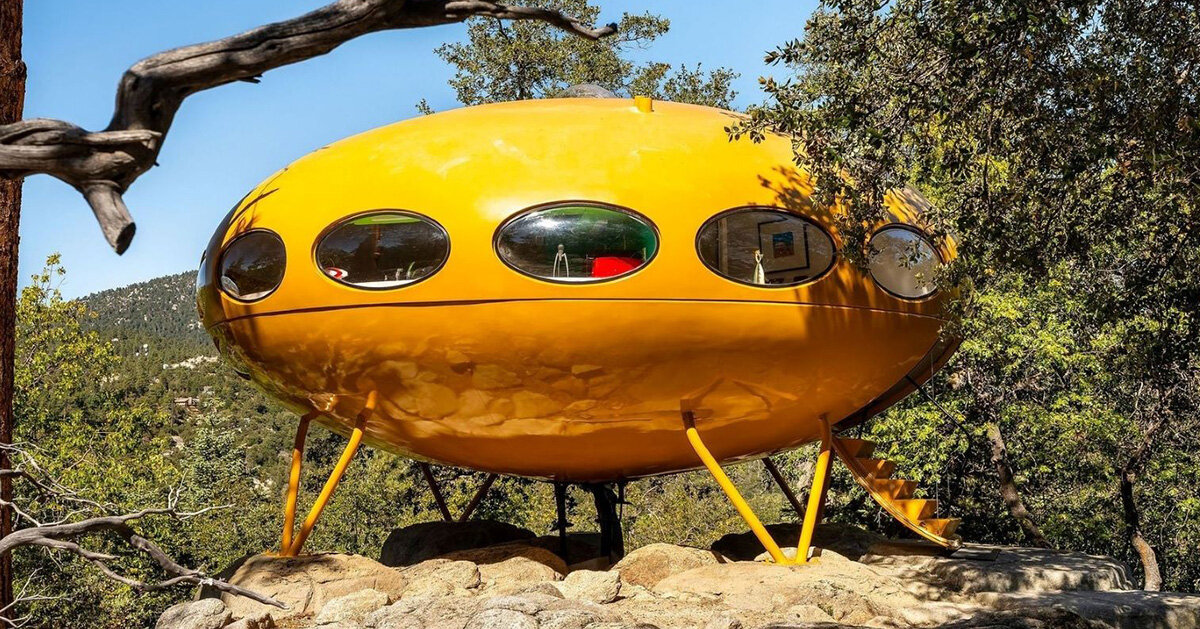
With fewer than 100 units ever constructed worldwide, surviving examples of the Futuro house are treated as holy grails by architectural historians and mid-century modern enthusiasts alike. The Idyllwild property, currently owned by historic preservationist and former Obama administration appointee Milford Wayne Donaldson alongside his wife, Laurie Donaldson, holds a prestigious place on the National Register of Historic Places. Through meticulous restoration efforts, the couple has carefully maintained the structural integrity, original materials, and master craftsmanship of the 1969 design, ensuring that this radical spatial experiment continues to survive intact well into the twenty-first century.
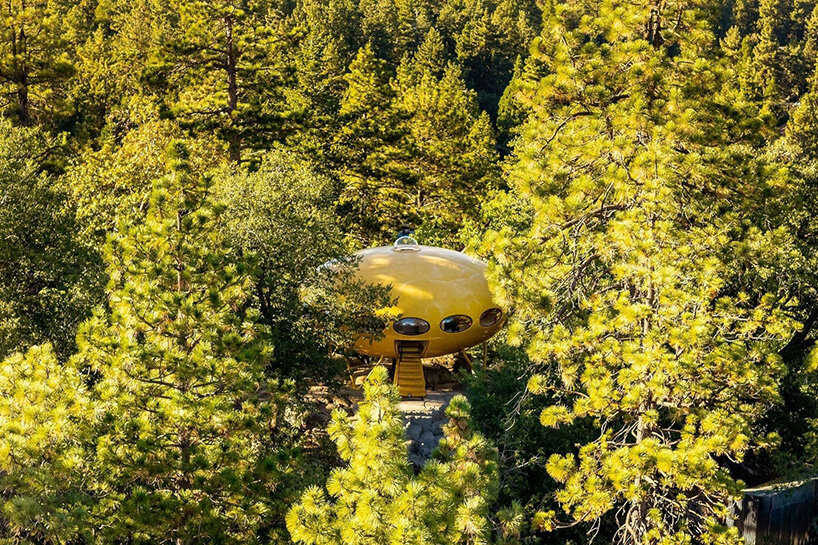
The Matti Suuronen-Designed House Is Designed to Go Anywhere
The genesis of the Futuro house lay in an unconventional brief. Matti Suuronen was originally commissioned by a friend to design a ski cabin that could be erected quickly in cold, snowy, and remote environments where traditional construction methods were impractical or environmentally disruptive. Responding to this challenge, Suuronen conceived a lightweight, prefabricated dwelling that could be manufactured off-site, transported with relative ease, and assembled rapidly.
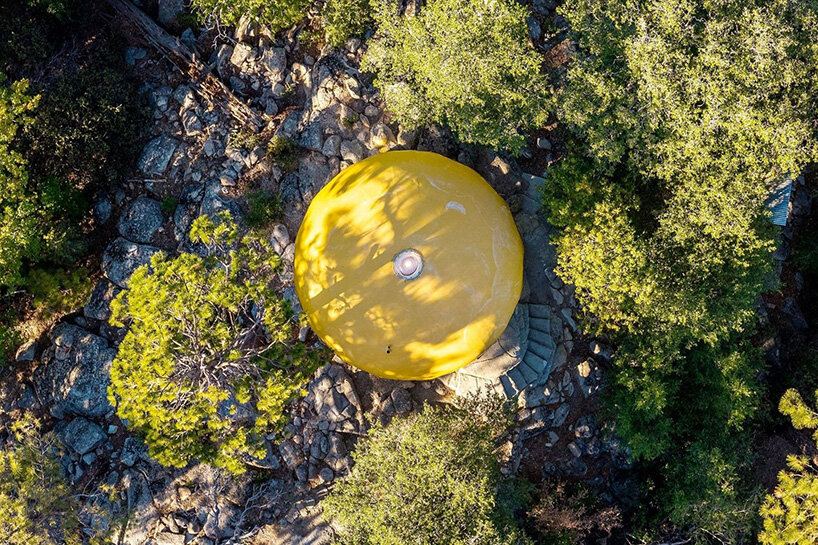
The resulting structure is an architectural marvel of its time. Comprising modular fiberglass-reinforced polyester plastic segments bolted together on-site, the elliptical dwelling was engineered to be exceptionally lightweight. Weighing approximately 5,398 kilograms, the entire structure measures roughly 8 meters in diameter and 4 meters in height, encompassing about 73.7 square meters of interior living space. The exterior shell is insulated with polyurethane, allowing the capsule to be heated swiftly even in freezing alpine climates.
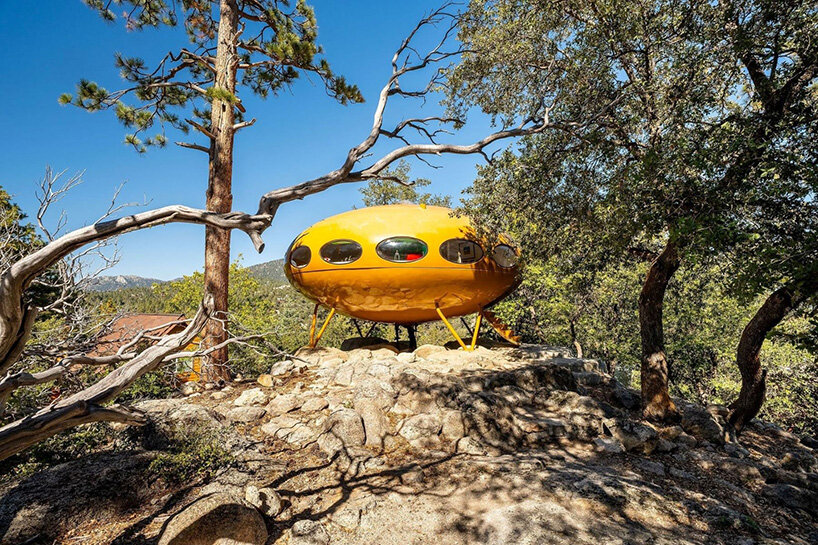
One of the most revolutionary aspects of Suuronen’s original engineering was its foundation requirements. Rather than demanding extensive excavation or concrete slabs, the Futuro was designed to rest upon just four concrete piers, dramatically minimizing its physical footprint on the surrounding terrain. Furthermore, the lightweight nature of the materials meant that the entire house could theoretically be dismantled, reassembled, or even airlifted by a helicopter to an entirely new location. Perched today on a 0.23-hectare parcel in Idyllwild, the bright yellow capsule captures the imagination precisely because it merges the organic geometries of science fiction with a rigorous, functional approach to modular mobility.
Why the Futuro Never Became the House of the Future
Despite capturing the global architectural imagination during the height of the space race, the Futuro ultimately failed to achieve mass commercial success, remaining an intriguing footnote rather than the mainstream housing solution its creators envisioned. Developed during a period of immense confidence in industrial mass production, the Futuro proposed a radical departure from traditional homebuilding. Instead of constructing a dwelling from the ground up over many months on a permanent site, owners could theoretically purchase a prefabricated shell off an assembly line.
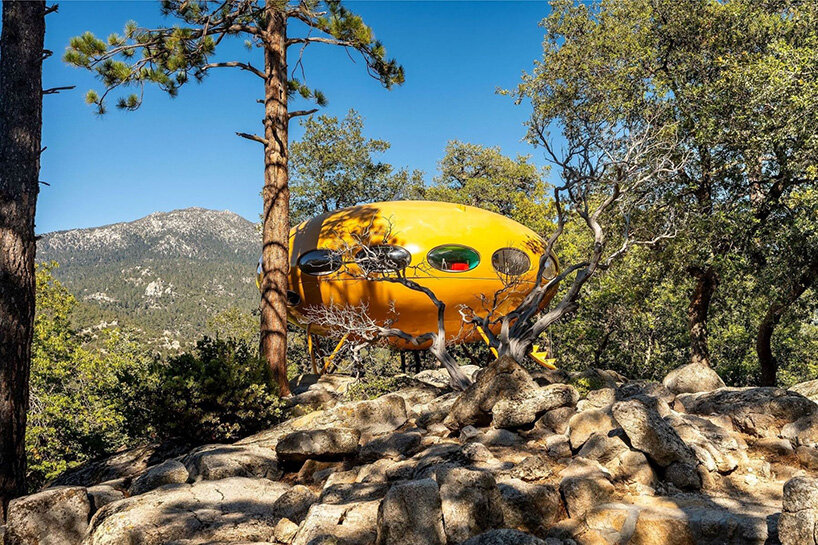
However, the design encountered numerous systemic hurdles. The unconventional, oval-shaped silhouette and bright plastic materials met fierce resistance from traditional neighborhoods, zoning boards, and municipal planning departments that were unprepared for extraterrestrial aesthetics on suburban or rural plots. Securing traditional mortgage financing for a plastic, non-standard dwelling also proved difficult for prospective buyers.
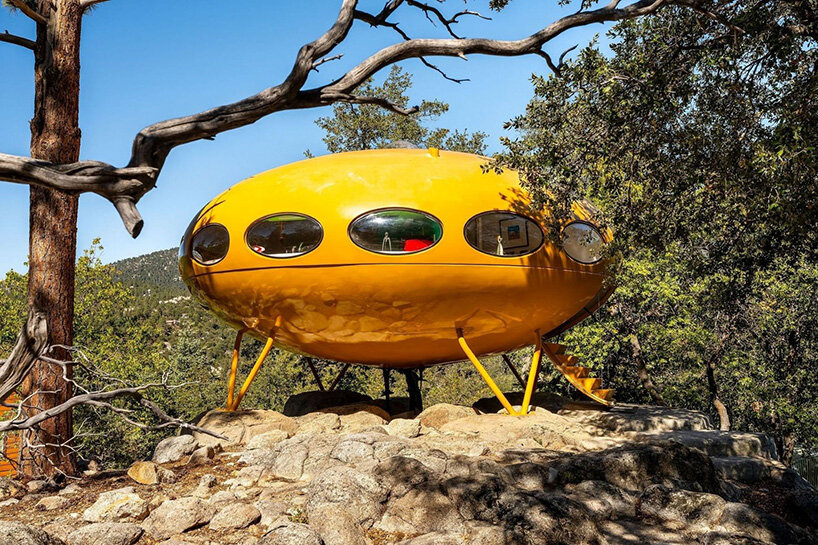
The definitive blow to the Futuro’s economic viability arrived with the 1973 oil crisis. As petroleum prices skyrocketed, the cost of manufacturing synthetic resins and plastic building components surged exponentially, completely undermining the affordability and industrial logic of plastic-shell architecture. With production grinding to a halt, fewer than 100 units were ever built across the globe.
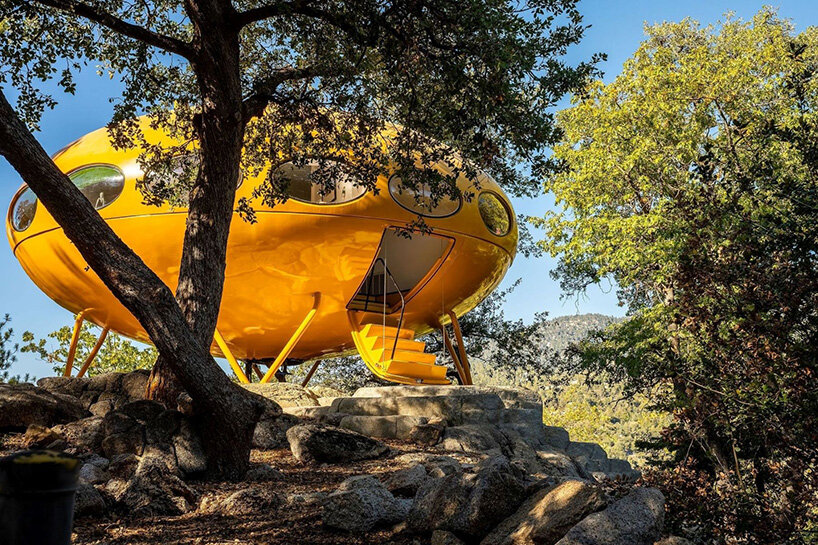
Today, the Donaldson Futuro occupies a fascinating paradox. Conceived as an accessible, mass-produced, transportable dwelling intended to populate diverse landscapes on a broad scale, it has instead transformed into an ultra-rare collector’s item. Listed for $1.5 million, the property highlights a recurring theme in architectural history, where visionary experiments that fail commercial adoption ultimately achieve enduring value through extreme scarcity, historical recognition, and passionate preservation.