In a dimly lit bedroom, a nude figure with frazzled hair lies motionless beneath sickly colored linens. Their fingertips glow an eerie, inflamed red as they clutch a navy-blue smartphone, staring catatonically at the glowing display. Bursting forth from the device is a vibrant infinity symbol, rendered as endless loops of mesmerizing, hypnotic energy that seem to swallow the room whole.
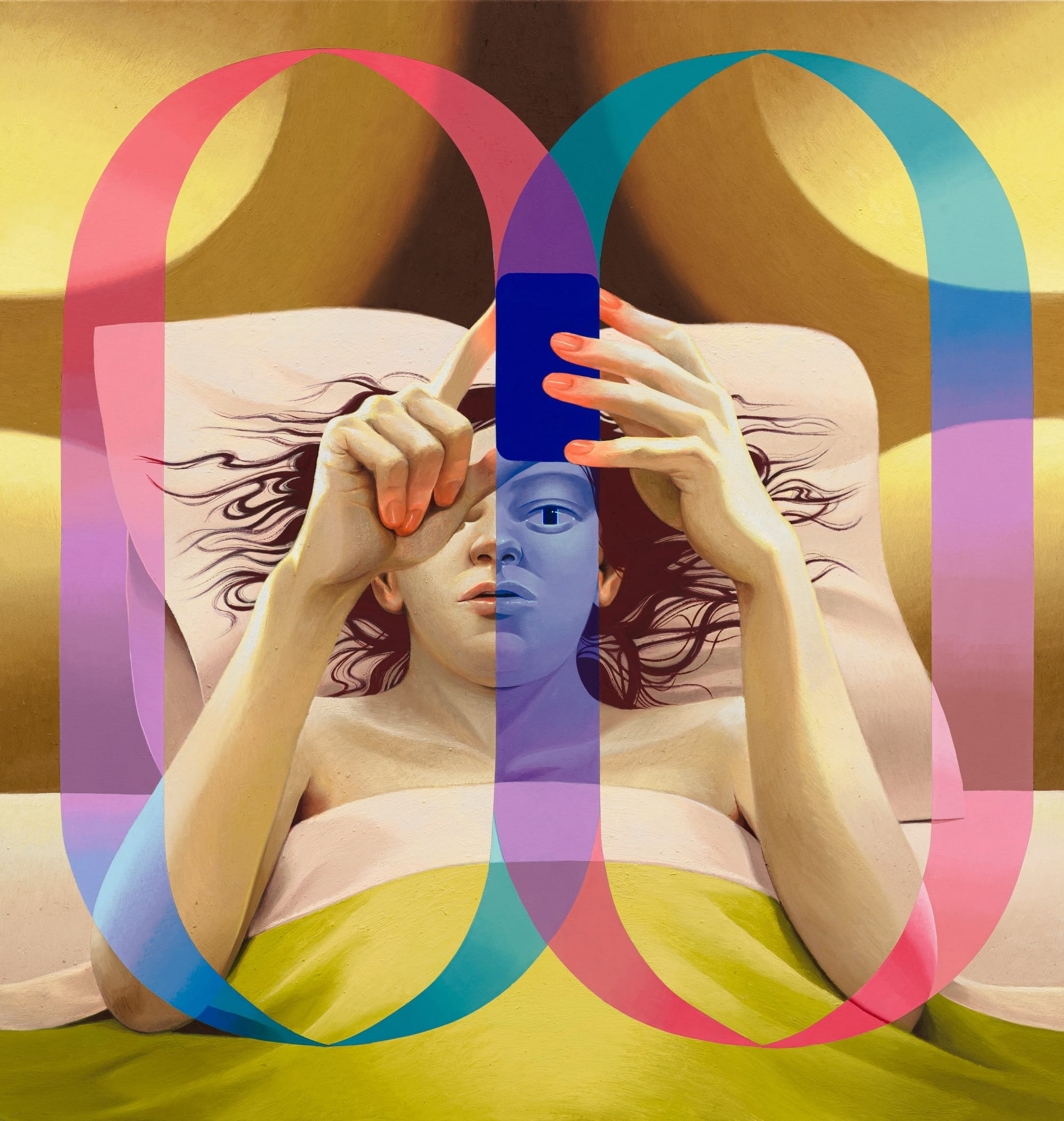
This all-too-relatable portrait is not merely a caricature of modern exhaustion; it is part of a striking suite of new works by Brooklyn-based artist Robin F. Williams. Together, the collection captures the omnipotent, slippery techno-dystopia that contemporary society collectively barrels toward. Extrapolating on the profound ways humanity and machines continue to merge, Williams presents a mystical, unsettling vision of another world—one heavily infused with pop culture touchstones and deep-rooted art historical references.
The exhibition, tellingly titled Act Natural, plunges headfirst into the uncanny valley without ever quite settling into a comfortable reality. The sleek, frictionless world the artist portrays exudes both the intoxicating allure of modern technology and the immense, quiet horror it elicits from those tethered to it.
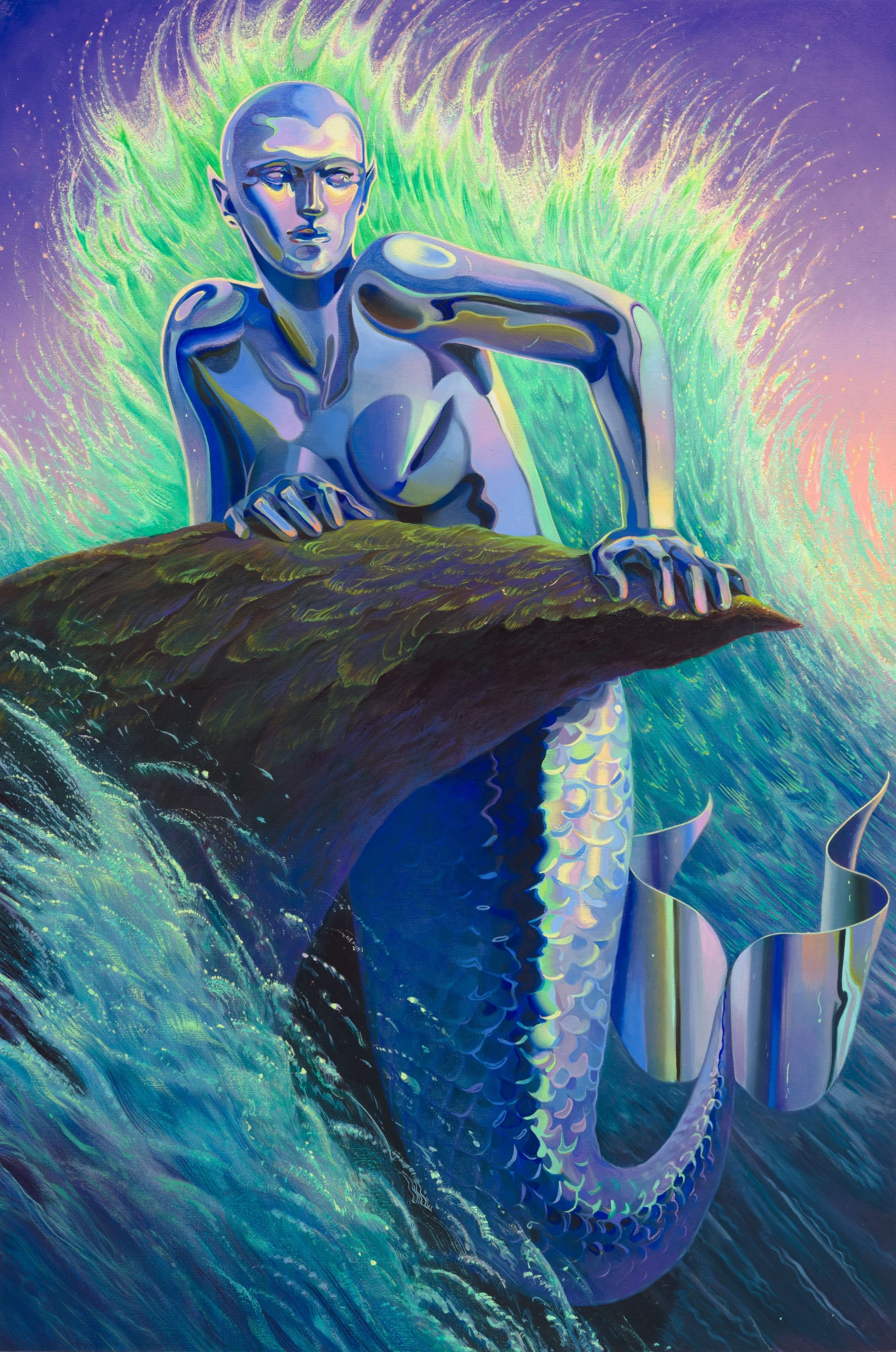
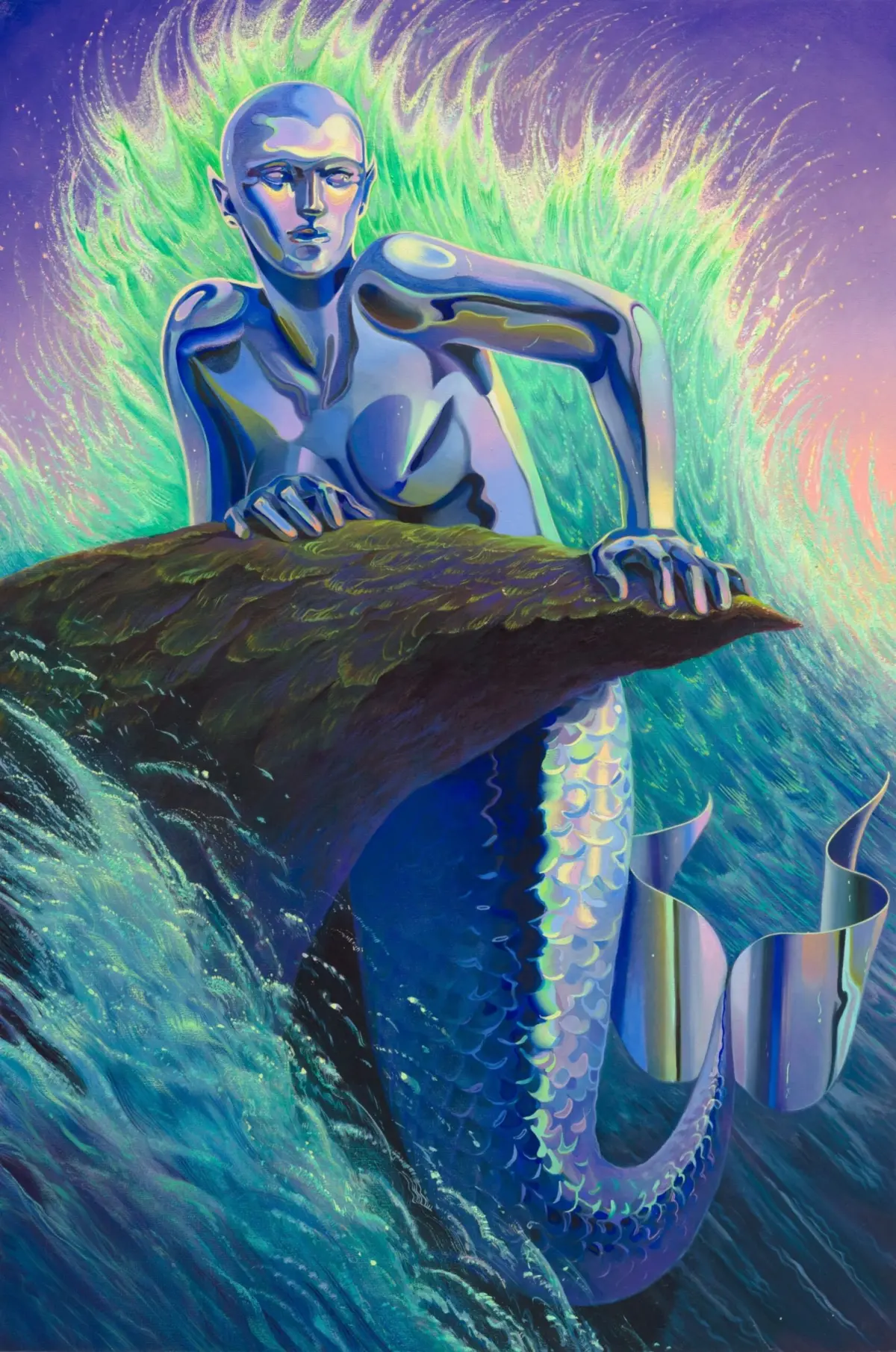
Among the standout pieces in the collection is "The Merminator," a painting that brilliantly collapses two iconic figures from the 1980s and beyond: the relentless cyborg assassin and the classic Disney princess. The resulting hybrid is a metallic bot perched precariously on a stone. Much like Hans Christian Andersen’s original mermaid or Disney’s Ariel, the creature peers toward a world it presumably longs to be a part of, yet instinctively recognizes it can never truly belong to or be accepted by. It is a sharp, ironic commentary on alienation in an age of engineered perfection and artificial identities.
Another major work in the suite is "I Am Not a Robot," a symmetrically composed piece that borrows its compositional rigor and distinctive color palette from the pioneering spiritualist abstractions of Hilma af Klint. At the same time, the painting draws heavily from Sandro Botticelli’s Renaissance masterpiece Madonna of the Pomegranate, a work that traditionally utilizes the titular fruit as a rich visual metaphor for the human heart and divine life. In Williams’s contemporary iteration, however, the organic heart is replaced by the smartphone. The device radiates an artificial light outward, casting it as the new, omnipresent life-giving—and life-consuming—source of the modern era.
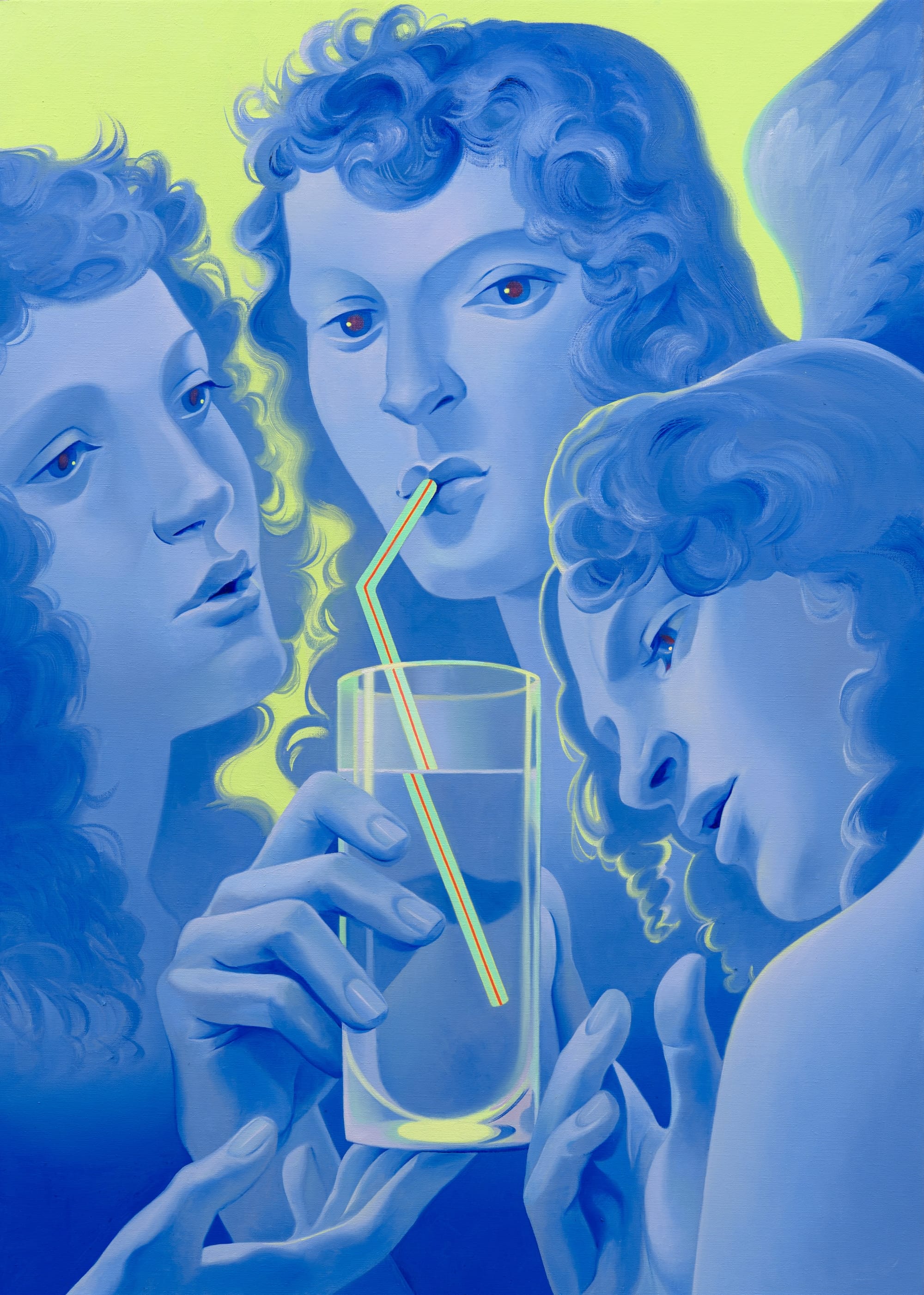
The thematic and aesthetic breadth of Act Natural extends across several other carefully executed canvases, including "Holy Thirst Trap," "Language Model," and "Spooky Action at a Distance." Each piece acts as a window into a strange, parallel reality where the boundaries between biological existence and digital dependency have completely dissolved. Whether depicting figures huddled together in bizarre communal rituals or posing with the strained architectural postures of online culture, Williams maintains a delicate balance between high art heritage and contemporary internet vernacular.
P·P·O·W gallery has brought this provocative body of work to London, presenting Act Natural as a special pop-up exhibition at Frieze’s No. 9 Cork Street location. The exhibition has drawn considerable attention from critics and collectors alike, remaining on view to the public through October 24. For those unable to experience the canvases in person, Williams continues to share insights into her evolving artistic practice and upcoming projects through her dedicated Instagram account.