It is one of the oldest and most dependable tricks in the corporate branding playbook: when a product, institution, or initiative suffers from a worsening public perception problem, do not bother overhauling the underlying product. Simply change its name.
History is filled with high-profile attempts to scrub away negative associations through clever nomenclature. In 2000, the California Prune Board famously persuaded regulatory authorities to allow prunes to be marketed as "dried plums" in an effort to shed the fruit’s long-standing association with digestive aid for the elderly. In a similar vein, seafood distributors successfully transformed the unappetizingly named Patagonian toothfish into the luxury culinary staple known today as Chilean Sea Bass.
Political operatives have long relied on the exact same playbook. During the early 2000s, conservative political strategists, most notably Frank Luntz, advised political figures to phase out the phrase "global warming" in favor of the far more neutral and benign term "climate change," precisely because focus groups found the latter far less alarming.
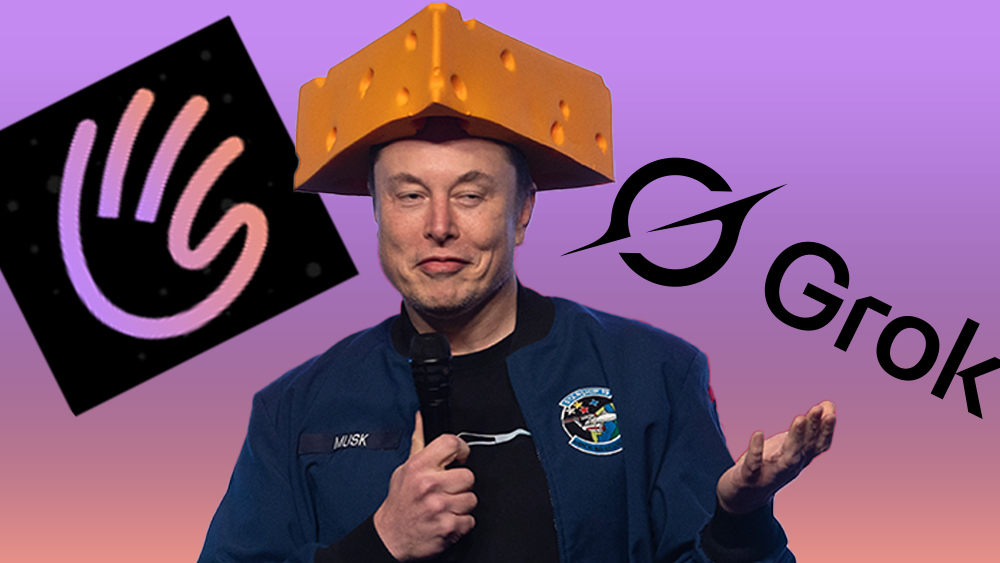
Given this long history of linguistic maneuvering, it was perhaps inevitable that tech executives and political figures would eventually attempt a similar rebranding effort for artificial intelligence. Recently, X owner Elon Musk publicly took issue with a growing pop-cultural term used to describe computer-generated music. Responding to the emerging phrase "slopcore"—a pejorative moniker applied to low-quality, automatically generated AI tracks flooding digital streaming platforms—Musk offered his own alternative. Calling the label a misnomer, Musk asserted that the genre should instead be called "awesomecore."
No, he’s serious
While the phrase might initially sound like an offhand internet joke, the owner of X was entirely in earnest. Furthermore, his attempt to rename AI-generated content reflects a broader movement among prominent figures seeking to reshape public language surrounding the technology.

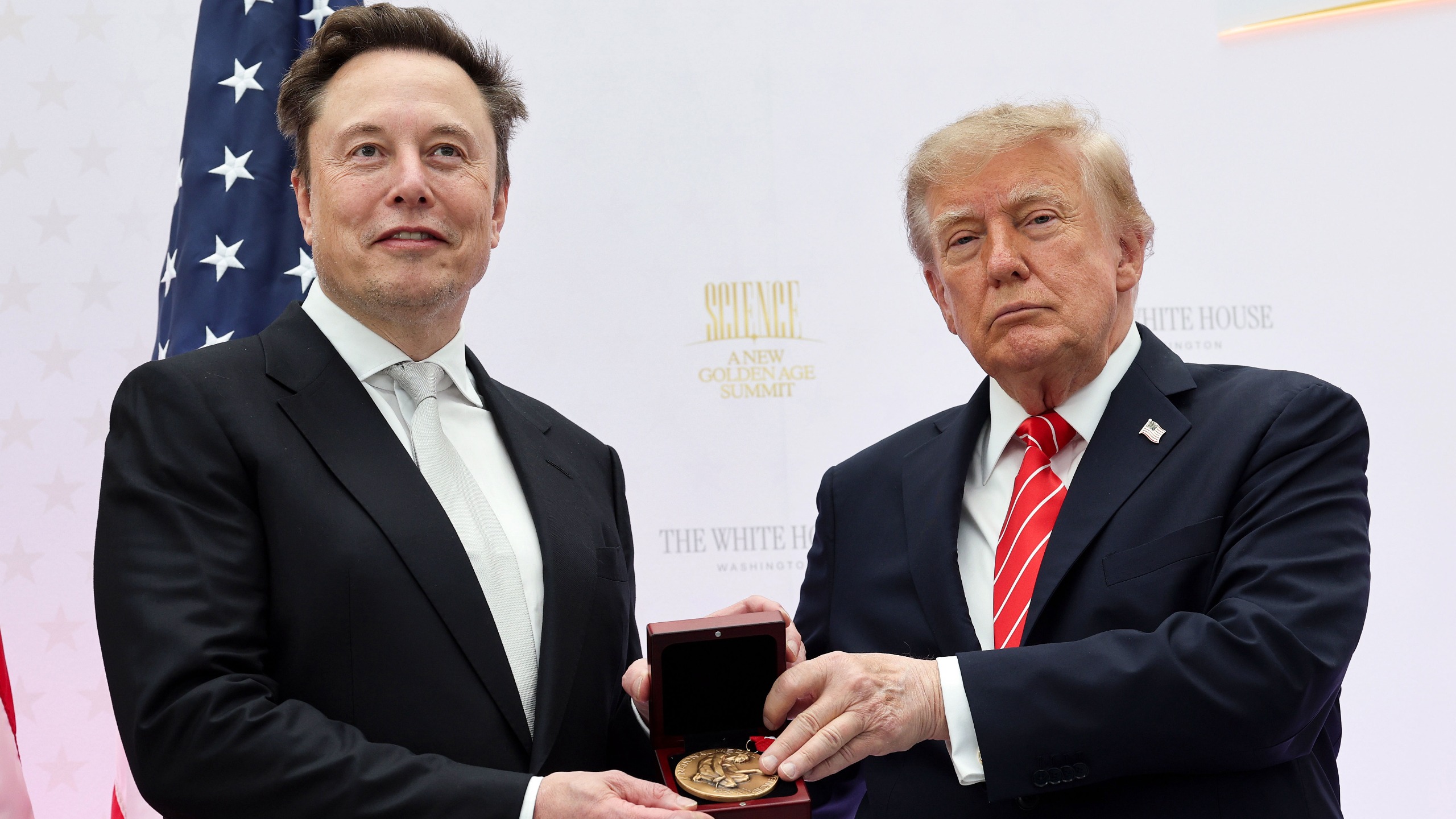
Former President Donald Trump recently launched a similar campaign to alter the terminology surrounding artificial intelligence. Writing on his social media platform, Truth Social, Trump insisted that the phrase "artificial intelligence" ought to be replaced entirely with "super intelligence." Pushing the rhetoric even further, Trump declared that anyone who continues to use the conventional term "artificial intelligence" should be considered "THE ENEMY!"
For journalists and commentators who have spent decades tracking corporate communications and political messaging, these linguistic pivots fit into an easily recognizable pattern. History demonstrates that major organizational and conceptual rebrands almost always arrive as a defensive reaction rather than a celebration of success.
Consider the modern history of corporate crisis management. When tobacco giant Philip Morris faced an unprecedented wave of public health lawsuits, regulatory crackdowns, and reputational damage, the parent company rebranded itself as Altria. When the British nuclear facility at Windscale suffered a disastrous reactor fire in 1957, the site was eventually renamed Sellafield to distance the complex from its radioactive legacy. And in 2001, the United Kingdom’s Royal Mail attempted a corporate-speak makeover by changing its name to Consignia—an effort that sparked widespread public ridicule and was quietly abandoned shortly thereafter in favor of the original name.
The lesson across all these historical examples remains consistent: healthy, wildly popular concepts rarely require a top-down name change. When advocates and leaders suddenly demand new terminology for an established idea, it is almost always an unmistakable signal that the existing label has become toxic in the public consciousness.
Here’s the truth
The deeper reality underlying these recent rebranding efforts is that the primary champions of artificial intelligence are coming to grips with a difficult truth: the general public is growing increasingly skeptical of the technology’s widespread deployment.
This resistance extends far beyond isolated online subcultures or fringe conspiracy groups. Broad segments of the mainstream public are expressing genuine fatigue and concern regarding the pervasive rise of automated media and the physical infrastructure required to sustain it.
In the cultural sphere, genuine enthusiasm for computer-generated creative work remains conspicuously low. While millions of consumers have inevitably encountered or been inadvertently exposed to AI-generated music, art, and text across social algorithms, very few active fanbases or passionate communities have formed around purely synthetic art. Instead, listeners and viewers increasingly express frustration over platforms being saturated with low-effort, synthetic content designed primarily to farm clicks and streams.
Simultaneously, public resistance to the physical footprint of the AI boom is escalating rapidly. The massive data centers required to train and run complex algorithmic models are encountering fierce pushback from local communities concerned about energy consumption, water usage, noise pollution, and land use.
According to a nationwide Gallup survey, 70 percent of Americans express opposition to having data centers constructed within their local communities, demonstrating a rare cross-partisan consensus against the rapid expansion of tech infrastructure. This public hostility is already yielding tangible economic consequences. Data compiled by Data Center Watch reveals that between April and June alone, roughly 45 separate data center projects—representing an estimated $68 billion in proposed capital investments—were either blocked, delayed, or derailed entirely by local opposition and administrative hurdles.
A sign they’re losing
For creative professionals, artists, and media workers who have watched the rapid rise of generative technology with understandable concern, this growing cultural friction offers a clear insight. The intense effort to rename and recast artificial intelligence indicates that the tech industry’s promotional narrative is failing to win over the broader public. If the public were unreservedly embracing every aspect of automated content creation, tech executives and political figures would feel no need to police the language used to describe it.
Distinguishing between specialized technological utility and mass-produced content overload is critical. Computational tools that assist human workers with specific, labor-intensive tasks remain widely accepted. However, the automated generation of endless media streams designed to replace human artistic expression represents a entirely different proposition. Ordinary consumers are proving adept at recognizing the difference, actively calling out low-quality automated output and demanding greater transparency.
In the discipline of brand strategy, an enduring maxim holds that a brand is not defined by what a company says about itself in its promotional materials; it is defined by what ordinary people say about the product when the creators are not in the room.
At present, a growing portion of the public has settled on the word "slop" to describe the relentless stream of low-quality, automatically generated digital media cluttering their feeds. Promoters can suggest terms like "awesomecore" or "super intelligence" as replacements, but attempting to forcibly swap out public language ultimately underscores the severity of the image problem they are trying to fix.