
The constant aperture f/2.8 zoom has historically occupied a challenging tier in the photography market, tending to be both expensive and heavy. However, a growing number of optical options built specifically for APS-C sensor cameras are successfully packaging that coveted bright f/2.8 maximum aperture into a footprint no larger than a standard kit lens. The new Tamron 16-50mm f/2.8 A stands out as a prime example of this design philosophy, aiming to provide everyday shooters with high-end performance in a lightweight, highly portable package.

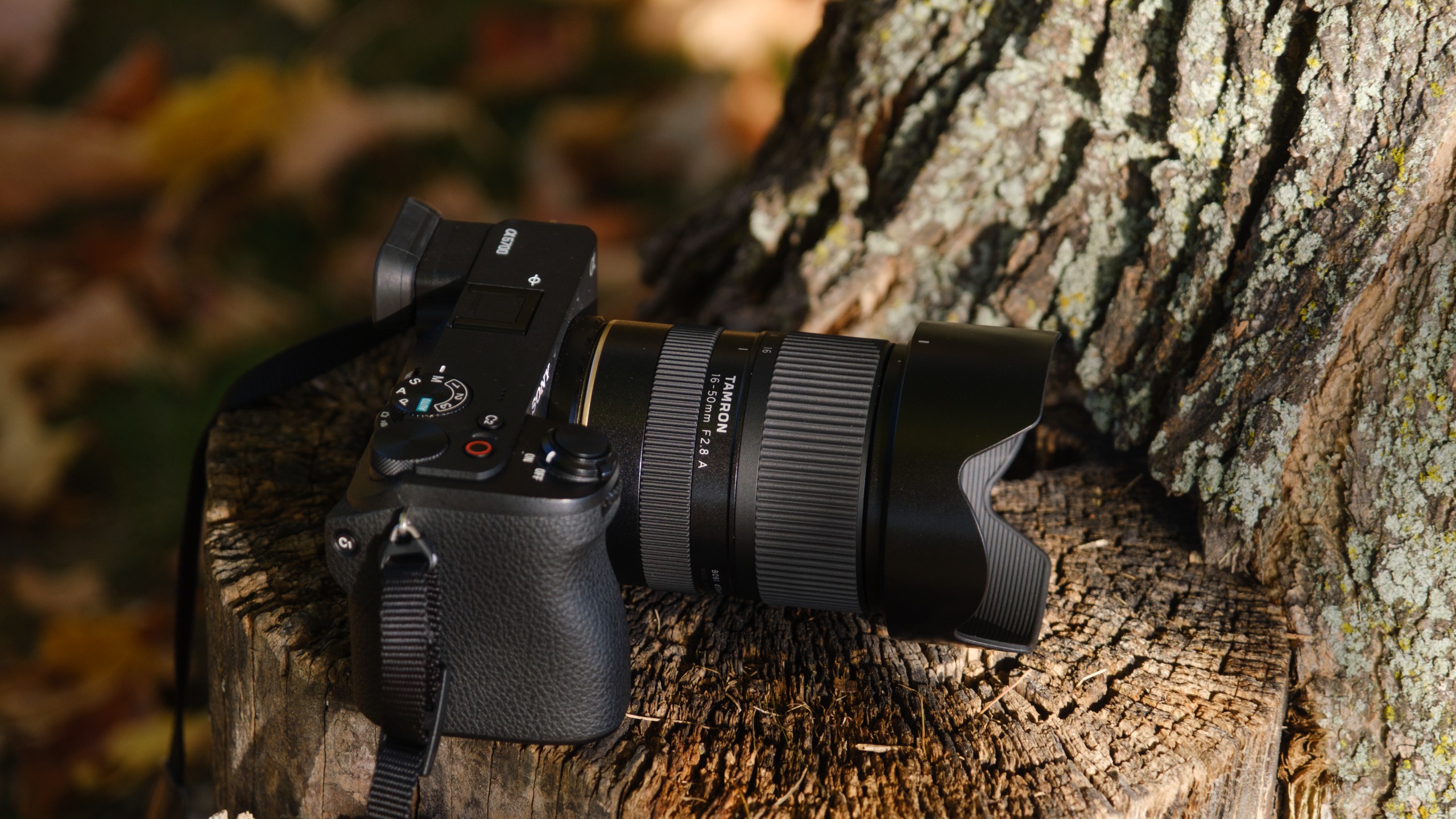
Designed for APS-C bodies across multiple major camera ecosystems—including Sony E, Canon RF, Nikon Z, and Fujifilm X mounts—the lens weighs a mere 10.8 ounces / 305 grams depending on the specific mount. When paired with a compact camera body like the Sony A6700 and taken out into the field for a rigorous hike to capture autumn foliage, the combination of a budget-friendly price point and a constant bright aperture makes the lens a remarkably tempting choice for an everyday carry setup.
Tamron 16-50mm f/2.8 A Review: Price and Availability

The Tamron 16-50mm f/2.8 A enters the market at a price point that feels exceptionally reasonable for APS-C shooters looking to upgrade from slower, variable-aperture kit optics. It is priced significantly lower than first-party alternatives such as the Sony E 16-55mm f/2.8 G and the Fujifilm XF 16-55mm f/2.8 R LM WR II. At the same time, it establishes strong direct competition against other third-party options on the market, such as the Sigma 18-50mm f/2.8 DC DN Contemporary.
Pricing for the new optic varies slightly depending on the camera mount selected. The Sony E-mount and Fujifilm X-mount versions are priced at $529 / CA$749. Meanwhile, the Nikon Z-mount and Canon RF-mount variations retail for $549 / CA$749.
Staggered release dates mean that availability will roll out gradually across different mounts. The E-mount and RF-mount versions are scheduled to ship first on October 29. They will be followed by the Z-mount version on November 19, with the X-mount variant rounding out the initial release schedule on December 17.
Tamron 16-50mm f/2.8 A Review: Specifications
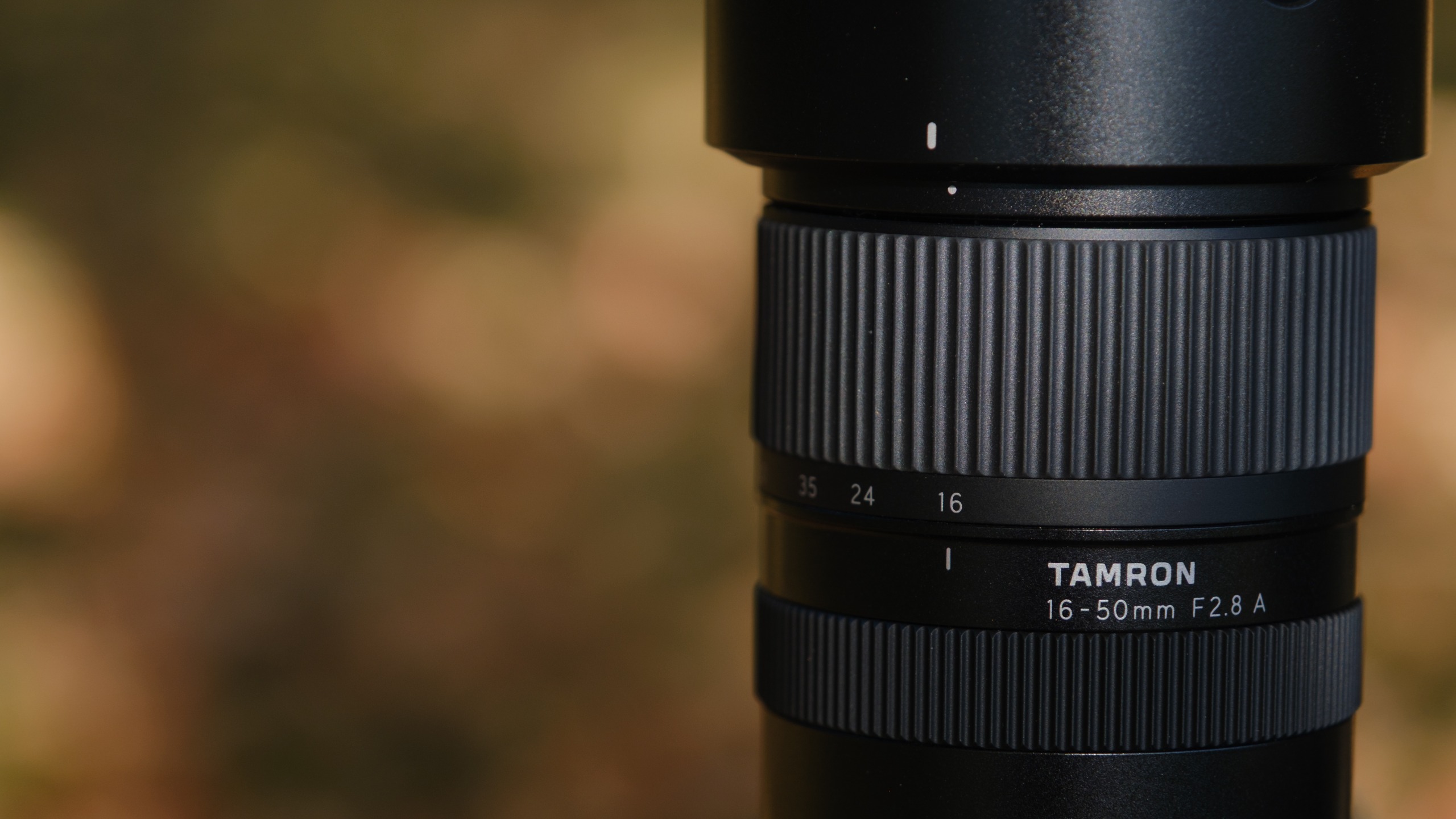
To understand how Tamron packed a bright f/2.8 aperture into such a small frame, looking at the core specifications reveals a sophisticated optical layout. The lens features an optical construction consisting of 14 elements arranged in 10 groups. The maximum aperture remains a constant f/2.8 throughout the entire zoom range, ensuring exposure settings do not shift as users zoom in or out.
Close-focusing capabilities are impressive, boasting a minimum object distance of just 6 inches / 0.15 meters at the wide end, and 11.5 inches / 0.29 meters at the telephoto end. This yields a maximum magnification ratio of 1:4.5 at the wide setting and 1:4.8 at the telephoto end, allowing for striking close-up perspectives of small subjects.
Physical dimensions vary marginally across the different mount types to accommodate flange focal distances. The Sony E-mount version measures 3.2 inches / 79.6 millimeters in length and weighs 10.8 ounces / 305 grams. The Nikon Z-mount version is slightly longer at 4.8 inches / 121.3 millimeters and weighs 11.2 ounces / 315 grams. The Fujifilm X-mount version matches the E-mount’s weight at 10.8 ounces / 305 grams while measuring 3.2 inches / 79.9 millimeters in length. Finally, the Canon RF-mount version measures 3.1 inches / 77.6 millimeters and weighs 10.8 ounces / 305 grams. Every version ships with a removable petal-shaped lens hood included in the box.
Tamron 16-50mm f/2.8 A Review: Build and Handling

The Tamron 16-50mm f/2.8 A is deceptively small. Upon first handling, its physical dimensions make it look more like a basic kit lens than a professional-grade, constant-aperture zoom. The modest 10.8-ounce weight and compact length make it an effortless companion for long treks and extended photography sessions where keeping pack weight to a minimum is essential.
The lens utilizes an external zoom design, meaning the physical barrel extends slightly as the user zooms in toward the telephoto end of its range. The exterior styling follows a clean, minimalist aesthetic. There is a complete absence of physical control switches on the barrel. Instead, users will find only a dedicated focus ring, a smooth zoom ring, and a built-in USB-C port designated for handling firmware updates and utilizing Tamron Link support.

While the minimalist approach keeps the lens clean and lightweight, it does come with a minor operational trade-off. The omission of a physical aperture ring may disappoint photographers who prefer traditional tactile controls, though it remains a reasonable sacrifice to achieve such a lightweight and compact form factor.
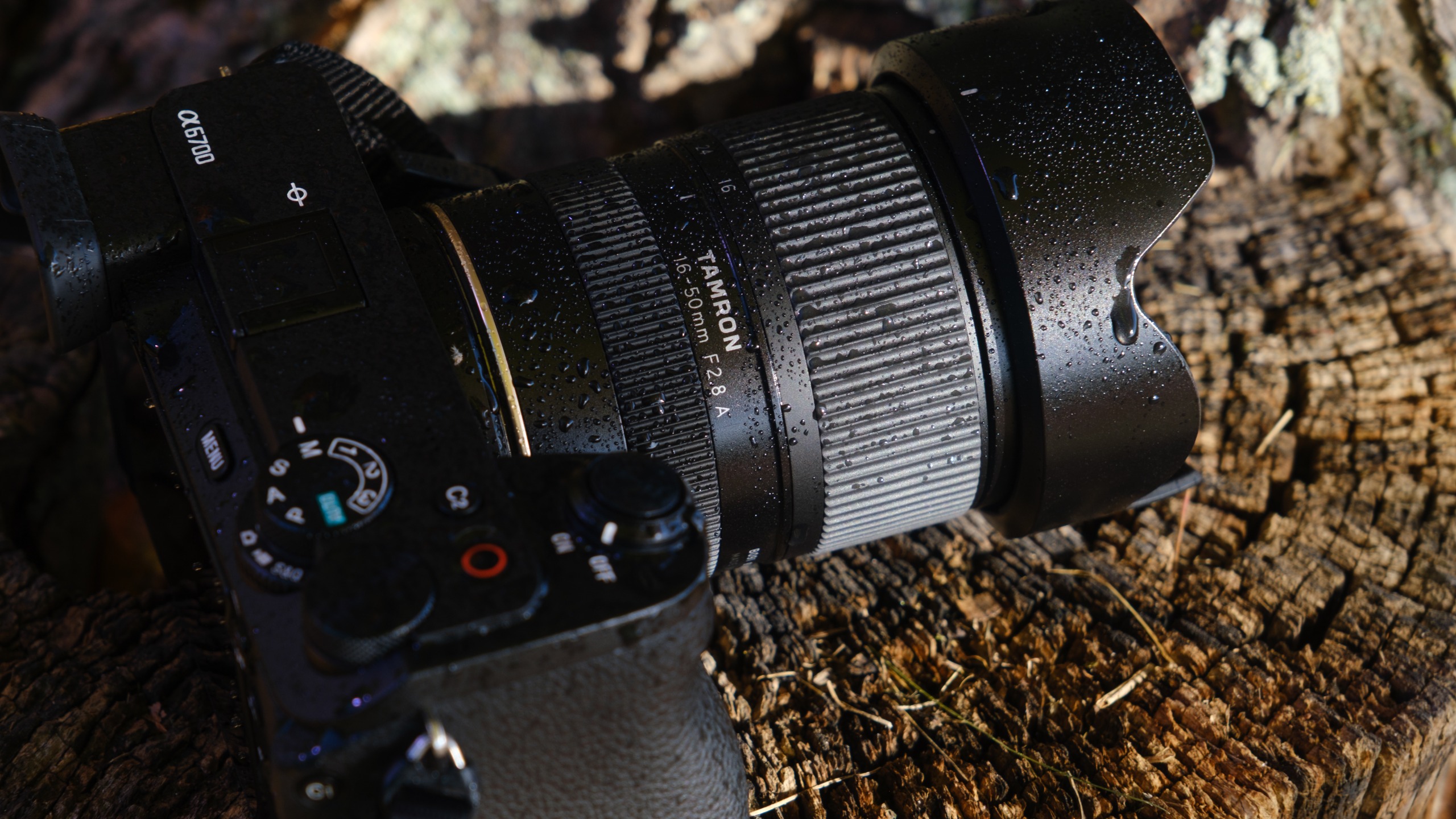
Importantly, Tamron did not compromise on weather resistance to reach this weight and price point. The lens barrel features multiple internal weather seals distributed throughout its construction. Testing the weather sealing with a light mist from a plant mister on a sunny afternoon revealed that both the lens and the paired camera body shrugged off the moisture completely without issue.

Tamron 16-50mm f/2.8 A Review: Performance
Taking the Tamron 16-50mm f/2.8 A out into the field for a weekend hike to photograph autumnal landscapes highlights its practical field capabilities. The lens successfully squeezes a versatile focal range and a bright maximum aperture into a highly portable optic. Combined with the impressive close-focusing abilities at both ends of the zoom range, the lens proves exceptionally adaptable for various shooting scenarios.

Images produced by the lens exhibit respectable sharpness, delivering subjects that appear crisp and well-defined without looking artificially over-sharpened. When evaluating unedited RAW files, the lens exhibits some natural barrel distortion at the 16mm wide end and minor distortion at the 50mm telephoto end. However, applying the dedicated lens profile within software like Adobe Lightroom corrects these optical anomalies instantly with a single click.
Similarly, minor vignetting is visible in the extreme corners of some frames, appearing slightly more pronounced at the 50mm setting than at the wide 16mm setting. Once again, the bundled lens profile makes quick work of cleaning up the corners during post-processing.

Pixel-peeping at 100 percent magnification reveals occasional purple fringing when shooting backlit, high-contrast scenes. This form of chromatic aberration is noticeably stronger in untouched RAW files than in processed JPEGs, though it remains minor enough that it will generally go unnoticed during normal viewing conditions.
The f/2.8 maximum aperture delivers pleasing bokeh quality. Large points of light render as smooth, rounded bokeh balls, though smaller and more distant highlights can occasionally exhibit subtle onion-ring patterns. Pointing the lens directly toward the sun allows photographers to capture a gentle, atmospheric lens flare that can add a sparkling quality when filtered through natural foliage. Conversely, shooting directly into harsh sunlight can occasionally introduce minor purple ghosting artifacts.

Initial impressions of the lens ahead of a formal launch and subsequent lab testing indicate that the Tamron 16-50mm f/2.8 A delivers a solid overall balance of sharp rendering and pleasing background blur. While it relies heavily on lens profiles to handle distortion and vignetting, and exhibits minor chromatic aberration in difficult lighting, its core strengths in portability and price are undeniable.
The Tamron 16-50mm f/2.8 A is compact enough to mimic a standard kit lens while providing the distinct advantage of a constant f/2.8 maximum aperture. It serves as an ideal upgrade for photographers looking to replace a slower kit zoom, while its versatile focal length, close-focusing capabilities, and weather-sealed construction make it an appealing travel and everyday carry solution.

While the lack of an aperture ring is a minor drawback, the substantial weight savings and competitive price point make it a worthy trade-off. By balancing solid image quality, portability, and cost, Tamron has created a lens that undercuts first-party alternatives while providing strong competition for other third-party options on the market.