The tragic death of a man who was ejected from a roller coaster at Six Flags Over Georgia has renewed national attention regarding the safety of amusement park rides. In their ongoing pursuit of bigger thrills, modern roller coasters have become increasingly faster, taller, and steeper, pushing the boundaries of engineering and design.
Despite the growing intensity of these attractions, fatalities on roller coasters remain exceedingly rare. State and park officials have released few details regarding the circumstances of Monday’s incident, which claimed the life of 42-year-old Hassan Jihad Ibn Kariem. According to reports, Kariem was thrown from his seat while riding the Goliath coaster, subsequently striking other patrons before landing on the ground beneath the structure.
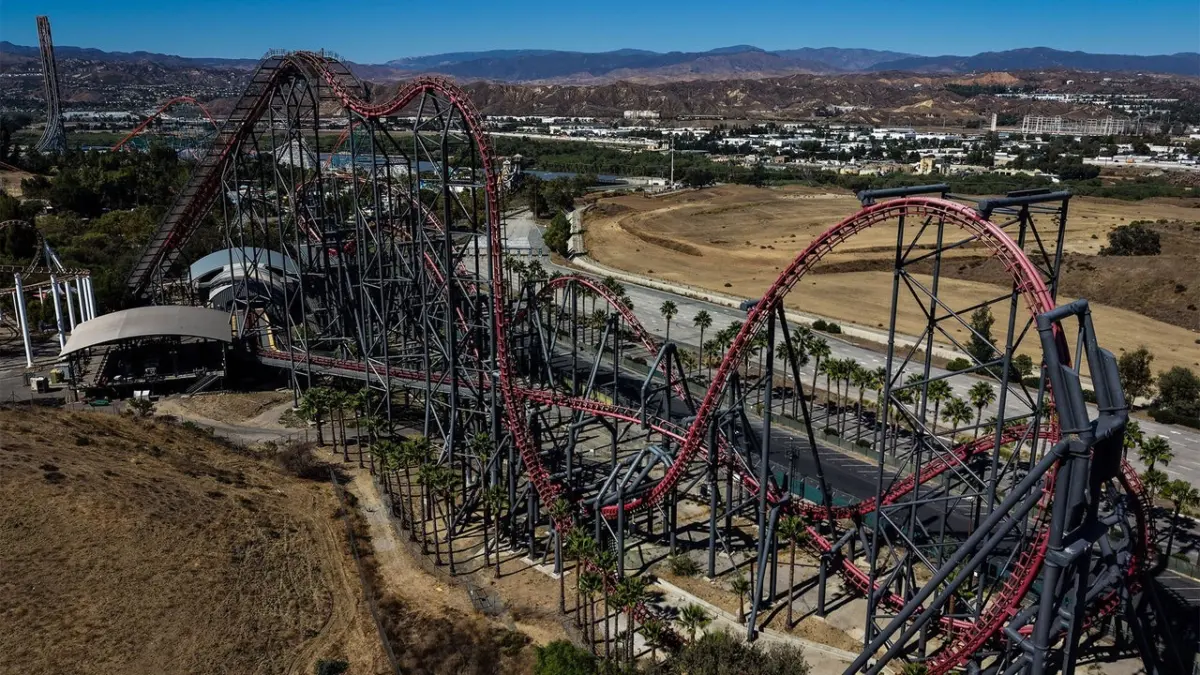
The Goliath is a prominent fixture at the Austell, Georgia, theme park, having operated for two decades. The ride relies on velocity and sheer downhill plunges rather than inversions like loops or corkscrews. It features a dramatic, sheer drop from 200 feet, propelling riders to top speeds of 70 miles per hour.
In the wake of the tragedy, Six Flags took the precautionary step of temporarily closing nine similar coasters across North America out of an abundance of caution. The ride’s manufacturer, Bolliger & Mabillard, issued a brief statement indicating that it is actively investigating the incident and will withhold further comment until it has a clearer understanding of the mechanics and events that led to the ejection.
The US Has a Patchwork of Rules Regarding Rides
In the United States, roller coasters and other rides at major amusement parks do not fall under the jurisdiction of the federal government. Instead, oversight and regulation are handled entirely at the state level.
Critics and safety advocates argue that this decentralized approach has resulted in an inconsistent, patchwork of rules. While some states maintain rigorous safety standards and active inspection protocols, others exercise little to no meaningful oversight.
This regulatory gap has long drawn the attention of lawmakers. U.S. Senator Ed Markey of Massachusetts has repeatedly introduced legislation aimed at closing what he describes as a significant loophole in federal law. Current statutes allow federal safety officials to regulate mobile amusement rides, such as those found at carnivals and traveling fairs, but explicitly prevent the Consumer Product Safety Commission from exercising oversight over stationary rides located at major permanent amusement parks.
Safety experts argue that the lack of uniform federal standards leaves vital questions unanswered regarding training and compliance. Brian Avery, a University of Florida professor and amusement ride safety expert, emphasizes the need for broader federal involvement.
"Who’s watching those in these organizations to ensure that they are adequately trained, that they are compliant, that they are monitoring these rides to the level in which the standards have established?" Avery asked.
In Georgia, the Office of Insurance and Safety Fire Commissioner is responsible for overseeing annual ride inspections. Garrison Bennett, a spokesperson for the office, confirmed that state authorities are currently conducting an in-depth and comprehensive review to determine the exact sequence of events that led to Monday’s tragedy at Six Flags.
Amusement Park Industry Has Set Its Own Safety Standards
Amusement park operators around the world generally adhere to a standardized set of guidelines known as ASTM standards. Developed by industry experts, these protocols govern every phase of a ride’s lifecycle, from initial design and construction to strict limitations on the acceleration and G-forces individual riders are permitted to experience.
Dennis Speigel, a prominent theme park consultant and former president of the International Association of Amusement Parks and Attractions trade group, explained that the industry operates under multiple layers of inspection and accountability. Park operators face intense financial and legal pressure from insurance carriers, who stand to face substantial payouts if a catastrophic failure occurs.
"With the checks and balances that are put in place, theme parks are really one of the safest places to be on the planet," Speigel said in a phone interview.
According to data cited by the industry trade group, the statistical chance of sustaining a serious injury on an amusement park ride in the United States is approximately 1 in 15.5 million rides taken.
Roller coaster experts point out that mechanical failures on rides like the Goliath are exceptionally difficult to fathom due to their robust structural engineering. The ride utilizes a pull-down lap restraint system commonly referred to as a "clamshell." This device employs a ratchet mechanism that emits distinct clicking sounds as it is pressed down firmly over the rider’s hips, utilizing multiple internal disks to provide mechanical redundancy in the event of a component failure.
Martin Lewinson, a roller coaster expert and professor at Farmingdale State College, noted that these restraint systems are both dependable and operationally straightforward.
"They’re dependable. They’re not so technically advanced that theme parks have difficulty with operations," Lewinson said.
Furthermore, operational protocols dictate that ride dispatch is contingent upon a computerized safety system. The system displays a green "go" light for every individual seat on the train, and the ride theoretically cannot be dispatched unless all passenger restraints are fully locked and verified.
Despite these redundant safety measures, experts acknowledge that absolute safety is virtually impossible to guarantee in dynamic mechanical environments.
Past incidents highlight the persistent vulnerabilities associated with human error or exceptional physical circumstances. In 2022, a 14-year-old boy fell to his death from an amusement park drop tower in Orlando when his harness failed to lock securely due to his physical size. Nearly a decade earlier, in 2013, a 52-year-old woman was killed after slipping from her seat on the Texas Giant roller coaster at Six Flags Over Texas. Following that tragedy, Six Flags implemented significant safety updates, including redesigned restraint-bar pads, additional seat belts, and test seats installed at ride entrances to allow guests to verify their fit before boarding.
Visitors to Six Flags Over Georgia note that ride operators maintain strict physical check protocols. Nick Mendenhall, who has ridden the Goliath more than a dozen times in recent weeks, observed that park staff consistently verify restraints prior to dispatch.
"There are two employees, one on either side of the train, and with their hands they push down and they make sure it locks every time. I’ve never seen them not do it," Mendenhall said.
States Handle Oversight in Different Ways
Regulatory oversight varies dramatically from state to state, reflecting the lack of a centralized federal mandate.
In California, the Department of Industrial Relations maintains direct authority over the approval of new and modified amusement rides. State officials either conduct direct annual inspections of ride mechanics and operational procedures or mandate thorough reviews conducted by qualified professionals under state guidelines.
Conversely, Florida’s largest theme parks—including major destinations like Walt Disney World and Universal Studios—are entirely exempt from state-level safety inspections. While smaller regional venues and traveling carnivals face state oversight, major theme parks are permitted to conduct their own internal inspections and enforce proprietary safety protocols, provided they report any significant injuries or fatalities to the state.
Texas operates under a similar model, relying heavily on private inspectors hired directly by park operators or their respective insurance companies to certify ride safety.
In Arizona, home to Six Flags Hurricane Harbor Phoenix, there is no state-level regulatory agency tasked with overseeing amusement park rides or conducting safety inspections. State statutes merely mandate an annual private inspection, leaving actual enforcement and compliance up to local municipal governments.