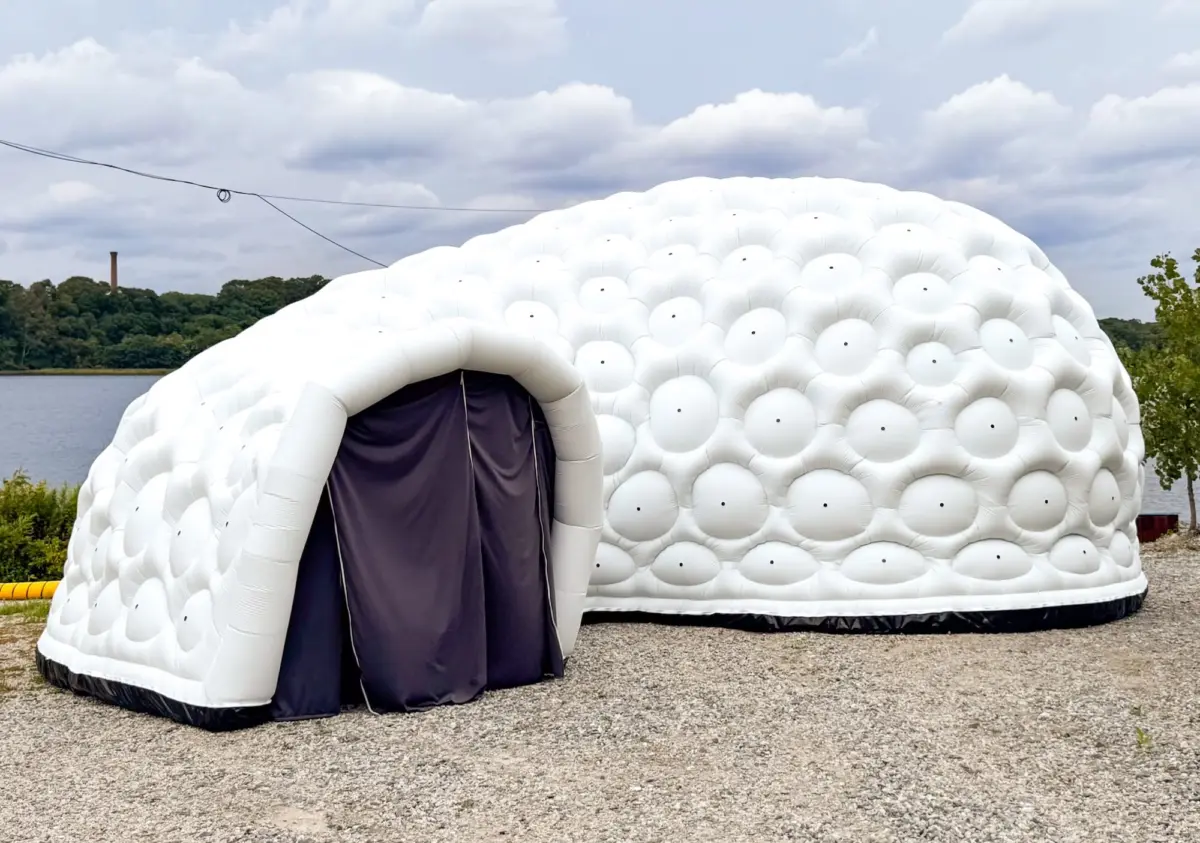
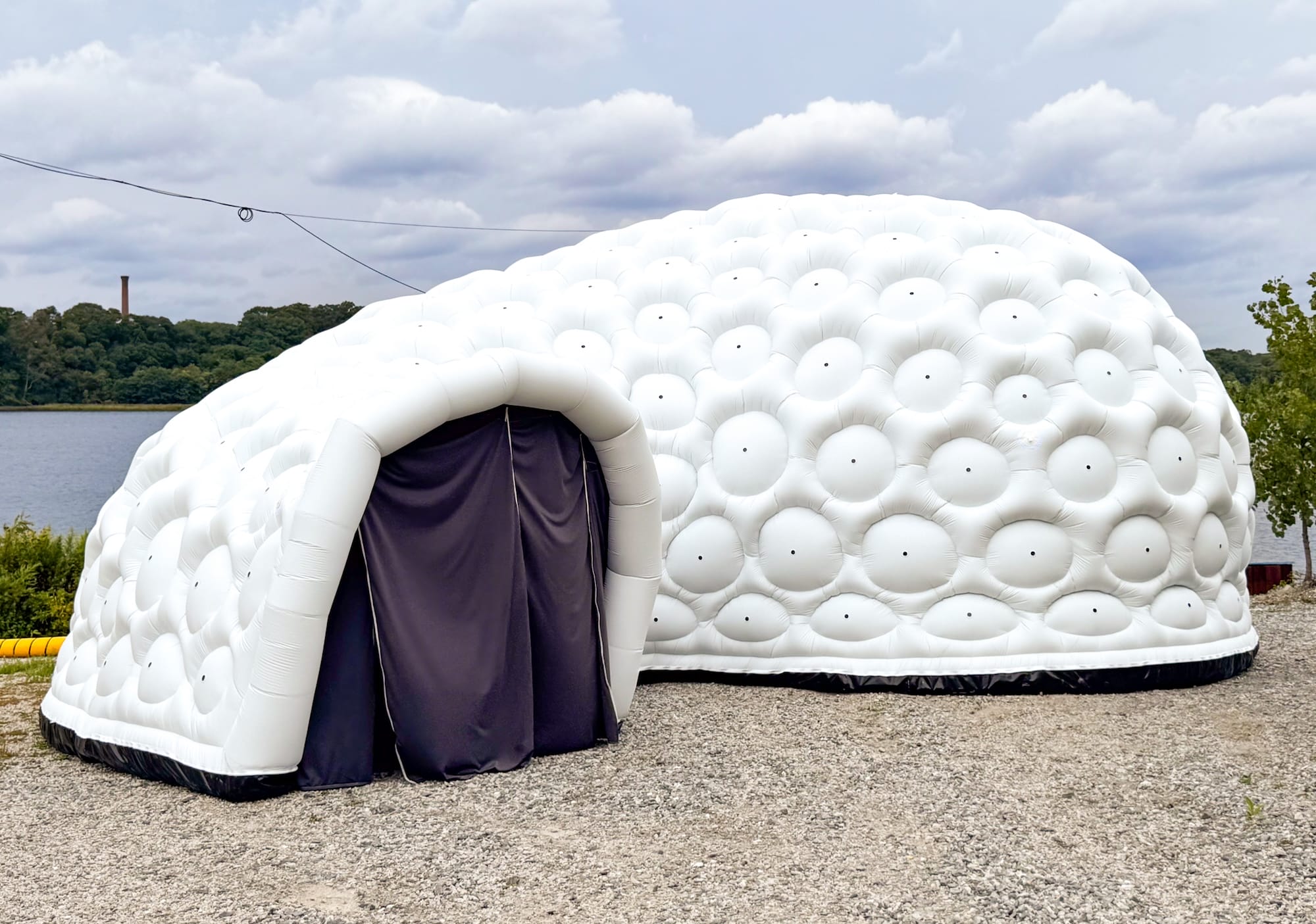
Premiering late last month at the MODE Festival—a prominent annual celebration dedicated to global photography—"Compound Camera 3" is the latest visionary creation by Pneuhaus. Based in Rhode Island, the design studio has built a formidable reputation for producing large-scale architectural inflatables that merge art, science, and public interaction. This latest ambitious work spans more than 700 square feet, inviting festival-goers and art enthusiasts alike to step inside and walk around an expansive, entirely solar-powered optical projection.
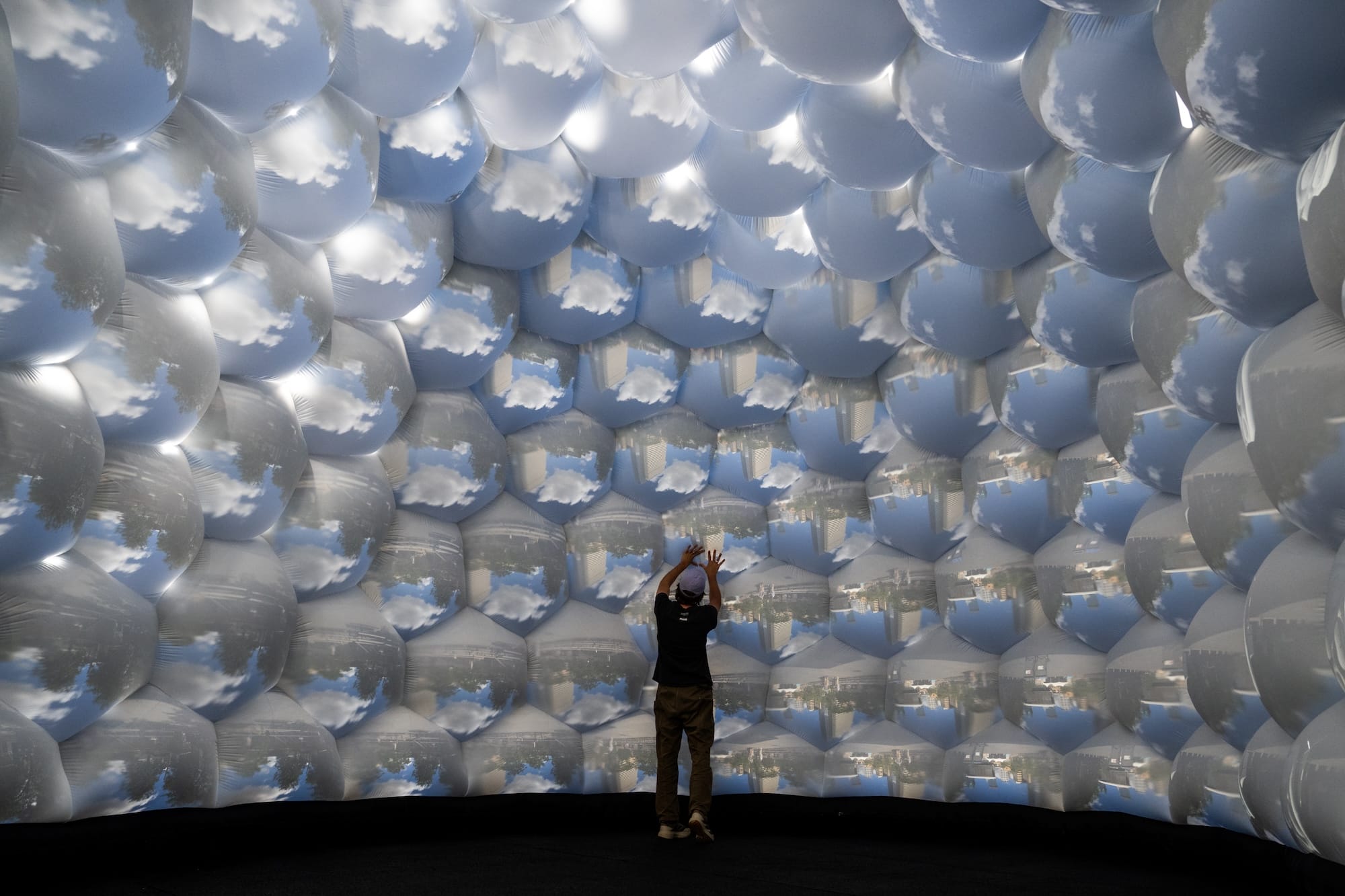
As visitors navigate the luminous interior, the mechanics of the camera become wonderfully apparent. The brilliant light of the sun illuminates everyday scenes through purely analog methods, casting crisp, inverted images across the bulbous, multifaceted surfaces of the room’s interior. Lenses directed toward the sky capture the atmosphere across dozens of individual facets, creating a dizzying yet mesmerizing visual effect that mirrors the compound structure of a bug’s eye. Meanwhile, apertures pointing sideways project moving silhouettes of nearby trees, towering buildings, and fellow pedestrians passing by the installation outside.
One of the most tactile and engaging aspects of the installation is its responsive material. The soft, pliable surfaces lining the interior walls allow visitors to physically interact with the projections. By gently pushing or pressing on the flexible material, participants can actively distort and warp the imagery, manipulating the bug’s-eye view of the sky and urban landscape in real time. This playful interactivity bridges the gap between passive observation and active participation, transforming each visitor from a mere spectator into a temporary co-creator of the optical experience.
In our current era of hyper-connectivity and relentless digital data accumulation, it is nearly impossible to encounter a multi-lensed optical structure like Pneuhaus’s without immediately reflecting on modern anxieties surrounding surveillance. In recent months, public discourse has increasingly focused on the proliferation of automated surveillance networks, from license plate readers tracking vehicular movement on public streets to private doorbell cameras tethered to sprawling corporate data repositories. These omnipresent electronic eyes record, store, and analyze our every move, feeding an endless appetite for personal data and digital monitoring.
However, "Compound Camera 3" offers a deliberate and poetic antidote to the culture of pervasive digital tracking. In this space, the gathering of information is entirely rooted in the philosophy of being present. Nothing inside the installation is recorded, saved, or uploaded to a cloud server. There are no high-definition sensors archiving the identities of passersby, and there are no glowing LED screens broadcasting targeted advertisements or algorithmic feeds. Instead, the installation relies on an ancient, essential analog optical technique that has fascinated scientists and artists for centuries.
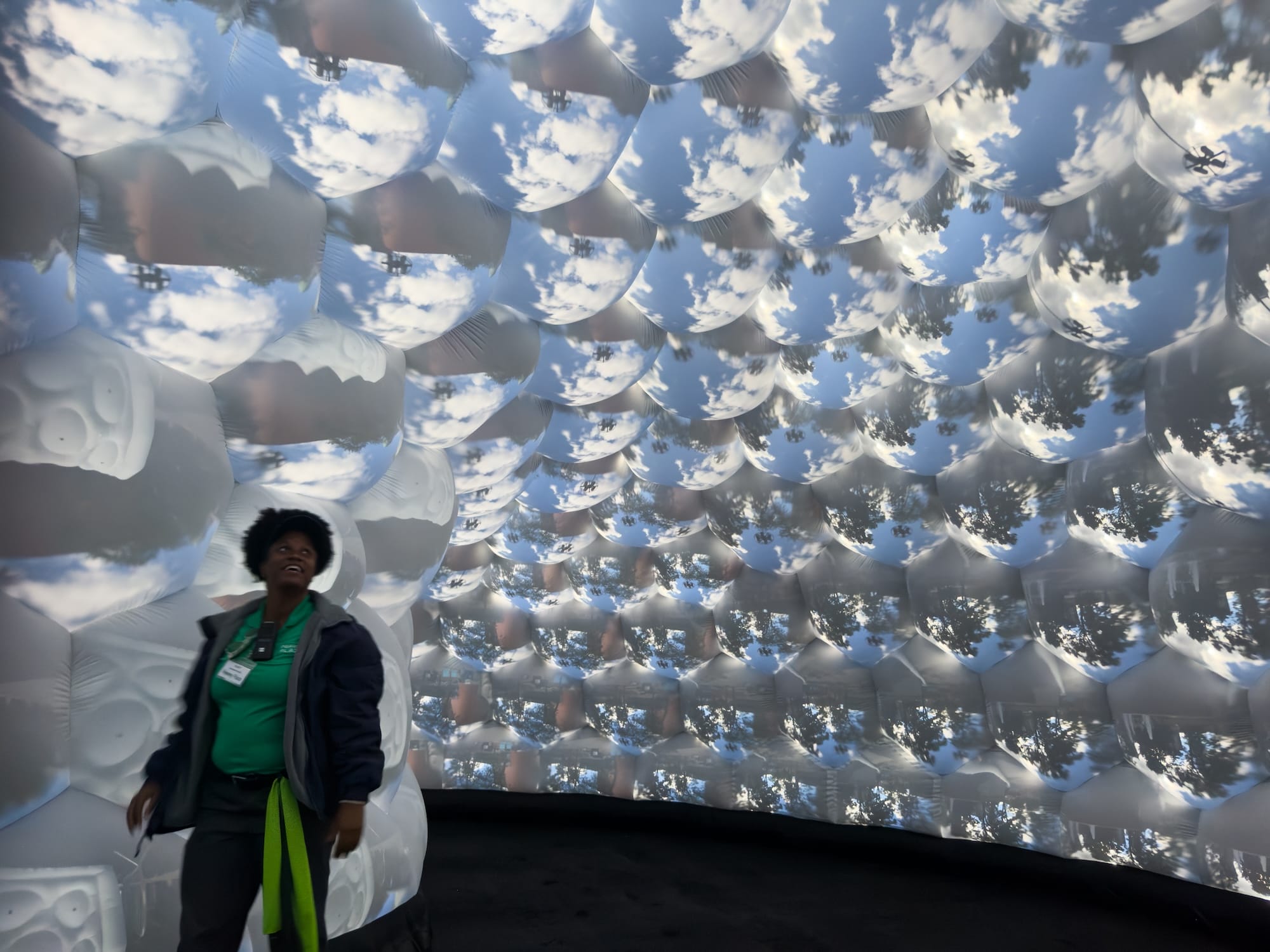
By stripping away the digital apparatus that typically accompanies modern imaging, Pneuhaus encourages a radically different relationship with our environment. The installation acts as a deliberate mechanism to slow down human perception. In a world where we constantly rush past our surroundings while staring down at smartphone screens, the multiplied imagery inside the inflatable chamber forces us to pause, look closer, and examine the subtle details of light, shadow, movement, and architecture that we might otherwise ignore if we were simply walking past the same scene in the open air.
The successful debut of "Compound Camera 3" at the MODE Festival highlights Pneuhaus’s continued ability to push the boundaries of how public art can shape our spatial awareness. By fusing the scale of modern inflatable architecture with the foundational principles of optics, the Rhode Island studio has crafted a sanctuary for mindful observation. Through its unique blend of playful tactility and analog wonder, the installation successfully reminds its audience that experiencing the world does not always require a digital footprint, offering a refreshing space where light, shadow, and human presence exist solely in the fleeting, beautiful moment.