Saudi Arabia’s critical aviation infrastructure has been subjected to a wave of renewed Houthi bombardment, plunging the kingdom into a severe security test that is forcing Riyadh to re-evaluate its global alliances, military preparedness, and whether the unprecedented financial backing of its ambitious Vision 2030 megaprojects has come at the expense of national defense.
Following last weekend’s devastating drone and missile strikes targeting some of the kingdom’s most vital civil aviation hubs, the Saudi government has urgently sought heightened defense support from the United States. This diplomatic and military appeal comes just a year after the kingdom injected historic levels of cash into its armed forces, elevating Saudi Arabia to the position of the world’s eighth-largest defense spender. The current crisis has consequently become a major litmus test for the network of alliances that Riyadh has carefully cultivated over decades.
Last weekend’s attack on Riyadh’s King Khalid International Airport resulted in the tragic deaths of at least 12 people and left more than 300 others wounded. Simultaneously, the King Fahd International Airport in Dammam has also been targeted by the Iran-backed Houthi movement. The group has publicly claimed responsibility for the strikes as Saudi Arabia escalates its military airstrikes to support an ongoing Yemeni government counteroffensive. This sudden resurgence of violence shatters the fragile quiet Riyadh had hoped to establish, bringing a distant conflict directly back into its crowded passenger terminals and prompting an uncomfortable national question: why remain the country’s principal gateways so intensely vulnerable?
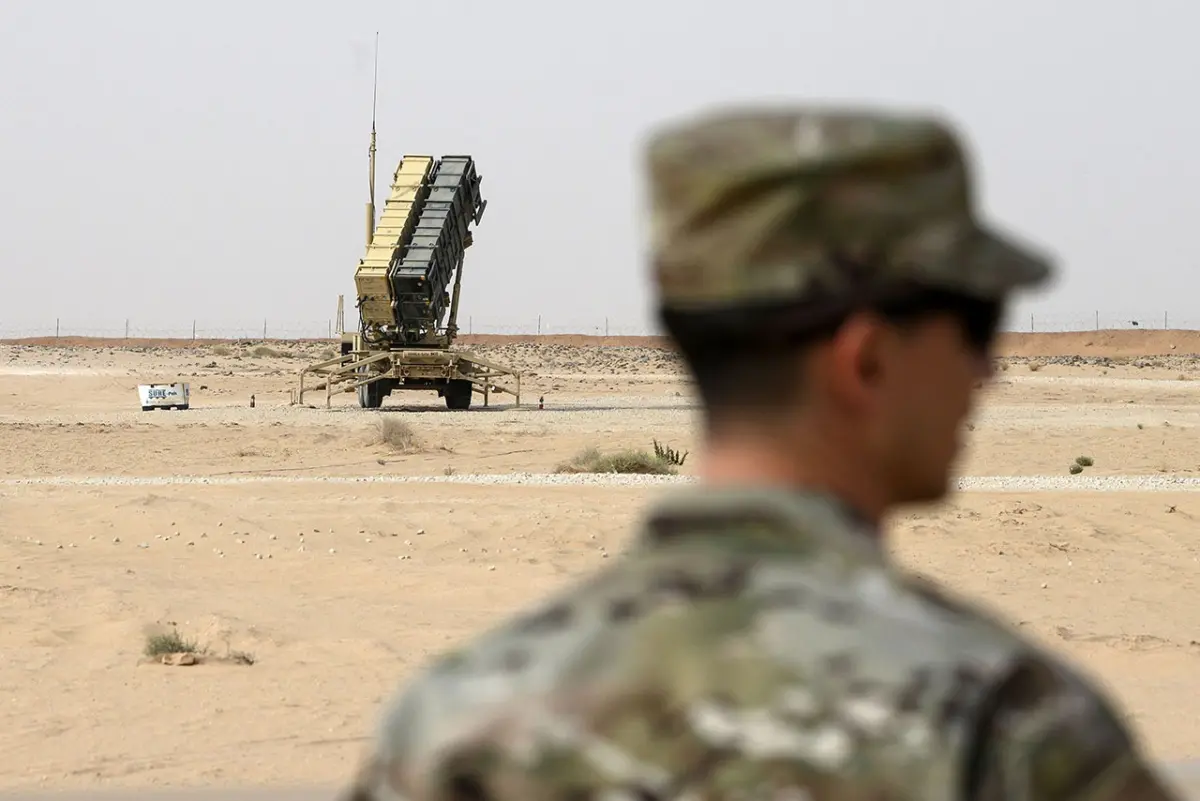
It is tempting for external observers to question whether channeling fewer financial resources into mirrored Giga-Projects—such as the heavily publicized, 170-kilometer-long linear megacity, The Line, which has recently faced scaling back alongside other developments—and devoting more focused attention to national security and air defense might have averted the disaster. To be fair to the kingdom’s planners, however, Saudi Arabia spans an immense geographic footprint of more than two million square kilometers. Its critical infrastructure, including sprawling airports, rapidly growing cities, and massive oil installations, is spread out across vast tracts of territory, making it virtually impossible for even sophisticated, high-end defense systems like Patriot and Terminal High Altitude Area Defense (THAAD) to provide an entirely impenetrable canopy.
Over the course of the long-running regional conflict, the Houthis have evolved from a localized guerrilla movement into a highly capable hybrid military force. They now possess formidable stockpiles of precision missiles and sophisticated drones. Moreover, they operate with significant tactical advantages from the rugged, mountainous terrain of northern Yemen, rendering them remarkably resilient adversaries.
At the same time, ongoing regional conflicts have consumed massive quantities of interceptor missiles, placing unprecedented strain on Saudi defense supplies as well as the inventories of its international partners. Replenishing these depleted stockpiles could easily take more than a year. While having a massive defense budget is undoubtedly useful, financial capital alone cannot instantly manufacture or conjure extra missiles off an industrial production line that is already struggling to service a long queue of anxious global customers.
Riyadh’s traditional allies have mobilized to provide assistance, with the United States, Turkey, and Pakistan dispatching various forms of defensive and technical support alongside military personnel. Yet, the urgent nature of the Saudi government’s direct appeal strongly suggests that the currently available assistance falls short of what is required to secure the skies. The kingdom spent years nurturing these key strategic partnerships, and it must now determine precisely how much practical, real-world protection those alliances can deliver in a moment of existential crisis.
In Washington, political dynamics complicate the picture. Donald Trump has publicly stated that he is considering joining potential military strikes against the Houthis, but he finds himself navigating a difficult diplomatic and political position. A ceasefire agreement between the Houthis and the United States, which was successfully brokered by Oman in May 2025, provides a substantial reason for hesitation. Furthermore, upcoming midterm elections in the United States threaten to temper any immediate political enthusiasm for renewed military entanglements in the Middle East.
Meanwhile, Israeli Prime Minister Benjamin Netanyahu has strongly condemned the Riyadh airport attack—a noteworthy diplomatic gesture given that Israel and Saudi Arabia do not currently maintain formal diplomatic ties. Ongoing background discussions have long revolved around the possibility of the United States encouraging Saudi Arabia to eventually join the Abraham Accords. Should the kingdom’s security needs escalate to a critical threshold, policymakers in Riyadh might even consider seeking access to Israel’s renowned Iron Dome defense system, a move that would carry far-reaching and transformative implications for the broader architecture of regional alliances.
In the immediate wake of the weekend’s attacks, Anwar Gargash, a senior adviser to United Arab Emirates President Mohamed bin Zayed Al Nahyan, issued a public call for renewed and deepened defense cooperation across the region. Although a formal Gulf Cooperation Council defense agreement already exists on paper, deep-seated political trust remains notoriously difficult to cement in practice. Historically, Saudi Arabia and the UAE have backed opposing factions in Yemen, and fierce economic competition for international investment gives neighboring states ongoing incentives to aggressively guard their own individual interests. Nevertheless, analysts note that practical security cooperation does not necessarily have to wait for absolute political harmony.
The economic and psychological damage caused by this latest spate of Houthi aggression reaches far beyond the borders of the Gulf. Anu-Eerika Viljanen, Finland’s former ambassador to Saudi Arabia who has since returned to Helsinki, noted in discussions that an official European delegation recently bypassed Gulf aviation hubs entirely when planning its travel routes for an upcoming diplomatic and trade trip to Southeast Asia. Such cautious reassessments should serve as a serious warning to major aviation and transit hubs in Dubai, Doha, and Abu Dhabi.
Saudi Arabia’s persistently hefty defense spending makes it difficult to argue that the nation has fundamentally underspent on its overall security apparatus. However, it remains a fair and pressing question whether everyday military readiness and integrated defense coordination have received the same intense, unyielding attention lavished on futuristic architectural wonders like mirrored linear cities or cliff-edge mountain stadiums. Ultimately, achieving the ambitious transformation goals outlined in the country’s Vision 2030 strategic plan depends fundamentally on getting the most basic pillars of national security right. For now, ensuring that the kingdom’s existing commercial airports remain safely open would serve as a far more persuasive advertisement for Saudi Arabia’s stability than the unveiling of yet another futuristic destination.