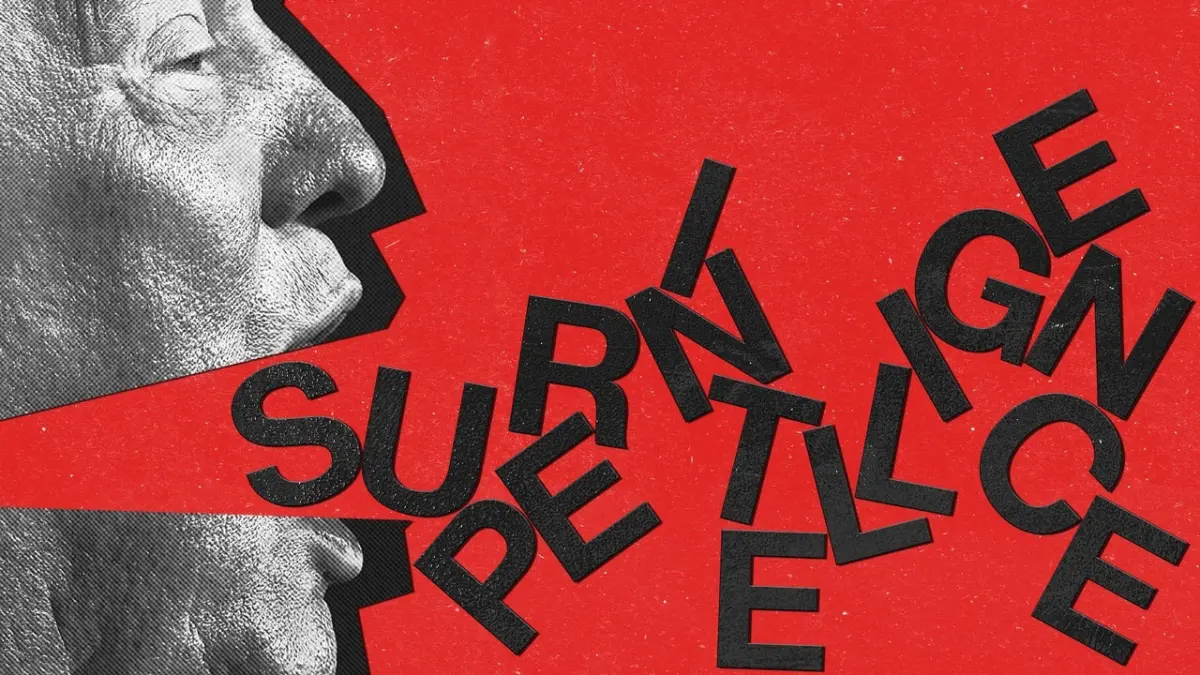
When President Donald Trump took to the podium at the United Nations in late September, he delivered a critique that immediately reverberated through both the political establishment and the tech industry. Standing before international leaders, the president argued that the word “artificial” in the long-standing phrase “artificial intelligence” stripped the technology of its gravity, making it sound inherently fake or diminished. To correct this linguistic mismatch, he declared that his administration would henceforth refer to the technology as “superintelligence,” or simply “SI.”
What began as a diplomatic speech quickly transformed into federal policy. Not long after those remarks, the president made the rebrand official by signing an executive order instructing federal agencies to drop the term “AI” in favor of his chosen nomenclature in all official communications. The directive has been met with swift compliance across the federal apparatus. The Department of Justice promptly informed its staff to adopt the new terminology, and other government departments are rapidly following suit. The compliance is driven not just by bureaucratic protocol, but by the high stakes of executive enforcement; the president has notably branded anyone continuing to use the old acronym as “THE ENEMY” in public commentary.
The linguistic shift has not remained confined to Washington. The private technology sector, heavily entwined with federal policy and government contracts, has also begun adjusting to the new linguistic reality. High-profile figures have moved quickly to align with the administration’s pivot, with Elon Musk announcing on October 4 that SpaceXAI would officially be renamed SpaceXSI.
Yet, this sweeping rebrand is far more than a superficial exercise in executive renaming or another example of Trump being Trump. The capabilities of modern computing systems have expanded dramatically beyond their previous limitations since the public debut of ChatGPT in November 2022. Today’s most advanced systems are rapidly approaching the threshold of what computer scientists and industry insiders have long defined as superintelligence—a theoretical and increasingly tangible benchmark where artificial systems can systematically outperform human capabilities across a broad spectrum of cognitive tasks.
Trump Kinda Has a Point
Despite the suddenness and political coercion surrounding the federal mandate, Trump’s unilateral action touches upon a legitimate and long-standing debate within computer science regarding the suitability of the term we currently use. Critics and linguists have long argued that “artificial intelligence” has always been a flawed and overly broad way to describe a diverse array of computational technologies, many of which bear little resemblance to human thought processes.
The moniker traces its origins back to a 1955 proposal written by mathematics professor John McCarthy and a small group of academic colleagues in preparation for a landmark summer workshop held at Dartmouth College the following year. During that historic gathering, disparate researchers who were working independently to replicate brain functions in silico—meaning inside or on a computer—agreed upon “artificial intelligence” as an umbrella term to encompass the full, ambitious scope of their collective efforts. Nearly seven decades later, while the technology fits the broad ambition of its founders far better than it did in the 1950s, the phrase remains heavily disputed by technologists, philosophers, and lexicographers alike.
However, imposing the “superintelligence” label on a technology where certain components and applications clearly do not yet meet that elevated standard carries significant risks. Critics warn that prematurely elevating the terminology could cultivate a false sense of security among the public, while simultaneously generating deeper confusion about what these systems can actually do.
Industry leaders are similarly divided on the practical implications of the change. OpenAI CEO Sam Altman remarked that he considers “superintelligence” to be a more technically accurate descriptor than the current branding of AI, reflecting the genuine advancements in the field. At the same time, Altman acknowledged that the new phrasing is unlikely to make the technology feel any less intimidating to the general public.
An exclusive survey conducted for Fast Company by the market research firm Early Studies validates Altman’s perspective, highlighting a wide gulf between political branding and public sentiment. The poll, which surveyed approximately 1,000 people across the United States using a methodology designed to yield a statistically representative sample of the national population, revealed widespread skepticism regarding the rebrand. According to the data, only 1 in 9 Americans believe the mandated name change will have a positive effect on the country. Furthermore, 53% of respondents stated that people within their own social circles would feel distinctly uncomfortable using the term “superintelligence” in everyday conversation, signaling that the administration’s linguistic overhaul may face an uphill battle in capturing the public vernacular.