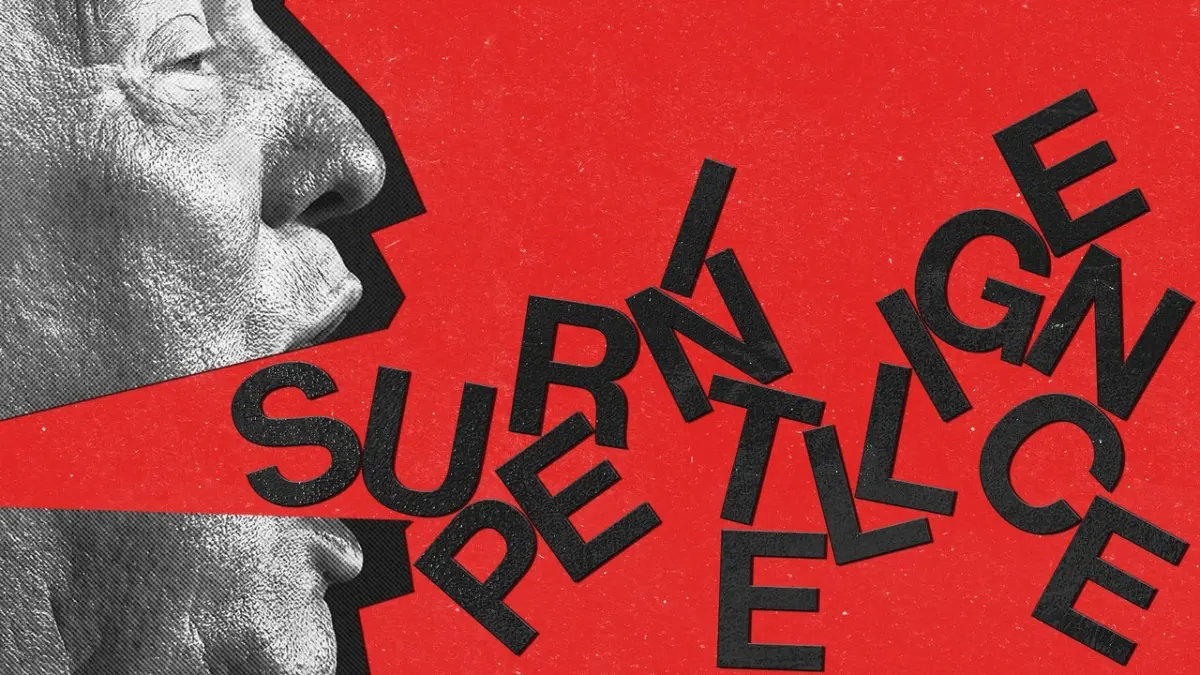
When President Donald Trump addressed the United Nations in late September, he struck a chord that would quickly ripple through the federal government, Silicon Valley, and the broader technology sector. In his speech, Trump argued that the word “artificial” in “artificial intelligence” made the rapidly advancing technology sound fake. To correct this linguistic mismatch, he declared that his administration would officially transition to calling the technology “superintelligence,” or simply “SI.”
What began as a diplomatic speech soon transformed into binding federal policy. Not long after his remarks at the UN, the president signed an executive order instructing federal agencies to phase out the term “AI” in all official communications and replace it with his preferred nomenclature. True to form, the administration wasted little time enforcing the directive. The Department of Justice promptly instructed its internal staff to follow suit, setting a precedent that other government departments are widely expected to mirror. The enforcement mechanism behind the policy took on an even sharper edge when the president took to social media, branding anyone who continues to use the legacy term “AI” as “THE ENEMY.”
The shockwaves of the presidential decree were immediately felt far beyond the Washington beltway, prompting swift reactions from some of the biggest names in the tech industry. Elon Musk, a prominent figure in both aerospace and artificial intelligence development, announced on October 4 that he would align his enterprises with the new standard, stating that SpaceXAI would be officially renamed SpaceXSI.
While the rebranding initiative might initially read as a quintessential display of political branding, technology experts note that it arrives at a pivotal juncture in computer science. Since the public release of OpenAI’s ChatGPT in November 2022, the capabilities of generative models and machine learning systems have accelerated far beyond previous limitations. The technology is rapidly approaching the threshold of what computer scientists and researchers have long defined as superintelligence—a theoretical milestone where autonomous systems are capable of systematically outperforming human intelligence across virtually all economically valuable tasks.
However, applying the “superintelligence” label uniformly across an entire industry—especially when significant components of current technology do not yet meet that elevated standard—carries substantial risks. Critics and industry analysts warn that premature branding could foster a false sense of security among consumers and deepen public confusion regarding the actual capabilities and limitations of modern software systems.
Reactions from industry leaders highlight the complex debate surrounding the shift. OpenAI CEO Sam Altman acknowledged in recent commentary that “superintelligence” is arguably a more accurate descriptive term for the trajectory of advanced models than the legacy branding of artificial intelligence. At the samealing time, Altman expressed skepticism that the new terminology would make the public feel any less apprehensive about the technology’s rapid ascent.
An exclusive survey conducted for Fast Company by market research firm Early Studies validates Altman’s perspective, revealing a significant disconnect between government policy and public sentiment. The poll, which surveyed approximately 1,000 individuals across the United States using a statistically representative methodology, found that public skepticism runs deep. Only 1 in 9 respondents believe the government-mandated rebrand will yield a positive effect for the nation. Furthermore, more than half of the surveyed Americans—53%—indicated that the people they know would feel uncomfortable referring to the technology as “superintelligence.”
Trump kinda has a point
Despite the widespread public hesitation and the abrupt nature of the federal mandate, the presidential action raises a legitimate and long-standing question regarding the terminology the tech industry has relied on for decades: Is “artificial intelligence” actually a suitable description for the technology in the first place?
In truth, AI has historically served as an imperfect umbrella term for a vast, heterogeneous range of computational techniques, data models, and automated systems. The phrase’s origins trace back to a foundational 1955 proposal written by mathematics professor John McCarthy and several academic peers ahead of a historic summer workshop held at Dartmouth College the following year. During that landmark gathering, disparate researchers who were attempting to replicate human brain functions in silico—meaning inside or on a computer system—agreed upon “artificial intelligence” as a broad enough label to encompass the diverse scope of their pioneering efforts.
Seven decades later, as modern neural networks process data at scales unimaginable to the field’s founders, the original moniker fits in some ways better than it did in the 1950s. Yet, as the ongoing debate over the White House’s executive order demonstrates, it remains a heavily disputed and evolving term as society navigates the threshold of a new technological era.