As Bangkok eagerly prays for the monsoon rains to clear ahead of next week’s major global finance gathering, the city is preparing to step into the international spotlight. Behind the polished preparations, however, lies a deeper narrative about Thailand’s economic trajectory, structural hurdles, and the pressing need to let more economic sunshine into the vibrant regions far beyond the capital.
Lock up your datasets and polish your policy briefs, because Bangkok is playing host to one of the largest and most influential gatherings of economists, central bankers, and finance ministers on the planet. The annual meetings of the International Monetary Fund (IMF) and the World Bank—which traditionally leave Washington, D.C., every three years—will begin in the Thai capital on Monday, marking the first time the prestigious event has been held in the city since 1991.
Government officials in Thailand have eagerly embraced a grand title for the high-level conflab taking place at the Queen Sirikit National Convention Center, referring to it as the “Olympics of Global Finance.” While it might be a sexed-up promotional title for more than 10,000 delegates in grey suits nattering endlessly about interest rates, inflation, and sovereign debt, these global policymakers possess genuine influence over the international economic landscape, and Thai authorities are understandably keen to impress.
In the lead-up to the summit, Bangkok has undergone a visible transformation. Power lines have been pruned to clean up the urban aesthetic, workers have been granted a day off to help ease notorious Friday traffic congestion, and even the city’s giant LED billboards are strictly on message, welcoming international dignitaries. The stakes for administrative competence are high; a recent logistical failure involving a shortage of baggage handlers at the main international airport caused luggage to pile up drastically, ultimately costing the CEO of Thai Airways his job. With the summit now days away, Prime Minister Anutin Charnvirakul and his cabinet have far more pressing meteorological concerns, needing to pray for sustained sunshine following the city’s recent round of disruptive floods.
Fortunately, local contingency plans for the summit are far more robust this time around, featuring four distinct operational scenarios mapped out in the event that floodwaters breach the perimeter of the Queen Sirikit National Convention Center. Should water levels reach 50 centimeters, authorities insist the show will go on. However, instead of being whisked away from their hotel lobbies in electric-powered BMWs, VIP delegates will be rerouted to the venue via the BTS Skytrain and the underground metro system.
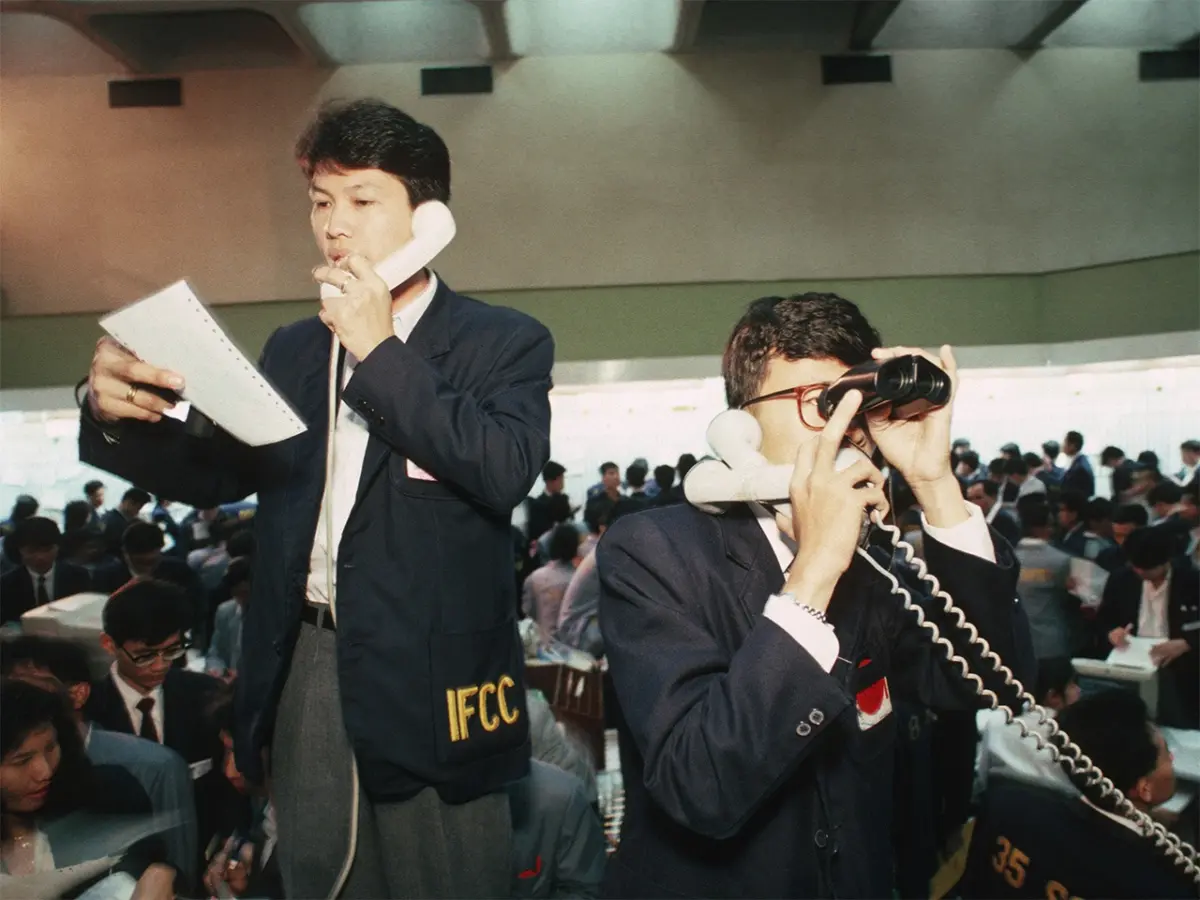
An alternate transit route might actually prove beneficial for the visiting dignitaries. The elevated Skytrain remains easily the best way to navigate and view the sprawling expanse of Bangkok, serving as a tangible marker of the city’s remarkable modernization and economic transformation since the IMF and World Bank last held their annual meetings in the city during the early 1990s.
While these annual meetings are international in scope, they also provide a timely opportunity to take a much closer look at the host country’s underlying economic foundations. The World Bank’s latest comprehensive report, released just last month, paints an impressive picture of Thailand’s long-term development over the past 35 years, highlighting its evolution from an agrarian, lower-middle-income country into one of the most dynamic economies in Southeast Asia. It is an achievement that cannot be easily dismissed, yet transitioning into the World Bank’s top income bracket will require addressing the root causes of Thailand’s current upper-middle-income malaise.
At the current pedestrian rate of economic growth, which hovers around a sluggish 2.2 percent annually, it will take Thailand another 30 full years to successfully transition into a high-income country. Achieving this milestone by 2037—which happens to be the government’s stated national goal—will require a radical overhaul of the domestic economy alongside bold ideas that extend far beyond simply constructing more data centers or applying to join international blocs like BRICS and the OECD. To meet the 2037 target, annual economic growth would need to average a robust five percent over the next 11 years. Observers note that finding anyone in Thailand who genuinely believes such a recovery is possible remains a challenge; the last time the country experienced economic expansion with those kinds of high-flying numbers was back in 2012, following the previous year’s devastating floods that commanded global news coverage and biblical headlines. Perhaps, some suggest, history might find a way to repeat itself.
One of Thailand’s most persistent structural problems is, ironically, also one of its greatest historical successes. Bangkok has firmly established itself as a top-20 global city, but its meteoric rise has come at a steep and direct cost to other regions, cities, and provinces across the country. According to the World Bank, Thailand suffers from "one of the world’s most extreme cases of urban concentration in its largest city." The institution suggests that fostering the development of second- and third-tier cities would be a sensible remedy, and the nation certainly boasts plenty of strong candidates for such a shift.
Chiang Mai, for instance, possesses the cultural and infrastructural potential to transform itself from a sleepy regional backwater into a flourishing creative capital. Meanwhile, Khon Kaen located in the northeast benefits from established universities and vast agricultural land, positioning it ideally to become a national hub for agritech innovation. While the private sector and various tourism agencies are currently doing their part to promote these regional areas, there remains a distinct lack of urgency or meaningful policy buy-in from the central government in Bangkok.
Political structures continue to heavily centralize power. Bangkok is only one of two administrative areas in the entire country with a directly elected governor, while all other provincial leaders remain appointed civil servants dispatched from the center. During the most recent general election in February, the reformist People’s Party campaigned heavily on a platform of decentralization. While the party swept the board and dominated the vote within the capital, the country’s heartlands—which arguably stood to benefit the most from decentralization in the long term—ultimately handed their political power back to the conservative status quo.
Bangkok may have changed beyond all recognition since the global finance meetings of the 1990s, but Thai politics, come rain or shine, appears steadfastly determined to remain the same.