To the average commuter hurrying along the streets of London or navigating the well-trodden paths toward a workspace in Deptford, a discarded end table, a battered boot, or a lost mitten might register as nothing more than urban clutter. But for Seoul-born artist Woo Jin Joo, these fragments of everyday life represent an invitation to magic. Where others see trash or unwanted remnants, Joo perceives a reservoir of untapped narrative potential, transforming overlooked items into uncanny, lifelike sculptures that blur the boundaries between domestic architecture and biological form.
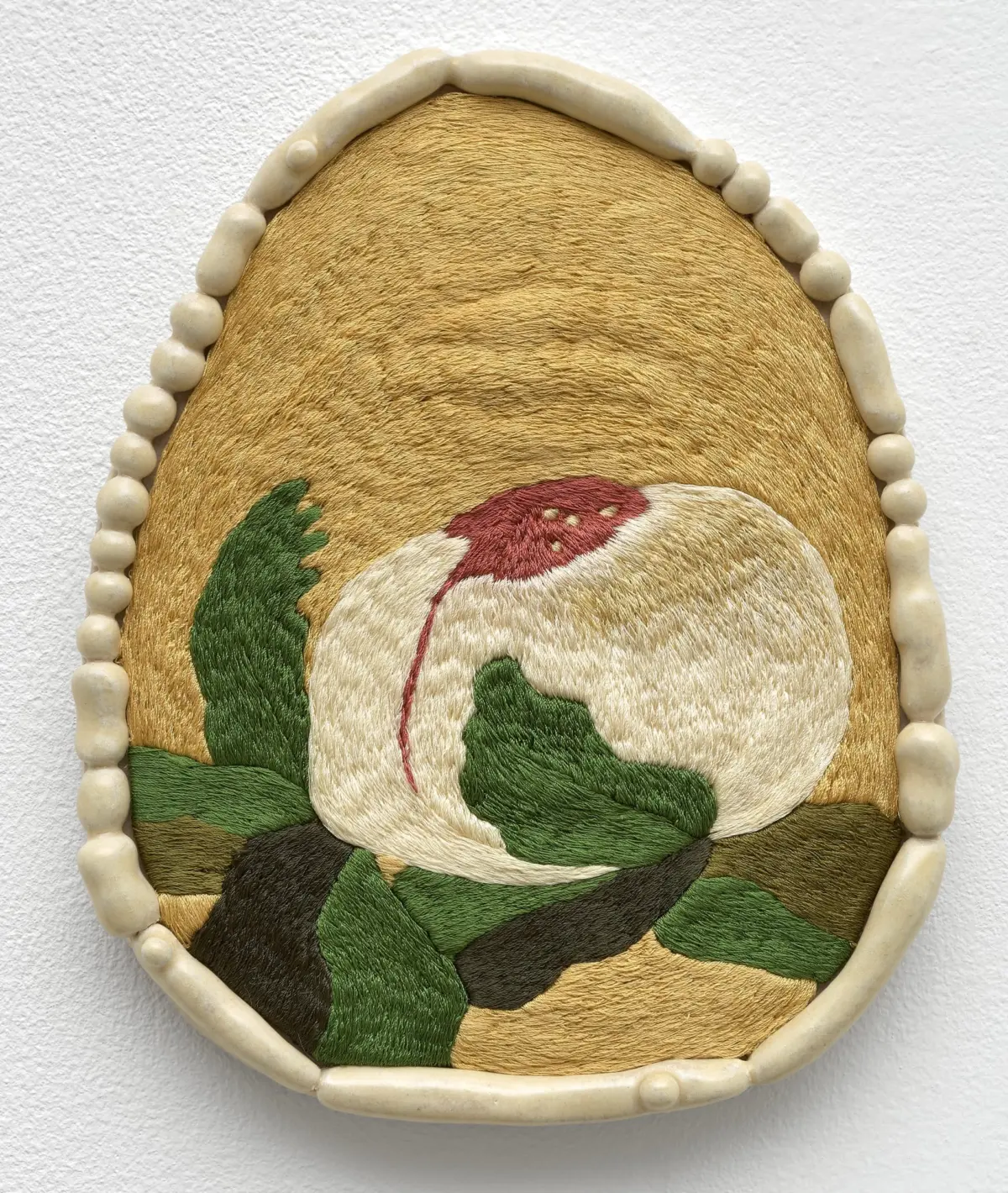
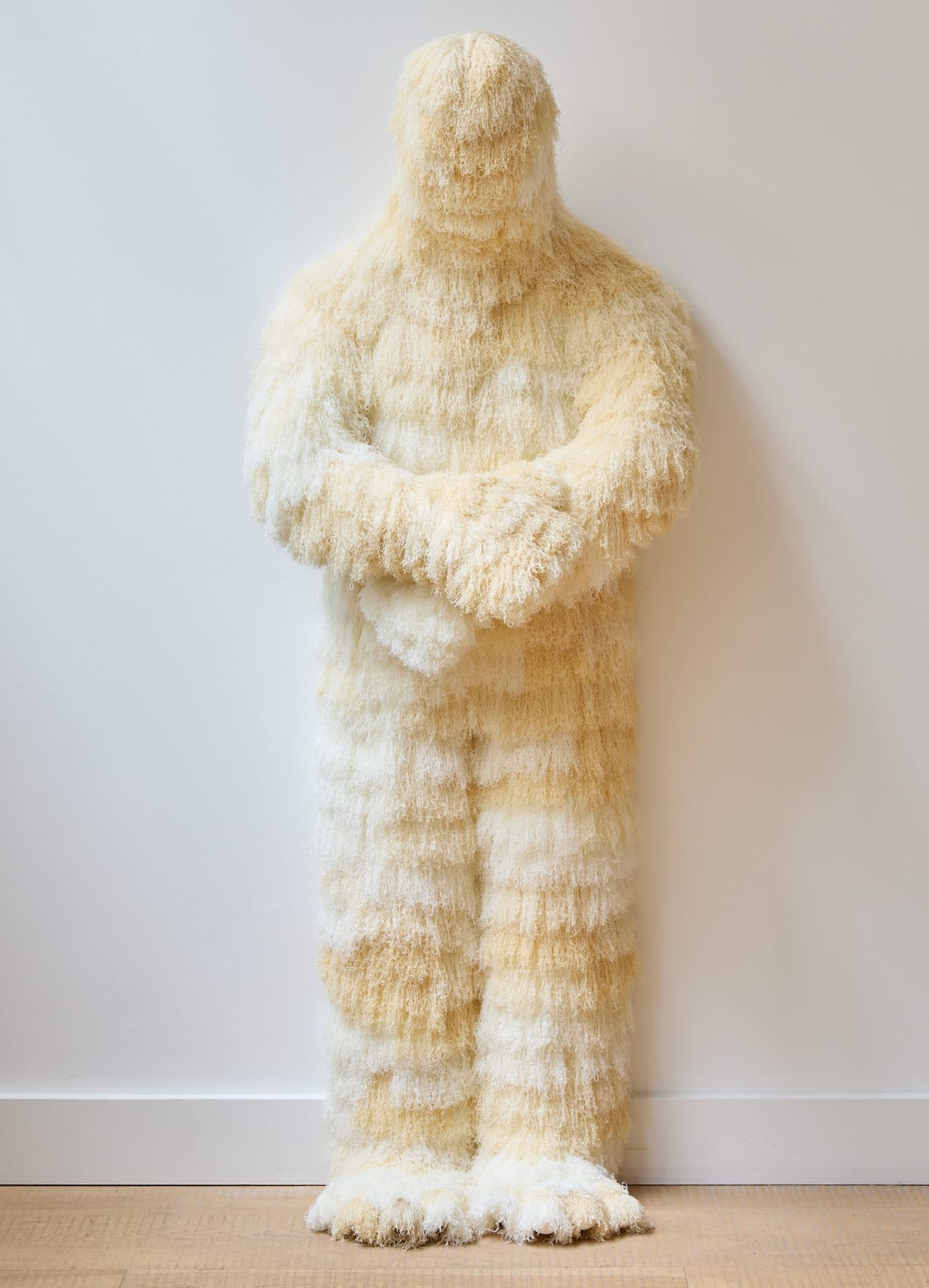
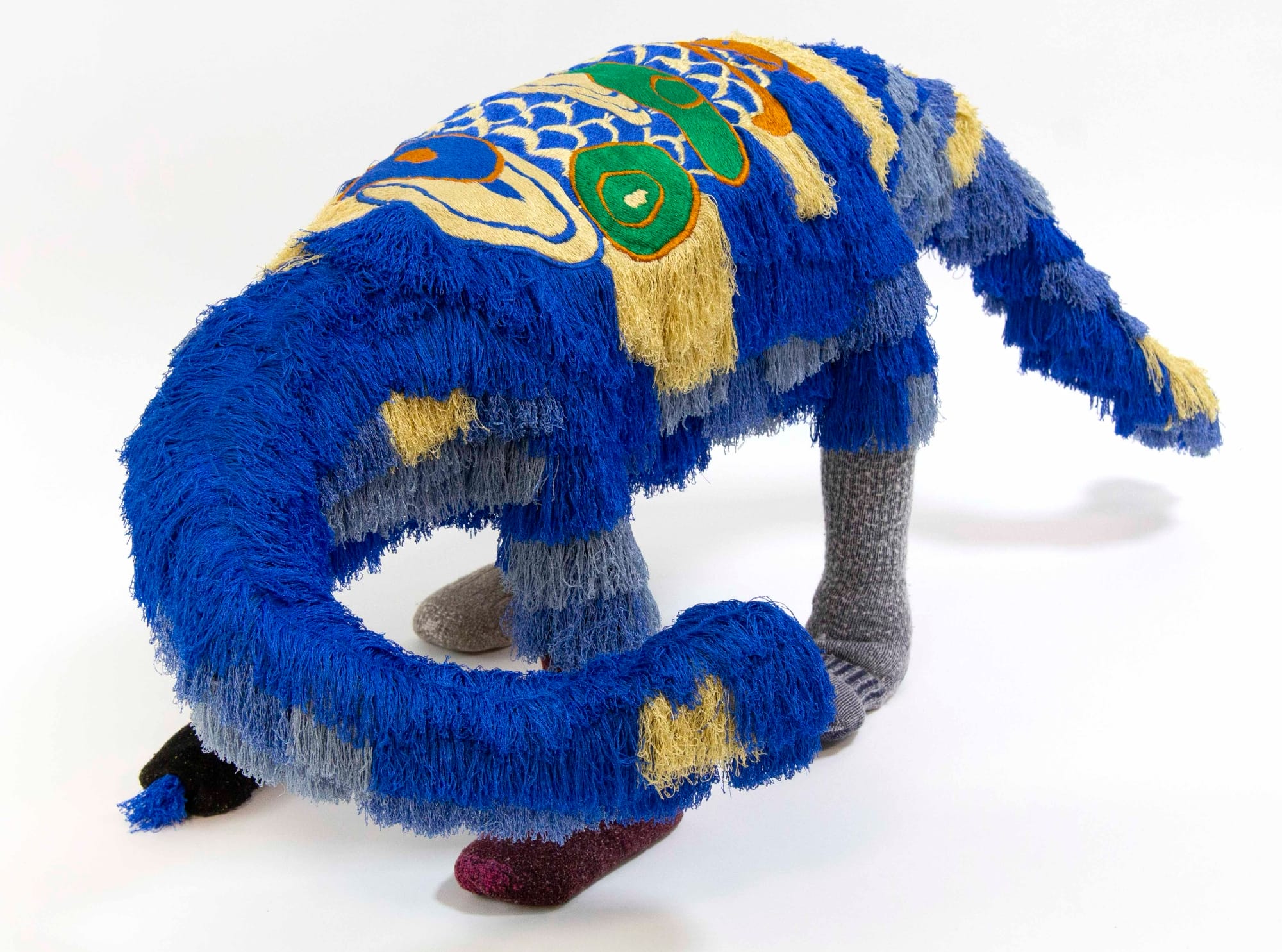
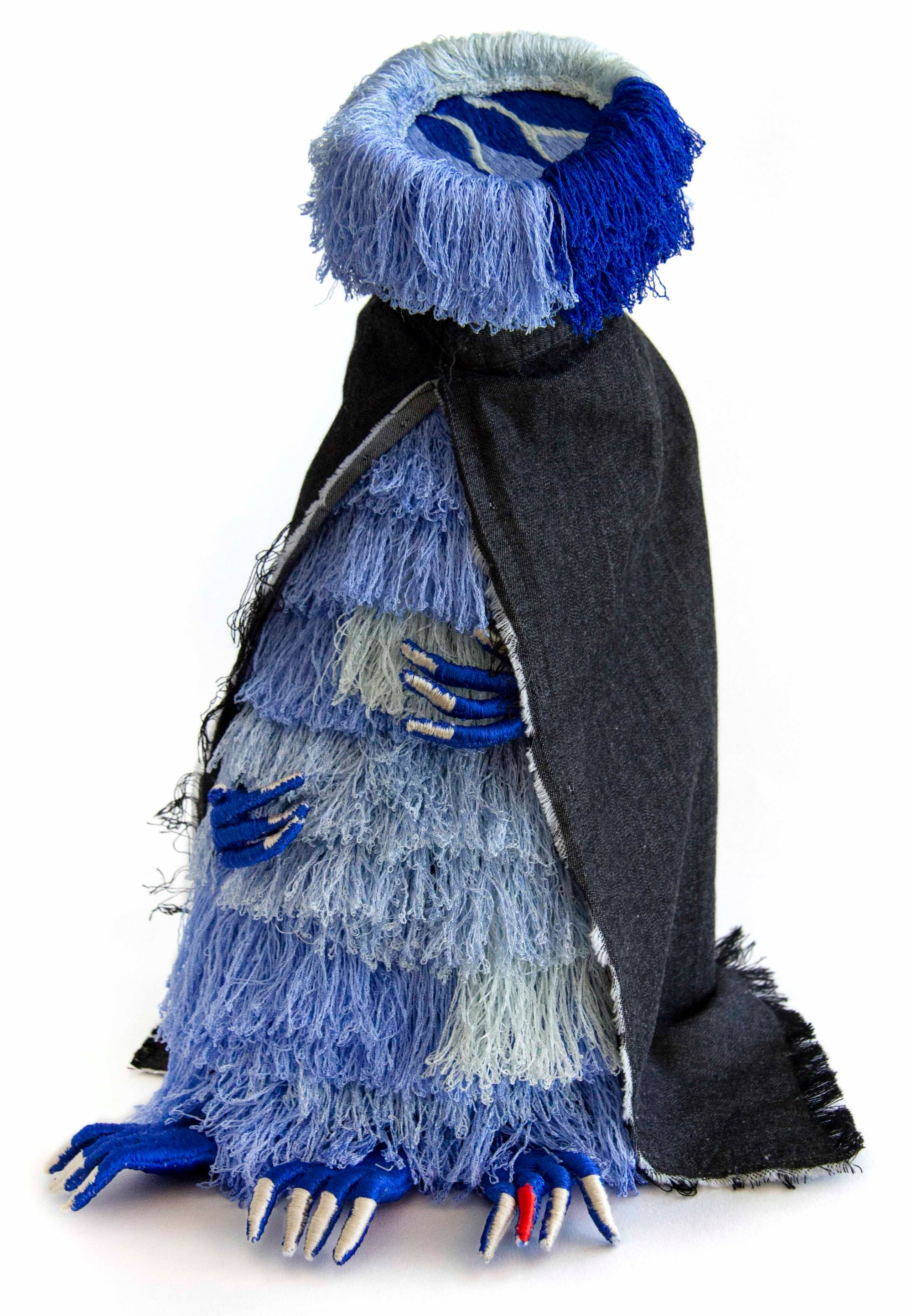
Joo is internationally recognized for a distinctive sculptural practice that rescues discarded garments, furniture, and miscellaneous objects, fusing them with clay and lustrous viscose thread. The resulting creations frequently merge animal-like anatomies with familiar household fixtures, yielding figures that command space with a quiet, arresting presence. Human-sized entities draped in garments of interwoven white and beige fringe slump against gallery walls or rest upon the floor, evoking the uncanny sensation of living beings pausing mid-breath, waiting patiently to be addressed.
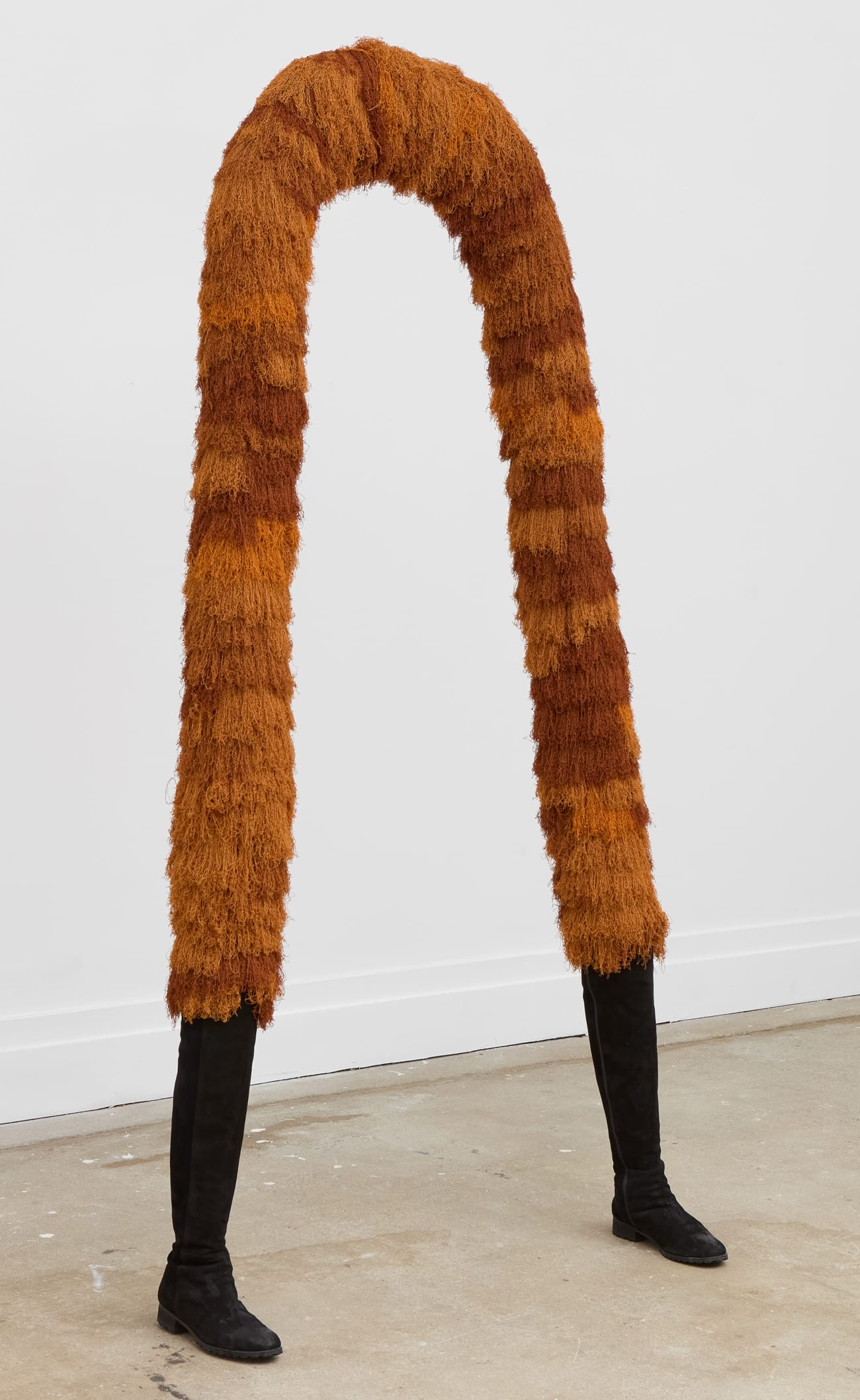
Other works within her expanding body of work similarly dismantle and reconstruct conventional forms, playing with anatomical suggestions and household utility. In pieces such as For Those Who Wade, an ochre-tinted arch is grounded by a pair of black suede boots, creating a hybrid silhouette that feels simultaneously ancient and deeply contemporary. In Murmur, a totemic, fur-covered leg culminates in a small, carved wooden table top, anchored by a ceramic foot. Through these thoughtful assemblages, Joo manages to breathe vitality into inanimate materials, transforming cold metal rods, wadding, old socks, and salvaged textiles into animated entities that seem to possess their own histories and internal logic.
The attraction to the strange and surreal is far from arbitrary for the artist; rather, it serves as a deliberate methodology to transcend the rigid limitations of human perception. By leaning into the language of the uncanny, Joo explores how folklore, myth, and ancient storytelling traditions can offer alternative modes of acquiring knowledge and cultural wisdom. She firmly believes that even the most mundane, overlooked interactions harbor an underlying potential for profound transformation and meaning.
This philosophical fluidity is deeply rooted in Joo’s personal biography and her experiences living between distinct cultural landscapes. As a Korean-Chinese artist raised across both countries, her memory and psychological framework have been shaped by the rich mythologies and traditions of East Asia. At the same time, the raw physicality of her daily existence in London—marked by chance encounters with abandoned objects on the pavement—serves as the immediate catalyst that unlocks specific visual imagery and conceptual ideas. The convergence of these diverse cultural reference points allows her to approach materials with a unique perspective, bridging geographic distances through tactile artistry.
Central to Joo’s artistic philosophy is a profound respect for the biographies of the objects she collects. Like many contemporary sculptors who gravitate toward found items, a major part of the allure lies in the invisible histories these materials carry before they ever enter her studio. She views herself not merely as a fabricator, but as a collaborator with time and history.
“I am not actively looking for anything in particular, but I discover them by happenstance, and they become meaningful; they provoke my imagination,” Joo explains, reflecting on her scavenging walks. “This is how I feel like we conjure meaning in our lives. I am left to imagine, build, and find meaning in objects that have their own history. Naturally, it is not always that I discover an object that draws me, but I still have other creative ideas that exist within my imagination that I can turn to.”
Scale also plays a critical role in the spatial dialogue Joo establishes with her audience. Several of her sculptures are constructed to match the height of the artist herself, a deliberate choice that introduces a physical weight and presence impossible to replicate with smaller, wall-mounted pieces. This immersive scale encourages viewers to actively navigate around the sculptures, forcing them to confront the volumetric mass of the works in direct relation to their own physical bodies.
For the artist, the production of these monumental pieces carries its own distinct enchantment. Watching a concept evolve from a fleeting mental sketch into a fully realized, animated presence that populates the corner of her studio space remains one of the most rewarding aspects of her creative process.
Art enthusiasts and collectors currently have the opportunity to experience Joo’s immersive installations firsthand. In London, her solo exhibition, Bodily Inbetweenness, is open at Ruup & Form through November 13, offering a comprehensive look at her recent explorations into hybrid forms and tactile narratives. Looking ahead, Joo’s work is scheduled to reach new audiences in early 2027 with an upcoming exhibition at the Harley Foundation in Nottinghamshire. Until then, admirers of her surreal, textile-driven craft can follow the ongoing evolution of her studio practice through her updates on Instagram.